
Forest bathing, or shinrin-yoku, is a simple Japanese practice that may be one of the most accessible ways to calm a busy mind and lower everyday stress.
Forest bathing, or shinrin-yoku, is a simple Japanese practice that may be one of the most accessible ways to calm a busy mind and lower everyday stress.
It’s not hiking.
It’s not exercise.
It’s not another thing to achieve.
Forest bathing is the practice of spending slow, intentional time in nature, letting the forest atmosphere reach you through your senses: the smell of trees, the sound of birds, the feeling of moss underfoot, the movement of light through leaves, the coolness of the air on your skin.
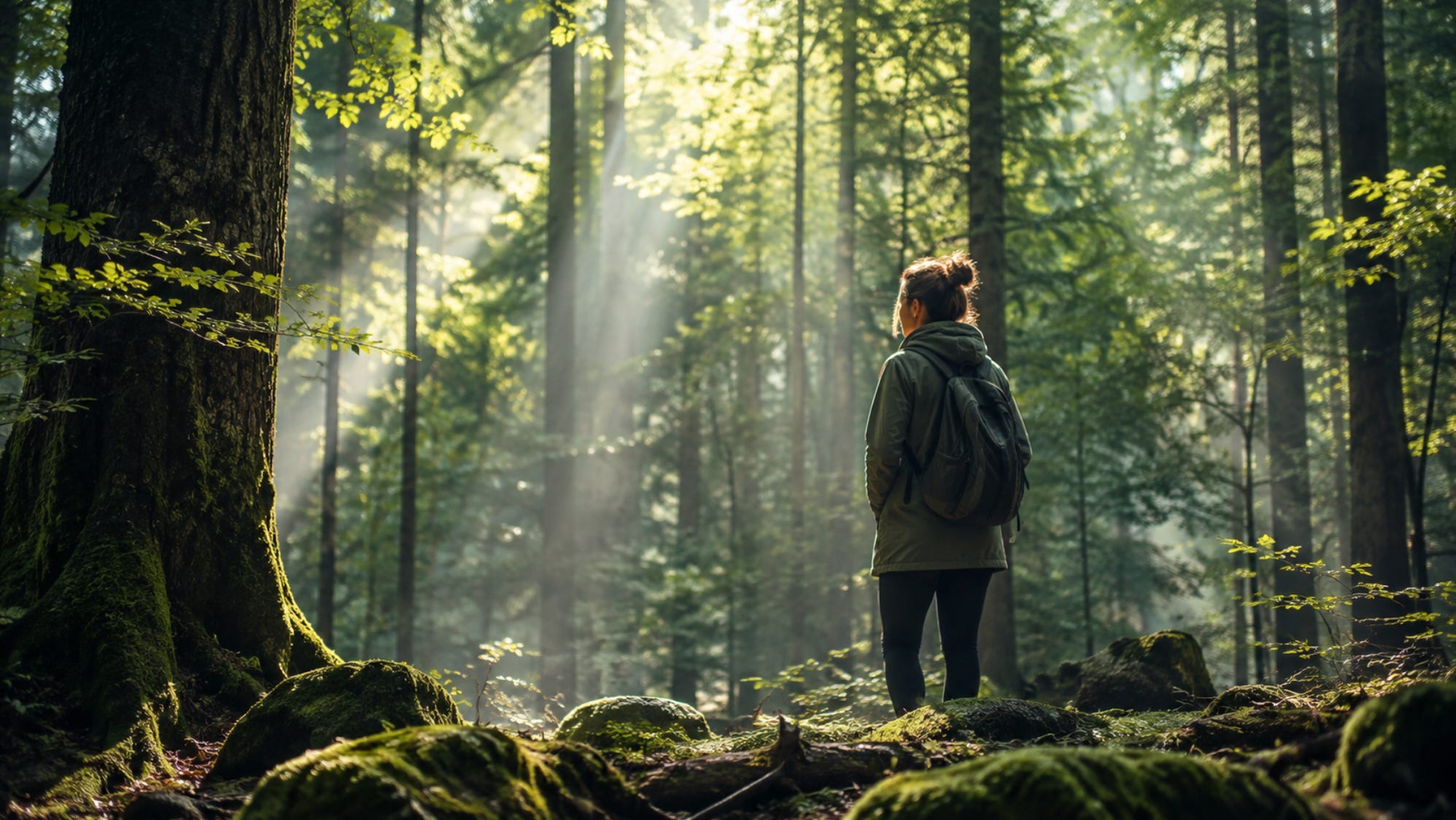
It is called “bathing” not because you get wet, but because you immerse yourself in the forest environment.
And for anyone who feels mentally overloaded, constantly available, or tired from too much screen time, this practice can feel surprisingly restorative.
You do not need to be outdoorsy.
You do not need to walk far.
You do not need a guide.
You do not even need a perfect forest.
You simply need to slow down enough for your body to notice where it is.
Forest bathing comes from Japan, where it is called shinrin-yoku, often translated as “forest bathing” or “taking in the forest atmosphere.” The term was introduced in Japan in 1982 by the Japanese Forestry Agency as a way to encourage people to spend time in forests for health, restoration, and wellbeing.
Although the named practice is modern, the idea behind it is much older: humans have always had a relationship with forests, natural landscapes, and quiet outdoor spaces. In Japan, forests and mountains hold deep cultural meaning, but shinrin-yoku itself is not an ancient religious ritual. It is a modern, nature-based wellbeing practice that has since spread internationally.
Today, forest bathing is studied as a form of nature therapy. Research reviews describe it as a practice where people spend time in forest environments in a slow, mindful, sensory way, with attention directed toward the surroundings rather than toward performance or distance.
This is the key difference:
A normal walk often has a purpose. You want to get exercise, reach a destination, walk the dog, clear your head, count your steps, or get your heart rate up.
Forest bathing has a different intention.
The purpose is not to cover distance.
The purpose is to arrive.
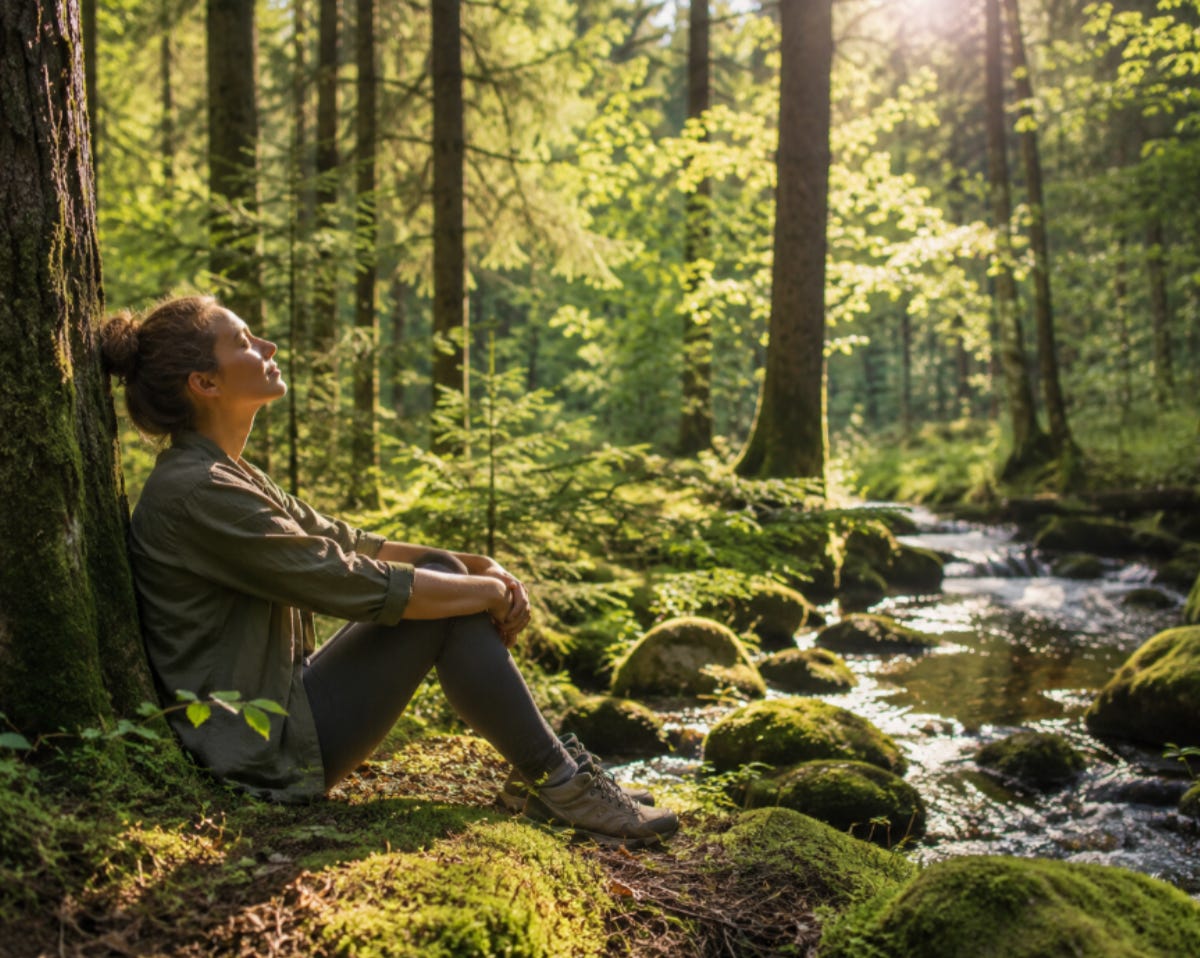
You walk more slowly than usual. You pause often. You notice details. You listen. You smell. You touch the bark of a tree. You sit still. You allow the forest to become the main event, not just the background for movement.
A normal walk often moves you through the forest.
Forest bathing lets the forest move through you.
That may sound subtle, but it changes everything. When you stop trying to “do” the forest and simply let yourself be there, your body may begin to shift out of high-alert mode. Your breathing may slow. Your shoulders may drop. Your attention may soften.
For people who live in a constant state of doing, thinking, planning, managing, and responding, that shift can feel deeply relieving.
Comments
Nothing yet. Say the first thing.
Sign in to join the conversation.