
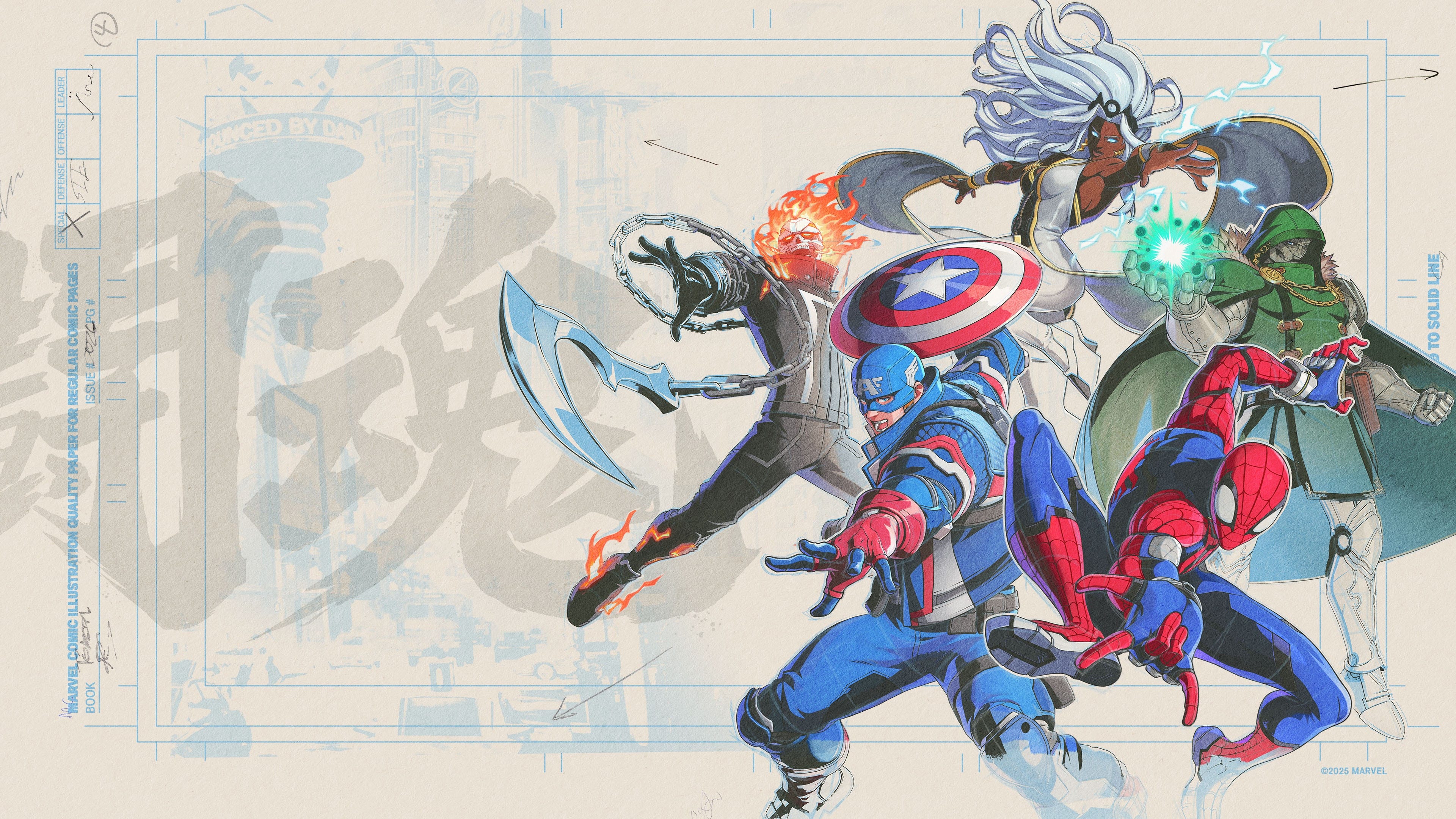
If there’s anything people love to see superheroes do, it’s fight. As such, it’s no surprise that Marvel’s iconic characters have been a big part of fighting game history since the early days thanks to the legendary Marvel vs. Capcom series. As one of the earliest and strongest examples of the tag fighter, where both players control a team of multiple heroes who can assist and tag in for each other, Marvel vs. Capcom remains an absolutely one-of-a-kind spectator esport with boundless hype. However, 2017’s Marvel vs. Capcom: Infinite didn’t quite live up to the standard, and though Marvel and Capcom both share the blame for that, it turns out that Marvel wanted their next fighting game made by another studio. I can’t think of any company better suited to fill Capcom’s big shoes than Arc System Works, known for their wide range of great fighting franchises with a deep sense of style like Guilty Gear and BlazBlue.
Even without the shadow of Marvel vs. Capcom looming over it, Marvel Tōkon: Fighting Souls is a seriously ambitious fighting game. It eschews the standard tag fighter teams of two or three for four-person teams, approaching assists and tagging differently than any other game I’ve seen. It’s designed to accommodate a wide range of ways to play your team, from just backing up one character with three assist moves to constantly tagging between teammates during combos and offense. Finally, the game clearly wants to be approachable for beginners while maintaining a high skill ceiling to reward more skilled players for their effort. Tōkon is one of those games that seems like it wants to make all kinds of players happy, which is always dangerous ground to tread. This is far from Arc System Works’ first rodeo, though; careful design choices, vivid characters and a great sense of personality help Tōkon stick the superhero landing as an excellent, original fighting game.
As with any fighting game, there’s no better place to start than the gameplay. Arc System Works has always known how to design characters that play with a lot of depth and personality, and their talents are on full display in Marvel Tōkon: Fighting Souls. This game’s characters accomplish the very difficult task of being universally approachable and deeply distinct at the same time, but it looks so easy in practice. Every character basically has the same set of normal and special move controls. This makes it really easy for beginners to transfer their knowledge between characters at a basic level. Features like autocombos and the quick assemble, a type of assist move that functions the same regardless of the character, also help ensure beginners can jump in, hit buttons, and have a good time right out of the gate. What’s really so impressive about this character design system is just how unique each character is when you really put in the time.
Each character’s four special moves deftly fill a common set of roles while providing distinct approaches in the neutral game, offense, and defense. Tying it all together is the Unique Action, a one-button technique which differs quite vastly between each character. Star-Lord can swap out elements to change the effects of his attacks, Storm’s wind can move herself and her opponents around in tricky ways, and Ms. Marvel can stretch her arms to travel across the screen or yank herself to her opponents, for example. Some characters have more subtle unique traits that come to define them even further. Iron Man isn’t the only character who can fly, but he is the only character who can cancel all of his normal and special moves into flight for unique combos and offense. Deadpool’s special moves all transform into different attacks when he has recoverable damage, which he can inflict upon himself with his Unique Action. From how they fight to how they act, all 21 of the game’s iconic characters are baked deep with personality - which certainly helps with the fact that there’s only 21 of them. I look forward to seeing who the DLC characters will give this deluxe treatment to.
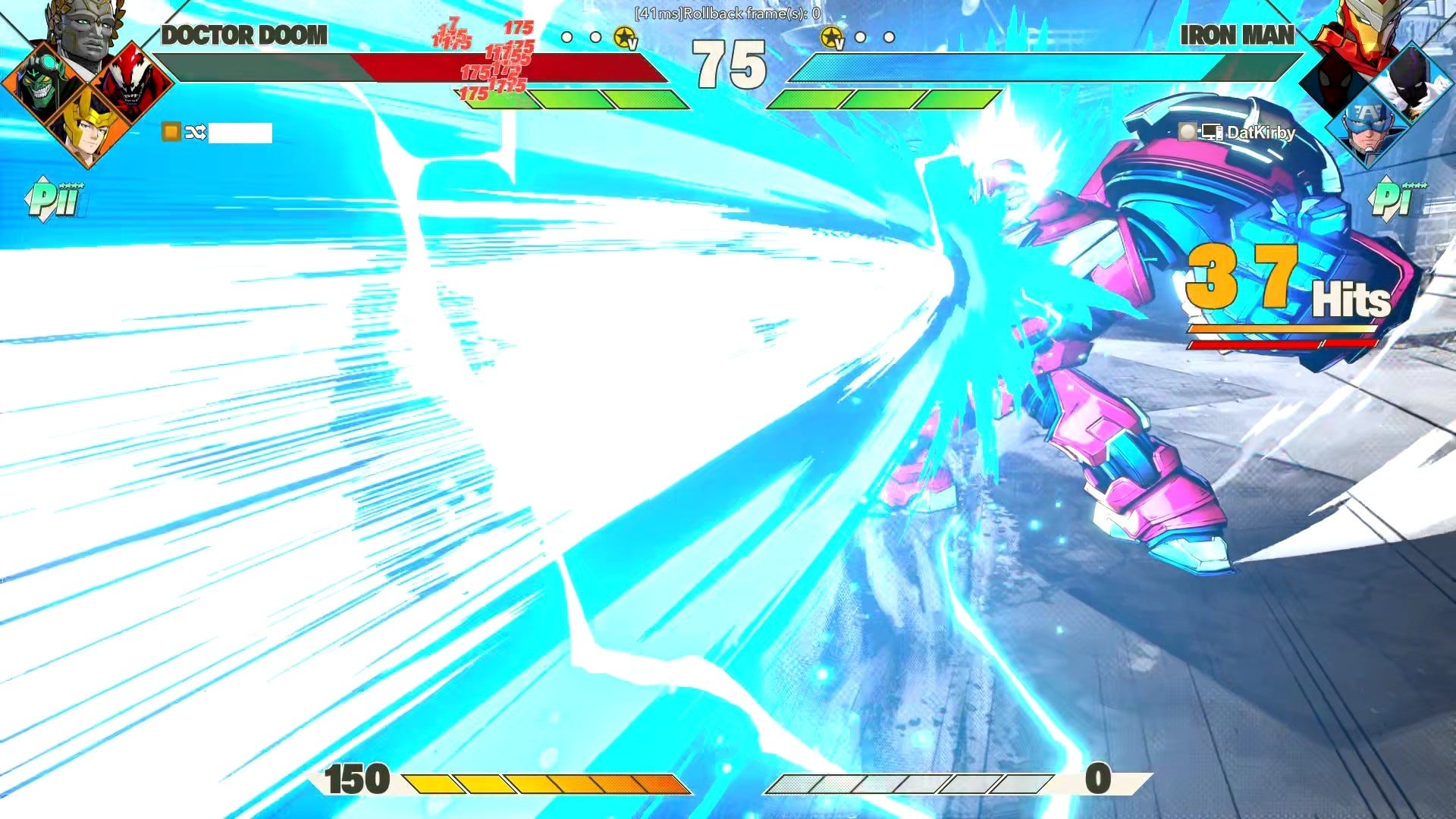
It’s hard to properly capture exactly what’s so satisfying about Marvel Tōkon: Fighting Souls’ character design philosophy. Calling it “easy to learn but hard to master” doesn’t really cut it. It’s more like the characters are comprehensive, feeling satisfying from every angle. As a fighting game fan, it’s fun to learn more useful combo routes and pressure strategies, watching my hard work pay off against real people. As a Marvel fan, I enjoy how much playing as Iron Man feels the way you’d expect it to, deftly switching from long-range assaults with repulsors and Unibeam to close-range brawling by taking flight. Games are at their best when getting more skilled at them doesn’t make them any less fun, and Tōkon understands how to balance the simple joys of making iconic superheroes do their thing and the strategic interplay the genre is known for. Calling in the Champion Buster armor to finish off my foes with a massive laser beam is all the more fun when it’s earned.
As if just one of these great characters didn’t offer enough, the game really opens up when you factor in your full team of four. If you really take a liking to just one character, as I’m known to do with Iron Man, there’s still plenty of thought that goes into who you back them up with. Aside from the generic quick assemble which can extend combos, your second slot character performs a long-ranged shooter assist, third slot does an anti-air assist, and fourth slot performs an assault assist. You only start a round with your first two characters, gaining a teammate by hitting an opponent with a stage transition/wall stick or whenever your lose a round. Assault assists create powerful opportunities for you since they need to be unlocked, generally being stronger than other assist options for damage and pressure against blocking opponents.
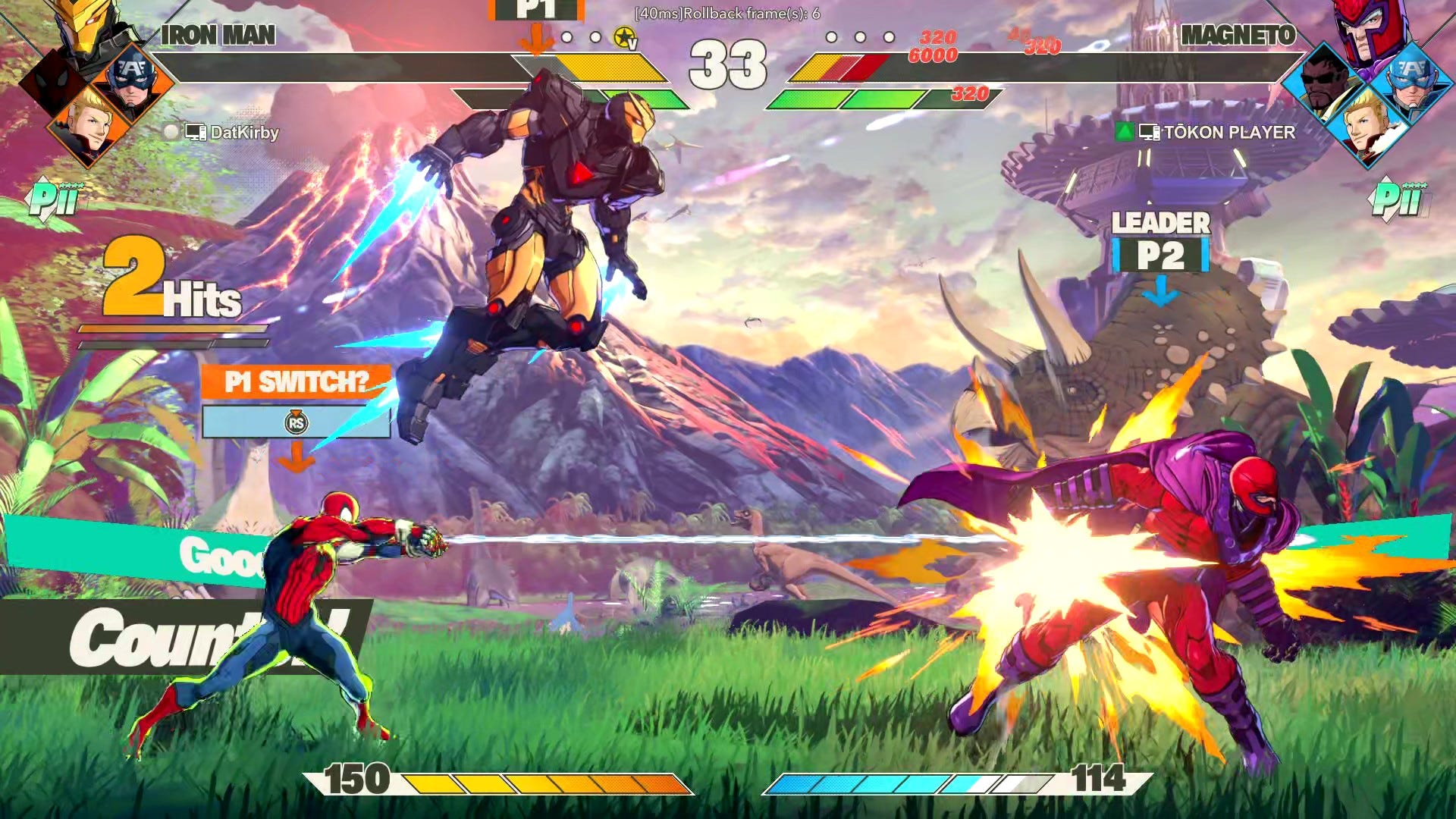
This creates an interesting system where you’ll want to prioritize hitting your opponents with combos that reward you with characters, then shift to offensive strategies that make use of them to maximize damage and set up mix-ups on blocking opponents. Even if you never tag out, the way you approach the match changes dynamically as you move around the stage and teammates arrive. If you do tag out, there’s even more ways for you to set up tricky offense or adapt to your opponent’s strengths and weaknesses. I’m typically not great at tag games - my past attempts to learn Ultimate Marvel vs. Capcom 3 have proven that much - so I appreciate that this game is designed such that I don’t need to tag out to feel like I can play competently. The way this system works means that I can learn other characters and potentially work on tagging between them at my own pace, which is great. If any of my other Marvel favorites like Moon Knight or Squirrel Girl get added as DLC, it could be a lot of fun to work them into my team and really evolve my gameplay. Like the characters themselves, this assist system is approachable but also boundlessly open to strategic experimentation.
Assists are reined in by the Assemble Gauge, a meter with one stock per available character that limits how often you can call your assists during combos and pressure sequences. Calling assists during neutral is completely free, which can get a little out of hand once you have all of your characters. The Assemble Gauge is also your resource for defensive mechanics, namely an armored overhead attack, a special backdash that results in a counterattack if your opponent hits you during it, and a guard cancel you can use to break up blocking pressure. Unfortunately, defense is the clearest weakness of Marvel Tōkon: Fighting Souls’ system. The guard cancel can oddly be countered by the player on offense, which can potentially result in the defending player losing access to their Assemble Gauge if the counter is timed well. The best players are already doing this consistently, making the guard cancel useless unless your opponent is completely out of Assemble Gauge to counter with. The other options are situationally useful, but not particularly rewarding. Combos in this game can deal extreme damage, so stronger defensive options to level things out would make sense. That said, weak throws and limited mix-up options for most of the cast make it difficult to open blocking foes up sometimes, so I hope to see both offense and defense fine-tuned in future updates.
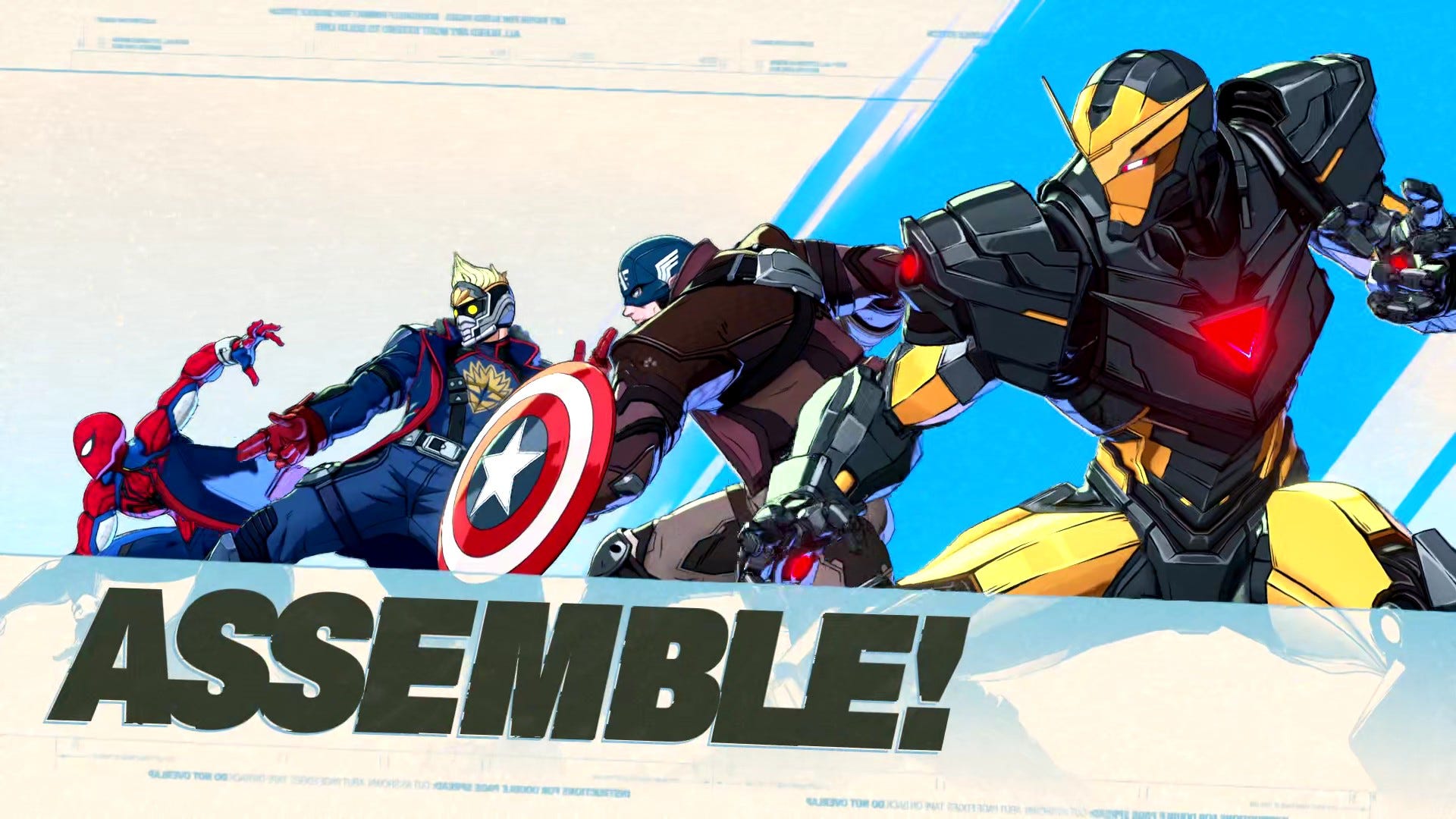
Marvel Tōkon: Fighting Souls has great fighting, the way any fighting game should, but it doesn’t end there. This game is an aesthetic treat, nailing its visual presentation top to bottom. Arc System Works has applied their unique flair to Marvel’s characters, fitting Iron Man with a Gundam-esque suit and giving Blade the Muramasa katana. The designs are all pretty slick and modern, and Arc System Works’ experience with awesome animation means every character has cool attacks and extra-hype super moves. The game’s designed with a vibrant style; stages are packed with fun background details and lively color. The menus even have this style meant to mimic the drafting process of a comic book, which sounds like it would look unfinished or cheap but actually looks really cool. Every time Arc System Works releases a new fighting game, I see people calling it the best-looking fighting game ever, and this is no exception. They’ve been on a real hot streak.
The sound in this game is great, too. Hits feel weighty and satisfying, and all the different energy blasts and webs and blunt objects have a distinct sound to them. The music is as excellent as we’ve come to expect from Arc System Works, encompassing a wide range of styles that fully capture the characters and stages they accompany. They brought in a lot of different composers and performers to give every character theme a unique edge. I particularly enjoy the songs by Guilty Gear series creator and composer Daisuke Ishiwatari, whose music has always been infectiously enthusiastic. His theme for Iron Man is clearly inspired by the kinds of bands Tony Stark listens to in the movies, and his theme for Magneto thoroughly captures his uncompromising dedication to his vision for mutantkind. I also really enjoy Captain America’s theme, mirroring his timeless nature by carrying the same melody between tinny, classical instrumentation and modern, synthesized reinterpretation. Like the visuals, the music handily lives up to Arc System Works’ track record.
Unlike other Arc System Works games, though, Marvel Tōkon: Fighting Souls has pretty solid single-player content - at least by fighting game standards. The story mode is split into five episodes, one for each four-character theme team. Each episode is written by Kieron Gillen, a Marvel veteran with a solid grasp on what makes all of these characters tick, and they have illustrated cutscenes by a variety of professional comic and manga artists. Anyone looking for a story that presents challenging ideas or interesting narrative arcs is barking up the wrong tree, though I’m sure you can find a comic book for any of these characters which has those things. What the episodes do have is a lot of fun character moments, each with unique endings that show how each team would resolve the threat of the Champion and change the world in the aftermath. It’s polished and decently fun, even if the gameplay does just boil down to fighting computer opponents - never a fighting game’s strong suit. The other single-player modes pretty much just boil down to that, too, which is unfortunate since I had to tough out 100 whole rounds of survival mode just to get my favorite Iron Man color swap.
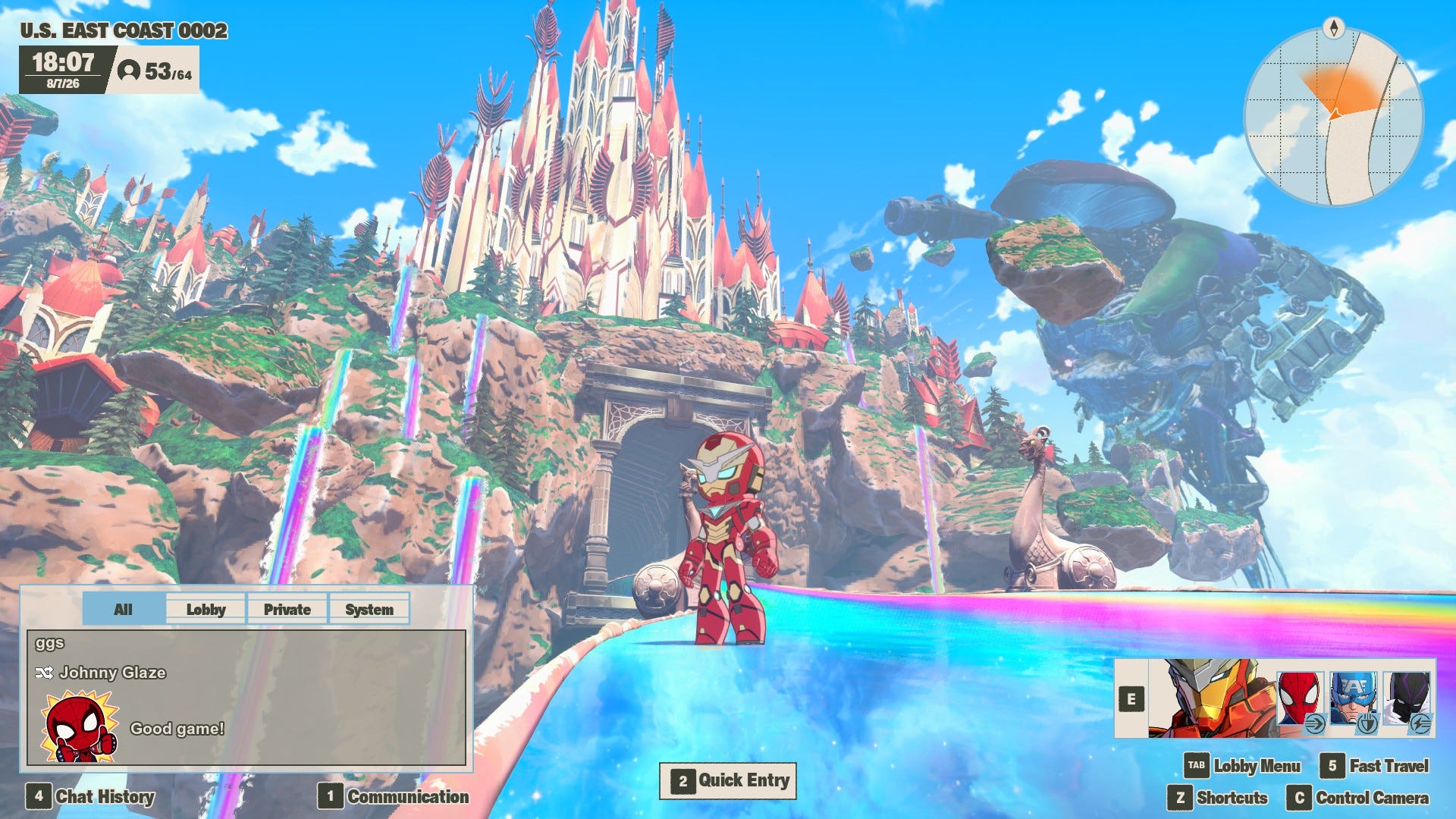
Players who want to dig into advanced techniques with their characters can enjoy the standard combo trials, plus a neat, advanced version of combo trials that challenge you to fulfill certain requirements with your own combos. Instead of being shown a combo to replicate, you’ll have to meet a certain amount of damage while using or avoiding certain attacks. It’s a great way to encourage players to experiment and learn naturally. There’s also a social lobby like most fighting games these days, and it’s surprisingly rich in visual detail this time around. This lobby is also host to Arcadia Rumble, a series of minigames with simple controls you can play with a large number of players. This is similar to Granblue Fantasy Versus: Rising’s Grand Bruise Legends mode… and equally confusing. I understand that fighting games don’t normally allow large groups to play together like some games, but nobody is getting Tōkon just to play Arcadia Rumble. The mode apparently sees no players even though it hasn’t even been two weeks since launch. I say “apparently” because I’ve never bothered with it, and I don’t feel like I’m missing out. The main game just has so much more to offer.
There’s only one serious problem to be mentioned with Marvel Tōkon: Fighting Souls, and it’s the PC performance. Thankfully, this is looking to be a temporary sort of issue, but the game launched with disastrous PC optimization. My rig was fine, but others were reporting a totally unplayable experience, and the lack of a performance benchmark means you can get into matches with stable internet connections that still have lag issues thanks to your opponent dropping below 60fps. A recent performance patch seems to have resolved the vast majority of major issues people were having, but a new Windows 11 update can also cause the game to crash due to its aggressive anti-cheat implementation. Sony, who published this game, seems to have been afraid of what PC players might do when they got their hands on the code. Well, the anti-cheat didn’t stop them from datamining for long, so it seems like the only real effect it’s having is to ruin performance for some players. Right now I would recommend getting this game on PS5 if you have the choice, though playing on PC is now quite feasible as long as you roll back the latest Windows 11 update.
Marvel Tōkon: Fighting Souls is exactly what I was hoping it would be when it got revealed about a year ago; an excellent fighting experience that captures its legacy characters with as much spirit as they’ve ever had. It stands shoulder-to-shoulder with the many other great fighting games which have emerged in the past half-decade thanks to its inventive gameplay systems and impressively approachable design. If you’ve never tried fighting games before, this is a great place to start, and if you love fighting games already, this one’s definitely worth your time. It even takes some steps to raise the bar for the genre’s teaching tools and single-player experience, although I think there’s still a lot of room for improvement there. On the whole, it’s a polished and fun experience, and my only complaints are likely to be improved as the game adds new characters and tunes its balance. This game will never be perfect without Squirrel Girl, but it’s always nice to have something to look forward to!
No posts
Comments
Nothing yet. Say the first thing.
Sign in to join the conversation.