
Part 2 of The New Game: Power, Product, Place
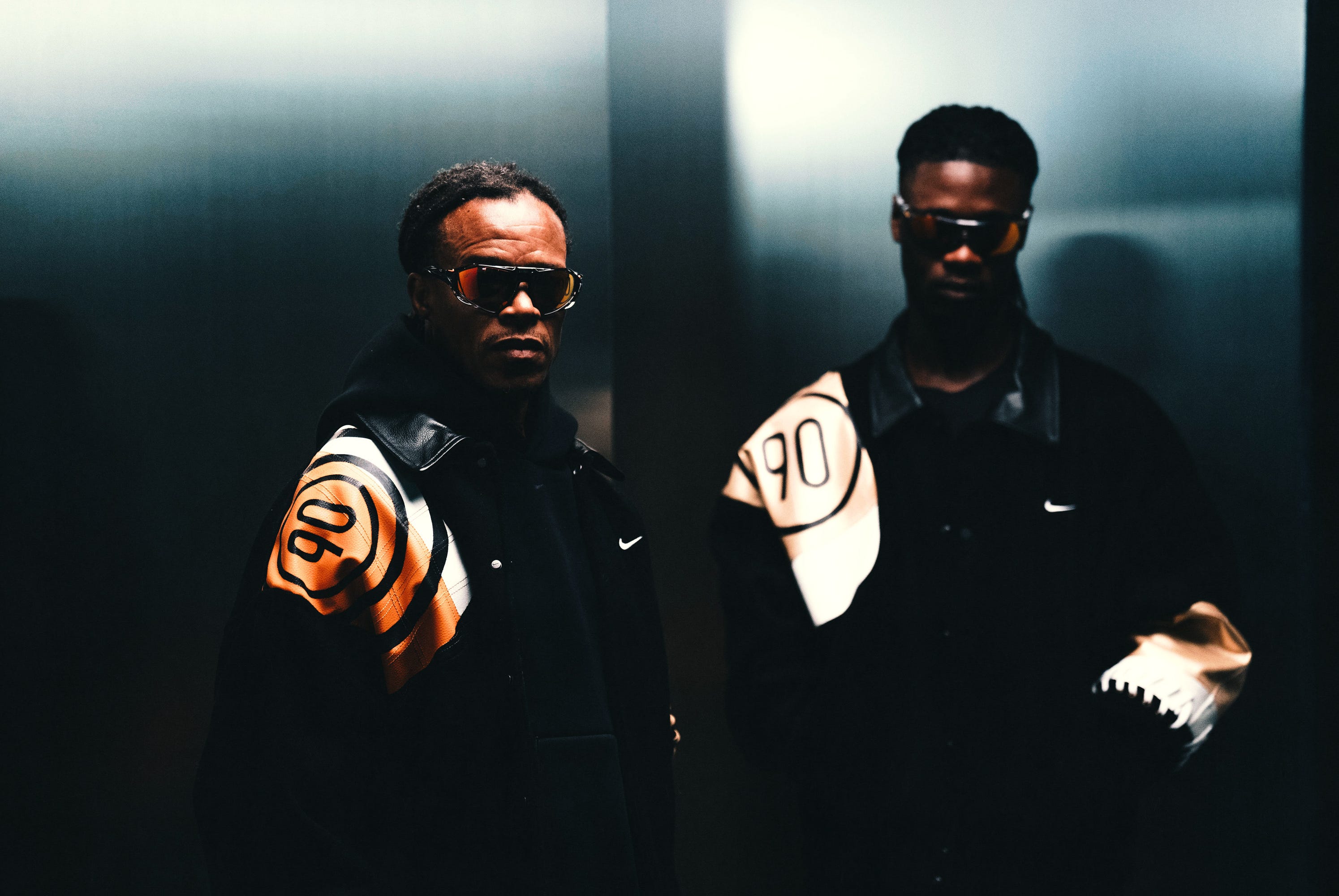
Clubs don’t have a creativity problem. They have a consistency problem. You don’t need more creative directors. You need a system that doesn’t rely on one.
I’ve seen plenty of people put themselves forward over the years for this kind of role. Creative Director of a Football Club. It sounds progressive. It looks good on a press release. But it’s not a one-person job.
No single person can carry the load of constant output, fresh ideation, reinvention, strategy, storytelling, production and cultural awareness. That’s a system, not a role. Football keeps trying to fix a structural problem with a personality hire. It’s why creativity in football still feels inconsistent. You get the flashy campaign, the influencer drop, the streetwear moment, then silence. The creative pulse flatlines because there’s no engine underneath it.
What really frustrates me is the agency cycle. The big creative agencies that win the pitch, pocket the cheque, and then quietly lean on the people who actually live in the culture to do the work. Account managers chase creators for ideas, sometimes steal them, often underpay them, and then call it authenticity.
It’s imitation dressed up as collaboration. Flattering? Maybe. But mostly painful.
You can always tell when a campaign is inspired by the right people but executed by the wrong ones. It feels hollow. Like it’s wearing culture as costume rather than speaking the language.
If clubs really want to connect with culture, they should hire the people who build it. Bring them in properly. Give them a stake and the resources to create something real. Stop borrowing voices. Build them in-house.
Football has turned a corner creatively, but it’s still crawling out of a hangover from the days when Karen and Dave in the ticket office were the marketing department. When “marketing” became a buzzword in football, it really meant selling more tickets. The people running it weren’t marketers or brand thinkers. They were salespeople. Which worked fine when the goal was shifting shirts and filling stands. But as football globalised, the thinking didn’t evolve.
Old-school owners thought that was enough. A few posters, a catchy slogan, a charity day. They never understood the difference between selling something and building something. Between a transaction and a story. Between a sale and a brand. Most clubs are still paying for that.
Meanwhile, the music industry has been miles ahead for years. Always first to test new tech, new platforms, new monetisation models. When streaming killed margins, they didn’t sulk. They adapted. They turned disruption into business. Labels learned to monetise everything around the artist: the content, the merch, the drops, the data, the experience. Every touchpoint became a revenue stream.
Football didn’t. It still treats digital as a side project. Some Premier League clubs don’t even have a proper CRM system. Imagine that. Global fanbases worth billions and no way to track who’s buying what. It’s ridiculous.
Even outside football, other sports have shown how CRM and data systems can transform fan engagement, using platforms to personalise fan experiences and boost revenue.
The difference between football and music isn’t creativity. It’s culture. Music sees fans as consumers to understand. Football still sees them as crowds to manage.
In music, the artist, the label, the team all know their audience inside out. They study the data, the engagement, the spending behaviour. They know what fans want next. Football has passion, access and scale but none of the infrastructure to use it. Until clubs start operating like record labels, with in-house production, audience data and creative IP, they’ll keep wondering why they can’t “connect with culture.”
If you want proof of how music adapted, look at what happened when streaming blew up margins: it forced artists and labels to rethink the entire ecosystem, from royalties to brand collabs to direct-to-fan monetisation (Royalty Exchange). Football hasn’t had that wake-up call yet.
Then there’s the constant tension between brand and sales. Clubs talk about long-term brand building, yet everything still revolves around short-term KPIs and partnership revenue.
Commercial departments are revolving doors. People burn out or move on because the system rewards hitting targets, not building identity. Everyone is chasing quick cash to balance the books, pay the wage bill, or patch over another bad transfer window. That’s a conversation for another day, but it’s all linked.
For a few pennies more, clubs take deals that make sense financially but chip away at brand equity. They treat sponsorship like a cash grab, not a statement. And while not every partnership should be based on image alone, people who know will know. When a deal has brand synergy, the upside often dwarfs the extra money left on the table.
A perfect example is from 2019, when my friend Amiel Walia, then in Arsenal’s partnerships team, tried to close what would have been a landmark deal. The plan was to pair Arsenal with Vivienne Westwood as the formalwear partner for both men’s and women’s teams. Two London icons, one vision. Can you imagine how epic that would have been? The deal was there to be done.
Instead, the club passed. Another Italian brand offered a few hundred thousand more, and internally someone decided Vivienne Westwood “wasn’t well known enough.” The result: Arsenal traded cultural gold for mid-market grey.
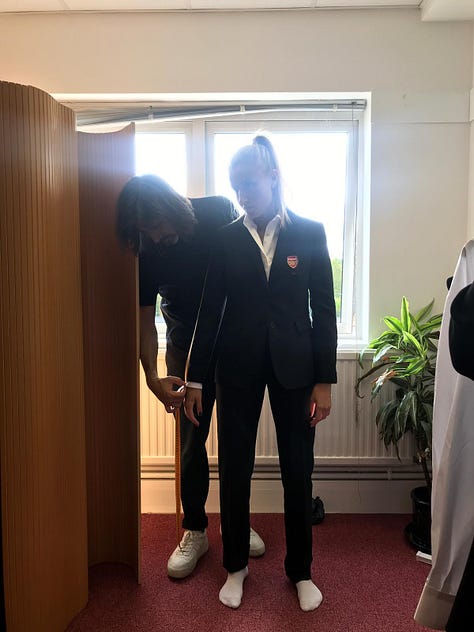
The following year Amiel managed to convince the leadership team (this time with the help of Hector Bellerin) to collaborate with Guillermo Andrade’s 424, a streetwear brand from LA, that had never produced formal wear, to design and produce suits for both the men’s and the women’s team. It was truly unique, with the late Virgil Abloh even praising it for being “genre defining.” In truth, the collaboration went under the radar, where the club could and should have leaned into it more through content strands, fashion shows and co-branded merchandise, especially considering this was the first Premier League team whose women’s side wore suits to games.
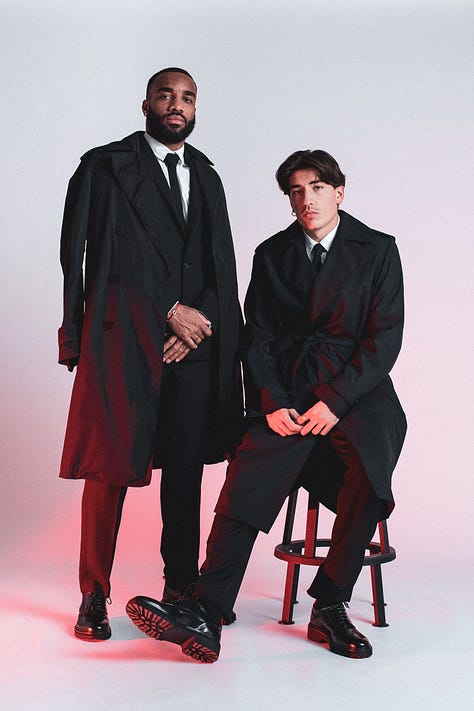
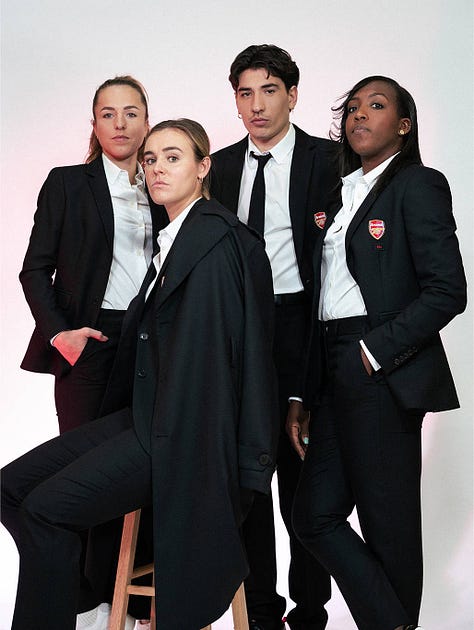
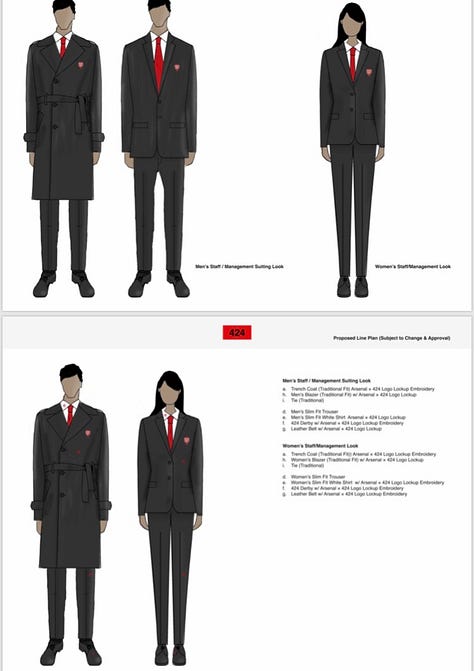
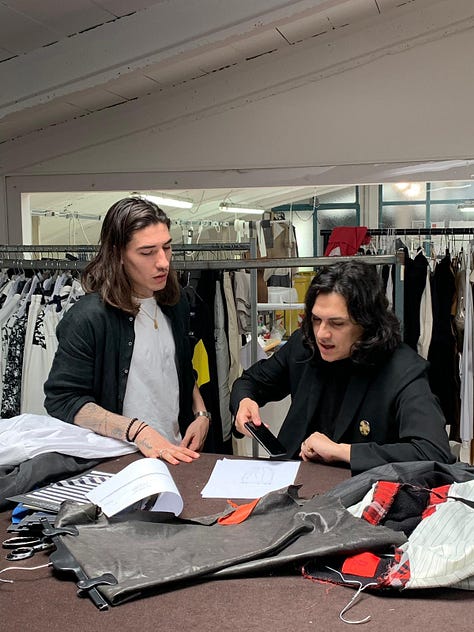

And look, this isn’t Arsenal-bashing. They’ve actually moved quickly to correct course. In recent years they’ve hired hundreds of new people to bring creative and commercial work in-house: brand thinkers, strategists and content teams. They went all in on building an app designed to produce more personalised content and better understand their fans. You can feel the shift. The data capture, segmentation and backend systems are far more sophisticated now. No surprise either. The Kroenkes own the LA Rams (NFL), Denver Nuggets (NBA) and Colorado Rapids (MLS), and over there the rule is simple: know your consumer and own every data point.
Amiel later worked with governing bodies such as FIFA and the Asian Football Confederation, but in parallel continues to support projects where he advises and mentors on how to build the kind of culturally intelligent deals football keeps missing. That Arsenal story still says everything: the wrong people making decisions for the wrong reasons.
Football doesn’t have a shortage of opportunity. It has a shortage of conviction.
Football doesn’t need slogans. It needs systems. A creative department should operate like a hybrid newsroom, studio and think tank. One that blends insight, speed and instinct.
That’s what I mean by a creative engine. A system that runs year-round, not seasonally. A rhythm that turns live moments into stories before culture moves on. A mindset that treats fans as collaborators, not consumers.
Nike mastered it. So did Red Bull. Even Formula 1 has caught up, building media powerhouses inside their teams. Football still thinks creativity is a department. It isn’t. It’s an ecosystem.
Most clubs still rely on borrowed capacity. Freelancers, agencies, ad-hoc campaigns. Their creative model isn’t built for volume or speed. They can produce one viral moment but not a consistent voice. Meanwhile, they invest millions into high-performance departments for players, but creative performance is still an afterthought.
If clubs want long-term brand value, they need internal production power: editors, designers, strategists, filmmakers, social leads, cultural researchers, all under one roof. That’s how you compound creative equity.
When your system is constant, your marketing doesn’t need to shout. It earns attention by being present. Fans feel it. Partners respect it. Culture responds to it.
Clubs talk about wanting to be “in culture,” but they rarely understand how culture actually moves: fast, decentralised, peer-led and constantly remixing itself. It’s not about chasing trends. It’s about creating an environment that moves as quickly as the people shaping them.
Everyone preaches authenticity, but very few clubs are built to deliver it. Authenticity doesn’t come from tone of voice. It comes from structure. From who’s in the room, who’s making the decisions and how quickly they can move.
A creative director can’t do that alone. A creative engine can. When you build a system that rewards experimentation and speed, you start working on culture’s timeline, not corporate time.
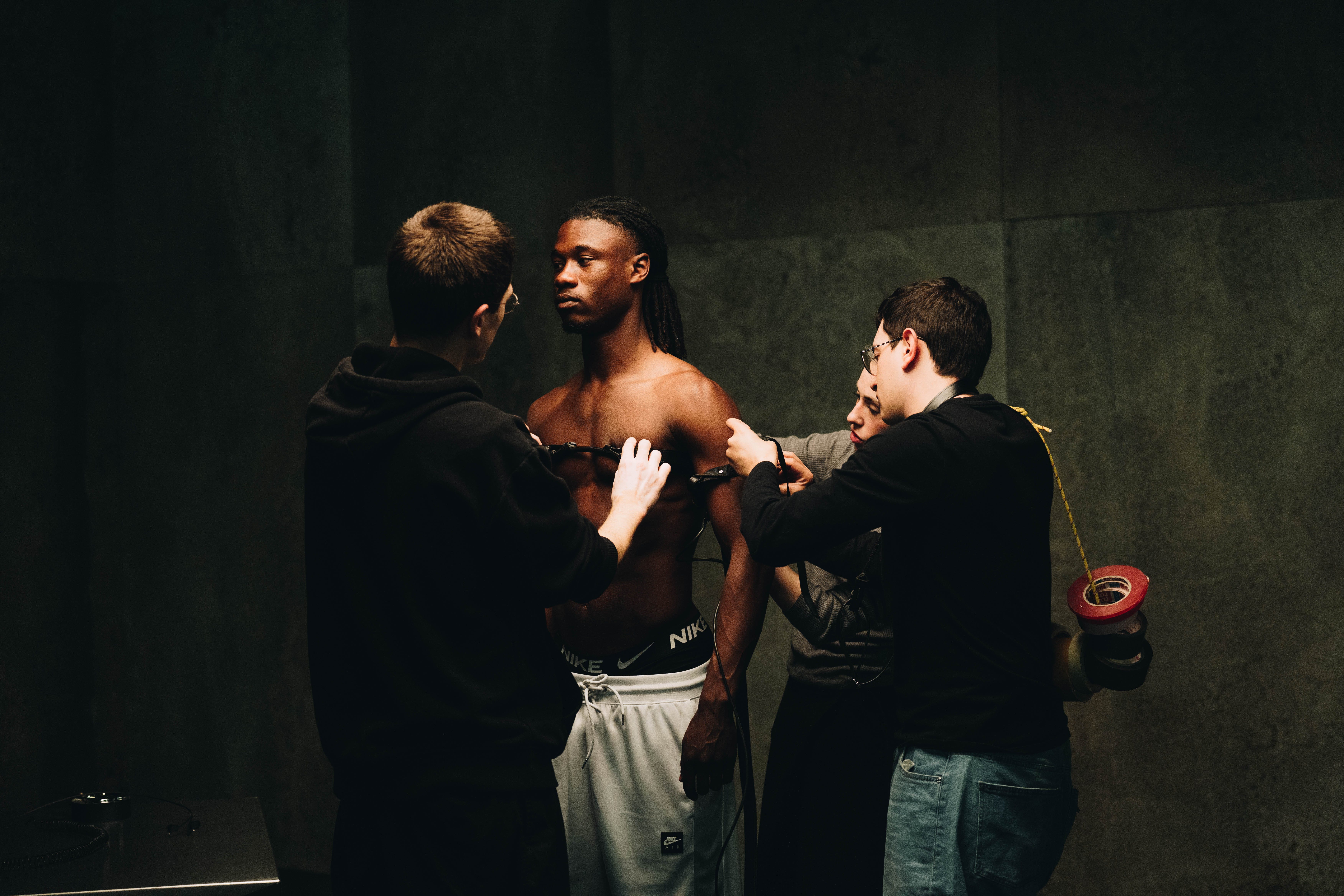
Stop romanticising the creative director title.
Build internal creative systems powered by people who live the culture.
Measure success in rhythm and relevance, not campaigns.
Pay real voices properly and bring them into the process.
Football doesn’t need another creative visionary. It needs creative infrastructure. Build the system and you won’t need the slogans. The culture will do the talking.
A three-part series exploring how power, creativity and ownership are reshaping modern football.
I don’t just write about the future of football, I help shape it. If this hit a nerve, I’m probably already thinking about how we could build something together.
Thanks for reading GAMEPLAYER.
Through EDEN, CAOS, GAFFER, and over 100 football contracts, transfers, brand deals, and equity-driven partnerships, I’ve seen power shift from clubs to investors, brands to athletes, and legacy to culture.
I break down what matters. Private equity takeovers, athlete-led media, billion-dollar sports IP, and the future of merchandising and streaming.
This isn’t just commentary. It’s about who’s making the real moves and what’s coming next.
Comments
Nothing yet. Say the first thing.
Sign in to join the conversation.