
In November 2006, Break.com nearly doubled what it paid for a user-submitted video, going from $250 to $400. Animation could earn as much as two thousand. Reuters called our CEO, Keith Richman, and asked the obvious question, which was whether the money was buying better videos. He said no. He told them there had been little correlation between paying more and getting better work. The higher rate raised awareness among young video makers and brought in more submissions. It did not make the submissions any good.
I have thought about that answer more than almost anything else I picked up in thirty years of shipping software. It is one of the cleanest findings anyone has produced about the economics of content, and it was produced by accident, by a company whose central editorial question on a given Tuesday was whether the skateboard had actually hit the railing.
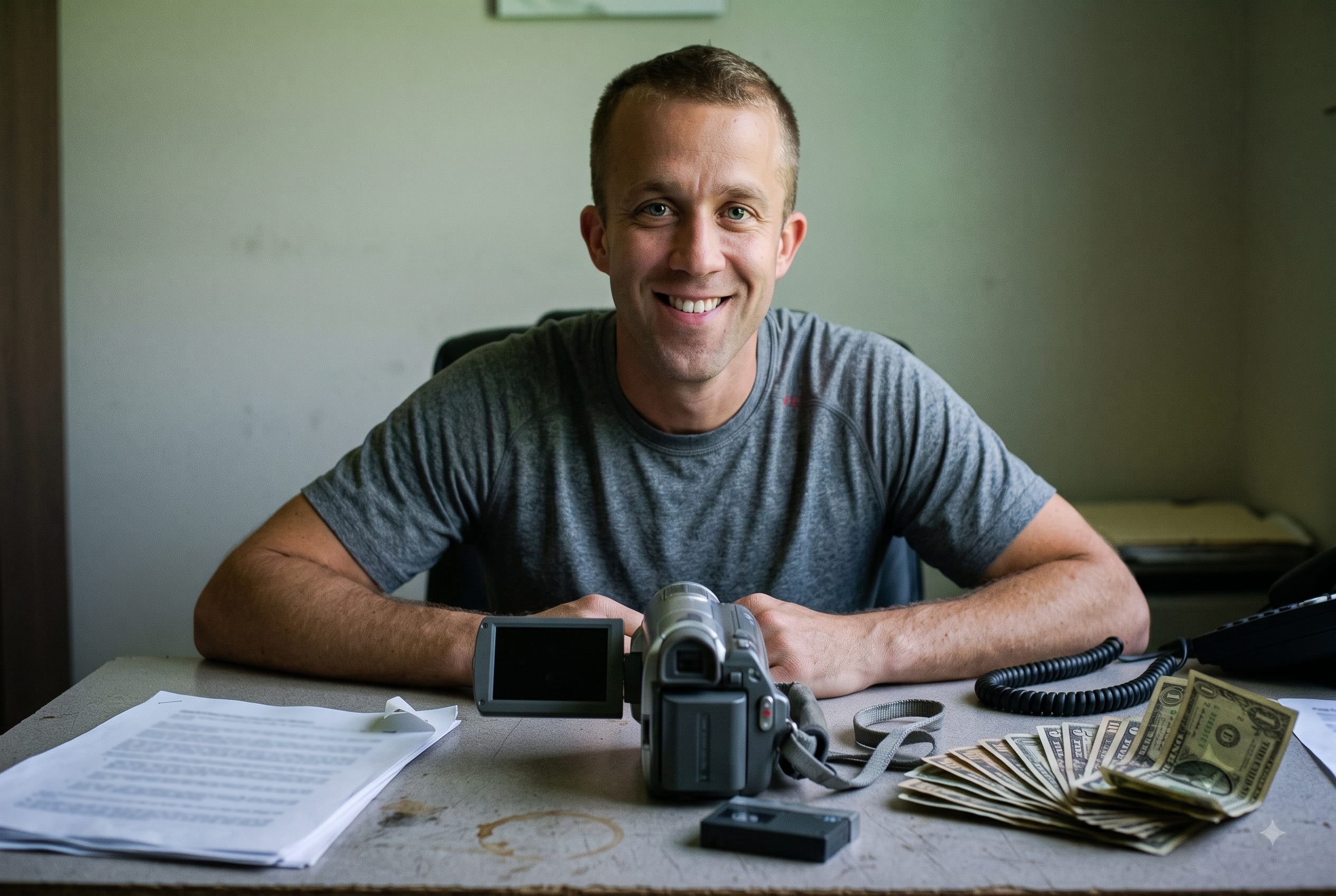
I was employee number six.
That same year, a lawyer who could not get published was running the same experiment from the opposite direction.
Tucker Max laid out his own numbers in a guest post he wrote for Tim Ferriss in 2010, and they deserve to be repeated precisely. In early 2002 he sent the stories that would become I Hope They Serve Beer in Hell to every publisher, literary agent, magazine and newspaper in the country. Somewhere between five hundred and a thousand query letters. He was rejected by all of them. Not most of them. All of them, without a single exception.
So he taught himself HTML and put the stories on a website he had registered a couple of years earlier because of a bet. By May of 2003 the traffic had gotten away from him and the same publishers who had passed came back asking. The book came out in January 2006 with no media coverage and no advertising support of any kind, and it walked onto the New York Times bestseller list anyway, carried entirely by an audience he had assembled himself, for free, in his spare time, out of spite. It reached number one in October 2009, three years and nine months after publication, and spent more than 180 weeks on the list.
Then he published the playbook, which is the part almost nobody does.
Rule one was to give the work away and never take it back. He kept his best stories free on the site for the better part of a decade on the theory that a permanent free entry point is the cheapest and most durable marketing that exists. Rule two was to make the work easy to move, and his example here is my favorite detail in the entire document: he formatted the stories to print cleanly, because a large share of his readers were men at desks who could not read that material on a monitor in an open-plan office but could print it, fold it, and walk it over to the next cube. Rule three was to put the work where the audience already gathered, and he named the five sites that worked for him between 2002 and 2004 in plain text, in public, which were GorillaMask, Fark, BoredAtWork, Stileproject and CollegeHumor. He notes that when he described this from a conference stage, the room hissed at him for the sin of submitting his own writing to websites whose entire stated purpose was accepting submitted links.
He ran an email list of roughly a hundred thousand people and mailed it about twice a year.
And then the rule everything else hangs from. He wrote that a creator has to find the fulcrum of attention for their particular work, and that in his case it turned out to be hostility. He noticed early that a substantial share of the English-speaking world found him repellent, concluded this was the only door to mainstream attention that would ever open for him, and walked through it deliberately. He is careful to add that he would not recommend the strategy to anyone writing about knitting.
Here is what took me an embarrassingly long time to see, given that I was standing in the middle of it. Tucker Max and Break.com had the same customer.
Not a similar customer. The same one. Break’s audience was men eighteen to thirty-four, and in 2009 TechCrunch covered our decision to raise the content budget under the headline “Calling All Dudes: Break.com Wants Your Fratastic Videos,” a sentence that could not be published today and that I would happily accept on a plaque. The New York Times had coined “fratire” for Max’s genre three years before that. Same guy, same desk, same fifteen minutes of avoiding work. He was reading a printed-out story about a bar fight and then clicking over to watch somebody’s cousin come off a roof.
Three businesses were selling into that fifteen minutes, and each of them made a different trade for the raw material.
Max gave the material away and kept everything. He never sold the stories. He sold the audience the stories produced, first as books, later as a film and a brand. His cost of goods was his own life, which he already owned outright.
We bought the material. If your file was promoted to the Break homepage you got paid, and under the terms of the contract you relinquished all rights to it. That was the deal. By late 2006 we had paid more than three hundred thousand dollars to amateurs on those terms, and at the time we were the generous end of the market, because most of our competitors paid nothing at all.
Which brings us to the third business. YouTube paid its uploaders zero, and Google bought it for one and a half billion dollars in the same month we raised our rate to four hundred a clip. Two of those three businesses are dead. Max shut down the Rudius message board in 2009 after about seven years of it. Break outlasted most of its peers, including 60Frames, which ran out of money, and Metacafe, which killed its creator payment program, before going dark on November 6, 2018 when Defy Media closed. The company that refused to pay for the material is the one still standing, and its archive is now training data.
Max’s next business should interest anybody who builds systems, because he shipped an architecture in 2014 that a good chunk of the industry is now reimplementing on GPUs.
Book in a Box, later renamed Scribe Media, sold one promise: you talk, we deliver a finished book, and you never touch a keyboard. The process was a structured interview. First they established what the book was for and who it had to reach, which produced the positioning. Then they built the outline. Then they spent roughly twelve to twenty hours on the phone with the client across several sessions, recording all of it, pulling out what the person already knew and had never written down. That recording became a manuscript in the client’s own voice and words, and then a published book. Flat fee, fifteen thousand dollars at launch, twenty and up later. The company did two hundred thousand dollars in revenue in its first two months and never took outside funding.
Read that pipeline a second time and it gets uncomfortable. The positioning is the system prompt. The outline is the schema. The interview transcript is the retrieval corpus. The manuscript is generation with style transfer, and the editorial pass is post-processing. He was charging five figures because the inference ran on people.
It worked. Scribe published about two thousand books, including David Goggins’ Can’t Hurt Me, and did twenty-one million dollars in gross sales in 2021.
Then it came apart, and not for any of the reasons you would guess. Max has written a nine-thousand-word account of it on his own site and it is worth an afternoon. The short version is that after he and his co-founder stepped back, the CEO they had hired allegedly falsified financial statements, invented acquisition offers that had never existed, and borrowed from investors and employees to cover payroll. On May 24, 2023, eighty-six people were laid off. Their health insurance was cut the same day. There was no severance. Roughly five hundred freelancers went unpaid for work already delivered, and hundreds of authors who had paid in full got nothing. Max expected about twenty million dollars for his share, agreed under pressure to six and three quarter million, and collected around twelve percent of that before the company went under. A decade of work on a business that did close to a hundred million in topline sales netted him under a million dollars.
None of that is a technology story. It is a story about hiring, and about the specific human weakness of needing a problem solved badly enough that you quietly stop checking whether it is.
Tucker Max today describes himself as a writer and homesteader. He lives on a ranch outside Austin with his wife and four kids. His published output over the past few years covers harvesting a bison, how to carry a concealed handgun, a beginner’s guide to psychedelic medicine, and a very detailed guide to brewing tea gongfu style. He runs a memoir coaching academy. He is writing a book about how the man who wrote I Hope They Serve Beer in Hell turned into this one, tentatively titled Feelings I Didn’t Want To Feel.
The trajectory reads like a punchline and it is actually a sound business decision. The man who industrialized getting the book out of your head has moved upstream to sell the input, which is having something in your head worth getting out. That is the one stage of the pipeline nobody has automated, because it cannot be.
Which brings me back to Keith and that Reuters call.
Between 2005 and 2006 we ran an experiment that nobody designed and nobody wrote up. We took the price of raw human content from fifty dollars to four hundred, an eight-fold increase inside two years, and we watched what came back. What came back was more. Not better. More.
The price has since moved the other way, all the way down to approximately nothing, and the result rhymes. A paper published this July out of Columbia and Michigan ran full-text AI detection across 14,419 self-published genre fiction titles sold on Amazon between 2023 and 2026 and matched them against daily sales records. The number that stopped me cold: across that window, the count of books actually selling in a given quarter grew 19.2 times, while quarterly revenue grew 8.9 times. The market added books more than twice as fast as it added money, and revenue per selling book fell across most genres.
Supply responds to price. Quality does not. We proved it going up, the machines are proving it going down, and in both directions the finding is boring enough that every generation has to rediscover it at its own expense.
One more piece of that old contract is worth sitting with. When we paid a kid four hundred dollars, he signed away every right to the thing he had made, permanently, and that was the generous end of the market. Twenty years later the going rate for human material is zero and the rights question is in front of judges. The authors of that Amazon study state plainly that their results bear on the market-effect question at the center of the fair use defense, which is a sentence worth reading twice, because one of them is a Columbia copyright scholar and she did not include it by accident.
The machinery behind that four hundred dollars was less impressive than the number makes it sound. We had editors, and their job was to go through the day’s pile and pull a handful of clips onto the front page, chosen on nothing more rigorous than their own read of what our audience would find funny. Payment came after the pick. We had a guy whose responsibilities included keeping a PayPal account funded and sending money out to whoever had made the cut that day. That was the entire operation. A few people with taste, and a PayPal balance. What I did not appreciate at the time is that raising the bounty only ever widened the top of the funnel. The editors still picked the same three or four videos a day, because that was all the front page had room for and all their attention could cover. We kept paying more for supply while the thing actually producing the value, which was a small number of people deciding every morning what deserved to be seen, stayed exactly the same size and never showed up on a single invoice.
And I still think about what those three or four picks a day were really rewarding. Not the video. Anybody can make a video now and the marginal cost is a rounding error. What got picked was a real kid on a real roof with a real camcorder and a genuinely bad idea, and the fact that he had actually been there when it happened. Tucker Max sold the same commodity, printed on paper, to the same customer, in the same year. He is still selling it. He just cut out the part in the middle where somebody else writes it down.
About the Author
Gal Ratner was employee number six at Break.com. He is the founder and CTO of Inverted Software and WhiteStar Labs, and serves as Chief Architect at Prana Entertainment in Las Vegas. Over roughly thirty years he has built production systems on the Microsoft stack for Microsoft, Sony, Rockstar Games, 2K Games, Best Buy and Allegiant Air, and he was a Los Angeles Business Journal CTO of the Year finalist. He now builds production agentic AI systems, which means he has personally shipped the pipeline that replaced the one described above, and he has firm opinions about what it can and cannot do. He is the author of the novel The Archive of Lost Suns, co-hosts Edge Grip Podcast, rides motorcycles, and trains Brazilian jiu-jitsu in Las Vegas. He writes at galratner.substack.com.
No posts
Comments
Nothing yet. Say the first thing.
Sign in to join the conversation.