
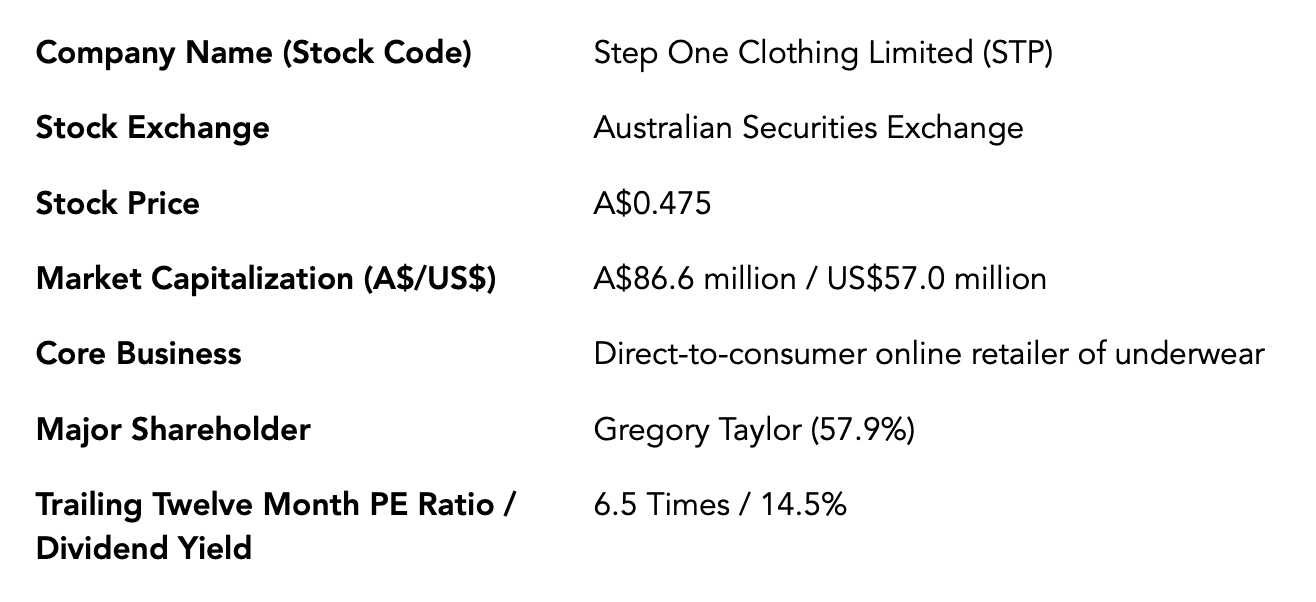
Former professional athlete and serial entrepreneur Greg Taylor founded Step One in 2017 after struggling to find underwear that could prevent chafing.
He maxed out his A$10K credit card for an initial order of 5,000 underwear pieces that he self-designed and filmed/uploaded a video of himself in a panda suit on FaceBook to sell them. The video went viral, racking up over 1 million views, and all 5,000 pieces sold out.
From that scrappy Facebook debut, Step One bootstrapped its way to an IPO in November 2021 at a A$283.6 million valuation. Greg remained Step One’s only shareholder before it went public.
While Step One remains a direct-to-consumer online-only brand, it expanded its products’ depth and breadth, and ventured into overseas markets (UK and US).
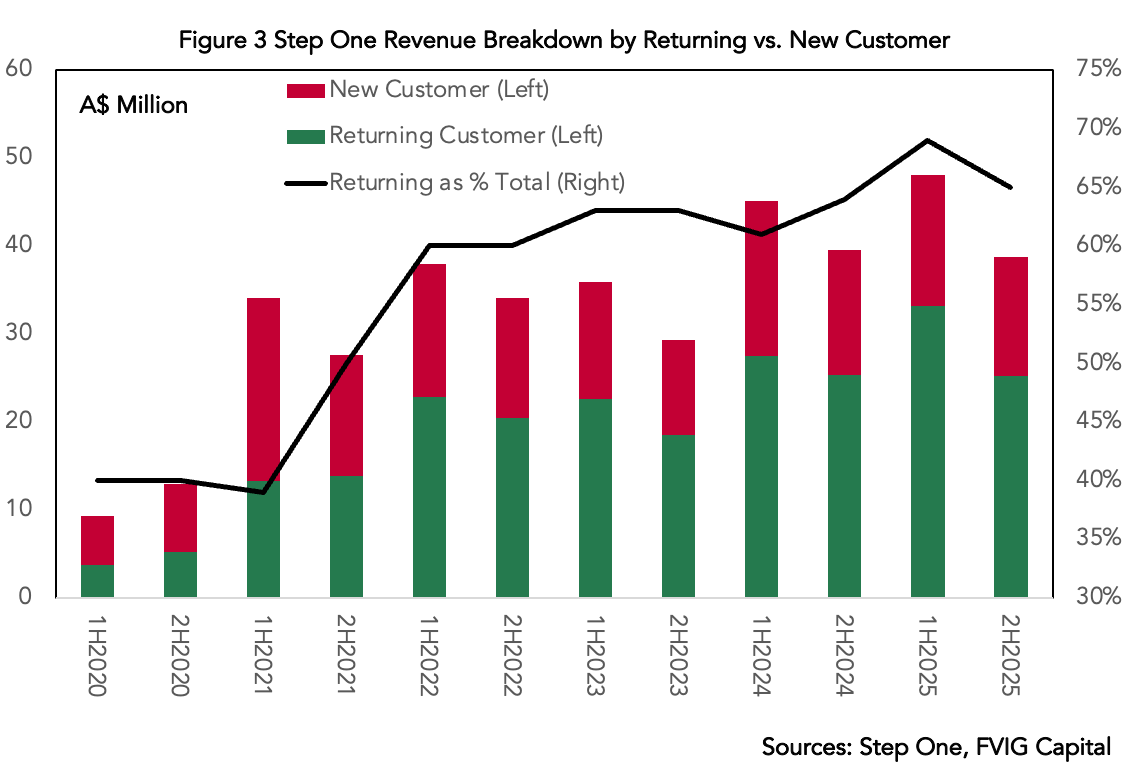
By focusing on functional design, premium quality, and value for money, Step One consistently earns over 60% of its sales from repeat customers.
Step One’s stock price has been crushed as it takes steps that will weigh on FY2026 profits: being more strategic with discounting and ramping up marketing spend.
Fundamentals remain solid: sales continue to grow, 76%+ gross margins are luxury fashion-like, ample runway ahead, cash makes up ~38% of market cap and the company runs lean.
Step One is making the kind of long-term decisions that founder-led, majority-owned companies make in building lasting brands.
The Rhythms of History
In his 2024 biography “lululemon and the future of technical apparel”, lululemon founder Chip Wilson described the overlooked market gap that helped him build a multi-billion-dollar athleisure empire:
“From my time as an athlete designing triathlon clothing in 1979, I knew damp, snug clothing combined with repetitive movement always resulted in chafing. The problem was athletic designers didn’t exist in 1998. One-hundred percent of designers coming out of schools focused on runway fashion or wedding dresses. Designers were first and foremost aesthetically driven. Apparel function was way down on the list of priorities.”
Ironically, not much has changed. Decades later, the same lack of functional thinking created another opportunity: this time for an Australian entrepreneur determined to solve a basic, persistent problem.
Greg Taylor, a former Australian rowing representative who competed at three World Championships, launched several start-ups (a reverse-auction car site, coffee-cup ads, bar-tab app) before founding Step One in 2017. The idea emerged on a hiking trip in New Zealand, where constant chafing pushed him to search for a solution. To his surprise, none existed. So he set out to design underwear that actually addressed the problem.
From the Bottom, Up
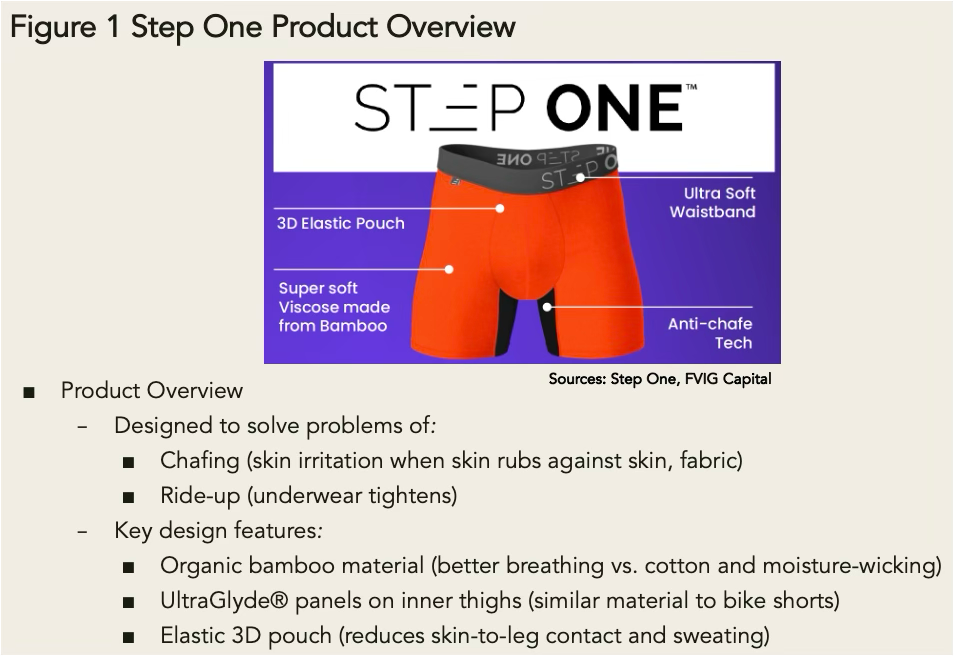
With most of his earlier start-ups having failed, Greg Taylor launched Step One under tight financial constraints. Capital was scarce, so he had to be creative. Multiple factories in China rejected his small order volumes, but eventually one agreed to produce a limited run based on a prototype he had built himself in a hostel: a pair of bike shorts cut apart and re-stitched with anti-chafe panels and a hammock-style pouch for support. Figure 1 illustrates the current production version.
Greg maxed out his A$10,000 credit card to order the first 5,000 units. To promote them, he filmed himself in a panda suit and posted the video on Facebook. Overnight, it attracted more than a million views and the entire batch sold out. From that point, Step One grew entirely off its own cash flow, bootstrapped from the first sale all the way to its IPO four years later in November 2021, when the company listed at a valuation of A$283.6 million.
Because Step One never raised external funding as a private company, it learnt to be highly disciplined on costs. That mindset carried through to its life as a public company: it still operates leanly, with just 33 employees (made possible by its online-only, direct-to-consumer business model) and most of its marketing content is produced in-house.
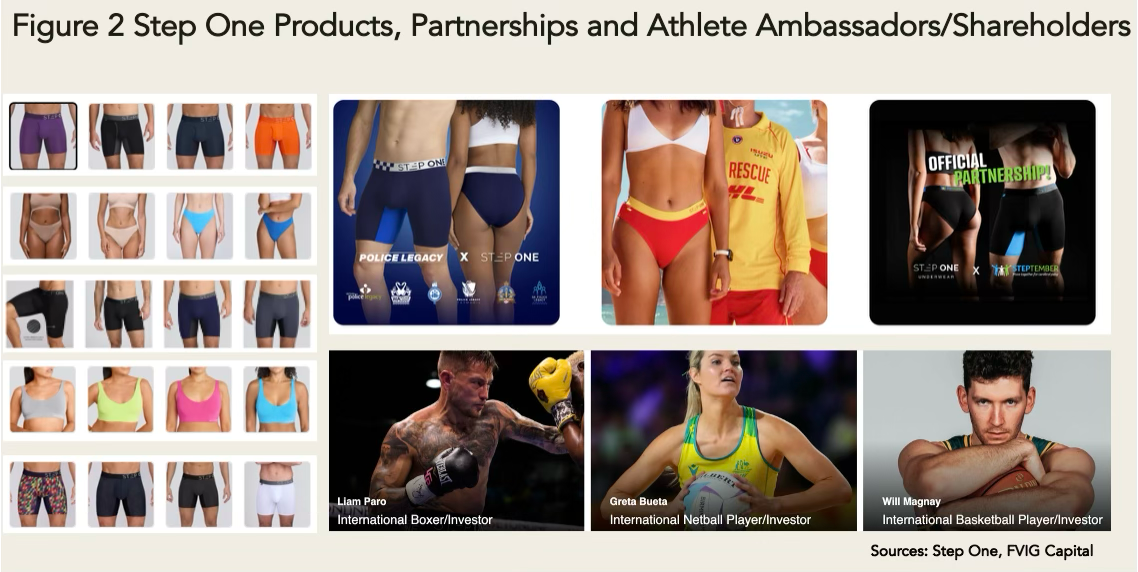
The company also looks beyond traditional digital advertising to build awareness, demonstrate product benefits, and strengthen its brand identity. It has formed strategic partnerships with organisations such as Surf Life Saving Australia, and its focus on functional design has attracted athletes who not only become brand ambassadors but also shareholders - see Figure 2
The Numbers
Step One’s products are contract-manufactured in China and Vietnam, then shipped mostly by sea freight urgent orders sent by air) to third-party logistics (3PL) warehouses in Australia, the UK, and the US. These partners handle storage, fulfilment, and last-mile delivery. More than 90% of Step One’s sales come directly through its own website, stepone.life, with the remainder generated through indirect channels such as Amazon and UK retailer John Lewis.
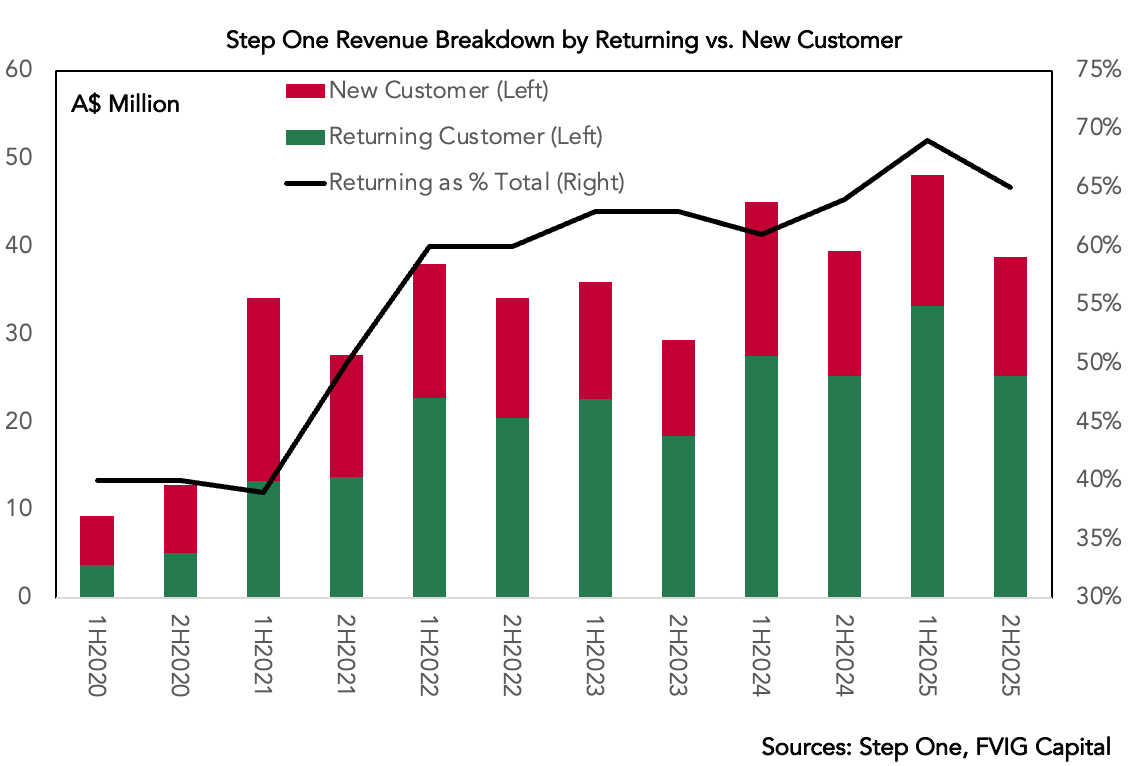
Step One’s direct-to-consumer model gives it clear visibility over, and a direct relationship with, most of its customers. Its database of more than 1.9 million shoppers enables highly targeted marketing and communication. Combined with strong product functionality and quality, this drives consistently high repeat purchasing that accounts for more than 60% of total sales - see Figure 3
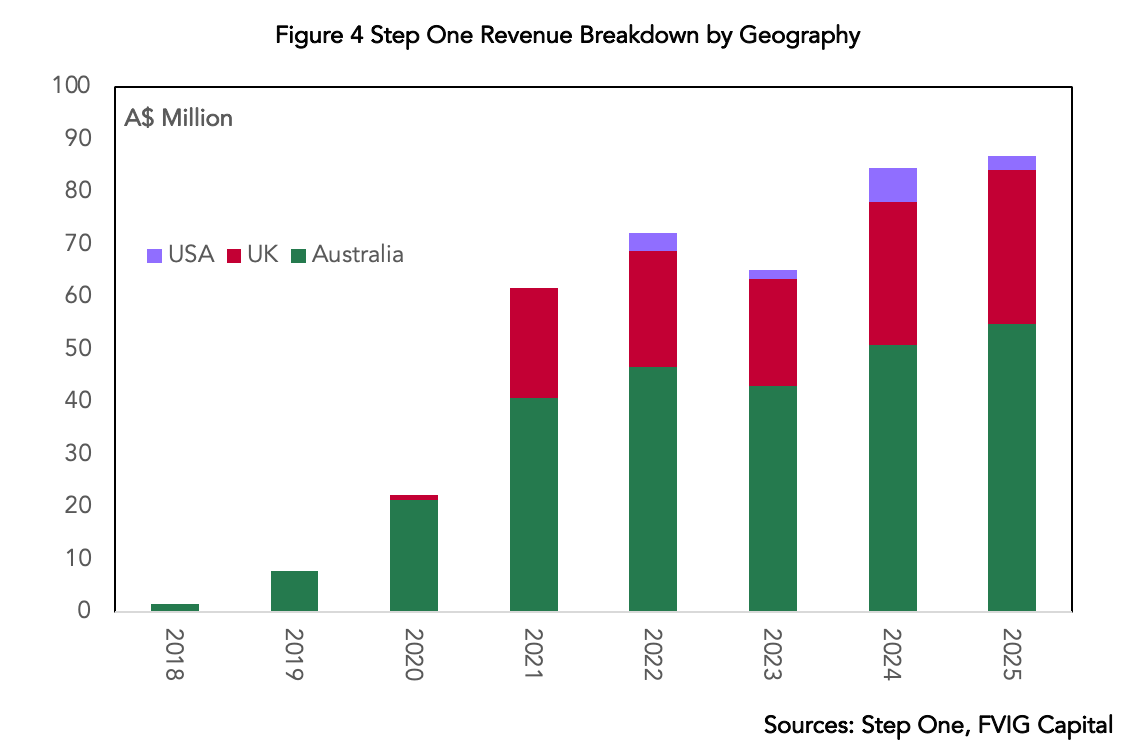
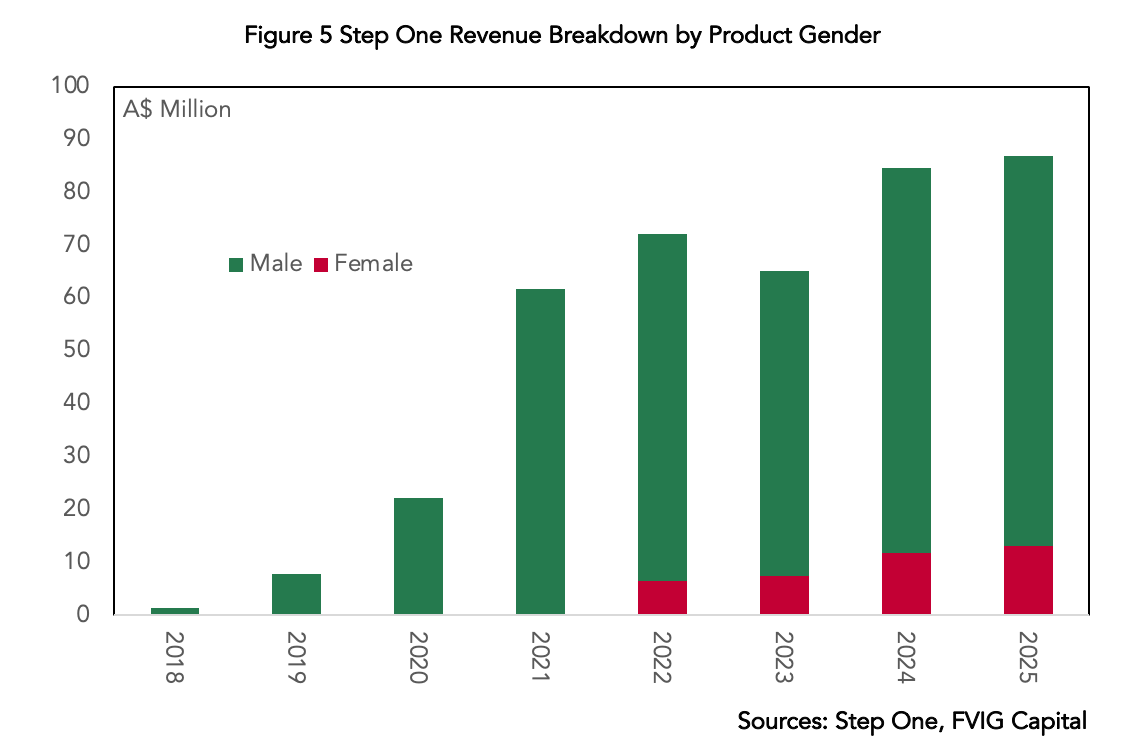
While Step One’s 2020 expansion into the UK delivered strong revenue growth, progress in the US has been more modest, reflecting the scale and competitiveness of that market - see Figure 4. Growth has also been supported by the launch of women’s underwear in 2022 - see Figure 5. Notably, women already accounted for around 40% of Step One’s customer base before the category expansion, largely because they were purchasing the products as gifts for partners, friends, and family.
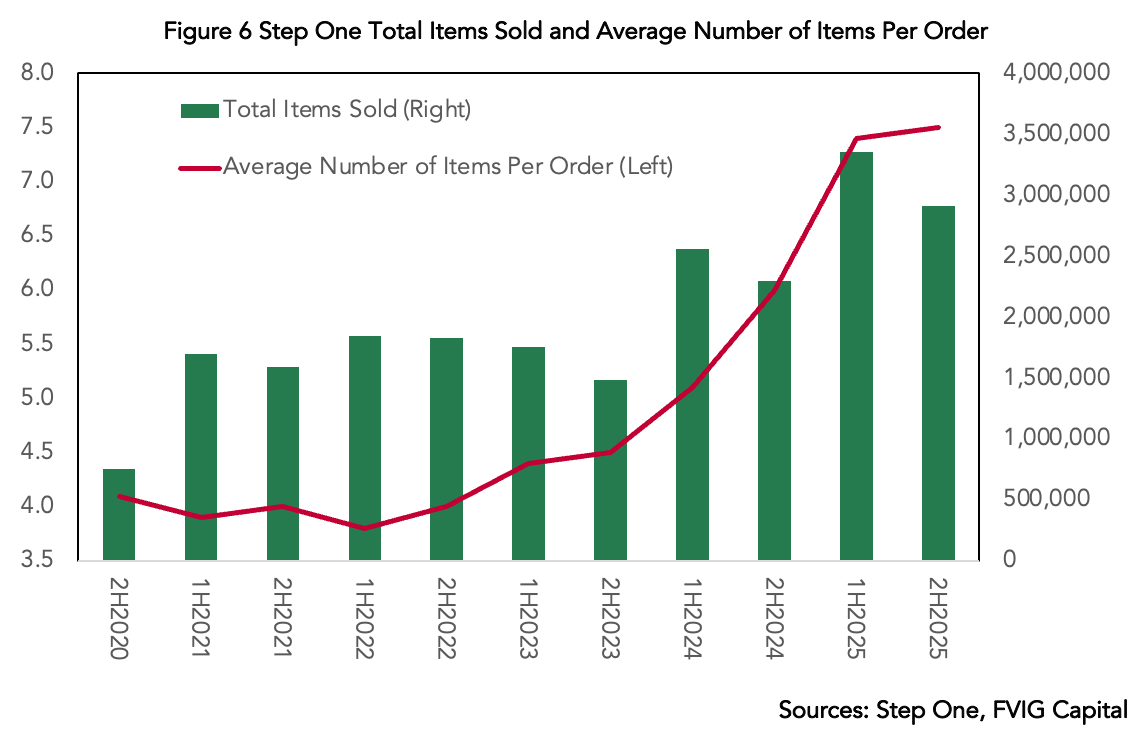
As the number and proportion of repeat customers have grown, the average number of items per order has also increased. Familiarity with the product encourages customers to buy in larger quantities to take advantage of bulk discounts - see Figure 6.
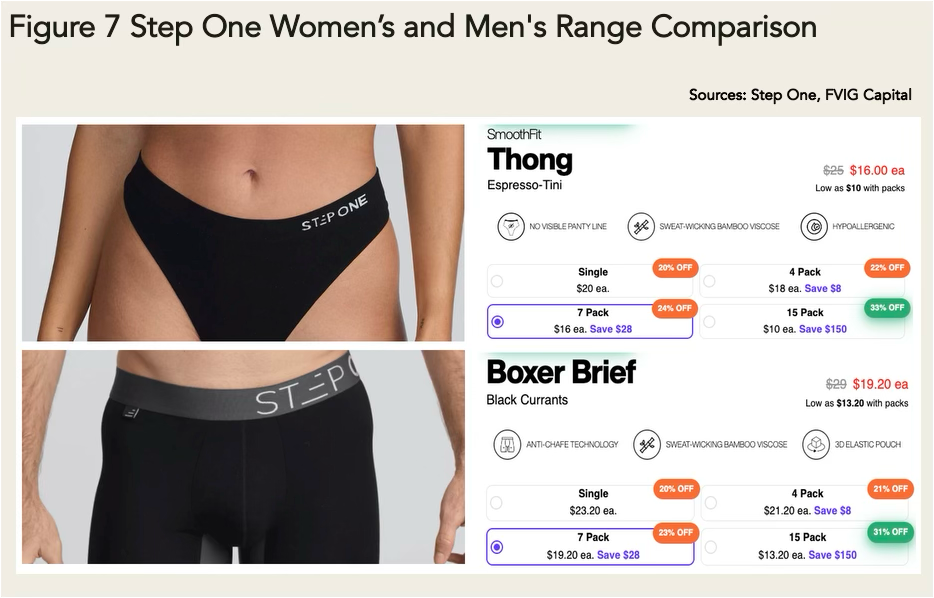
The price difference can be substantial: purchasing a single pair of underwear versus a bundle of fifteen can reduce the per-unit cost by around 50% (from about A$20 to A$10 or less), and Women’s products tend to be priced lower than the men’s range - see Figure 7. Additionally, trading conditions in FY2025 were tougher due to cost-of-living pressures, which pushed more customers to buy during promotional periods such as Black Friday.
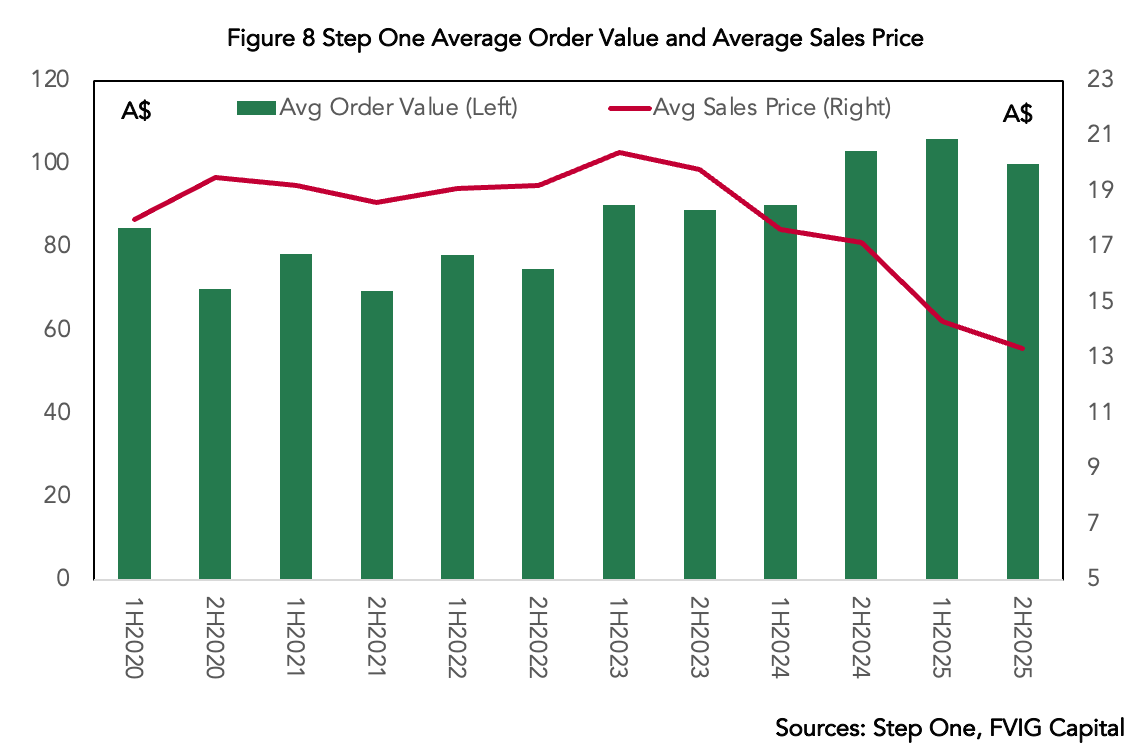
As a result, the growing share of repeat customers buying in bulk, the expanding mix of lower-priced women’s products, and the increased volume of purchases during promotional periods have all contributed to a lower average selling price - see Figure 8.
Why Did The Share Price Fall?
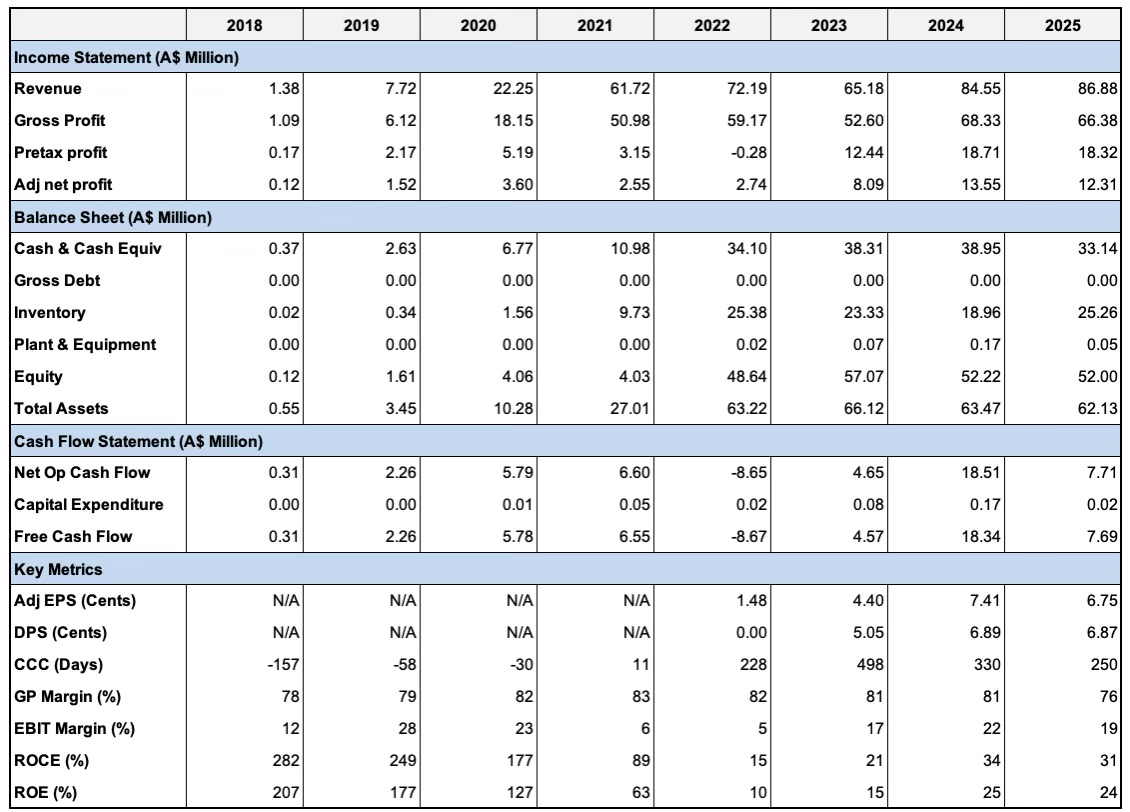
Nevertheless, selling directly to customers enables Step One to maintain gross margins above 76% even with lower average selling prices driven by bulk orders and increased discounting - see Table 1. These margins are more in line with luxury brands like Moncler and Hermès than with athletic apparel companies such as lululemon or Nike. Because of this strong margin profile and a lean operating model, Step One’s profitability is heavily influenced by its marketing spend, the majority of which is directed toward digital advertising.
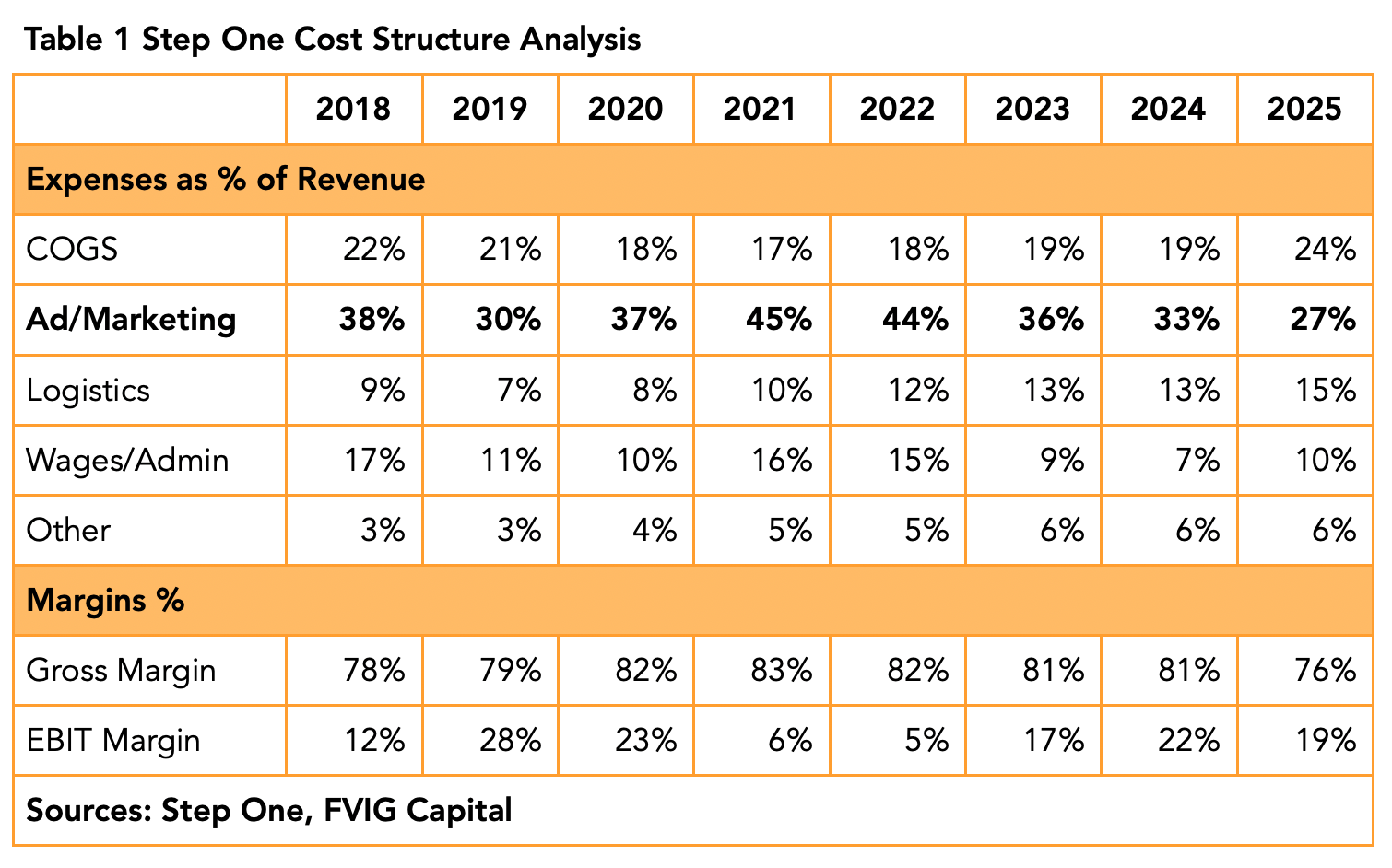
Advertising spend as a percentage of revenue has been declining, as revenue has grown while marketing costs have remained broadly in line with prior years. The deterioration in EBIT margin in FY2025 was therefore driven by compressed gross margins alongside higher personnel expenses (due to increased headcount) and rising logistics costs.
Step One has indicated that it will lift marketing investment in FY2026 to support brand building and customer acquisition, while also continuing to discount to clear slower-moving inventory. As a result, even with revenue expected to grow, gross margins are likely to soften toward roughly 73%, and marketing expenses will rise, meaning FY2026 profitability will be lower than FY2025. Step One’s share price accordingly fell to levels last seen in 2023.
The Long View
Step One’s combination of functionality, quality, and value for money results in high repeat-purchase rates. So, while these actions will weigh on short-term profits, they are necessary to build a larger pool of loyal customers over the long term. Step One continues to release new products, including upgraded versions of existing items made from higher-end materials such as quick-dry mesh, as well as entirely new categories like socks.
All new offerings remain function-driven: for example, the socks are crafted from sweat-wicking materials, with reinforced heel-toe areas and arch bands for an optimal fit. This focus is critical. Many brands drift from their core proposition in pursuit of short-term sales gains, which can erode brand equity over time. Step One’s consistent emphasis on functionality ensures a clear brand positioning within the underwear market, supporting sustainable growth over time.
The balance sheet is strong, with net cash of A$33.1 million (roughly 38% of market cap) providing both defensive and offensive flexibility. There is still significant runway for growth across geographies (existing and new), product categories, and ranges. Having the founder and major shareholder at the helm gives Step One a meaningful competitive advantage, enabling the company to make important long-term strategic decisions at the expense of short-term performance.
Given these solid fundamentals, Step One’s current market price does not reflect its true value. At FVIG Capital, we will continue to monitor developments closely and provide updates as Greg and his team build Step One “from the bottom up”.
Disclaimer:
This report is published by FVIG Capital for informational and educational purposes only and does not constitute investment advice or a recommendation to buy or sell any security. The views expressed are those of the author(s) as of the date of publication and are subject to change without notice.
FVIG Capital, its affiliates, and/or their associates may hold positions in the securities discussed. While every effort has been made to ensure accuracy, no warranty is given as to the completeness or reliability of the information contained herein. Readers should conduct their own due diligence before making any investment decisions.
Comments
Nothing yet. Say the first thing.
Sign in to join the conversation.