
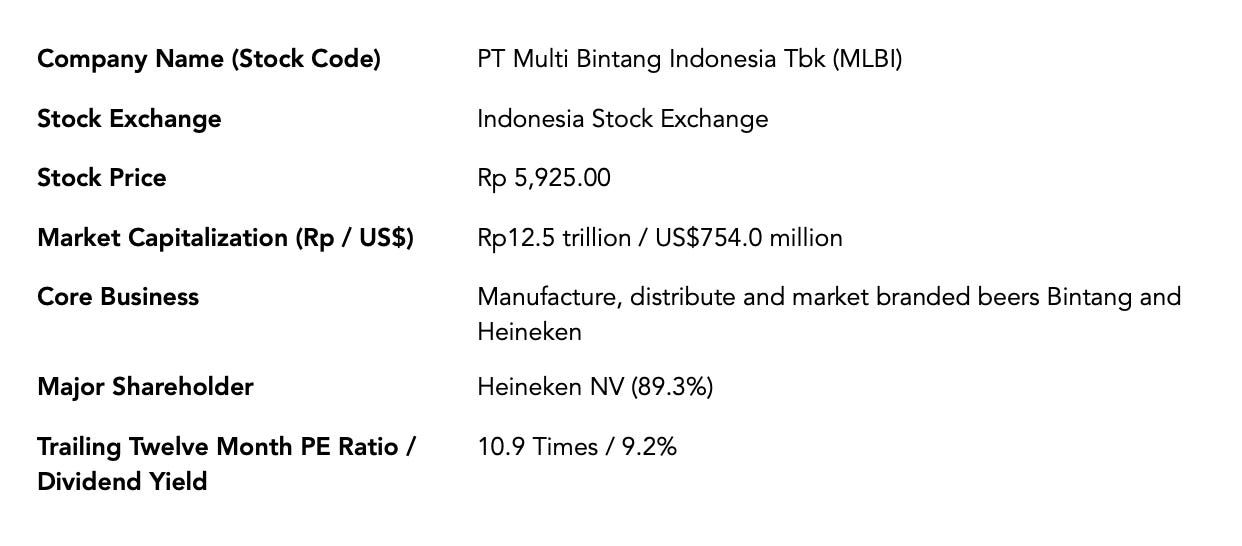
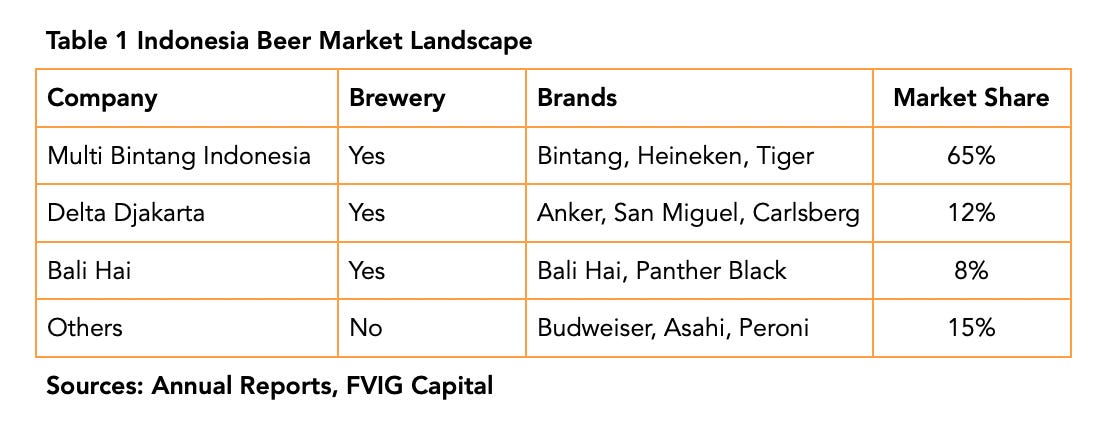
Three major brewers in Indonesia together control 85% of the country’s beer market:
Multi Bintang, majority-owned by Heineken NV
Delta Djakarta, backed by San Miguel Corp and the Jakarta Provincial Government
Bali Hai, a privately held, family-owned brewer
Among them, Multi Bintang dominates with around 65% market share:
Higher on-premise (restaurants, bars, nightclubs, hotels) market share (70%) compared to off-premise (supermarket, liquor store) market share (55%)
The on-premise channel is significantly more profitable. It faces less competition due to high switching costs, benefits from lower serving costs and captures higher consumer spending. 65-70% of Indonesia’s total beer volumes flows through this segment
Difficult to penetrate on-premise without brewery control: hard to get license in muslim-majority Indonesia and the market’s relatively small size makes new investment unattractive.
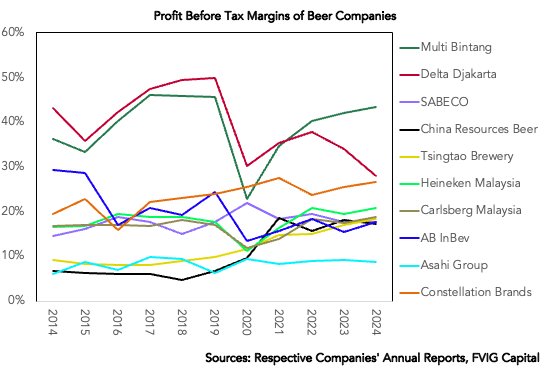
As a result, Multi Bintang operates like a monopoly, giving it strong pricing power and sustaining profit before tax margins above 40%, well above global industry average.
Multi Bintang remains undervalued as beer demand is constrained by a tourism sector still below pre-pandemic levels and sluggish economic conditions. The recovery however is underway.
Dutch Roots, Local Flavour
Indonesia’s two largest beer companies, Multi Bintang Indonesia (MLBI) and Delta Djakarta (DLTA), share deep historical roots, both tracing their origins to the early 1900s under Dutch colonial rule. MLBI’s brewery, established in Surabaya in 1931, primarily served Dutch expatriates and officials on Java’s eastern side, while DLTA’s Jakarta brewery, built in 1932, catered to the western region.
In 1936, Heineken NV acquired MLBI and took control of the Surabaya brewery, only to lose it a few years later to the Japanese during World War II. Heineken regained control in 1949, but was forced to surrender the asset again in 1957 when President Sukarno’s government nationalized Dutch-owned firms.
Heineken regained ownership in 1967 following negotiations with President Suharto’s administration that was eager to attract foreign investment. That same year, MLBI launched Bir Bintang, a light, localised lager created to appeal to Indonesian consumers and distance the brand from its colonial heritage.
Similar But Not The Same
MLBI expanded rapidly thereafter. It opened a second brewery in Tangerang in 1973 to broaden its reach and listed on the Jakarta and Surabaya Stock Exchanges (now merged as the Indonesia Stock Exchange) four years later. Heineken NV has maintained majority ownership and operational control for most of MLBI’s history, directly or through Asia Pacific Breweries Ltd (2010–2013), and increased its already sizable stake from 81.8% to 89.3% during the pandemic (2021–2022).
In contrast, DLTA, best known for its local brand Anker Bir, has faced a far more fragmented corporate journey. Following Indonesia’s post-war nationalisation, DLTA transformed from a Dutch-owned private firm into a regionally owned enterprise under the Jakarta provincial government. It entered into a licensing agreement with Carlsberg in 1983 and welcomed San Miguel Corporation of the Philippines as a major shareholder in 1990.
Focus is All You Need
DLTA’s multi-ownership structure and multi-brand portfolio have been persistent disadvantages. Its marketing resources are spread thin across Anker, Carlsberg, and San Miguel, while its complex distribution setup across on-premise (bars, restaurants, and hotels) and off-premise (supermarket, liquor store) channels adds further inefficiency. MLBI, by contrast, channels its resources into just two core brands: Bintang and Heineken, allowing it to market more aggressively and execute faster across Indonesia’s key beer-drinking segments.
MLBI’s focused portfolio and single ownership have created a clear competitive edge, particularly in the on-premise channel. This segment offers higher margins (draught beer has lower packaging costs, and consumers spend more freely) and lower competition with high switching costs due to the need for exclusive draught systems and contractual financing. Bintang accounts for around 90% of MLBI’s revenue and serves as Indonesia’s flagship beer thanks to decades of consistent marketing and distribution investment.
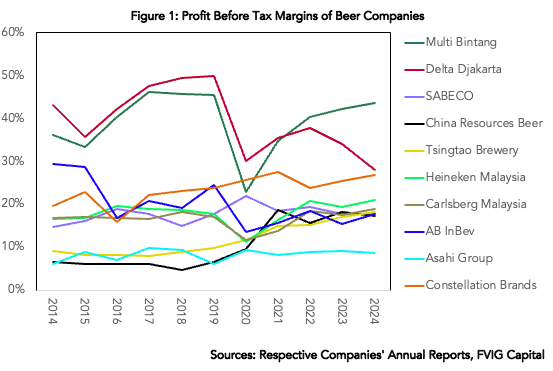
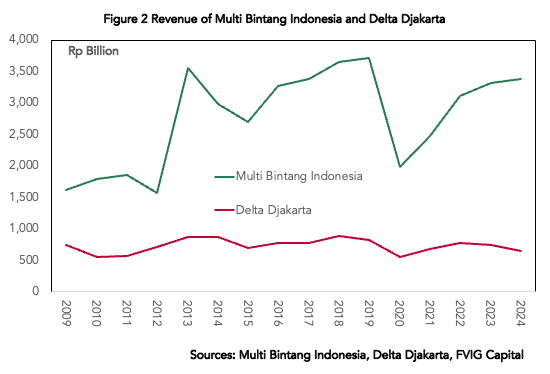
MLBI and DLTA nevertheless both benefit from limited domestic competition due to their significant first mover advantages, the difficulty of obtaining a brewery license in muslim-majority Indonesia and the relatively smaller market (e.g. ~3% of Vietnam’s total) which deter potential entrants. As a result, they enjoy above-average industry margins (figure 1), albeit with MLBI’s scale being significantly larger than DLTA (figure 2) given its dominant market share (table 1).
Pricing Power
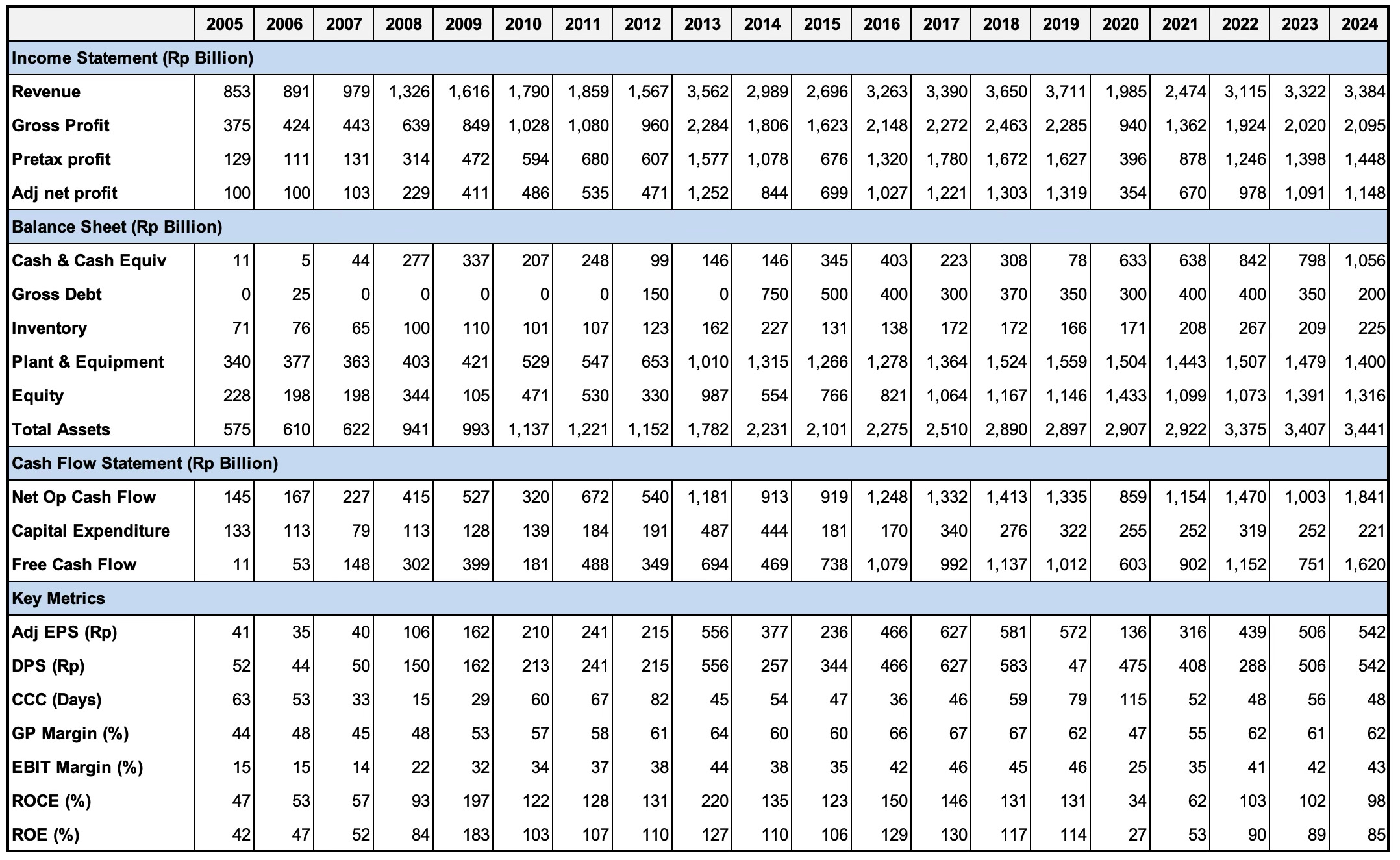
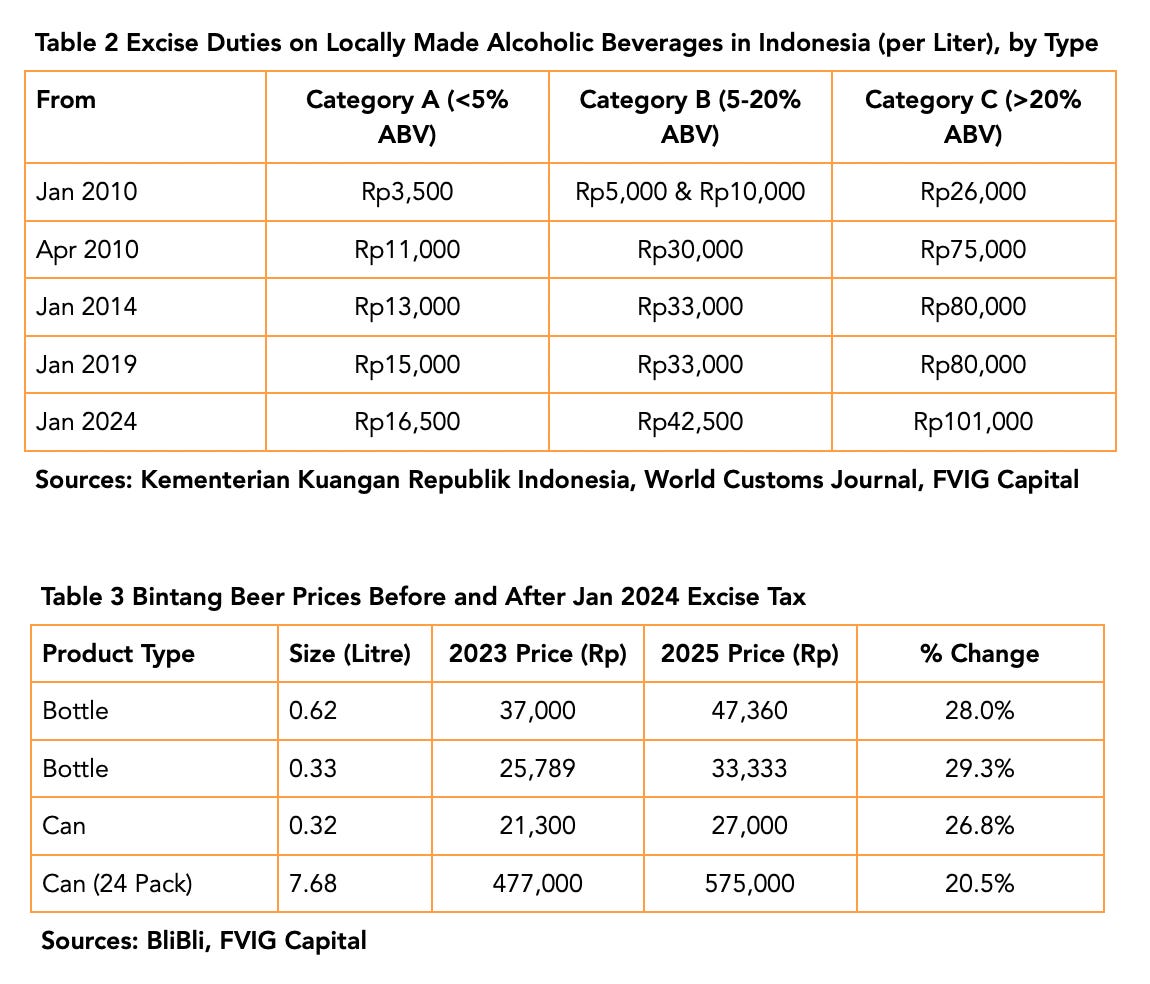
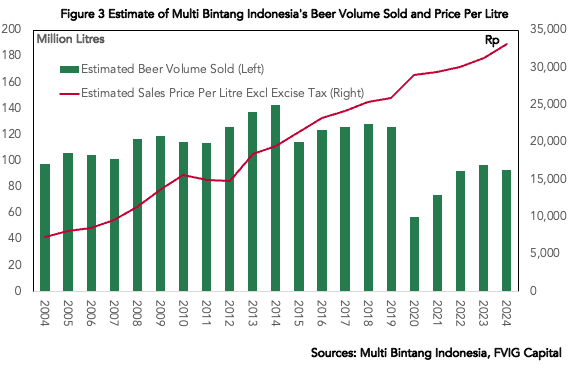
MLBI’s dominant position has enabled it to raise prices to offset alcohol excise tax tariff hikes (table 2 and table 3), weather volume declines such as in 2015 (convenience store alcohol ban) and 2020 (Covid-19 pandemic) (figure 3), and protect margins against currency depreciation and higher raw material costs (figure 1).
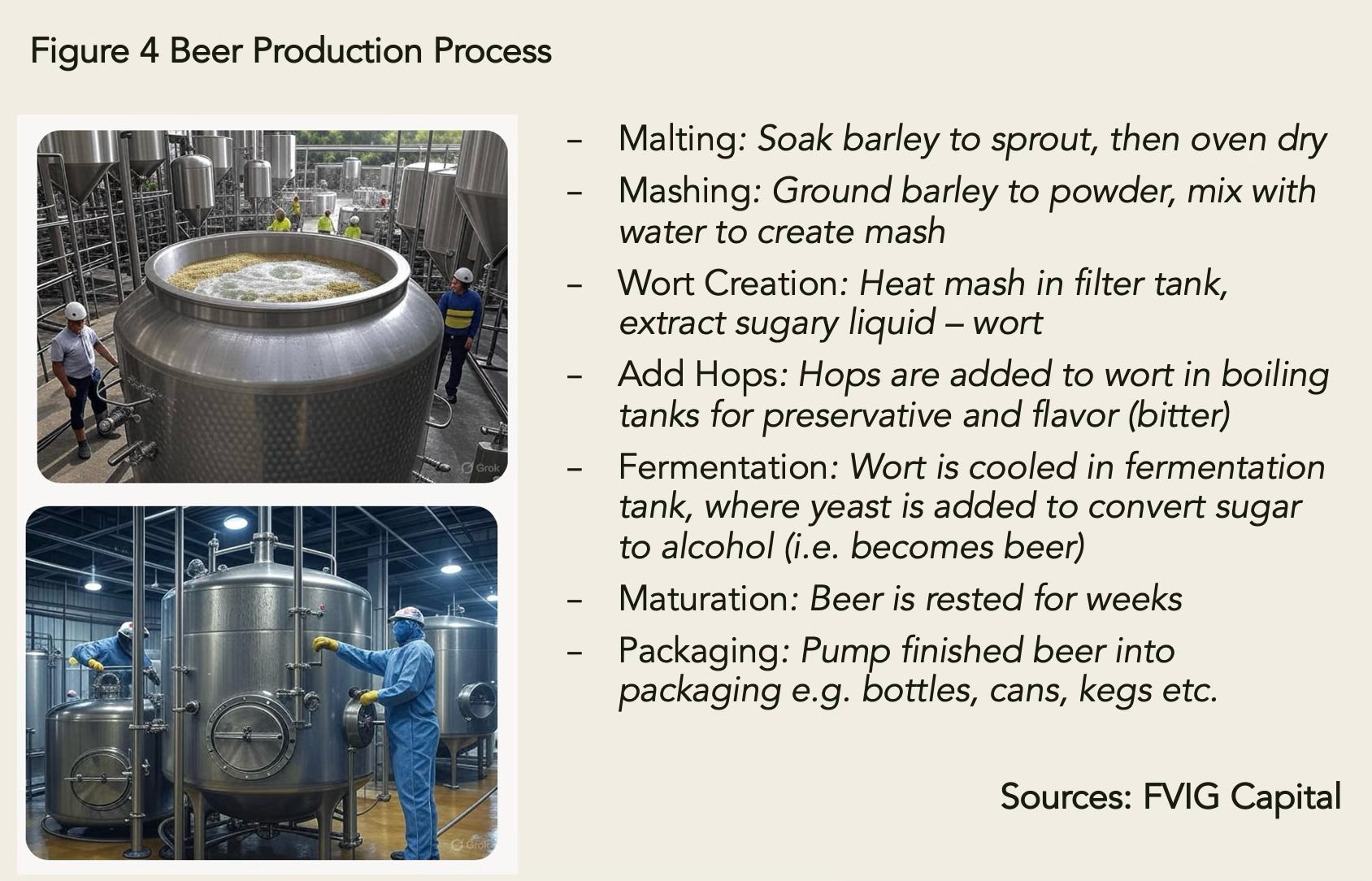
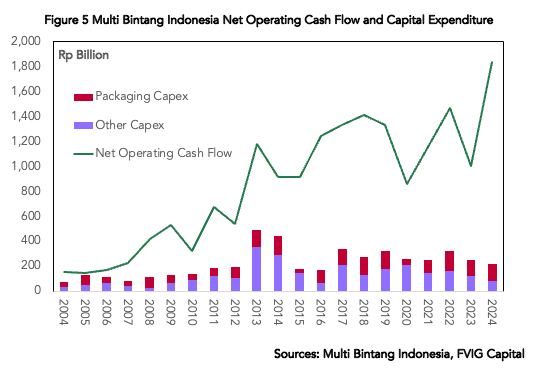
Beer production is a simple process involving a sequence of natural biochemical steps built on four core ingredients (figure 4). While it requires a large upfront investment (MLBI’s Tangerang upgrade in 2013 cost US$50 million), ongoing maintenance costs are undemanding and with proper upkeep brewery equipment can last for well over a decade. Consequently, MLBI generates substantial free cash flow from its operations (figure 5).
Why Is It Undervalued ?
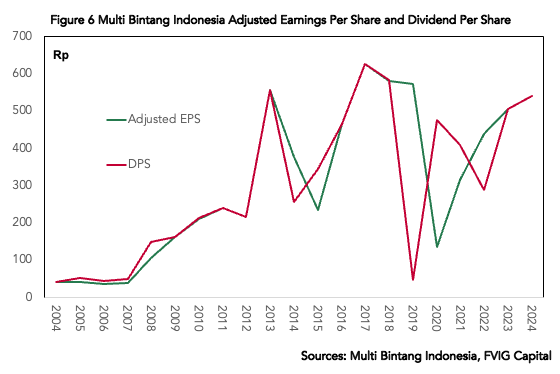
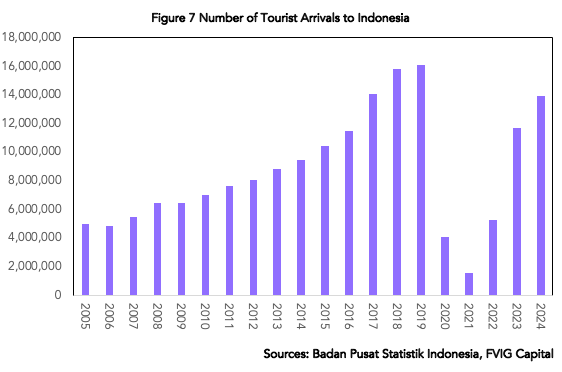
Earnings and dividends per share have been steadily improving but remain below their 2017 peak (figure 6), largely because beer volumes have yet to fully recover to pre-pandemic levels (figure 3) amid sluggish domestic demand and incomplete tourism recovery (figure 7). In other words, the problem is cyclical, not structural.
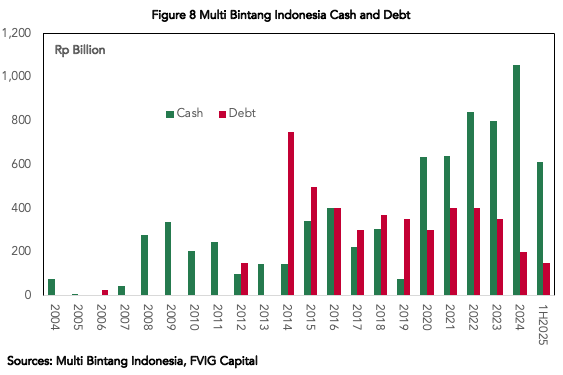
MLBI continues to capture market share from DLTA (figure 2), transforming what was once an oligopoly into an almost de facto monopoly, particularly in the on-premise channel, where its market share reaches about 70%, compared with 55% in off-premise sales. The on-premise segment also represents the core of industry growth, accounting for roughly 65–70% of Indonesia’s total beer volume. The company’s balance sheet meanwhile remains robust (figure 8).
MLBI’s share price has fallen to multi-decade lows, suggesting a business in decline when in fact, the opposite is true. Major shareholder Heineken NV increased its stake at prices at least 25% above current levels during the pandemic. Given MLBI’s unassailable industry position and strong cash-generation ability, it seems only a matter of time before the market recognises its true value. We at FVIG Capital will continue to monitor developments closely and provide updates as the story unfolds.
This report is published by FVIG Capital for informational and educational purposes only and does not constitute investment advice or a recommendation to buy or sell any security. The views expressed are those of the author(s) as of the date of publication and are subject to change without notice.
FVIG Capital, its affiliates, and/or their associates may hold positions in the securities discussed. While every effort has been made to ensure accuracy, no warranty is given as to the completeness or reliability of the information contained herein. Readers should conduct their own due diligence before making any investment decisions.
Comments
Nothing yet. Say the first thing.
Sign in to join the conversation.