
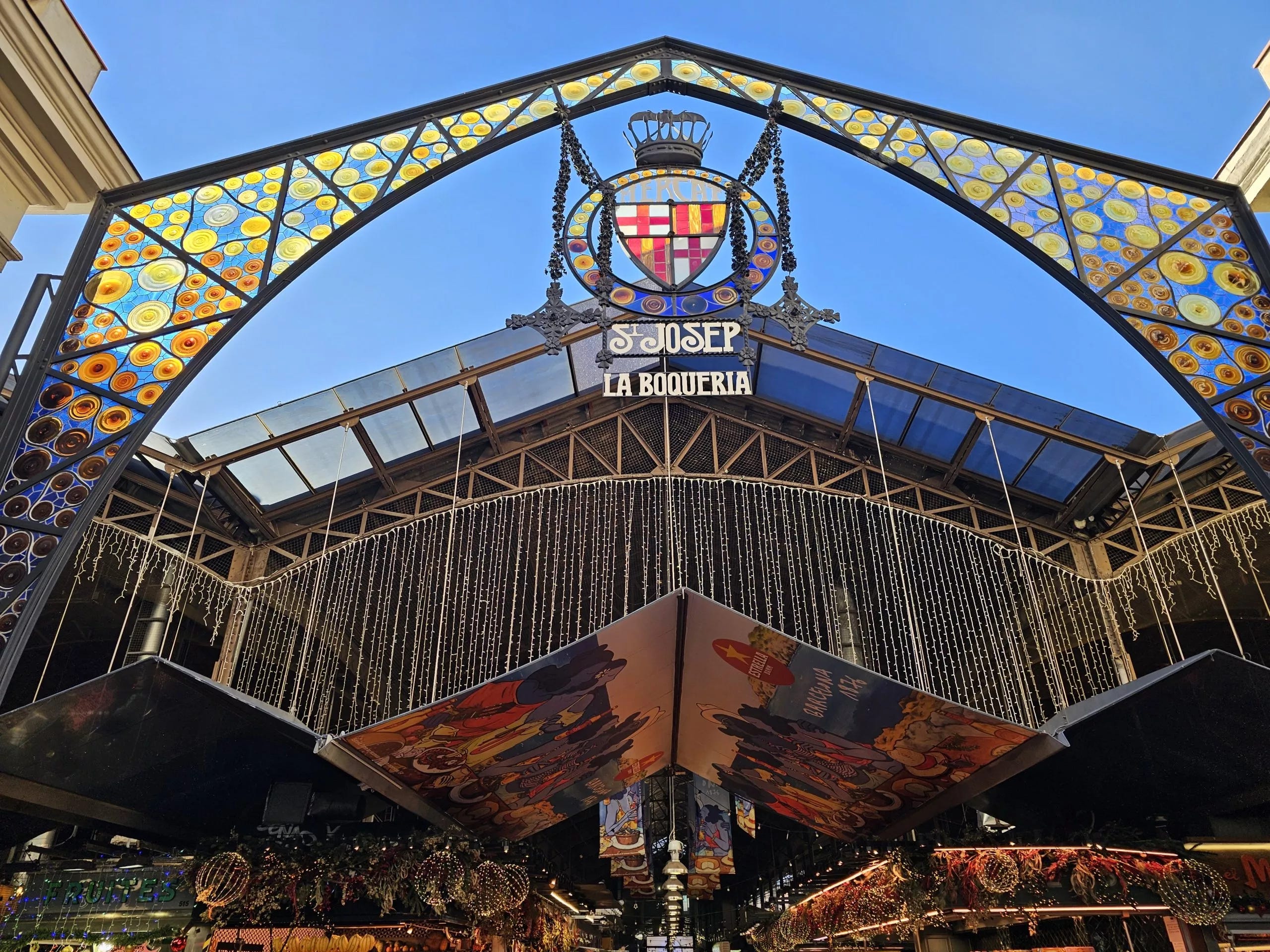
La Bouqueria is Barcelona has soon local businesses driven out by businesses catering to tourists.
Every week, The Future Of Where brings you new insights about the role place plays in our lives — and practical advice for how to manage places and make them work. So please become a subscriber today. We love free subscribers who spread the word — but paid subscribers help us pay the bills.
Well, last weekend we got out of town because the Comic-con crowd had arrived – more than 100,000 visitors converging on Downtown San Diego, many of whom are wearing crazy Superhero outfits.
The spectacle is fun to watch, but as a resident of the neighborhood I can say it’s a little hard to take. I’m on record as saying I like living in the middle of a tourist destination because the tourists keep a lot of businesses thriving that I get to take advantage when the tourists are gone. And I have to say that dealing with the fallout from the typical (for San Diego) three-day convention of 10,000 to 20,000 people is no big deal. But Comic-con is a bit much. Restaurants are crowded, Ubers are expensive – the things that make urban life so fulfilling most of the time are just a hassle.
So it’s not surprising to me that tourist towns across the globe are tired of getting too much love – and they’re taking extreme steps to do something about it.
Social media sites like TripAdvisor – to say nothing of user-generated content on sites like Instagram and Flickr – have made it possible for anybody, anywhere in the world, to learn about any cool destination anywhere else in the world. And increasing affluence means more people are traveling as tourists around the world. There are about 1.5 billion tourists per year worldwide, up about 25% since 2015 (after a huge dip during the pandemic).
Unfortunately, an awful lot of these tourists go to – and post online about – the same iconic few places. Machu Piccu. Barcelona. Yosemite. Paris. Venice. And those are the places getting worn down by what has come to be known as overtourism.
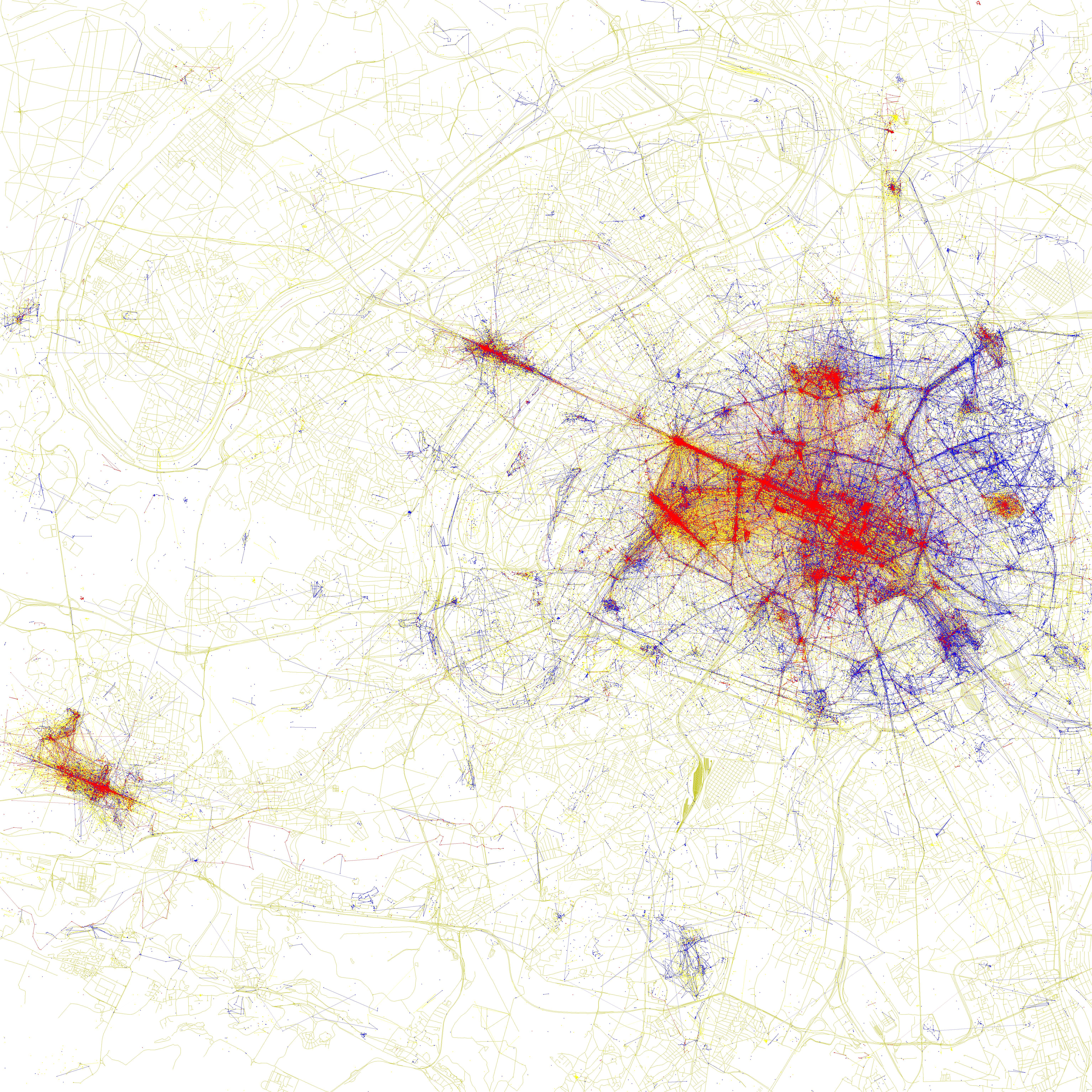
Eric Fischer’s famous map of tourists in Paris. The redder it is, the more pictures tourists post on Flickr.
A lot of the iconic locations like Machu Piccu and Yosemite have literally imposed limits on the number of people who can visit them at one time. Cities have a harder time doing that – using both sticks and carrots to keep the numbers down.
The latest city to crack down on overtourism is Barcelona. As The New York Times reported recently, the city has a new tourism commissioner whose job is not to attract more tourists – but to discourage them from coming.
Barcelona attracts about 16 million tourists a year, or more than 40,000 tourists a day on average. The city can’t literally put a cap on the number of tourists, but it is taking a number of steps to discourage them, including banning all short-term rentals by 2028.
And the problem is not only about the numbers but the effect. Tourists from around the world come to the famous La Boqueria mercat seeking an authentic Catalan experience – but businesses catering to tourists have driven out the authentic businesses. La Rambla has the same problem. The city has capped accommodations as a way of capping tourists and it’s subsidizing authentic businesses.
“It’s important to us that any resident can buy a loaf of bread, a book or a screw in their neighborhood,” the new commissioner said. “That’s what makes someone feel emotionally connected to their city. We also believe that tourists will be more interested in a city where urban space isn’t entirely souvenirs, phone cases and kebabs.”
Barcelona is not alone. Edinburgh just imposed a 5% surcharge on hotel stays. Santorini has limited cruise ship passengers. Amsterdam and Venice now have day-tripper taxes. Kyoto has imposed a tourist ban on it geisha district. And on and on.
Overtourism is an inevitable outcome from our current social and economic situation: You’ve got a billion people with enough money to travel and a deep-seated desire to check places off of their “bucket list,” along with a system of communications – social media – that tends to highlight a few bucket list locations.
The sad thing is that no matter all the ways you can think of to limit or discourage tourism – day-tripper fees, hotel taxes, limitations on accommodations, requiring reservations in advance – will drive up the cost of visiting the bucket-list locations. And so only the most affluent international travelers will get to check things off their bucket list. It’s the same problem that we have with sports and concerts – affluent folks can travel anywhere and pay a lot of money, so the locals are priced out of seeing events in their town.
The flip side is this: In theory, this should be an opportunity for other places to move up the bucket-list rankings. You make it hard to visit Barcelona, and people will seek out other locations. But if you’re not on the bucket list now, how do you get on it – helping out your local economy and spreading out the tourism business to more places? That’s got to be good for everybody from Barcelona to Podunk. I’ll deal with that in another post later this week.
Well, not surprisingly, we went to a nearby tourist area that’s growing fast in popularity: the Temecula Wine Country, an hour away from San Diego in Riverside County.
Temecula’s an interesting example of both the good and bad associated with the rapid increase in tourism. It’s been a serious wine destination for more than 50 years – but now it’s growing fast. It’s close to Los Angeles, Orange County, and San Diego, with about 12 million people living within 60 miles. And fast-growing Western Riverside County, with about 1.7 million people, provides a big local market.Meanwhile, wineries from Paso Robles are opening a second outlet there.
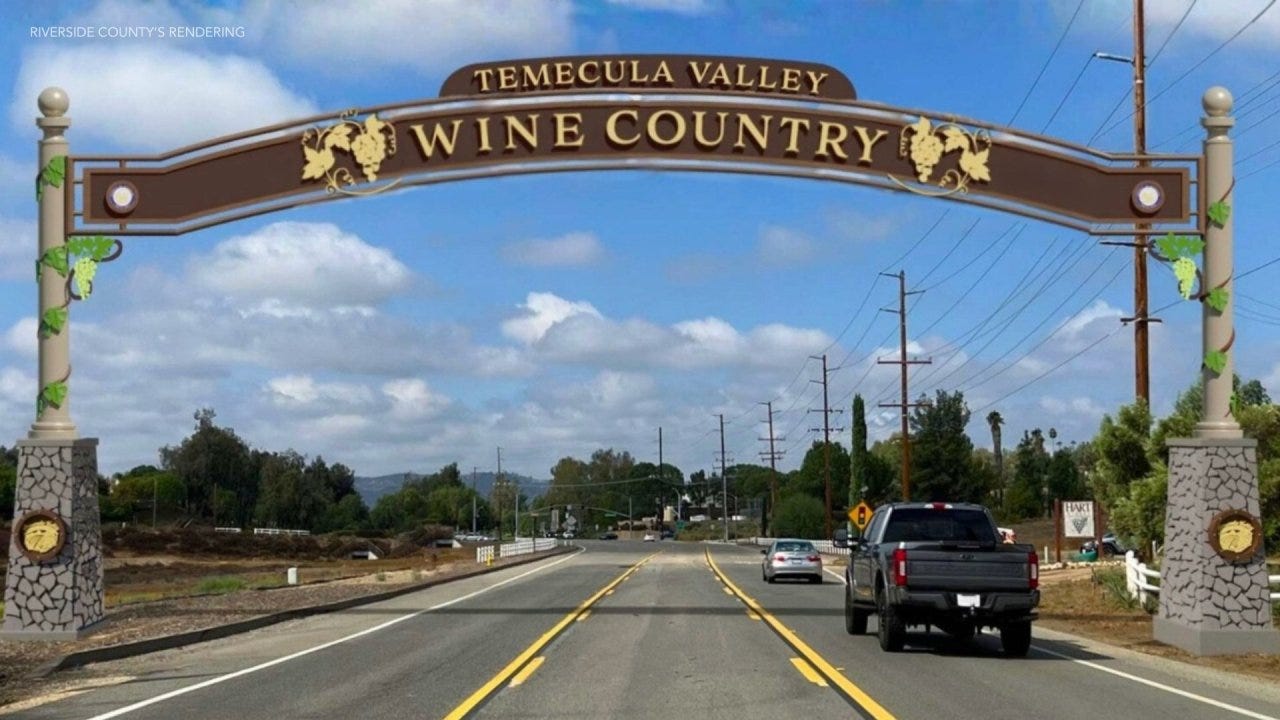
Bottom line: Temecula’s currently drawing about 4 million visitors a year, which works out to a little more than 10,000 a day (about a quarter of Barcelona’s total).
Temecula is not a world-class location like Napa Valley, but it’s very good and improving all the time, as wineries add hotels, resorts, and events. (This is a pattern in all wine areas, at least in the U.S. these days.) But of course that’s making it more expensive as well. A good room can run you $300 at a minimum, and dinner at the nicest restaurants can cost you the same. So, like so many other places, the Temecula Valley is gradually morphing so that it caters to a very upscale market.
That’s the downside. The upside is that most of those affluent folks drive in from elsewhere and the people who work at the wineries can, at least for the moment, afford to live there. The City of Temecula itself is getting pricey, with median home price creeping toward $800,000. (In addition to the wine country, Temecula has a great Old Town. But there are plenty of places within a half-hour drive where home prices are in the $500,000-$650,000 range, which is about as cheap as it gets in Southern California. Let’s hope it somehow stays that way.
Speaking of visitors, last week’s Future Of Where posts both dealt with cities chasing air passenger service, which is big news in the heat of the summer tourist season. As I wrote on Monday, there’s been a huge post-COVID surge in air service to “small hubs,” ranging from metropolitan-adjacent airports like New Haven to outdoor recreation destinations like Chattanooga and Bozeman. And as I wrote on Thursday, this isn’t an accident. These smaller cities have become very savvy in chasing airlines, using a four-step process that includes (1) a study showing latent demand, (2) a wooing process with the airlines, (3) the use of subsidies, including federal grants, and (4) aggressive marketing to local passengers who currently drive elsewhere to save a few bucks. It’s a really interesting economic development yarn.
No posts
Comments
Nothing yet. Say the first thing.
Sign in to join the conversation.