
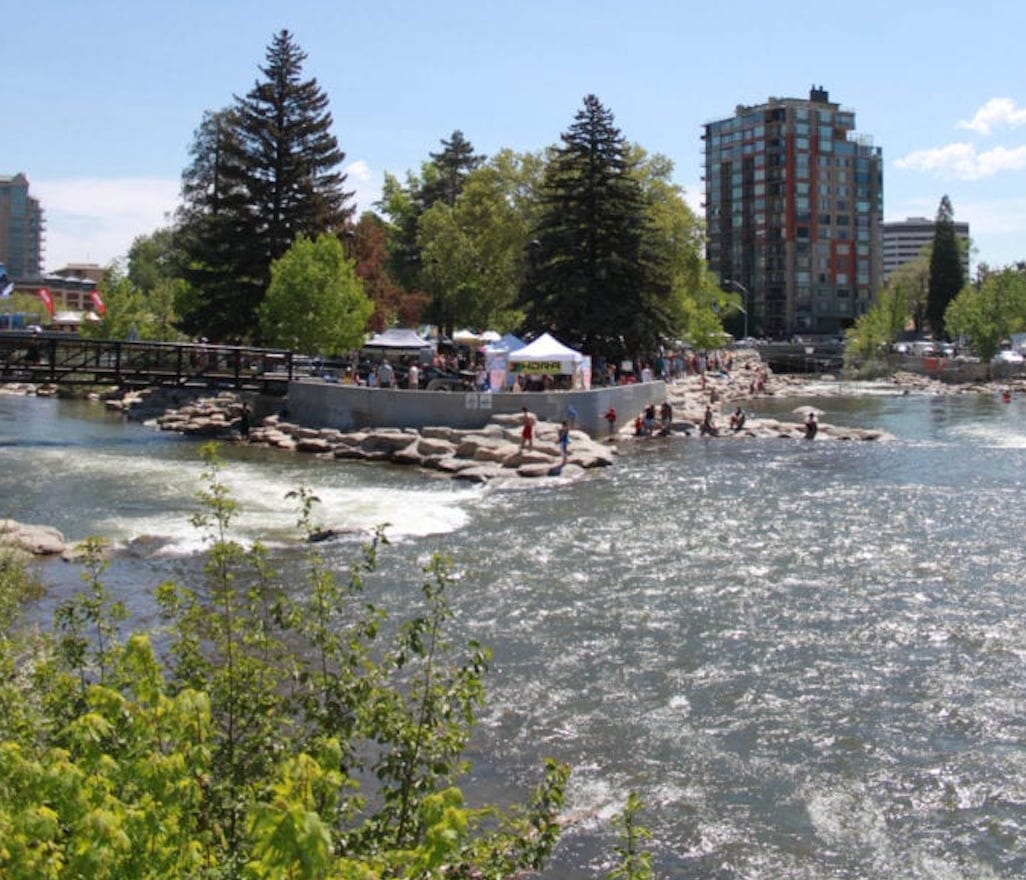
Whitewater rafting in Downtown Reno.
This Future Of Where post is targeted to practitioners and how they can maximize the value of their place-based assets , which is why it’s partly behind our paywall. We rely on our subscribers to keep us going — so please become a free or paid subscriber today!
On Monday, I wrote about how many “bucket list” cities such as Venice, Barcelona, and Edinburgh are trying to stop the constant influx of tourists. They’ve become so popular that they actually want to dampen market demand for visitation to their cities.
But even though they may be able to repel some of the tourists, they’re not really going to dampen overall demand to experience places. And that creates a tremendous opportunity for cities that aren’t on the bucket list to pick up more tourists. Shut out of Barcelona/New York/Venice/Nashville? Just go somewhere else instead and maybe it’ll be just as good.
But how can you be that somewhere else?
I think there are four fundamental steps familiar to most economic development and tourism experts: understand your assets, fix the assets you need to fix, assess the competition, and devise the right marketing strategy. But the fundamental question is: Do you want to be a copy of a crowded and expensive place, or do you want to be yourself and hope for the best?
Marketing and branding is an important part of economic development, but it can’t take the place of substance. Which means, of course, that you can’t brand your place successfully unless you have a place to begin with. After all, how many times have you seen a Chamber of Commerce advertisement with a giant picture of two six-lane highways and big parking lots? Whatever they’re trying to sell with that advertisement, it’s not place.
So you have to have place to begin with. And for tourists, even if they live in an autobound suburb most of the time, that usually means a walkable commercial district where they can hang around and socialize, as well as destinations that you can walk to or, increasingly, get to with a short Uber right (since who rents cars anymore?). These destinations have to be compelling: sports and entertainment venues, museums and other cultural destinations, historic sites. They usually have to be located near robust outdoor recreation areas or spectacular outdoor scenery. And they have to be unique: If you want people to come to your town, there have to be things there that you can’t find anywhere else.
Or not, depending on how busy the Bucket List Cities are.
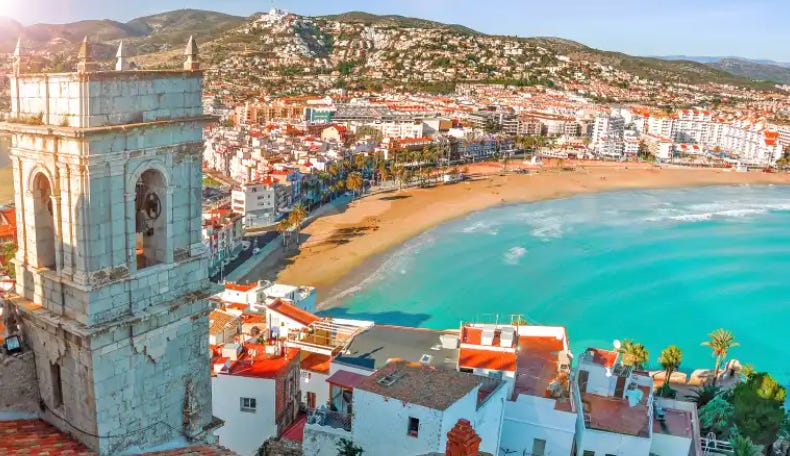
Valencia is often seen as a “Designated Dupe” to Barcelona.
That’s because the most popular marketing strategy for these other cities is to show that they’re just like some Bucket List City or other, only cheaper. This approach is called the Destination Dupe strategy, and it’s increasingly being used even by travel guides and web sites to give people ideas. Think, for example, of Valencia instead of Barcelona.
I have to admit that I lived for a long time in a city that sometimes considered itself a Destination Dupe. Ventura, where I lived for 25 years, is 30 miles away from Santa Barbara, one of the most expensive Bucket List Cities in the United States. Ventura was traditionally much more down-market and working-class, but it still had beaches, mountains, good hiking, a Mediterranean climate, an historic Downtown, and access to Channel Islands National Park. (Better access than Santa Barbara, actually, since the boats to the Channel Islands leave from Ventura Harbor.) What it didn’t have, traditionally, was hotel accommodations that rivaled Santa Barbara’s but were cheaper, though this is beginning to change now that upscale lodging in Santa Barbara can run $500-$900 a night.
Thanks for reading The Future Of Where! This post is public so feel free to share it.
But is being a Destination Dupe the right approach? After all, isn’t uniqueness traditionally a key to drawing visitors?
Well, and I hate to answer the question this way, yes and no.
Destination Duping might be a shortcut to attracting tourists. You target
Comments
Nothing yet. Say the first thing.
Sign in to join the conversation.