
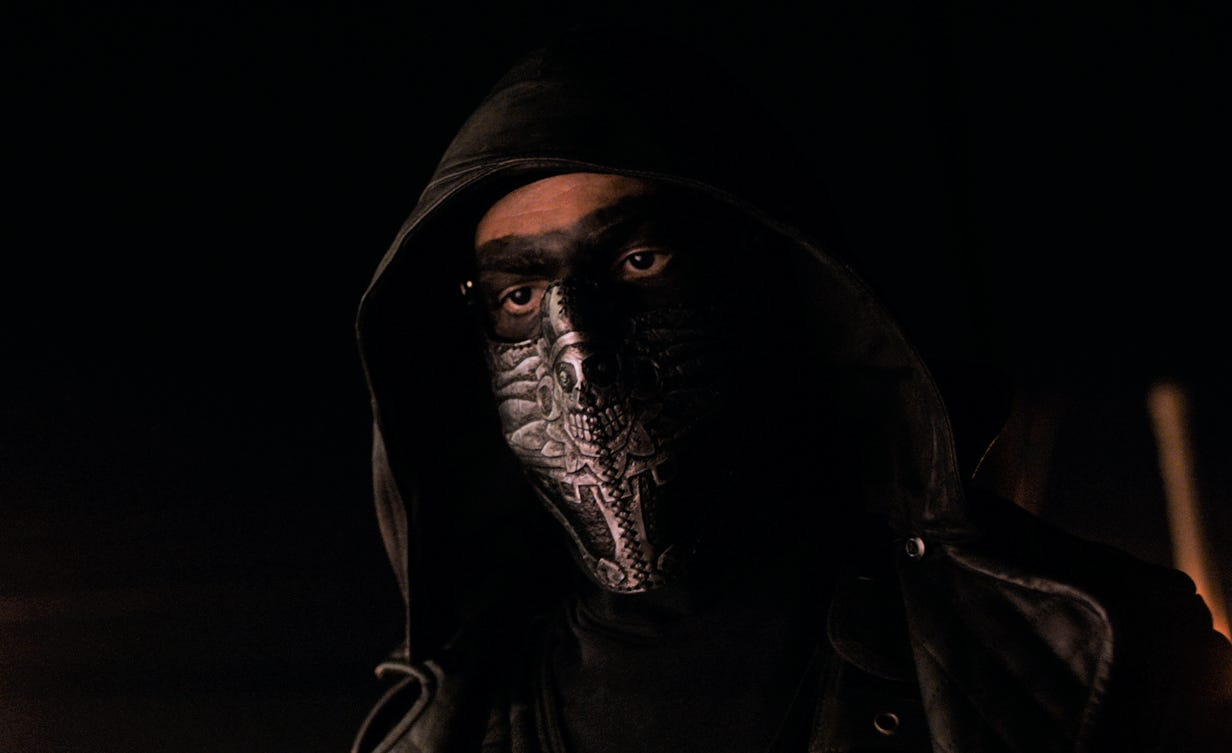
I have been very critical of superhero movies, but I still love them. I love them for what they represent, and I love them for their potential, even if it’s unfulfilled. A Marvel movie I see in any given year is going to be someone on the spectrum of enjoyable, to mildly amusing, to downright dreadful. But I’m still going to love seeing these characters, the ones I grew up reading about in comics, the ones who I dreamed of seeing one day on the big screen. And yet, it can feel like an empty victory. It can feel like I’m celebrating someone else’s joy.
Apparently there are around nine to ten million Puerto Ricans in the world. I’m one of them. But in the Marvel universe, the DC universe, in a lot of onscreen universes, I just don’t exist. In American movies, representation is usually dominated by my Mexican brothers and sisters, and if not, people go to South America for their mandated “diversity”. I was thrilled to see “Blue Beetle”, but again, Mexican. And while Pedro Pascal is Chilean, I was fist-pumping when he became the new Mr. Fantastic. Imagine if they let him speak in his native tongue. But I still remember getting the excitement from that final battle in “Avengers: Endgame” before realizing there were hundreds of characters on that battlefield, and not one Latino. Statistically, that should be unlikely.
I was definitely ready to commit to “El Chicano” which was – probably erroneously – called the “first Latino superhero movie”. Yes, these are Mexican characters again, and this is East L.A. I’m not gonna get my Puerto Rican superhero out of this. More pointedly, we’re dealing with gangbangers, so in exploitation-film style, we’re leaning into stereotypes. The co-writer and director, Ben Hernandez Bray, claimed this was based on a true story. I assume he meant the gangbanging portions, not the costumed superhero stuff. Not to judge. Maybe Mr. Bray actually is, to quote Don Cheadle in “Avengers: Endgame”, “about that superhero life.”
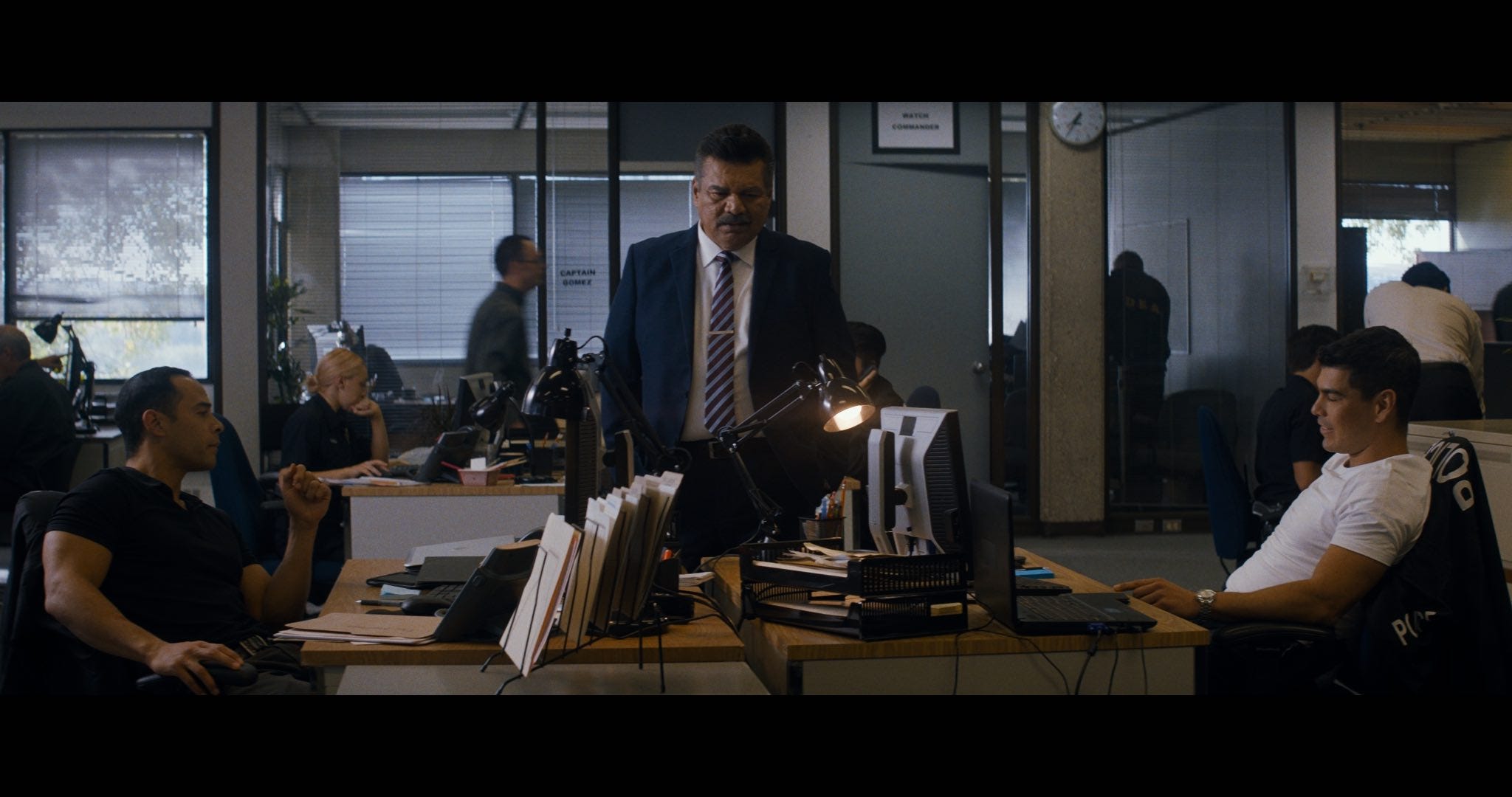
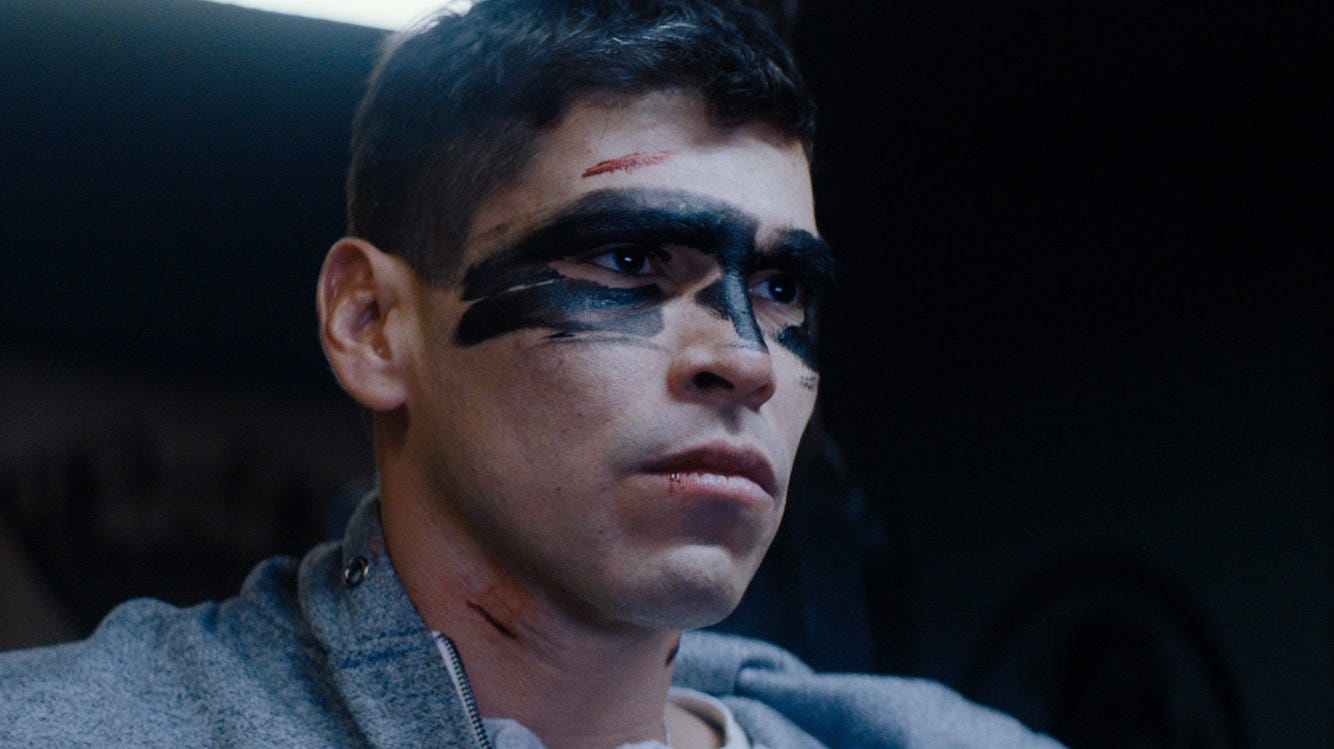
Raul Castillo is Diego, a cop from the mean streets. He freely drives up on guys and addresses them by name, he reminiscences about past encounters. He works for The Man, even though it seems like a one-way relationship. He’s haunted by the memory of El Chicano, a masked hoodlum who has become legend for a series of gangland shootings. Though he hasn’t been seen for a while, neither has Diego’s brother Pedro. As children, they both encountered El Chicano in the wild. Though Pedro is dead now, Diego can’t help but think that wasn’t the last time Pedro encountered El Chicano.
Diego and his partner – reliable character actor Jose Pablo Cantillo – are investigating a series of violent cartel incidents, some of which suggest El Chicano is still out there. Diego struggles because he’s getting tired of the code of the streets – even if the perception is that the gangs are being executed, of course none of them will talk. He feels as if that same silence got Pedro killed, even though his death is listed as a homicide. Therein lies the problem with this premise, however. Everyone has bought a ticket to “El Chicano”. The narrative has already told us El Chicano is at large. Nobody wants to spend a half hour watching Diego do actual detective work when there’s a crime-fighting vigilante out there. And no one cares about the emotional struggles he’s having as a cop on his home turf, and the rows he has with the captain of the force, played by a stern George Lopez. Hell, no one wants to see a stern George Lopez.
Without spoiling the resolution of this story – which feels like an 85 minute movie randomly stretched an extra twenty minutes – you’re left waiting for the superhero theatrics. It takes a while for El Chicano to do more than peek-a-boos in some scenes. By the time he gets his spotlight, in a series of hand-to-hand sequences, it’s a sad reminder – he’s got too bulky and limiting an outfit to be able to engage in fisticuffs. It’s less of a costume and more of an outfit, so it’s not like fashion is being favored over function. Still, the outfit, complete with face-mask, does allow the film to employ a stuntman to perform feats the actor inside most assuredly cannot. It’s a let-down, particularly in how the filmmaking team thinks we’re more interested in police investigations. Co-writer and producer Joe Carnahan – “The Rip”, “Copshop” – gets to stop by briefly and play a tough cop who screams at things. I’m glad it was worth it for someone.
As Diego, Raul Castillo doesn’t really light up the screen the way I’d want from an actor in a movie like this. He’s glum and thoughtful, not terribly dynamic. Diego ends up in a position where he’s moving several chess pieces around, but Castillo keeps you at arms length to an extent that it’s difficult to ascertain Diego’s overall intentions. You know he’s on a collision course with El Chicano in one way or another, but most of Castillo’s scenes play like a cable pilot about a street cop from the barrio. And when we do get to spend extended time with El Chicano, he’s battling perps under a heavy, practical outfit, one that doesn’t seem to allow for any flexibility. The camera has to cut frequently to hide that El Chicano has made an unwise costuming choice. Sadly, this guy just isn’t ready to be on that “Endgame” battlefield.

I presume, in the case of detention centers, the acronym NIMBY strongly resonates. For those who do not know, that means Not In My Back Yard, and it’s often used in regards to exposing a certain hypocrisy of those who might lean liberal on criminal justice reform until it’s time for criminals to become their neighbors. It’s shameful when they’re talking about individual ex-cons who just need a place to live, they just want to find comfort and peace in society after years of prison cruelty. But in regards to prisons and jails, NIMBY should really be NIABY – Not In ANYONE’S Back Yard. Hopefully they can come up with a better acronym.
This report discusses the recent aggressive actions by the Trump administration to buy up a number of warehouses across the country and convert them to ICE detention centers. Apparently, protesters and activists were able to unite to prevent these places from being built. A huge victory not only for these people in these communities, but also for the very act of protest, which has been scorned and nullified by a morally and emotionally-weak Department of Justice. It’s worth noting – the popular conception of protests like these are that they’re about rhetoric, about changing the minds, denying the voice of the oppressors. But sometimes, you’re actively reaching officials who have no concept of the idea that their actions may have a negative effect on their environment and the people who live in it. Too many politicians see the opening of a business like a detention center and they think of the potential for jobs. This is understandable, but it’s not an accurate worldview. And what we’re talking about when we oppose more jails, more prisons and more detention centers is most decidedly about a more accurate worldview.
No posts
Comments
Nothing yet. Say the first thing.
Sign in to join the conversation.