
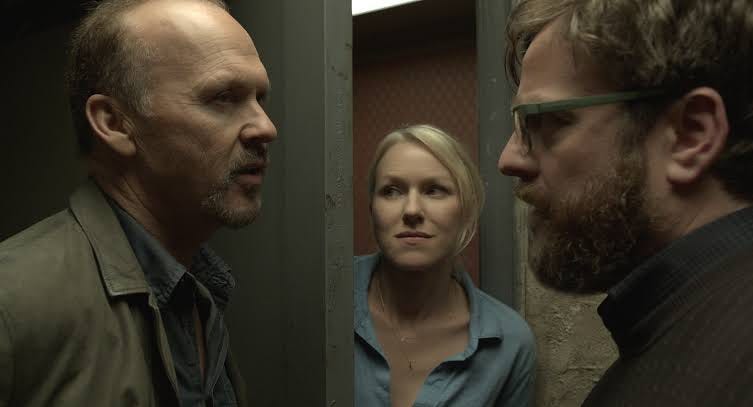
There’s a scene late in “Birdman Or (The Unexpected Virtue Of Ignorance)” when Michael Keaton’s Riggan Thomson has to face a critic played by Lindsay Duncan. He belligerently badgers her, to the point where the movie wants us to be uncertain about our allegiance. Riggan is the lead character, the Birdman in question, and we’ve warmed to him in all his insecurities and peccadillos, but here he’s clearly invading the personal space of an older woman, not to mention rupturing the imagined line meant to separate performers and journalists. He is hurt, lashing out, and you understand he has little affection for scribes of corporate journalism. It’s a scene ripe with potential, with the ability to say so much about the existence and persistence of an artist, the use of art criticism, the illusion of private space in New York City, accurately portrayed as a cacophonous place of constant collisions.
But the more Riggan talks, it’s clear that the critic is a “villain”. He speaks of how they are just pretenders, how they use glib cliches and simplistic comparisons to minimize art. He monologues, unchallenged, and mocks this critic and, separately, her work. He’s unimpressed, and though we barely know this critic, we’re also meant to be nonplussed. And at the end of his diatribe, she quietly cautions him that she intends to “destroy” his play, a deeply unprofessional and immoral act. The implication is that the artist will not have the final word because it always belongs to the writer.
A few people here have called me a “critic” at Substack. I think this is exceedingly generous and unwarranted – not only do I frequently have little to say about the movies of which I write, I am also a scumbag ex-con, little more. But I have to stand up for critics here. Duncan’s actions made me recall former New York Times critic Elvis Mitchell. There was controversy over a film he had seen, the science fiction picture “Source Code”, because in his review he had mistakenly described a character played by Jeffrey Wright. Specifically, he suggested the character had “smoked a pipe” onscreen – he did not, though if you’ve seen the movie, it wouldn’t seem like an unusual image. An online furor erupted as to whether or not Mitchell was professional, if he had even seen the movie. The nonsense pressure on him led to him being forced out of his position. If that can end a career in criticism, then what Duncan’s Tabitha Dickinson says is so beyond the pale that it should be tattooed on her. It’s villainy, ugly and improbable, and it’s the cheapest of several cheap shots made in this film. Alejandro González Iñárritu had a similar sequence between artist and critic in “Bardo”, so clearly this is a guy fantasizing about confronting his critics. What I’m saying is, stop calling me a critic, otherwise Inarritu might want to throw hands. And I would be disappointed to have to send the director of “Amores Perros” to the hospital.
“Birdman” is a film about an actor in his later years, one who has been defined not by stage work, not by difficult dramas or even slapstick comedy. No, Riggan Thompson was once a superhero, the costumed Birdman. That franchise had generated billions in revenue, but that was a while ago, and Riggan has quietly soldiered on with lower paychecks in work that has been underseen. I do wonder how this film plays without the baggage Keaton brings to the role. He was in both “Batman” and the best DC Comics film of all-time, “Batman Returns”, but he walked away, and then the roles became smaller and smaller. “Birdman” was a “prestige project”, but Keaton, once a comedian, later a wily bit player, is not the type of actor you’d see in a prestige film. How would this movie have played with Andy Garcia, or maybe Kurt Russell, or even George Cloon- oh, wait, yep, that last one would be sort of the same situation.
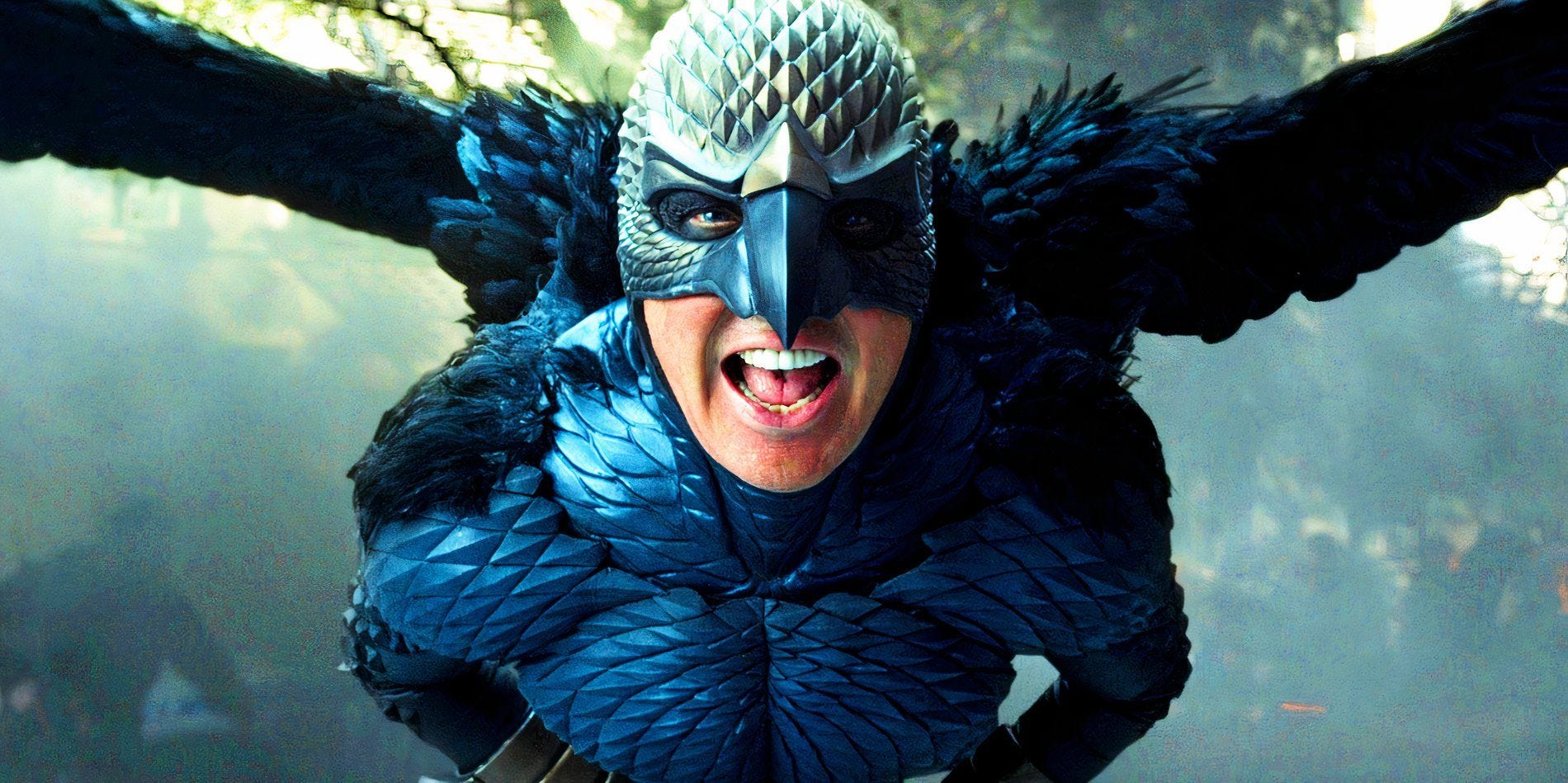
I wonder if Iñárritu has seen “Batman”, given that the Birdman hero is depicted as a pyrotechnically-abled flying avenger who can take to the sky on wings. Of course, you could also ask if Iñárritu has seen any superhero films, given that the Birdman design seems like it alternates between absurd camp (the bird beak mask, bright blue costume) and contemporary detail (the suit is layered, ribbed, and the violence he causes seems plausible). Riggan is determined to do serious acting on Broadway, specifically a Raymond Carver adaptation meant for the stage. But he is also haunted by Birdman, who, in many sequences, flies over his shoulder, taunts him with vulgar insults, and pushes him to appear as Birdman again in an as-yet-described revival. As Riggan walks down the street alone, Birdman, unseen by everyone but him, stirs havoc by flying over his shoulder and causing special effects violence. He’s a superpowered stalker, seeking validation from the only man that can keep him alive and swimming in billion dollar grosses.
“Birdman” has a structure that I find absolutely confounding. The movie is famously captured in a single shot, as we follow Riggan through putting together and performing “What We Talk About When We Talk About Love” on-stage with his co-stars. But it is not at all in real-time, and seems to occur over the course of a fluid few days, which calls attention to the stunt, nevermind the digital trickery required to fake certain effects. This is meant to incorporate the fantasies Riggan has of the actual Birdman visiting him inside his head, calling into question exactly how much of what we’re seeing could be real. Which is a perplexing choice when you’re using plot devices like drug addiction and artistic integrity.
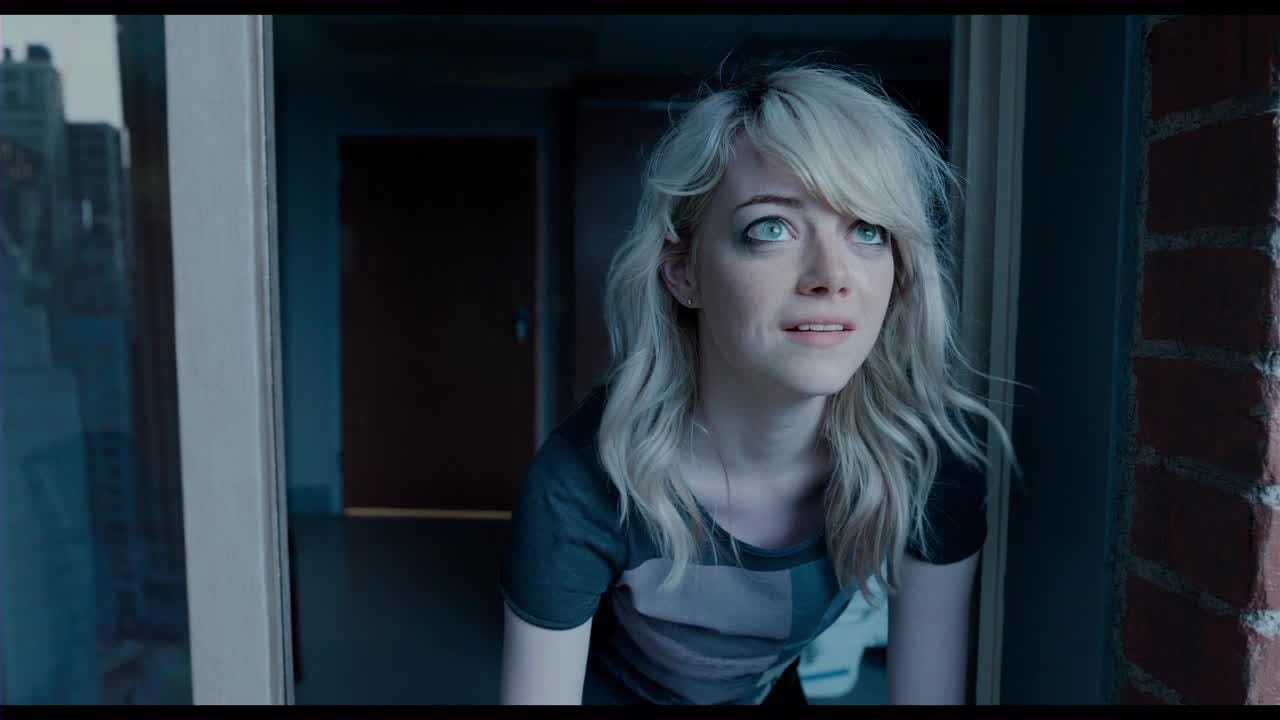
The former is represented by Riggan’s daughter Sam, played by Emma Stone. While Riggan was worried about being “true to himself” as an artist, Sam has struggled with consumption. Riggan’s answer to this has been to keep her close, working in another high-pressure environment as his assistant. He can’t imagine her as serving any other purpose beyond elevating him. Riggan’s also dealing with a “serious actor”, Edward Norton’s very Norton-coded Mike Shiner. Shiner’s a “real actor”, so, you know, he’s got notes, he’s got “ideas”. Part of those ideas involve seducing Sam behind the scenes and under Riggan’s nose. This is a movie with a hostile attitude towards actors. Though it’s amusing to hear the former Batman and the former Hulk throw shade at an unseen Michael Fassbender for his “X-Men“ commitments.
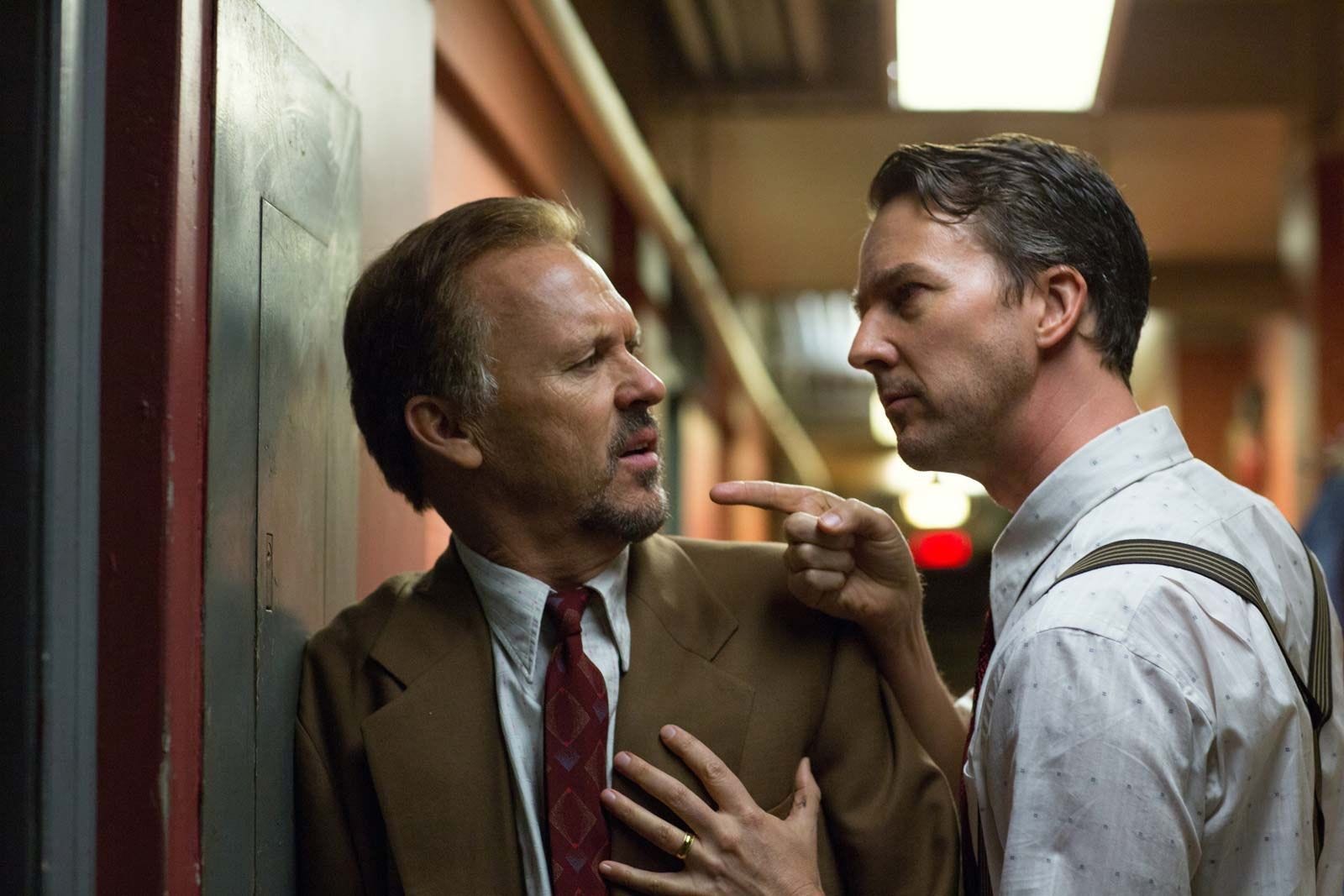
There are a few melodramatic elements being handled here by an extremely-loaded cast – Riggan of course has dalliances with both Naomi Watts and Andrea Riseborough. Zack Galifianakis is low-key amusing as a stage manager, and Amy Ryan and Merritt Wever pop in briefly. But most of the interactions feel artificial, canned, the most inside of inside baseball. Did you ever want to see Edward Norton make fun of method acting? Gosh, what a good sport. The Birdman pyrotechnics and the one-shot premise only further remind you that this is just a bit, inside a bit, inside a gimmick, unusually-skilled actors superficially exploring the art of acting. And in Keaton’s case, lashing out at critics.
Keaton’s presence reminded me of a film he did a couple decades ago, “Game 6”. Based on a Don DeLillo story, it follows Keaton as a playwright in Boston, his nerves rattled that opening night of his new work is the same night as Game 6 of the World Series, his Red Sox facing off against the New York Mets. It probably helps to know that this takes place in 1986, a loaded year for Red Sox fans. There are surreal touches – Keaton does not want to end up like a fellow playwright, played by Griffin Dunne, who used to be a peer but, after one awful review, he now dumpster dives for food. Keaton frequently tangos with a pre-”Iron Man” Robert Downey Jr. as a vengeful critic, but while he leans into the role of the villain, he’s a good-humored foil who inevitably has other things on his mind than just “ruining a play”. The movie is patchy at points, but it remains a story about real people with real concerns in addition to their apprehensions about art and commerce. “Birdman”, by contrast, has a pivotal scene where someone goes “viral” within the span of something like an hour and treats it like a serious plot point. I cannot for my life imagine that Inarritu is fun at parties.
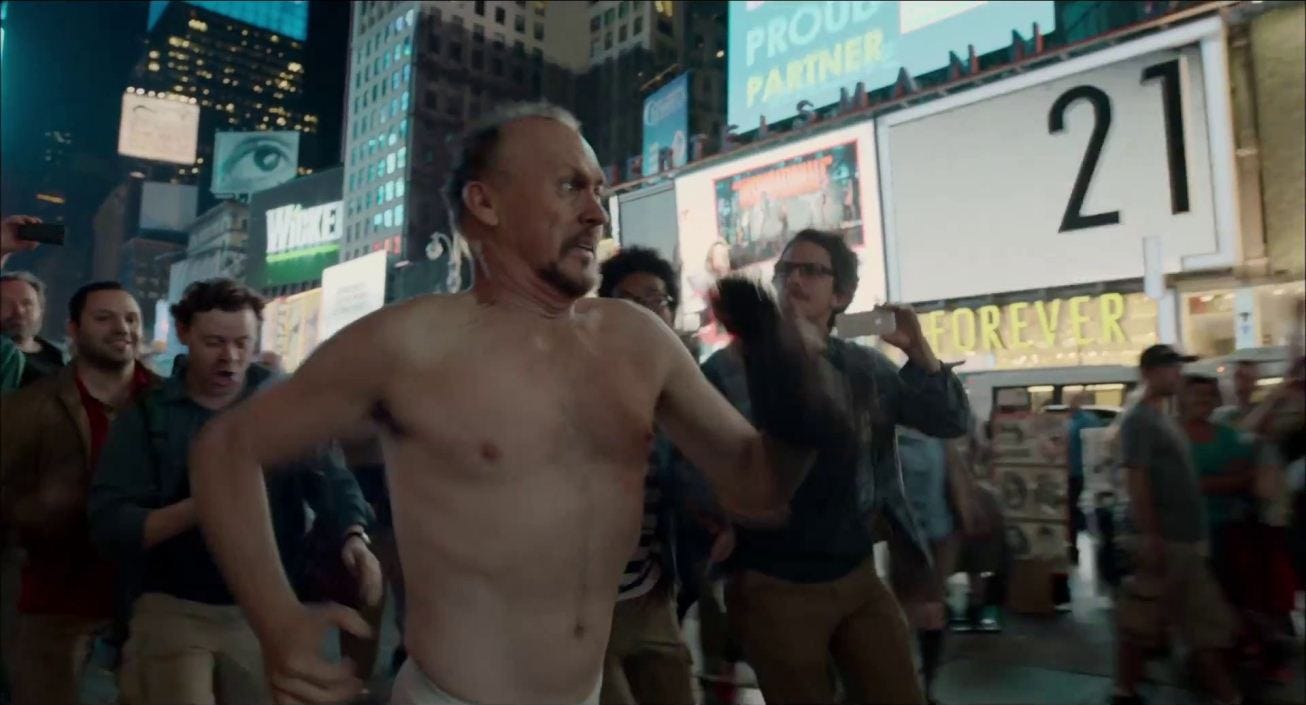
I can't help but notice that “Birdman” did for Keaton what Riggan hoped that his Raymond Carver adaptation would do for him. Keaton received an Academy Award nomination for the role, and for a while he seemed like the frontrunner. Ultimately, his own career trajectory says a lot about “Birdman”. Shortly after the acclaim, he signed up for a superhero movie, playing a birdman — he was the Vulture in “Spider-Man: Homecoming”, the seventh Spider-Man movie. An absurd coincidence, I'm sure you all made jokes about this back then. To cement the irrelevance of Iñárritu's film, years later, in his seventies, Keaton returned to the role of Batman. Fans saw him pop up in “The Flash”, but he had actually shot unused footage for the unreleased “Batgirl” movie as well as the “Aquaman” sequel. Even the star of “Birdman” isn't impressed by “Birdman”.
“Birdman” is a movie focused on acting, which was not something I did regularly, but something I’ve always fantasized about. I don’t think I’m alone on that. I’ve spoken about the acting I had to do in prison, however — a performance as an angry man, a physically-formidable person with a short fuse. You have to lean into your worst instincts, and view every conversation as combat, as a conflict, a confrontation. I got sick of playing that character, but it’s the only part you can play in prison, a place that sniffs out vulnerability and crushes individuality. You cannot be sad in prison. You also cannot be happy. You cannot be. You can only be a threatening menace that tells the guards to stay away and lets everyone else know that you’re “not the one.” Around 2018, when I was transferred to another institution, I made the biggest commitment to that role, knowing I was entering unfamiliar territory. Beforehand, in the SHU, I grew out a long, scraggly, fearsome beard, and I mastered a thousand-mile stare. When I was finally housed in my new arrangement, my roommates found that I was a man of little words or intention. It took maybe a month before they understood I actually liked conversation.
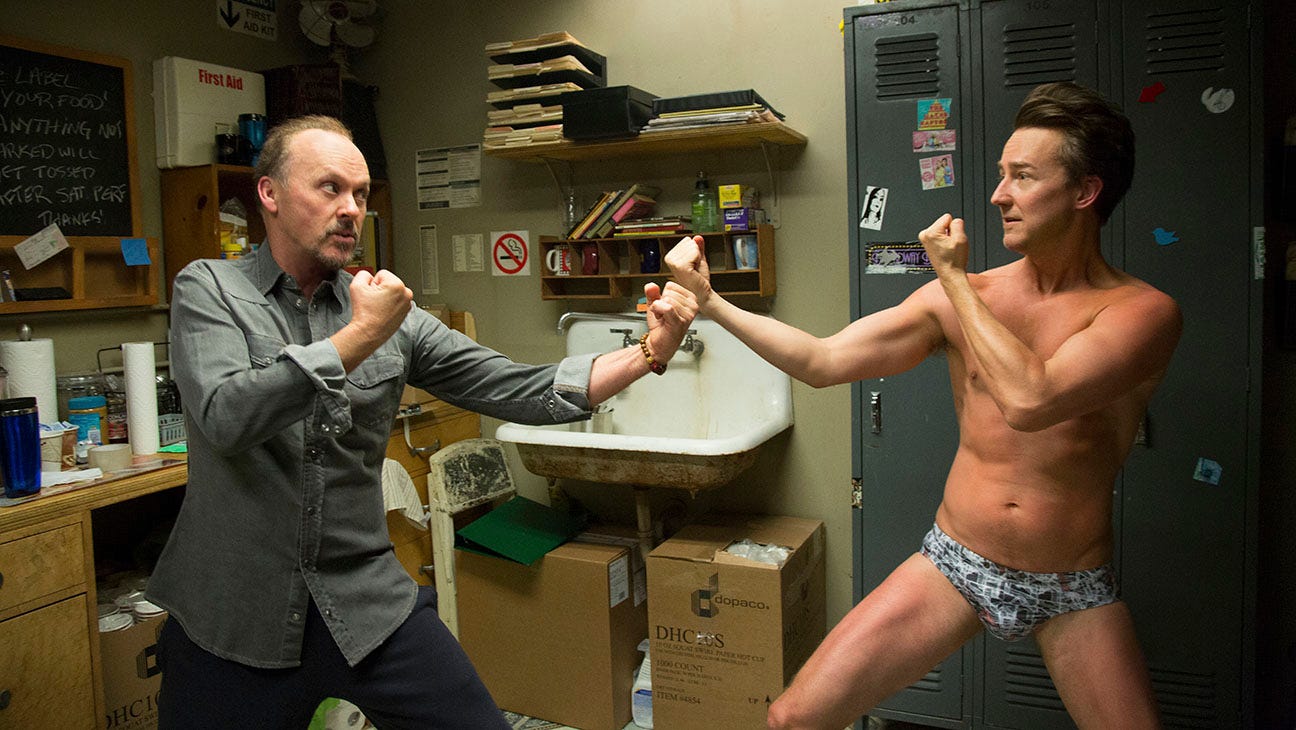
I briefly worked with an imprisoned producer of some sort on a play he wished to perform about prison life. Apparently the warden had okayed this experiment, though I gathered that the warden didn’t know and/or didn’t care about what he was approving, and never actually provided additional resources for the project. The inmate in question never completed the project, as it seemed like he wanted to forever be workshopping, always tinkering, always giving speeches so performers knew their “motivation.” I jumped at the chance to play someone else, anyone else, a new face in a new place. I experimented with different accents and dialects. I wrote the missing scenes the “director” claimed were unfinished. I was playing another prisoner, sure, but it felt like his life was so much bigger than mine, and I loved that. We never did perform that play. But I was grateful that, of all things, acting proved to be the most transportive.
Next week is Back To School Week!
No posts
Comments
Nothing yet. Say the first thing.
Sign in to join the conversation.