
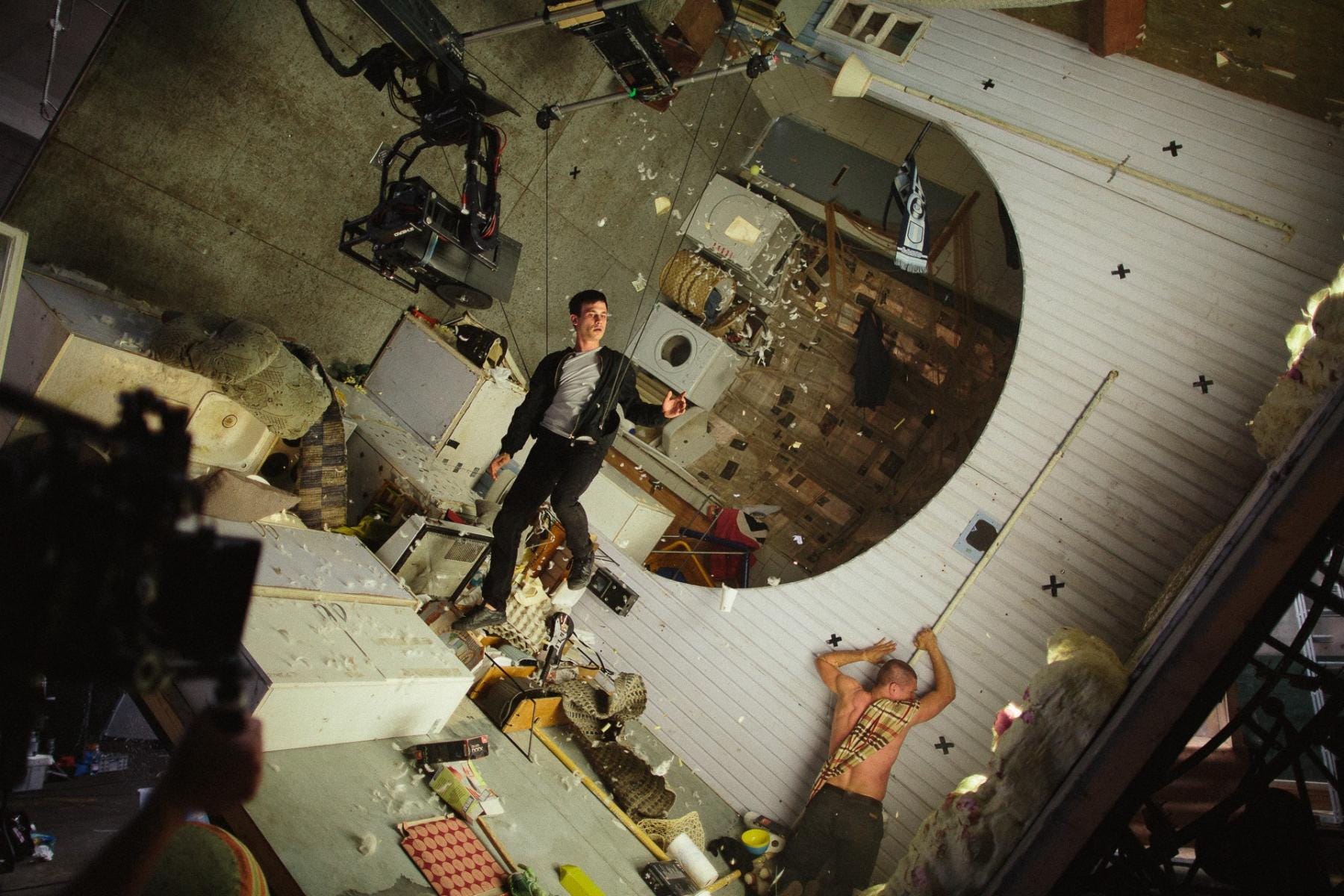
When I was little, I hoped that one day I could fly, and flight was just something you could wish for and obtain with a little bit of hustle and positive thought. I would go running, and would hope that on the tenth or thirtieth step, I would have built up enough momentum to take to the air. The thought always brightened my outlook, it seemed like a fanciful idea that I could one day do something beautiful. Even as a kid, I knew flying gave me an additional opportunity to help people. And at the very least, it would serve as a hopeful symbol. The boy who broke gravity, reminding you that today could be the day where you finally sail beyond your means.
I do think the natural beauty and optimism of flight is inherently tied into the hopefulness of the superhero fantasy. It’s the most common superpower to the point where it’s not even a main ability, but a secondary power, like a throw-in. It’s the French fries of superpowers. The superhero movie genre was built on the back of superpowered flight, with “Superman: The Movie” advertised based on seeing an actor actually escape our atmosphere. Now, characters routinely take to the sky in this genre, to the point where it’s not very interesting. I’m still stuck on the graceful sadness of Brandon Routh in “Superman Returns”, as he would ascend sadly upon learning that there was no Krypton, and no place for him on Earth, his adopted home. At the same time, like everything in “Man Of Steel”, Zack Snyder chose to showcase the aspects of violence that came with flight, the perception of flying as a destructive force instead of a peaceful exhibition. Calamity as a sensation instead of hope as a sentiment. Much of the genre is driven to mimicry – at the start of the superhero boom, actors were uncomfortably strapped to gimbles and forced to engage in uncomfortable wirework to depict this ability. Eventually, the effect was established by turning the actor into rubbery pixels.
Lost within this superpower, within any superpower, is that the characters make the choice to assist society. But that opportunity in this genre is not taken, but rather given to the hero. “Doing good” with your extraordinary power is a privilege. For decades in the comics, if you were a white male, that privilege was embodied in your physical appearance. But who gets the chance to do good, and sometimes make mistakes, and who gets to be feared and isolated? In “Jupiter’s Moon”, there is a young Syrian refugee named Aryan, who is trying to escape to Hungary when he and his father are shot. Aryan sees his father expire. But when he is taken in, the immigration officials discover that he can take flight, levitating in the air as if duty-bound to leave this world behind.
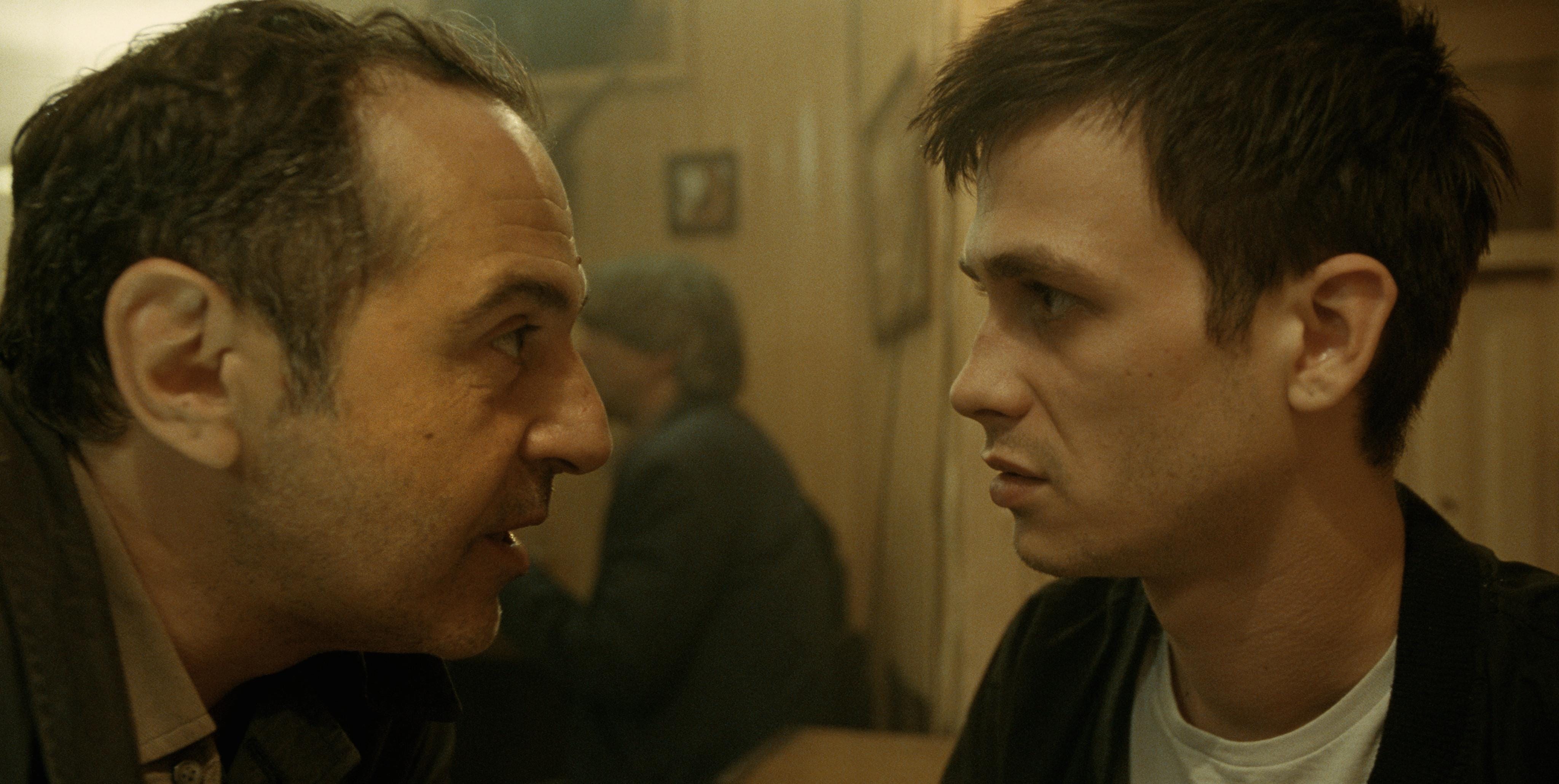
Aryan is not given a chance to “do good”, of course, and instead becomes the fascination of a doctor named Gabor. Gabor uses Aryan’s skill and notes that it’s his chance to break away from his menial career inspecting the health of immigrants trying and failing to cross the border. Gabor isn’t going to use Aryan to fight crime or “do good”. Aryan is a meal ticket, he is a prop to help another man discover a better future. They’re going to do parlor tricks. It’s superficial altruism towards an immigrant, but it’s really someone in power using another with astounding abilities. A common immigrant experience.
There is a thrilling bit of superheroism at the film’s midpoint. Aryan ends up following a terrorist into an underground train station, as he’s equipped with a bomb. But as much as Aryan pursues him, this isn’t a moment of Aryan “doing good”. In fact, he’s been manipulated by Gabor into thinking the terrorist has ties to his dead father, who Gabor has told him is still alive. The familial relationships of an immigrant, exploited before Aryan can commit an actual good act. When he cannot vanquish the bomb, he levitates again, an ability that he seems to only have a tenuous control over. It is a defense mechanism, Aryan isolating himself from disaster, yet another violent event in which his body forcibly removes him from the chaos.
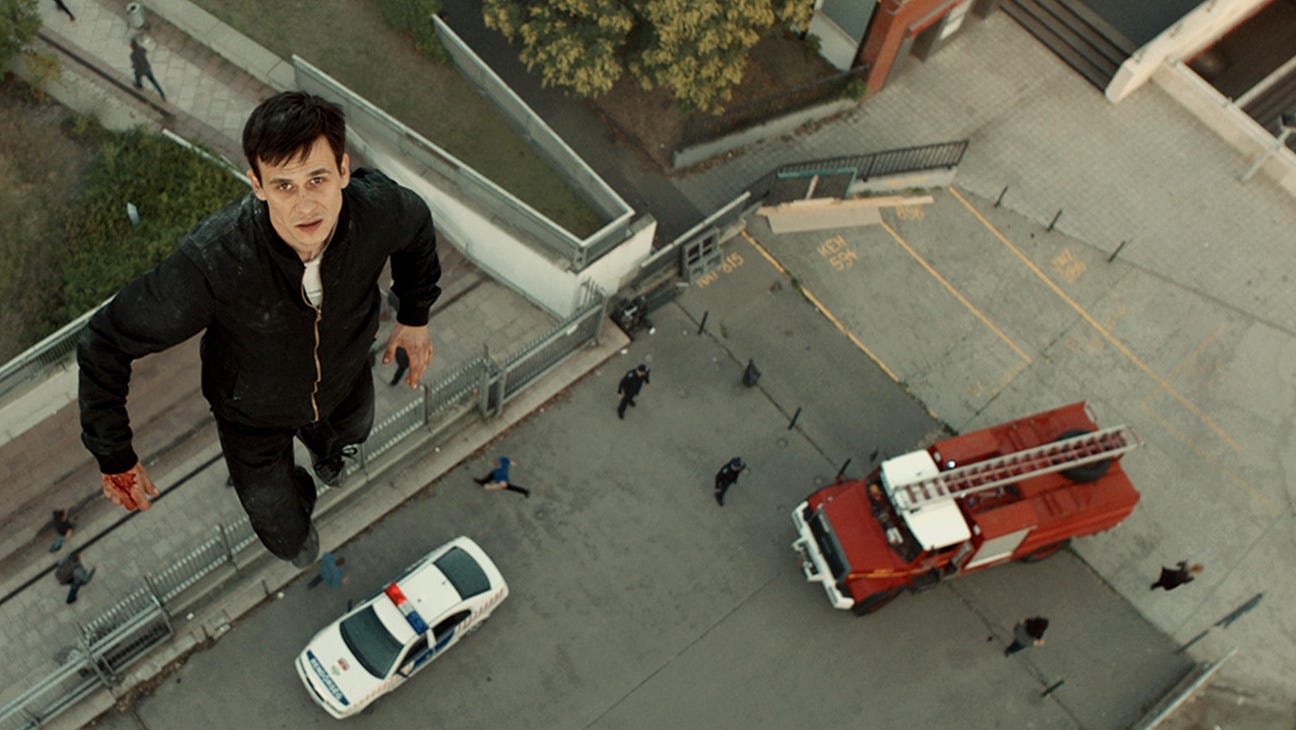
The flying sequences are very much the highlights of the film, as Aryan’s physical movements are exhibited as interpretive dance, but without restriction or form. Soaring above the people, he looks down, quizzically, silently, as the camera captures him spinning and gliding. You can see him wondering, am I different from them? Few people notice, as he sails over highways and skyscrapers, a high wire act in the clouds. There are a handful of moments like this. One that flowers in the mind is as he slowly descends from the top of an apartment building to the bottom, and we follow him as he passes by several open windows of people eating, watching television, having sex, all in their apartments. All ordinary people, unaware they’re in the company of something extraordinary.
Director Kornel Mundruczo is a maximalist filmmaker who will gladly let some images overshadow the themes and ideas of his films, or even expose their disposability. I very much liked an earlier film of his, “White God”, but it was an admittedly-thin premise tied to the spectacular performances of the onscreen dogs who served as the film’s stars. Mundruczo favors long, active takes, heavily choreographed for maximum effect. Indeed, there is a Friedkin-level car sequence in the third act that yanks you out of your chair, a moment that inspires even genuine fear. But it’s a problem that Mudroczo hasn’t found the right balance of spectacle and content, so part of that fear is, “I hope the crew of this movie doesn’t get hurt.” “Jupiter’s Moon” is less a movie about immigrants as much as it’s a sensory experience. But maybe that’s just what these sorts of stories require.

If you stay informed, then you become aware of just how few rights you have, and how many underhanded ways the government is surveilling you and detaining your neighbors. I would assume most every day citizens feel as if they’re not being watched, they’re not being inspected, they’re not candidates for arrest. They’re probably casually thinking it’s not going to happen to them. Well, I regret to inform you that I’m ultimately an average citizen, I don’t always stay as informed as I should. Which is why I did not know that if you’re entering or leaving the country, or even if you’re only a hundred miles from the border, your phone can be searched by the border police.
In this case, a man is suing for an invasion of privacy. The “Border Search Exception” is apparently a result of September 11th. But for obvious reasons, border searches of this nature have escalated to an extreme extent. This also results in seizure of your personal items, and if you’ve ever owned something that officials have confiscated, you know how excruciating it can be to get it back. The standards for conducting such a search are so low as to be borderline nonexistent. Some would concede this is about deterring people from entering the country, as this administration has made international travel a nightmare to ward off just about anyone trying to enter the country. But the more I read about this, the more it’s clear that these are people determined to make it more difficult to even exist as an American. This is petty authoritarian bullying. It seems like more trouble than it’s worth until American people start feeling more sheepish about participating in a functioning society.
No posts
Comments
Nothing yet. Say the first thing.
Sign in to join the conversation.