
Disclaimer:
If you think this won’t touch your life, you’re probably wrong. The scale of what’s coming is bigger - and faster - than most people expect.
Last time I landed in Malaysia, I walked into the future by accident.
From the moment the plane door opened to sitting on the KLIA Express train, around 18 minutes had passed.
No lines. No questions. No officer is trying to guess whether I “look like” my passport photo.
Just a smooth simple process: Scan passport. Step forward. Wait a few seconds. Green light. Done.
No visa check. No stamp. No human. Nothing.
Same story happened to me in Dubai Airport few years ago (DXB as well, but I thought it was more like an exception, because it is Dubai)
AI and algorithmic screening are already changing the way we travel, getting visas and residency permits.
Look at the real world:
Just five years ago it was three to five times easier to get EU residency, a second passport, a Golden Visa, or even something as basic as opening a bank account or setting up a company.
That wasn’t “the good old days.” That was yesterday.
The window is closing, and the systems deciding your mobility are getting stricter, not looser.
If you are an entrepreneur, a global citizen, or someone building a virtual company, you need to understand that the game has changed completely.
Same applies for anyone getting a second residency, a long-term visa, or a second passport, this is the new game: before you impress a government, you have to impress its algorithm.
You can’t outplay, out-charm, or outsmart an algorithm.
When you will be entering a new country soon, the question at the border will not be
“Do you have enough money, what is the purpose of your travel or if you have a return flight back?”
but
“Is your money, your work, your travel plans and your digital footprint are good enough to let you enter the country?”
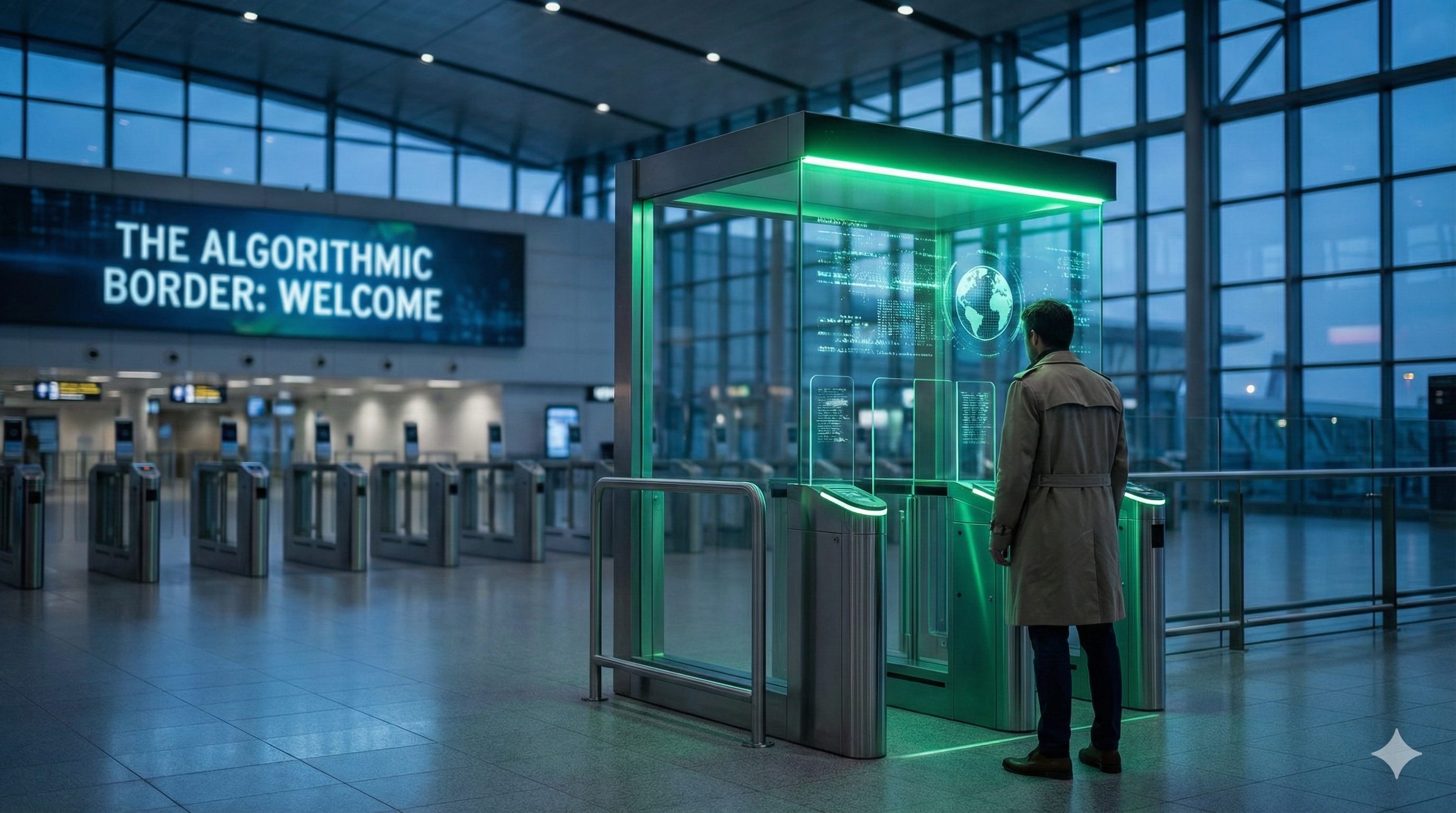
The old game was human and narrative-driven: You could charm an officer, hire a sharp lawyer, tell a neat story about your “business activities”.
Your travel story made sense: You showed up, smiled, maybe made small talk, handed over a stack of papers and you was good to go.
What matters now is data integrity - clean, consistent, traceable.
When you apply for a visa, you’re not just applying to a country.
You’re applying to its algorithm. And that algorithm is the first checkpoint - long before any human will start checking your application.
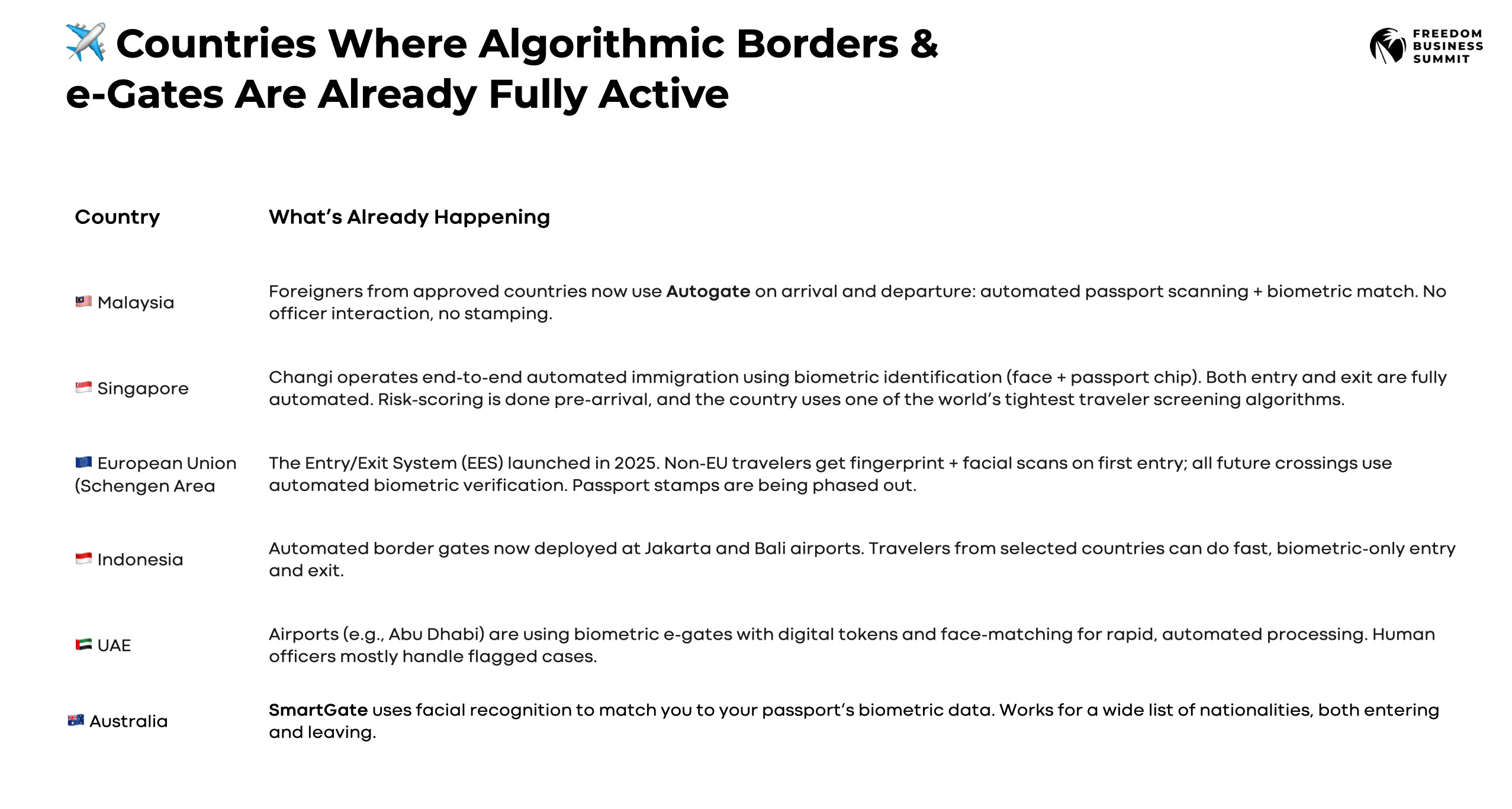
For example Malaysia and Singapore - they’re leading the trend. Both countries are quietly turning their borders into software, not desks with officers.
Actually, Malaysia 🇲🇾 is one of the most underrated players in the global “algorithmic border” game.
My experience with 18 minutes from plane to train - wasn’t the exception.
It’s the new default.
Singapore 🇸🇬 isn’t “adopting” algorithmic borders - Singapore practically invented the category and they have world’s most advanced traveler risk-scoring systems - their system evaluates travelers days before arrival.
Think of this as the “Credit Score” for your physical freedom.
It’s basically a map of how different countries’ algorithms judge you the moment your passport hits their system. Not the officer. The code.
Each country scores you on things like:
Your travel history pattern
Your biometric match
Your visa consistency
Your digital paperwork (or lack of it)
Your overstay probability
Your “financial normality” signal
Your previous entries and exits
The Index tells you who filters what, and how likely you are to get the green light, the slow lane, or who will hear “please follow the officer.”
Imagine the immigration system will ask you only these questions before letting you in:
Does this person’s financial background make sense?
Algorithms love narratives that are boring, predictable, and logically consistent.Is this person likely to break the rules?
Overstay behavior, sudden changes in travel patterns, strange flight routes - it all gets scored.Does this person’s past behavior match the paperwork they’re presenting today?
Mismatch triggers audits. Audits slow everything.
As travel becomes more automated, and countries adopt Malaysia/Singapore-style algorithmic borders, your data hygiene becomes your new passport.
Your balance matters less than your story, and your story is written in data.
You don’t outplay the algorithm by hacking the Matrix.
You outplay it by removing the reasons the Matrix would ever look at you.
It’s about removing the reasons the matrix would ever care about you in the first place.
You need to practice Data Hygiene and build a Mobility Stack.
Become Boring on Paper
The algorithm rewards predictability. Your financial structures, your residency claims, and your travel patterns need to be logically consistent.Make Your Travel Story Match Your Footprint
If you say you live in Dubai but spend 300 days in London, the algorithm will know. Align your story with your footprint.
Build a Multi Country Stack
One passport is a single point of failure. One residency is a trap. Smart entrepreneurs are building a stack.
Smart move is to have: multiple residencies, multiple SIMs, multiple bank accounts, multiple identities/residencies
Not to hide - but to avoid depending on any single algorithm’s interpretation of your life.
Your mobility will depend on your Travel Score, just like your credit score depends on your financial behavior.
You outplay the algorithm the same way you outplay life:
Not by tricking it, but by becoming the type of person the system sees and says, “Easy. Let him through.”
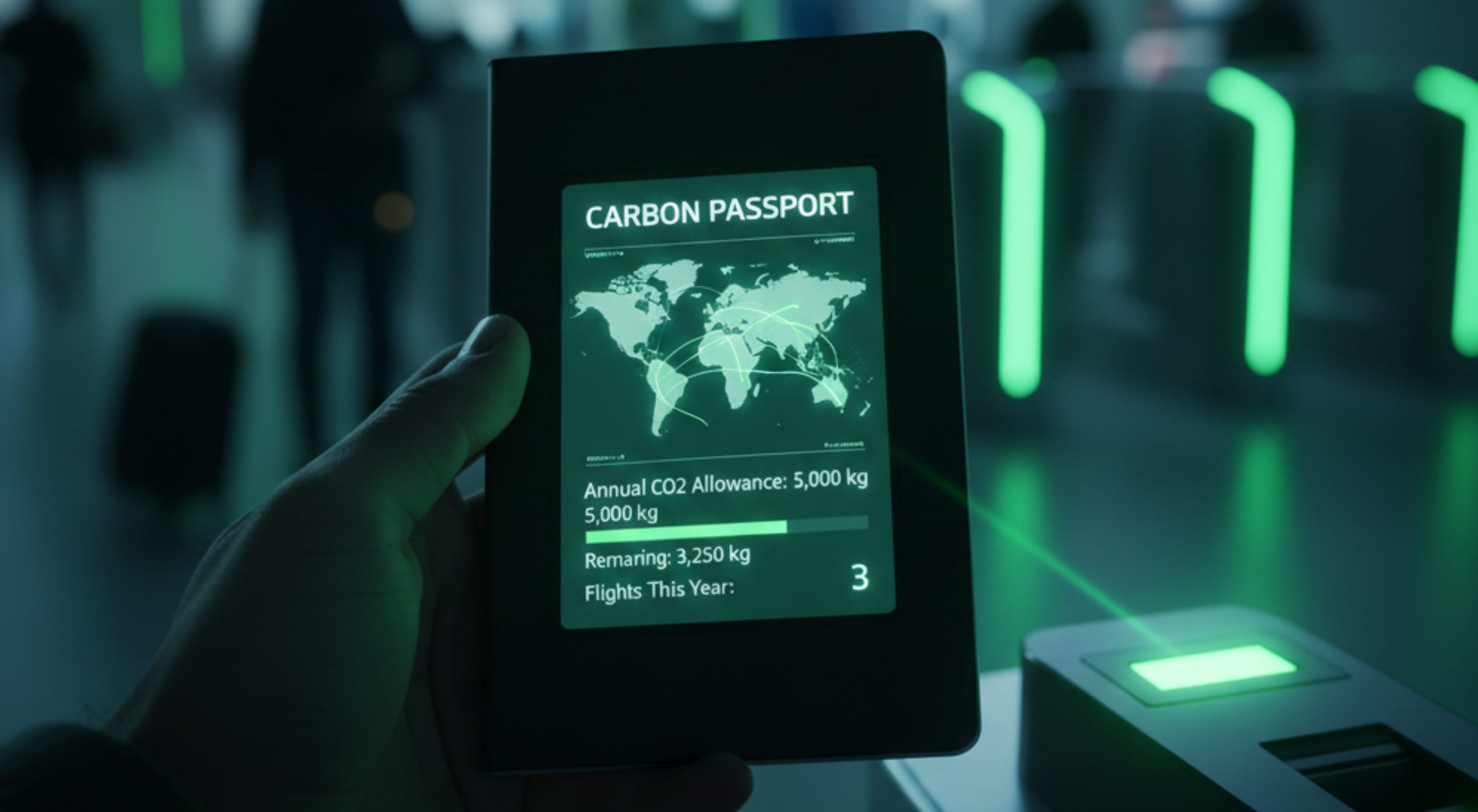
Carbon passports sound like sci-fi few years ago, but the idea is very simple: your right to move depends on your carbon footprint.
Think of it as a frequent-flyer program run by the Ministry of Climate, not the airline.
You’re given an annual carbon allowance - like a budget.
Every time you: book a flight, cross a border, stay in a hotel, make a high-emission purchase
…the system deducts carbon units from your balance.
Travel too much?
Your balance hits zero: No more flights. Try again next year.
Myth #1: Carbon Passports Are a Conspiracy Theory
They’re not.
Nobody at the airport is scanning your carbon aura - yet - but the infrastructure for carbon-scored mobility already exists.
Carbon accounting frameworks (UN, OECD, WEF)
Digital travel identity systems (IATA OneID, EU EES)
Personal carbon footprint apps (government-backed in UK, Sweden, Korea)
National carbon budgets in climate legislation
Flight emissions per passenger tracking baked into airline systems
When you combine carbon accounting + digital identity + border pre-clearance…
It’s not crazy to see where it all leads.
Myth #2: It Will Happen Suddenly
No chance.
There won’t be a “Carbon Passport Act of 2030.”
They will layer it in until it feels like infrastructure.
2025: Carbon scoring becomes a normal metric in travel apps, insurance, and airport taxes. Certain countries experiment with “green travel lanes.”
2030: High-emission travelers pay significantly more. Low-emission travelers receive perks or faster entry. Some countries begin limiting travelers into carbon quotas.
Singapore is building the tax infrastructure: It’s not a carbon passport yet, but the pieces are in place - carbon pricing, fuel levies, emission measurement.
Governments sell it as “good for the planet.” Airlines call it “sustainable travel.”
But underneath the marketing, it’s basically a digital budget that limits how much you can travel.
Your Personal Mobility is shifting from a right to a subscription service with a data cap.
The world is turning into one giant software update.
Borders, flights, and visas will be run by code, not immigration officers.
If you ignore this, you will eventually find yourself “locked out” of the global system, not by a person, but by a line of code that deemed you “high risk” or “over budget.”
Residency rules today are way easier than they’ll be in 10 years. Algorithms will make approvals tougher.
Get your options before everything gets strict. Don’t wait for the red light.
Learn the game now, and the algorithm becomes your superpower instead of your cage.
Next step could be building your “Mobility Stack” - the personal setup to diversify your global presence.
No posts
Comments
Nothing yet. Say the first thing.
Sign in to join the conversation.