
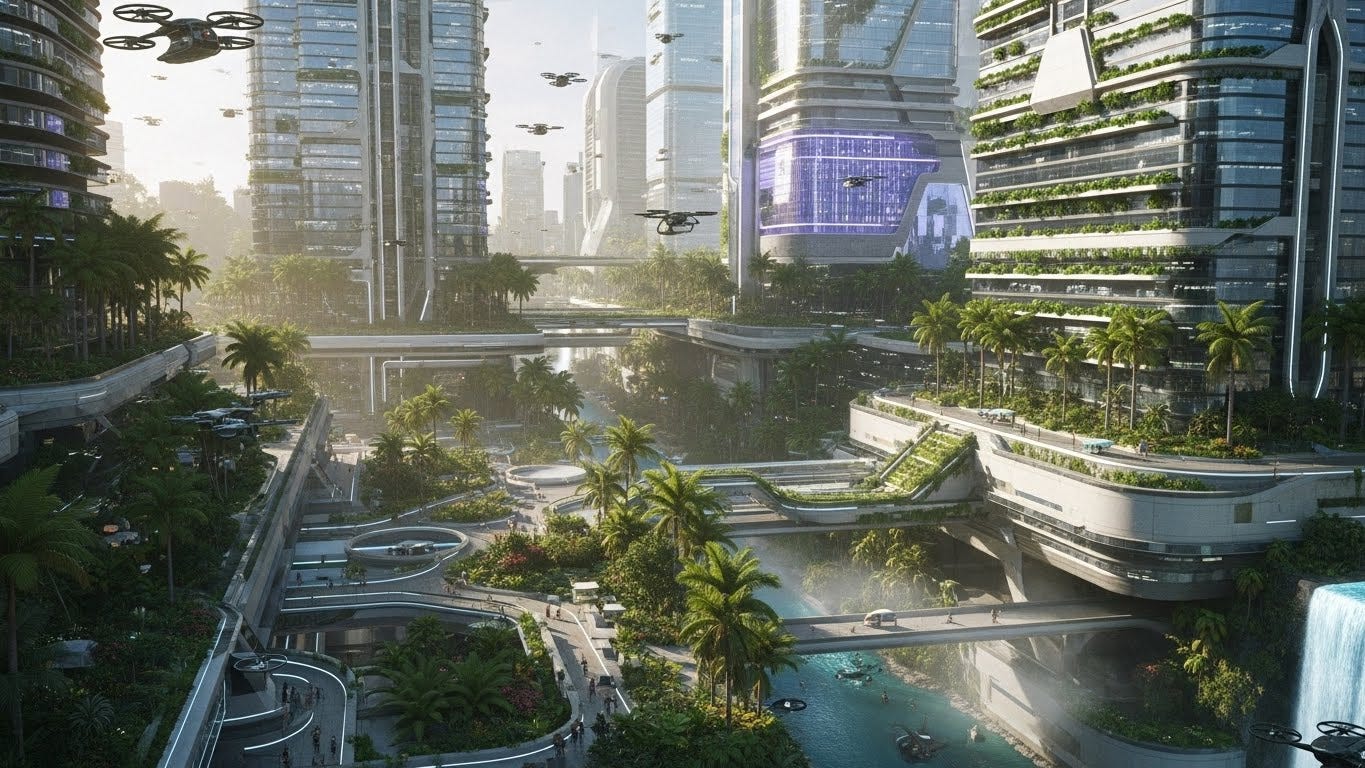
Imagine a future in 5 years from now. Year 2030. This is not that far distant.
How much will our world really change?
Back in the days, I was reading a sci-fi book from 1961 called ‘The Stainless Steel Rat’ by Harry Harrison.
The main hero in the book: Jim diGriz - “Stainless Steel Rat” - lives in a galaxy where everything is automated, optimized, and predictable. A perfect system. A machine-run society.
Harrison, in his book was sketching a world ruled by automated logic and described pattern of the world we’re entering.
Jim survives in that world because he refuses to behave the way the system expects. He cheats the algorithm. He stays human in a world that run by machine.
There’s a line in one of the books:
“Only the unexpected man can live in a perfectly planned society. When society becomes too optimized, the advantage shifts to the human who can improvise, stay unpredictable, adapt, and out-imagine the algorithm.”
Harry Harrison, The Stainless Still Rat
Actually, this line in the book hits harder today than it did sixty years ago.
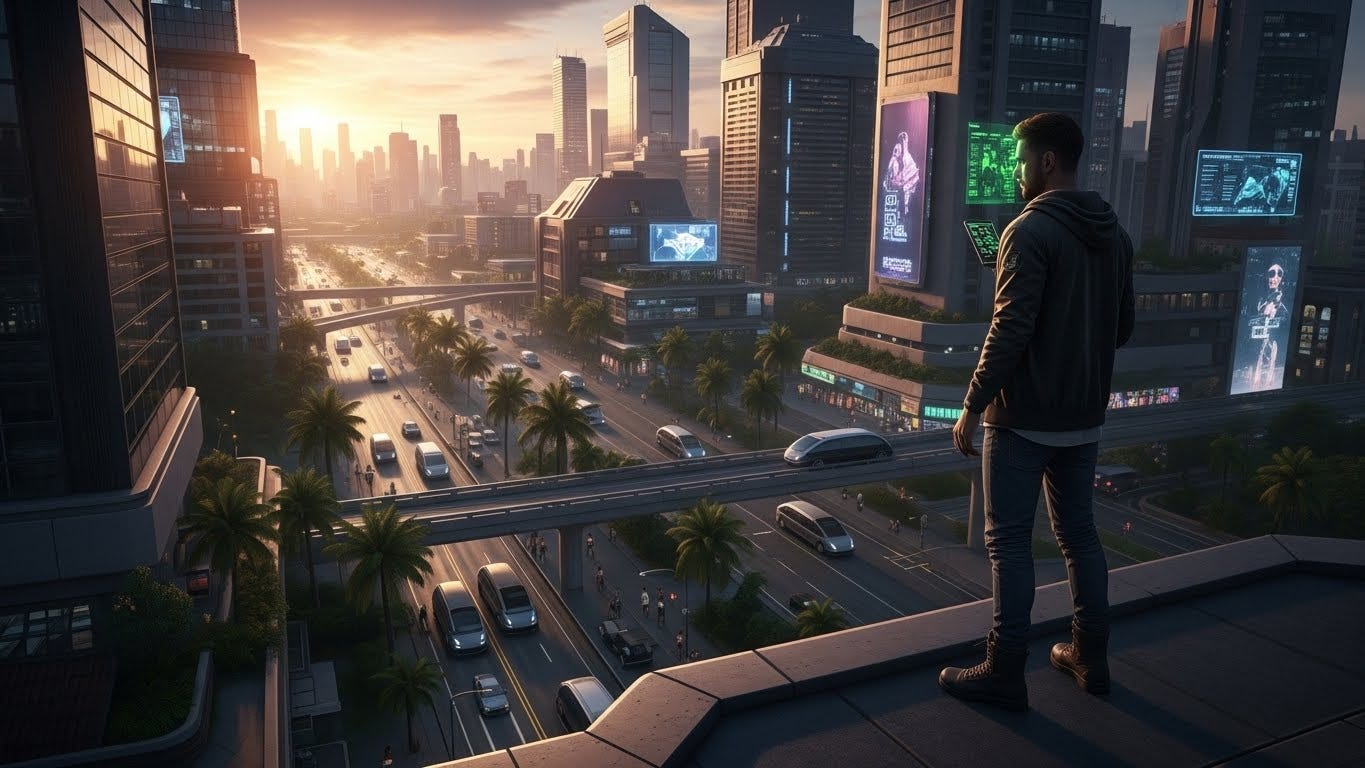
If you zoom out and look at the trend lines, the next five years become pretty predictable. Just look at the current trends, what will probably happen:
AI won’t destroy work. It will change it.
Taxes, safety, lifestyle, personal freedom - they will remain the key factors.
Now add AI on top, and suddenly one person with a laptop has more leverage than a company did twenty years ago.
Mobility stops being a luxury. It becomes your life strategy.
AI will low down the value of knowledge work: coding, analysis, design, content, marketing - all the things that once required “skill” become automated commodities.
The value of a diploma, certification, or technical skill: will collapse and the cost of entry for complex cognitive tasks drops to zero, killing the traditional “stable career.”
Mass migration and global mobility will go up: people will move countries at unprecedented levels for tax benefits, safety, lifestyle quality, political stability, and community. But the paradox: travelling, getting visas and residencies will become harder and more expensive.
AI leverage give people the freedom to move: there will a massive demand for new, flexible residency models and network states (already happening)
People will feel more disconnected than ever - as digital life grows - our nervous system weakens. Emotional exhaustion, anxiety, and depression will rise.
The main question is:
What are the exact skill sets, mobility strategies, and business structures that will make you unshakeable in the AI Era?
Probably, things will develop in this way:
Digitalization made work location-free.
AI made individuals 10x more productive.
Governments became slower, stricter, and more intrusive.
Cities became more expensive, crowded, and unsafe.
Communities become fragmented, so people seek new tribes
Put these together and you get a bigger picture:
Millions of people realizing they don’t need to stay where they were born, and they don’t want to
Now, the twist: as mobility increases, controls tighten.
Stricter visa rules, more documentation, AI-powered border checks, carbon passport - moving becomes more necessary, but harder.
Global mobility shifts from “nice-to-have service” to critical life infrastructure - as essential as banking or healthcare.
The market splits in two directions:
High-net-worth mobility (investment residencies, global structuring) - they buy time, freedom, and leverage through investment residencies, second citizenships, global tax structuring. They want premium access.
Mass skilled-migrant mobility (nomads, digital workers, startup founders) - who are not wealthy enough to buy their way into a country but are valuable enough that countries now compete for them. They’re the new middle class of global mobility.
Logic is entrepreneurial: opportunity + cost arbitrage + speed.
Governments already understand the math:
One group brings capital, the other brings innovation and growth. Both bring mobility.
We don’t know the future for sure and we can’t predict, but we still can make educated guesses and assumptions based on what is happening now.
When everything becomes digital, the real world starts to feel special - almost like treasure.
That’s why real-world experiences become a luxury:
Digital things are everywhere.
Real-life things are rare.
Becoming AI-proof isn’t about fighting the waves; it’s about surfing it with better balance than everyone else.
Paradox, but digital life will be a massive reason for increasing of emotional exhaustion, anxiety, and depression.
Many industries, will become less scalable, but more premium, human centric and more experimental.
AI replaces execution.
People who key industry shifts - remain irreplaceable.
1. Longevity, Biohacking & Human Optimization - people are living longer but feeling worse. Modern life destroys sleep, hormones, attention, and energy. AI accelerates this burnout.
Monetization: high-end programs, retreats, subscription-based health management.
2. Elite Education, Mentorship & Skill Acceleration - the world no longer rewards diplomas - it rewards transformation. Think: breathwork, meditation…
Monetization: cohort programs, memberships, high-ticket coaching, boutique academies.
3. Cybersecurity & Digital Risk Management - every business becomes a digital organism, always exposed. AI-generated attacks scale faster than human defenses. Data breaches, identity theft, deepfake extortion - this becomes the new normal.
Monetization: security audits, advisory, ongoing protection retainers, risk consulting for high-net-worth clients.
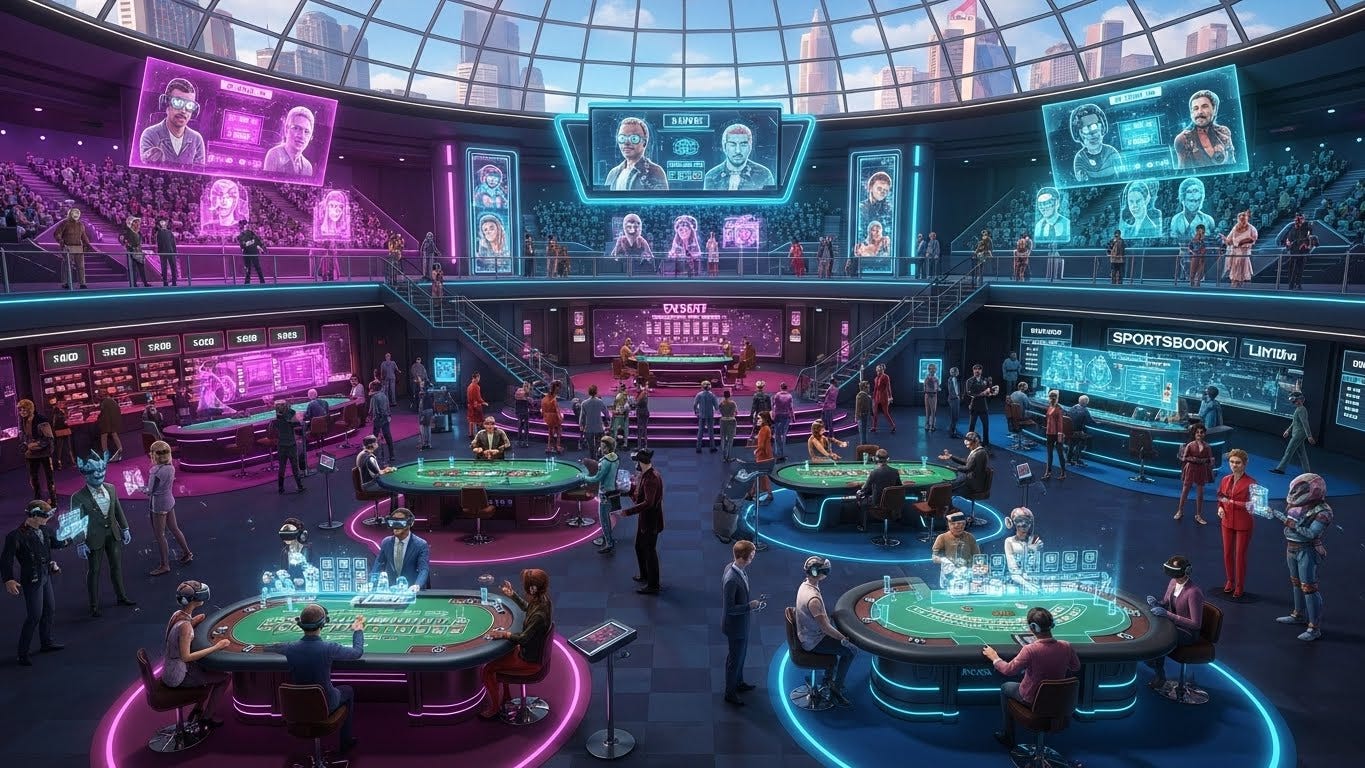
4. iGaming, Digital Entertainment & Prediction Markets - AI makes content infinite with games, stories, simulations, worlds. People want stimulation and dopamine. Prediction markets like Polymarket will grow because people will bet on events (illusion of control). Betting becomes a form of entertainment; gaming becomes an alternate reality.
Monetization: platforms, microtransactions, creator economies, digital casinos, prediction markets, gamified experiences.
5. AI Infrastructure, Automation Agencies & Integration Services - every business wants to use AI, but almost none know how. Companies need custom workflows, automations, agents, data setups, and AI operations. It’s the new “internet agency boom.”
Monetization: setup fees, monthly retainers, process automation, vertical AI tools, white-label systems.
6. Global Mobility & International Structuring - tax arbitrage, regulatory arbitrage, safety, and lifestyle engineering become normal. People want multiple passports, offshore companies, and Plan B structures.
Monetization: residency advisory, company formation, tax structuring, premium mobility planning
7. Real-World Experience & Community-Based Businesses - the more digital the world becomes, the more valuable “being somewhere with your tribe” becomes. Communities built around shared values, shared governance, and shared economic engines. Think micro-societies with their own culture, identity, and mobility stack - network states.
Monetization: private membership communities, curated travel and retreats, community hubs, co-living/campus models, tokenized memberships, IRL events, learning villages
The next five years won’t feel like science fiction, but it will more feel like a messy upgrade of everything we already see today.
Knowledge work becomes cheap. Credentials lose value. Mobility explodes. Borders tighten. People burn out faster. Governments respond slower. And meaning becomes the rarest commodity.
Seven industries will rise and these aren’t woo-woo sectors. They’re simply grow where demand goes.
People want health, safety, identity, leverage, and tribe.
AI can generate everything except those.
The next step is deciding which arena you want to master:
Health, education, risk, gaming, automation, mobility, or community.
Get ready to become a Future Proof Citizen.
Stop playing by rules that are expired back in 2018.
It’s not about being the smartest or richest. It’s about being the most portable. Future-proof people build their own system. They’re mobile, adaptable, curious, and they use creativity and leverage.
No posts
Comments
Nothing yet. Say the first thing.
Sign in to join the conversation.