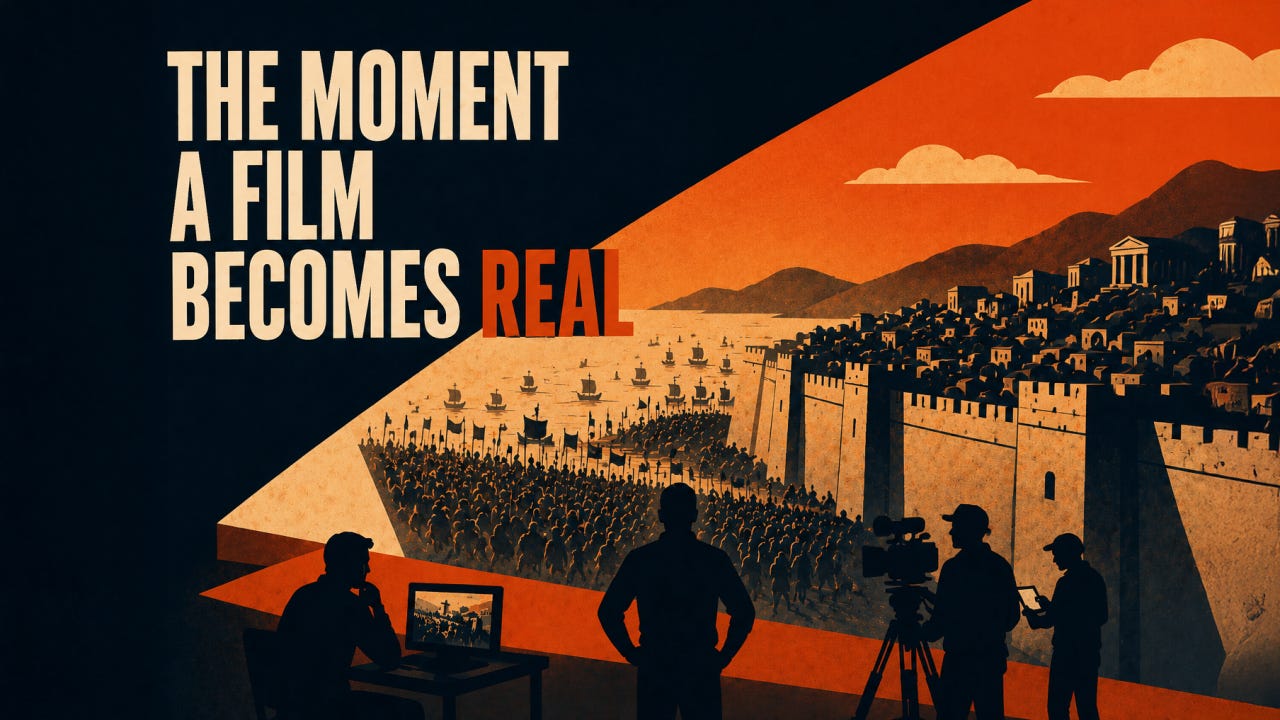
The Moment a Film Becomes Real
“The Spartans are at the walls of Troy.”

Mein persönlicher Substack
Live Last read · last published · next check
“The Spartans are at the walls of Troy.”
The VFX industry watched computers become affordable, software become accessible, and training become available almost everywhere.
There is a persistent tendency to talk about creativity in filmmaking as if it existed in a space of relative freedom, as if ideas could emerge first and only later be confronted with the realities of production.
The most consequential machine may not be the one making the film.
The first mistake is believing the miracle.
Nobody objects when the sentence enters the room.
Film industries like to describe themselves as ecosystems, and the metaphor is useful because film has always depended on density.
The mainstream film industry is not nearly as innovative as it claims.
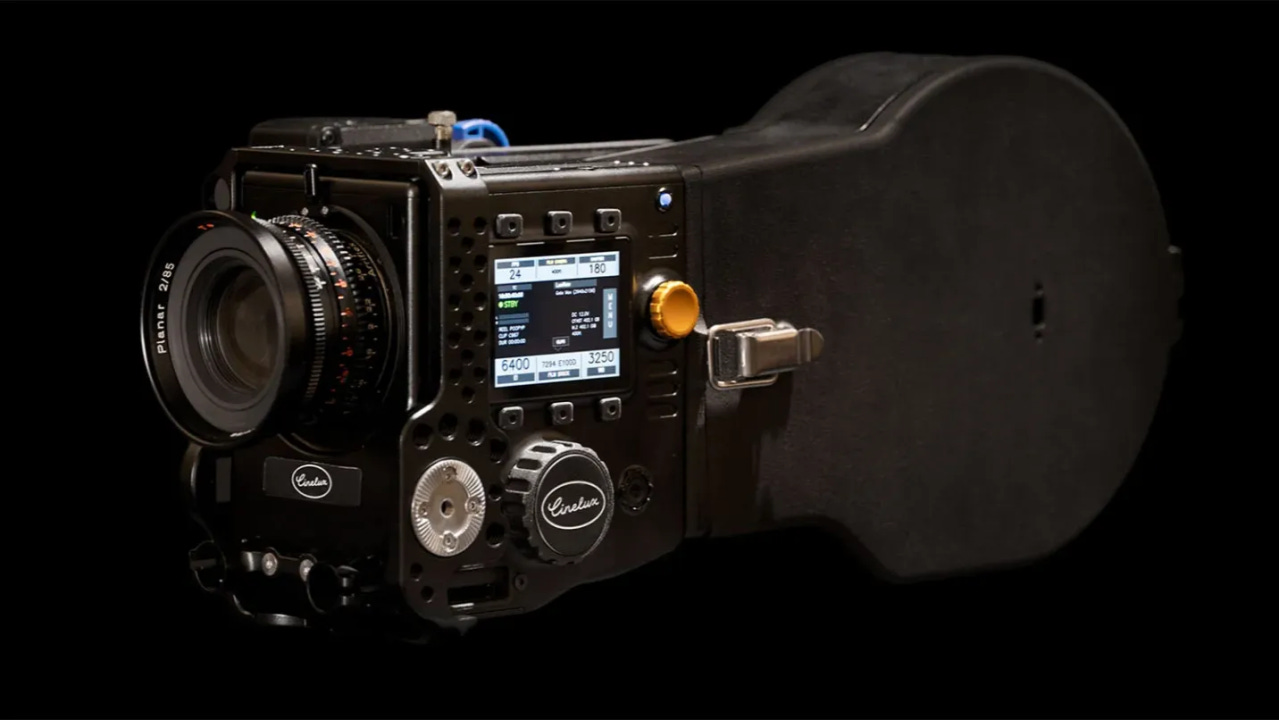
A few days ago, I read about the Cinelux SIXTEEN, a new Super 16 camera concept that exposes real film while also providing a digital image for monitoring, proxies, metadata and contemporary workflow use.
“AI can write you excellent imitative verse,” Ben Affleck said, “but it cannot write you Shakespeare.” It is a good sentence because it refuses two bad answers at once.
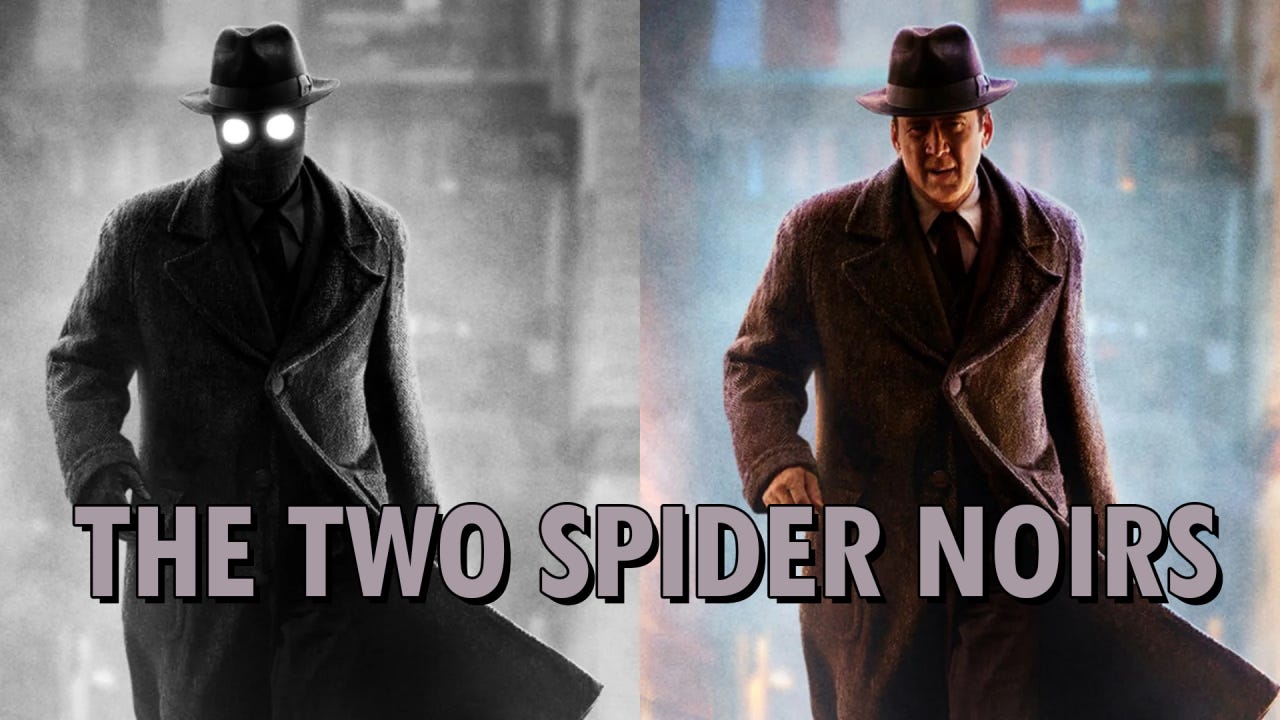
The Color Version Is The Real Mystery
How modern cinema came to depend on a craft it still publicly treats as contamination
Film production is often described as a chain of decisions, and that is true as far as it goes.
There is a comforting idea that moves quietly through our industry, repeated so often that it begins to feel like common sense.
Kane Parsons is not in the news because he said something predictable about AI.
IT IS ABOUT HOLLYWOOD.
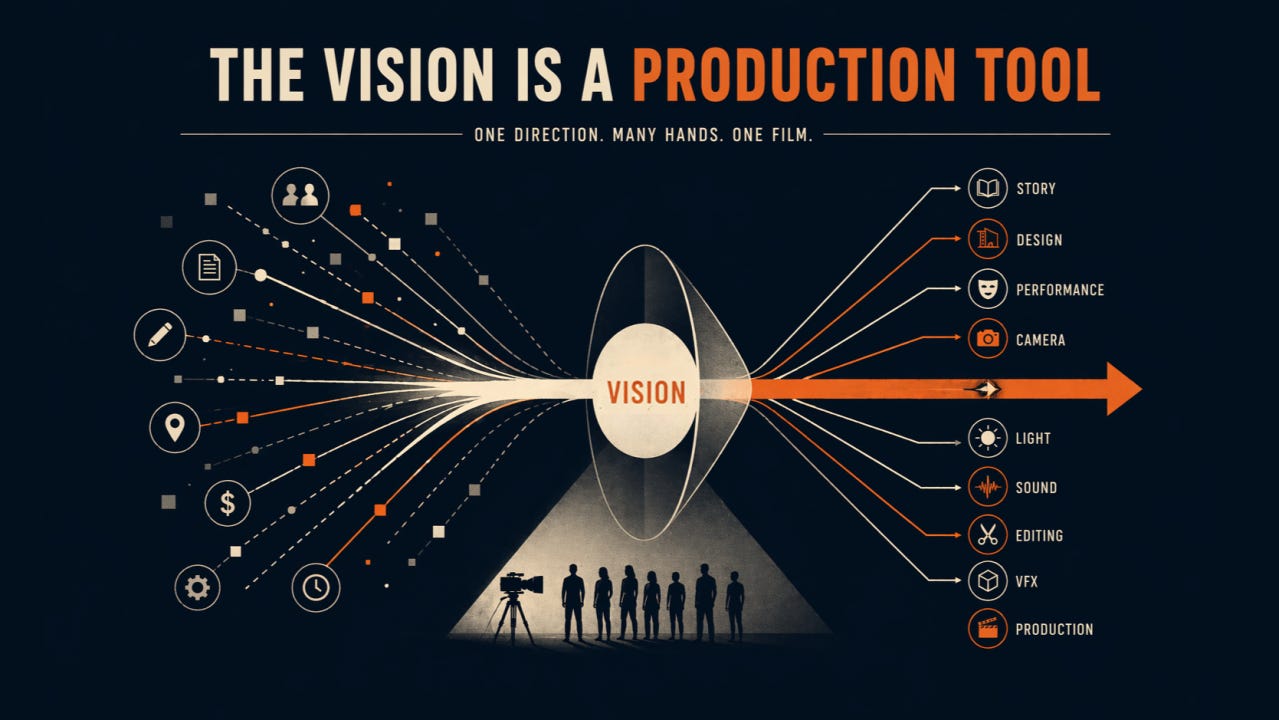
In film, people often speak about vision as if it were something mysterious.