
Tokenizing real-world assets (RWAs) allows investors to access markets that were once limited to large institutions. By turning physical assets—such as commercial ships, real estate, or infrastructure—into tradable digital units, tokenization improves liquidity and lowers entry barriers. But the regulatory landscape behind these innovations remains uneven and complex. For Fractalized, a platform focused on maritime investment, understanding and aligning with these diverse frameworks isn't just about compliance—it's a core part of the business model.
This article examines the regulatory regimes in the United States, United Kingdom, United Arab Emirates, Singapore, and Panama, exploring how they classify digital assets, license digital asset service providers, and balance innovation with investor protection. We also look at how Fractalized’s regulatory strategy leverages these frameworks to support its growth ambitions.
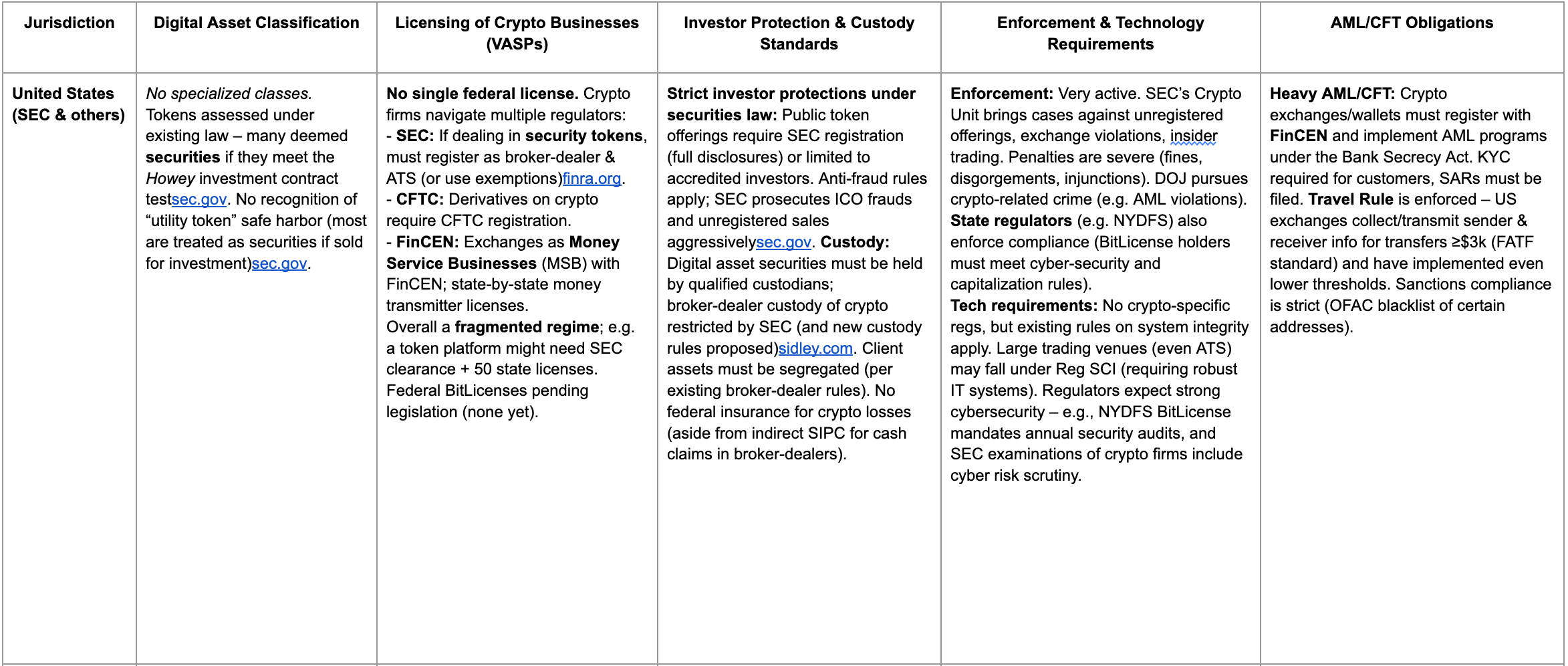
The U.S. applies legacy securities laws to digital assets, with no crypto-specific statute. The SEC relies on the Howey Test, making most tokenized RWAs securities. Firms dealing in such tokens must register as broker-dealers, operate ATS platforms, and meet overlapping federal and state requirements. Custody is another challenge: qualified custodians are required, but crypto-specific approvals remain rare and cumbersome.
Strengths:
Deep capital markets
High investor protection
Established disclosure norms
Weaknesses:
No bespoke tokenization framework
Multi-agency fragmentation (SEC, CFTC, FinCEN, state regulators)
High compliance and operational costs
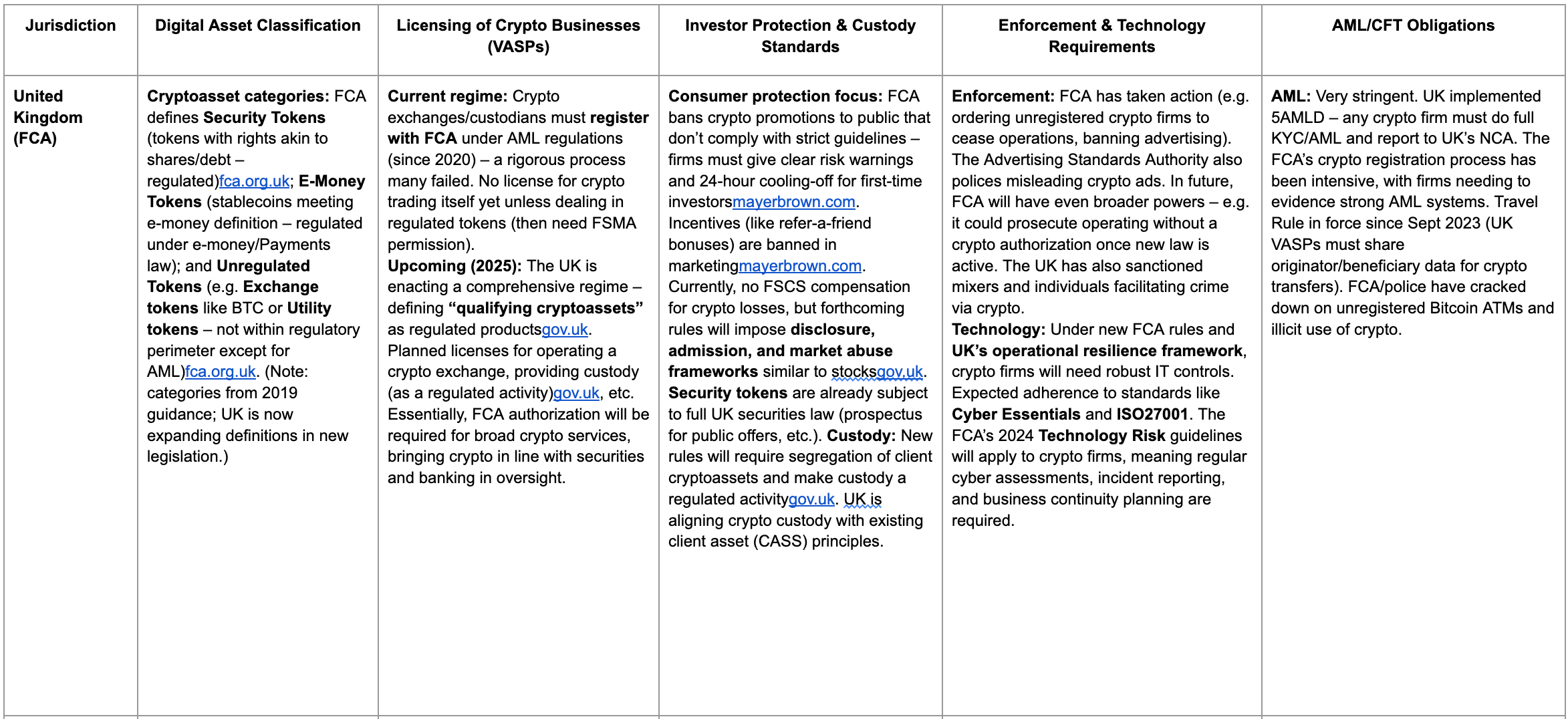
The UK offers a clearer taxonomy: security tokens are regulated like traditional securities; utility and exchange tokens are (for now) largely unregulated except for AML. However, FSMA 2023 will extend regulation across most crypto activities by 2025-26, bringing exchanges, custodians, and promoters of qualifying crypto assets into the regulatory fold.
Strengths:
Clear classification system
Proportionate regulation to date
Institutional credibility
Weaknesses:
Transitioning to a stricter regime
Dual burdens on security tokens (conduct + AML compliance)
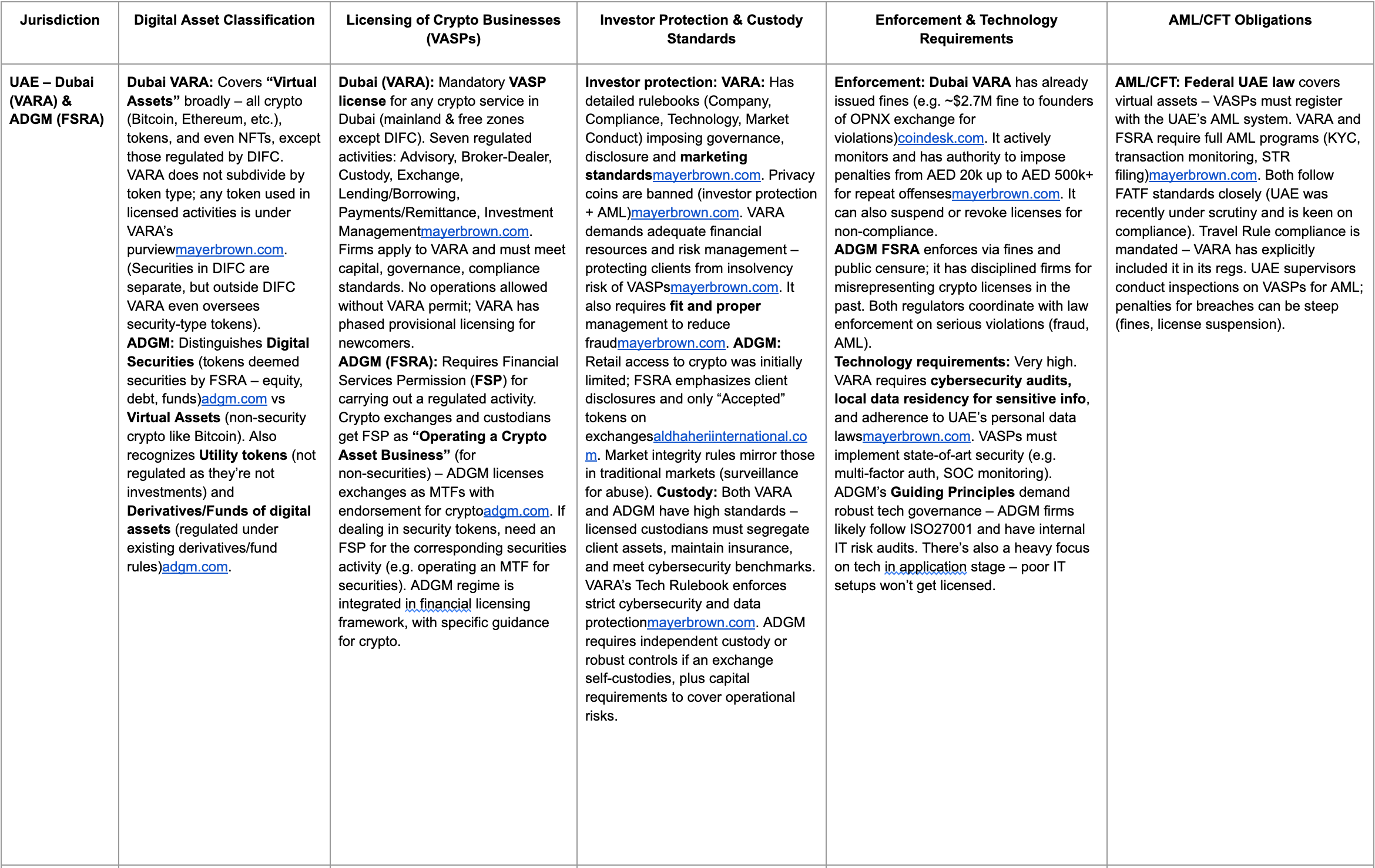
The UAE offers one of the most advanced regulatory environments for tokenized assets. Dubai’s VARA licenses all virtual asset activities under a single regime, while ADGM offers specialized licenses for virtual assets and digital securities. Both emphasize AML, custody, technological standards, and market integrity. UAE regulators combine innovation-friendliness with robust investor protection, making it a hub for serious tokenization projects.
Strengths:
Tailored frameworks for tokenization
Single-license coverage for broad activities (VARA)
Efficient approval timelines
Strong custody and tech standards
Weaknesses:
Continuous compliance reporting
Need for local entity presence
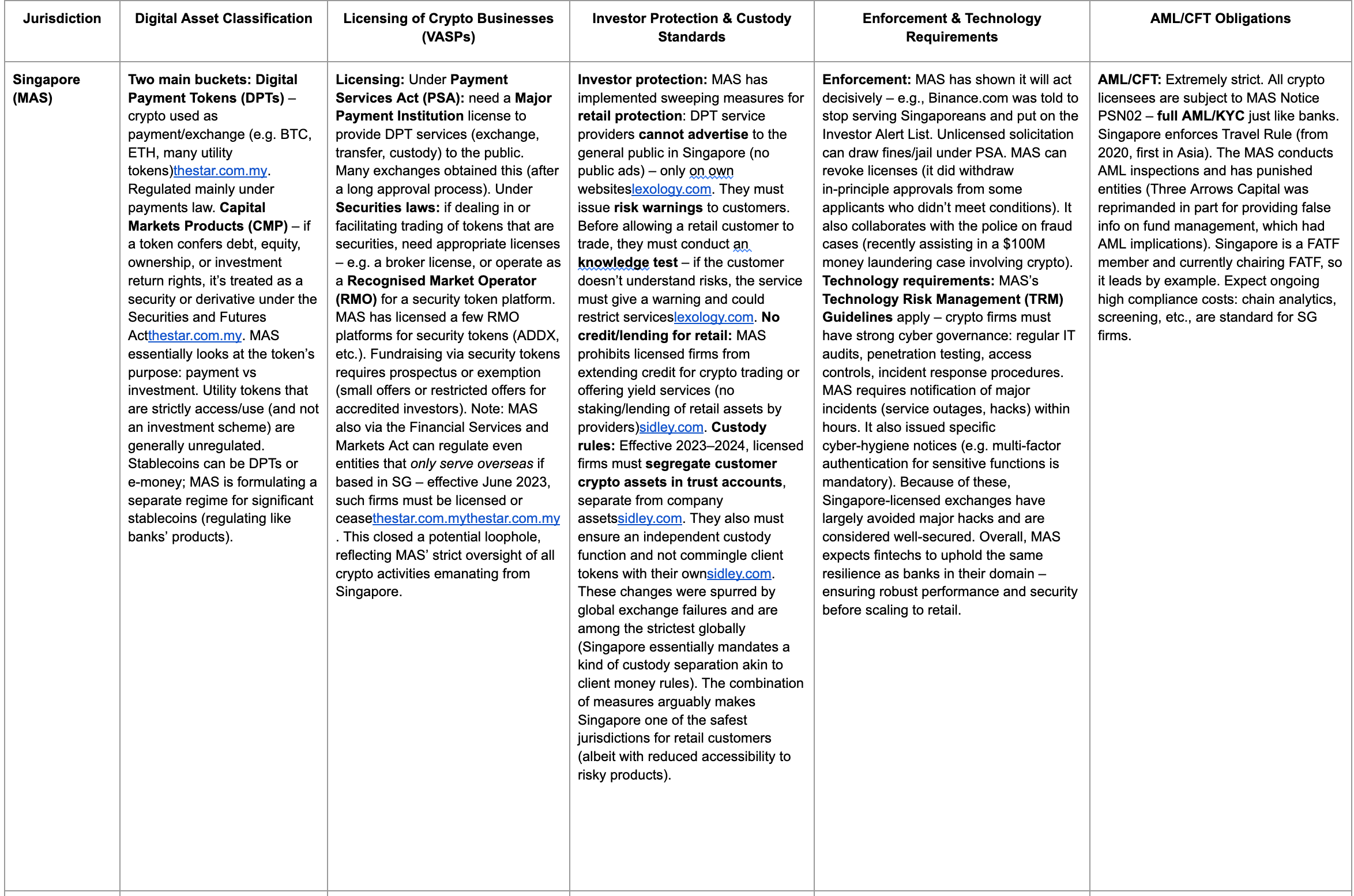
Singapore distinguishes digital payment tokens (DPTs) from capital markets products. Tokenized RWAs representing ownership or profit rights are treated as securities, requiring Capital Market Services licensing. MAS also requires DPT licenses under the PSA for crypto exchange or custody services. Notably, Singapore regulates even offshore-facing entities if they are based locally.
Strengths:
Clear guidance on classification
Strong rule of law, trusted market
Robust AML and tech standards
Weaknesses:
No tolerance for unregulated operations
Complex, multi-layer licensing
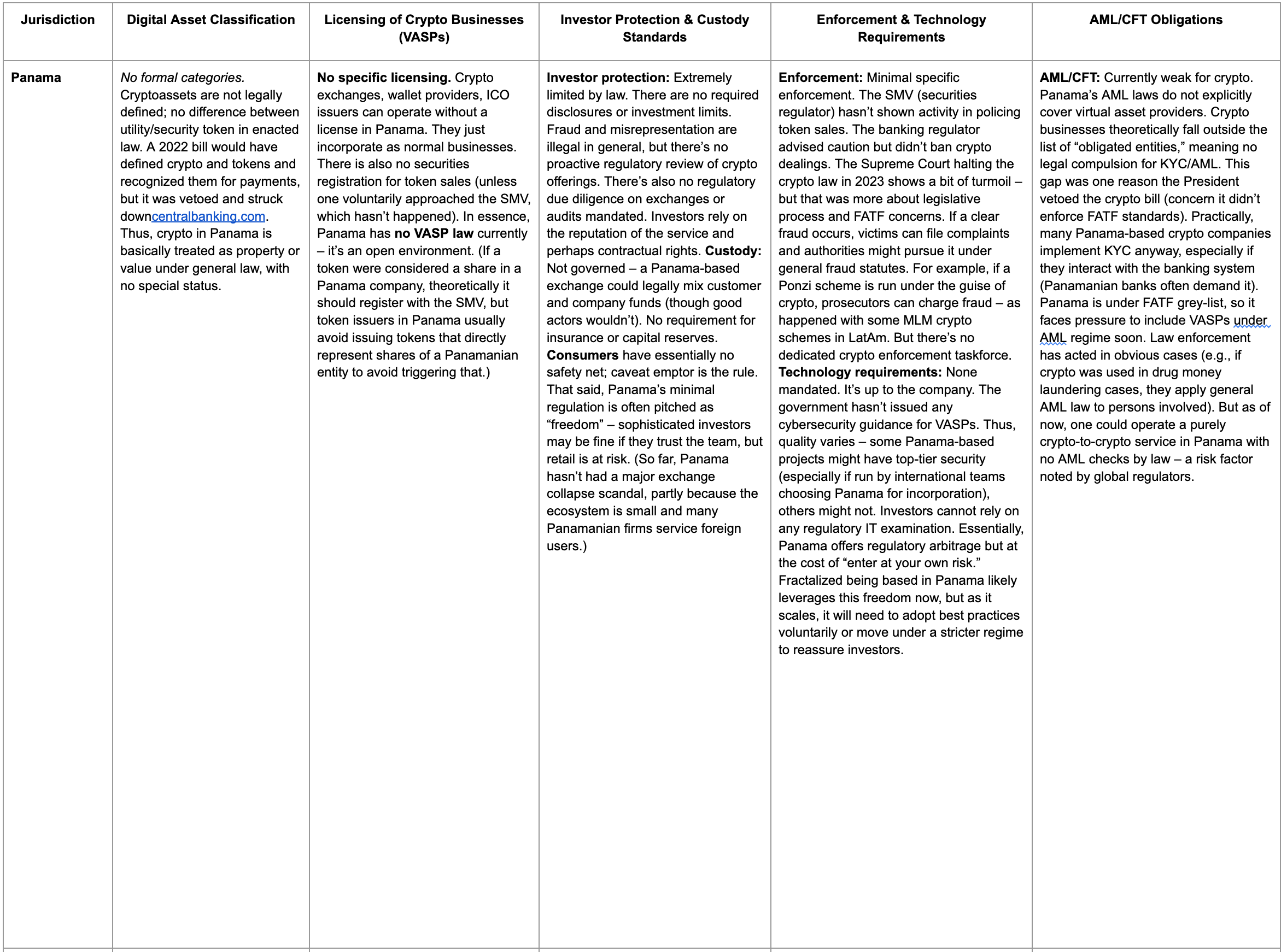
Panama is not yet a mature regulatory jurisdiction for digital asset securities. While companies must comply with general financial, tax, and AML laws, the country offers minimal bespoke oversight for tokenization. This light-touch regime can enable fast MVP deployment, but creates risks in terms of investor confidence, secondary market development, and future cross-border compliance.
Strengths:
Minimal direct crypto regulation → speed to market
Low operating cost
Useful as a launchpad for MVPs
Weaknesses:
Weak institutional investor confidence
Lack of regulatory clarity for securities tokens
No local secondary market infrastructure
Fractalized’s strategy reflects an understanding that regulatory sequencing is critical to success in the tokenization space. Our team conducts ongoing analysis of key jurisdictions, maintains close contact with specialized counsel across multiple markets, and proactively monitors updates from financial authorities worldwide.
This diligence allows us to assess risk and opportunity in real-time, adapting our compliance and market entry strategies accordingly. Rather than committing prematurely to a single regulatory home, we prioritize regulatory depth and optionality—building credibility through rigorous governance while staying agile in a rapidly evolving space.
In the fragmented world of tokenization regulation, success lies in precision navigation. Platforms like Fractalized that treat regulatory strategy as a pillar of their business model—not an afterthought—are the ones best positioned to win investor trust, unlock liquidity, and scale globally.
Sources:
Law Library of Congress – Panama: National Assembly Passes Bill Regulating Cryptocurrencyloc.govloc.gov
CoinDesk – Panamanian President Partially Vetoes Crypto Regulation Legislationcoindesk.comcoindesk.com
IMF Technical Note (Panama FSAP) – Payment Systems and Fintech Regulationssuperbancos.gob.pasuperbancos.gob.pa
Shufti Pro News – Panama’s Supreme Court to Declare Cryptocurrency Legislationshuftipro.comshuftipro.com
CryptoNinjas – New Legislation Introduced in Panama to Turn the Country into a Crypto Hubcryptoninjas.netcryptoninjas.net
Elliptic Country Guide: Panama (Sept. 2022)elliptic.coelliptic.co
Elliptic (Rita de la Guardia, 2022) – Discussion of SMV Opinion 07-2018elliptic.coelliptic.co
LegalNodes (N. Dubnevych, 2025) – How to Issue Tokens and Set Up a DAO in Panamalegalnodes.com
Superintendence of Securities (Panama) – Public release on unauthorized entity (2019)supervalores.gob.pa
KPMG Report – Panama removed from FATF “grey list” (2023)kpmg.com (FATF compliance progress)
No posts
Comments
Nothing yet. Say the first thing.
Sign in to join the conversation.