
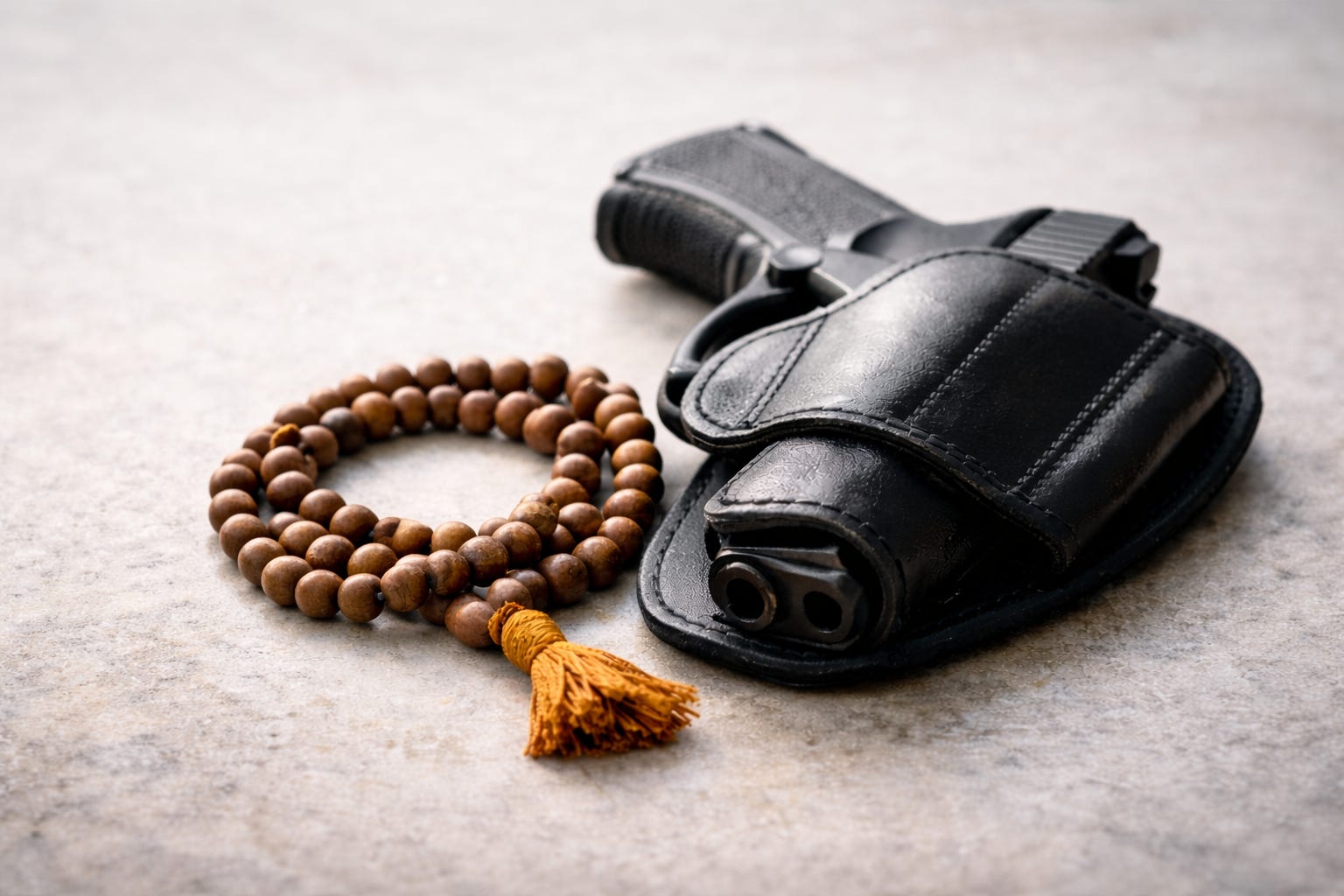
I am not writing this as a commentary on the political debate surrounding the recent shooting by an ICE agent in Minneapolis. What I want to address instead is a recurring religious conversation: tolerance, humility, and what the Vaiṣṇava tradition calls aparādha.
When should an officer shoot?
Most people would agree that an officer should be careful, measured, and not governed by fear, but only by necessity. A fearful or cowardly officer can cause immense harm. That much is obvious.
But that advice does not erase the reality of necessity.
So again: when should an officer shoot?
When, if ever, should an officer aim a gun at a teenager—or even a middle schooler? Many would instinctively say “never.”
But what if that middle schooler is actively shooting other children?
Suddenly, the moral clarity dissolves. The situation becomes tragic rather than simple. The danger lies not only in acting wrongly, but sometimes in refusing to act at all.
A similar tension exists in religious communities. We frequently hear the call for tolerance, humility, and restraint in speech. For some, this advice sounds noble. For others, it feels infuriating—especially for those who have been harmed by religious authority or have watched injustice persist under the banner of “forgiveness” or “non-criticism.”
So the question naturally arises: when should someone fight? When should someone speak out? When should someone criticize?
People grow tired of hearing the advice, “Be tolerant,” because they hear beneath it the fear that if I follow this advice, someone may get hurt. That concern is not imaginary.
But there is another danger that is easier to overlook. Just as aiming a gun—even with good intentions—can end in catastrophe, hostility, gossip, and reckless criticism aimed at a sincere practitioner can quietly devastate one’s own spiritual life. Aparādha does not announce itself with sirens; it corrodes from within.
In the Vaiṣṇava tradition, spiritual practitioners are often compared to children because, in general, a child is innocent. Likewise, a sincere practitioner is ordinarily an innocent party. For this reason, the primary danger of aparādha is not the harm done to the one criticized, but the damage inflicted upon the one who criticizes.
This is why careless speech is so strongly cautioned against. Even when words are factually accurate, unnecessary criticism of the sincere can be spiritually destructive—not because truth should be suppressed, but because truth wielded without necessity becomes a weapon in unsteady hands.
Śrīla Prabhupāda addressed this tension clearly. Calling a spade a spade is acceptable when it is genuinely required. But criticism that is accidental, excessive, or driven by irritation rather than responsibility ceases to be truth-telling and becomes self-sabotage.
At the same time, just as there are rare and tragic cases where children commit acts of violence, there are also religious figures who have caused severe harm to others. Such cases must be addressed. Ignoring abuse out of discomfort or misplaced humility is not tolerance—it is negligence.
Yet even here, discernment is required. Confronting wrongdoing does not require abandoning restraint, humility, or care. Speaking out does not necessitate cruelty.
The instruction, therefore, remains intact—not as a denial of justice, but as a call to maturity: be careful, be mindful, and be conscientious when handling things that can destroy lives, whether those things are weapons in the hand or words on the tongue.
Comments
Nothing yet. Say the first thing.
Sign in to join the conversation.