
The Middle East has a thriving healthcare market with a world-leading tech and advanced digital model. Add in an enthusiastic investment landscape and strong government support for health sector, and it’s no wonder that healthtech companies are falling over themselves to establish a foothold in the region. But commercial success and adoption in the unique markets of the GCC is not a given and getting comms and PR approach right is essential from day 1.
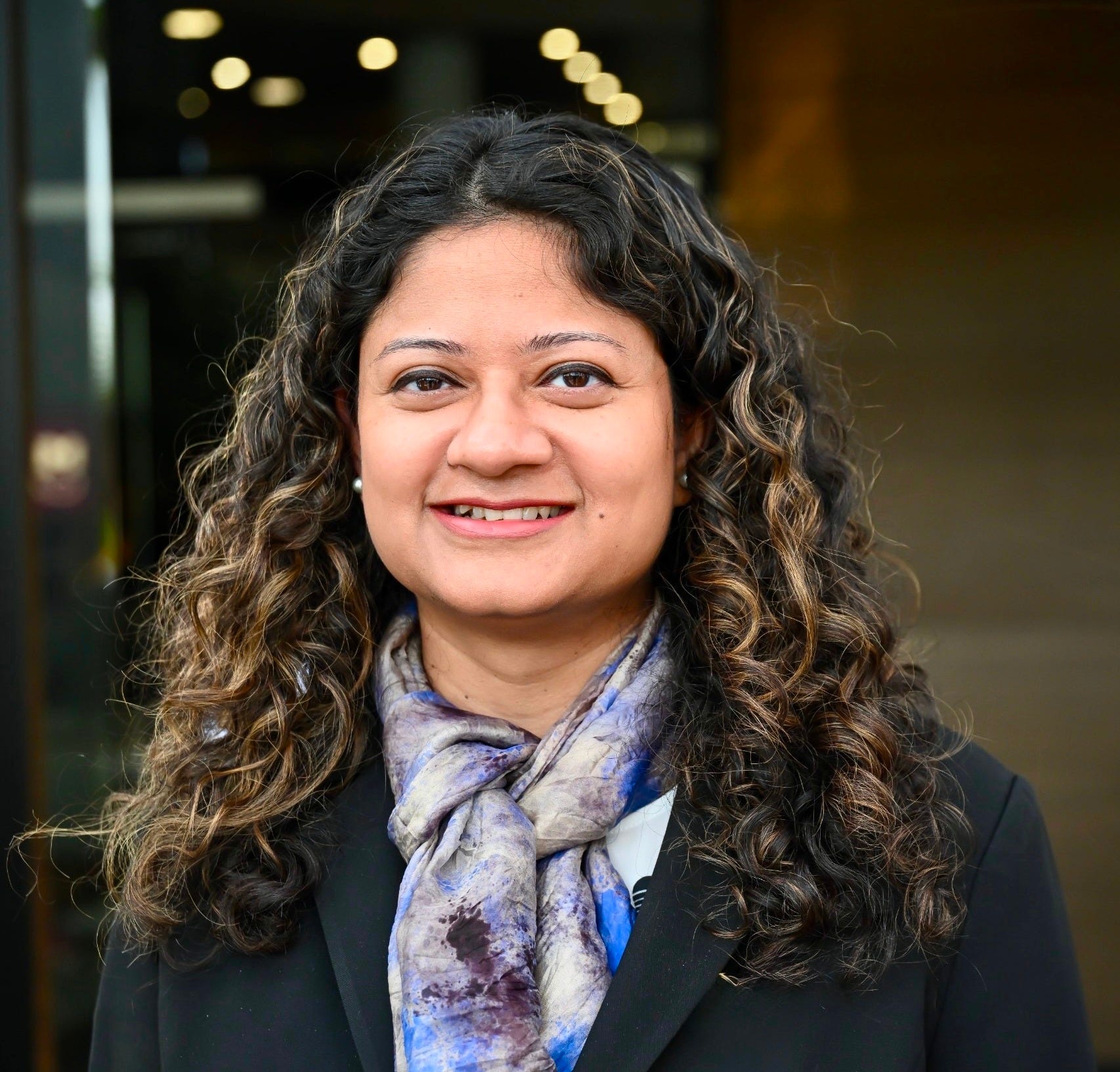
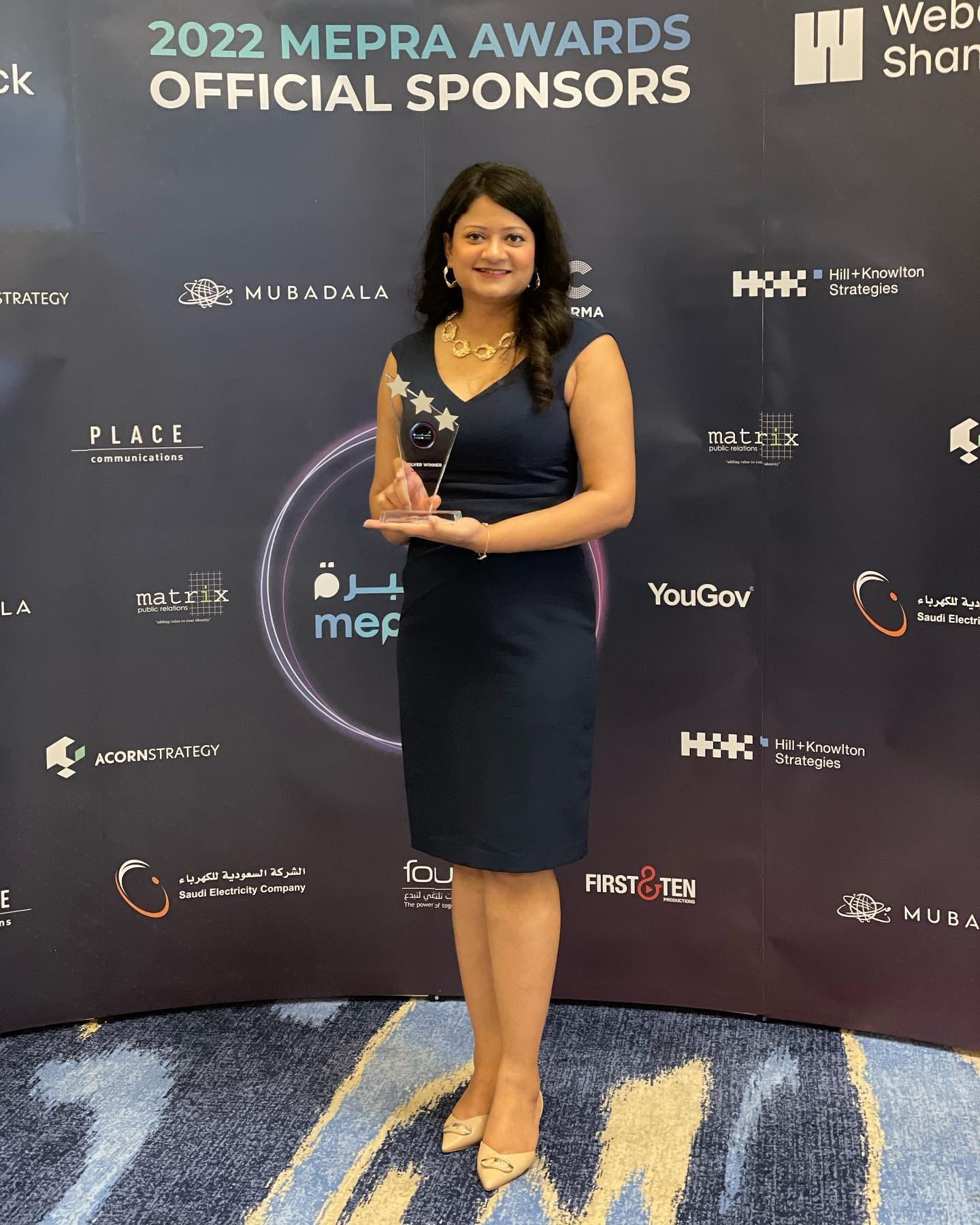
For this month’s expert interview, I spoke with Lavanya Mandal, a highly experienced communicator who has spent nearly 13 years in Dubai leading healthcare comms across both the UAE, Saudi and Middle East, and today runs global corporate, business and internal comms at Aster DM Healthcare (15,000 colleagues across the Gulf Cooperation Council (GCC) countries alone). In our conversation, she shared a very grounded view of what actually works in Gulf health communications: start local, earn trust through credible voices, keep the doctor–patient relationship front and centre, and when the region is in crisis, lead with empathy and your people first.

Her first point was blunt: in healthcare, comms in the GCC is deeply local. “The messaging that we have for UAE, it doesn’t work for Saudi,” she told me. But it’s not just language - how media works, how people consume information, and what they consider credible also differs greatly between countries.
In Saudi, Lavanya explains that news consumption is more ‘social-first’: fewer people are reading newspapers or watching TV news in the traditional way; and whilst radio still matters, TikTok and Snapchat dominate. “People actually research the news on Snapchat,” she said. In the UAE, by contrast, the mix is broader. It’s social media and established outlets (print and online), alongside government-driven channels that still carry weight. The UAE’s demographics - Emiratis living alongside Western, Indian and Southeast Asian expats - creates a more varied set of behaviours.
Practical takeaway: Don’t approach the GCC as if it were a homogenous region. Map audiences and media market-by-market and keep revisiting it. Lavanya flagged that what’s popular in Saudi today may not be in two years. If you’re a European health or health tech brand entering the region, her advice was to start grounded: do the research, understand the government context, and localise from day one. “Know your audience first… your plan can fail if you import assumptions from the UK or Europe”.
That need for localisation shows up most sharply in how trust is built. Lavanya’s approach is a deliberate mix of owned channels and third-party credibility. Posting on your own social channels can perform well (especially with paid support), but she’s seen the same information land better when it’s carried by a trusted outside voice. In practice, that means building up doctors as visible opinion leaders - and then selectively partnering with credible creators who speak to specific needs (she mentioned women’s health and maternity as an example).

One of the most useful insights for anyone used to the NHS is her observation that patients in parts of the GCC behave more like consumers. With insurance coverage (particularly in the UAE), word-of-mouth carries huge influence: “a mum who’s about to deliver… would rather go with a doctor that has been recommended to her by a friend than an influencer.” People can change doctors more often, which makes clinician reputation and consistency even more important.
On influencer partnerships, she was clear-eyed about the risk: guardrails matter. Her team sets benchmarks early (what “good” looks like, and what value the partner can genuinely add) and reviews content before it goes out. She also pointed out a contextual factor that changes the risk profile: the UAE market is “very guarded”, with tighter controls on what can be said publicly and more caution from creators. That doesn’t remove reputational risk - but it does mean the operating environment is different.
And yes, misinformation is a daily reality - especially in high-volume, high-anxiety categories like obesity and weight management. When social platforms drive the conversation, Lavanya’s playbook is to bring evidence and authority into the feed: work with credible media, put clinicians forward, and validate messages against recognised sources (she referenced international and local government authorities) before amplifying. Importantly, she sees this as a shared responsibility. In the GCC, government often leads on counter-misinformation, with private providers adding their voice and reach.
On health tech, Lavanya described digital as a “top priority” for healthcare providers in the region because it’s a practical answer to real system constraints - connectivity, geography, and access - and it supports the region’s ambition to become a healthcare hub. But as a comms leader, she’s careful about the framing. Aster has the advantage of being an integrated provider with physical services already in place, so digital can be positioned as convenience and continuity, not replacement. Book on the app; consult online if you can’t travel; see the same doctor in person when you need to. The narrative isn’t “technology will fix healthcare” - it’s “these tools are making it easier for you to access the people who care for you.”
Even with AI-driven diagnostics and robotic surgery, the principle holds: “we always position them as enablers.” Tech sits around the clinician to help them work faster, diagnose more precisely, and deliver better care - while the doctor–patient connection stays “of utmost value”.
Practical takeaway: If you’re communicating advanced tech in healthcare, make the human benefit explicit, and keep your clinicians visible, not hidden behind product language.
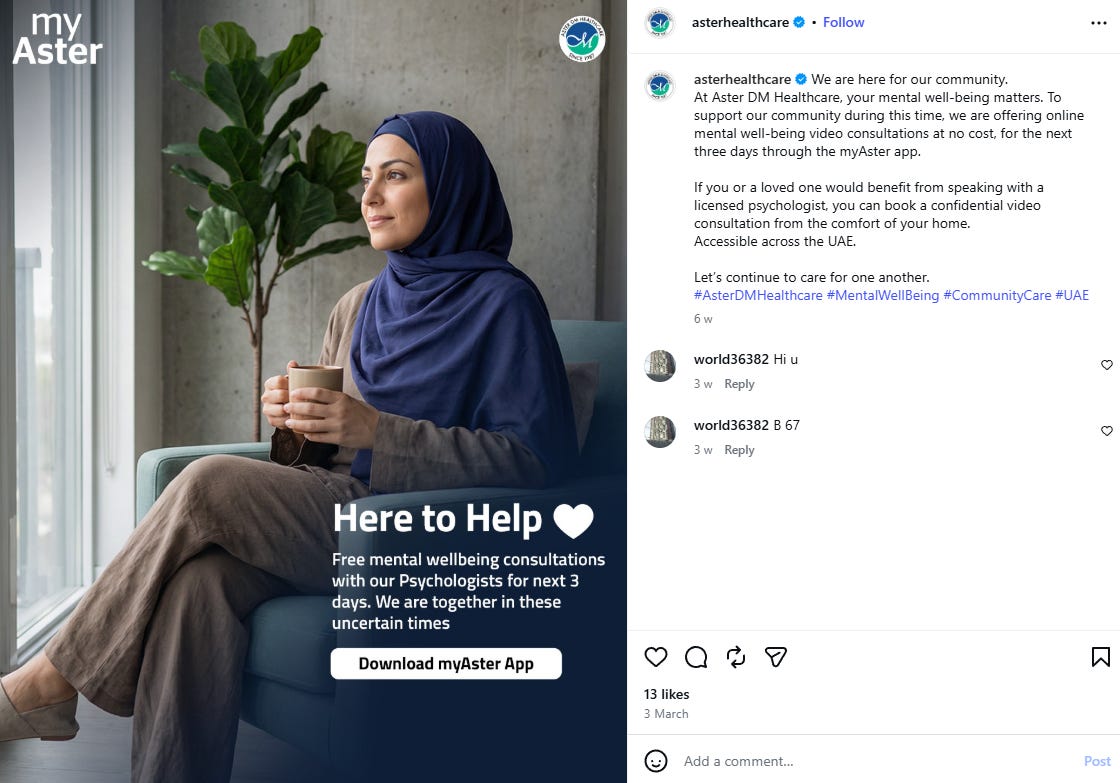
The most timely part of our discussion was how her comms approach has shifted in the context of the current conflict in the Middle East. Lavanya framed it as people-first, internal-first. In a healthcare business, the majority of colleagues are frontliners coming into work every day; if you don’t look after their wellbeing, everything else is secondary.
What that looked like in practice: direct leadership communication , reassurance without pretending things are easy, and - crucially - acknowledging what people are feeling. “The empathy-driven approach has worked better for us… the messaging around ‘we are there with you, we are all together in this’.” HR backed this with practical mental health and wellbeing initiatives and clear signposting to support.
Her biggest lesson echoes COVID: be agile, and don’t over-engineer comms when the ground reality is moving. In her words, healthcare comms has to roll out “quickly… to address the ground reality and address some of the issues or challenges that the organisation might be facing.” And the hierarchy of priorities is simple: people first, because they’re the ones delivering the care your reputation is built on.
If you’re doing health, health tech or comms work in (or entering) the GCC, here are the principles I’m taking away from Lavanya’s playbook: localise by default (country-by-country, channel-by-channel); build trust through clinicians and credible third parties, not just brand accounts; assume misinformation will show up in clinic and plan content that counters it with validated sources; frame digital and AI as tools that strengthen the doctor–patient relationship, not replace it; and in crisis, communicate with empathy, at speed, and internally first.
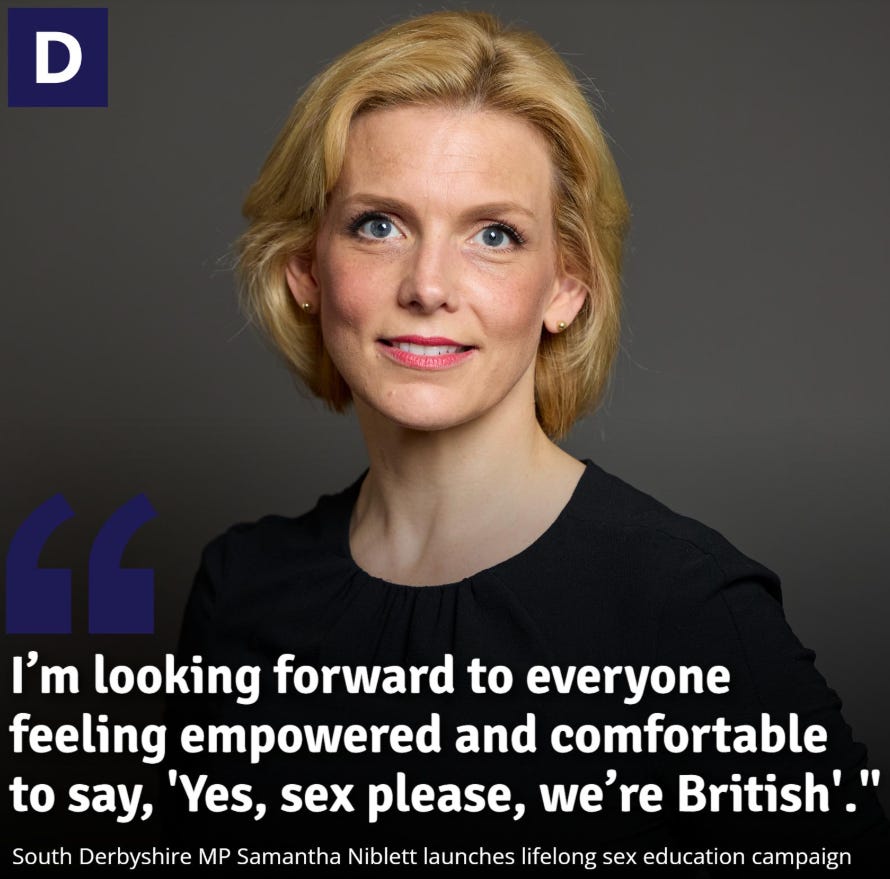
🫦 April PR Campaign Inspo: “Yes Sex Please, We’re British”
Samantha Niblett, the Labour MP for South Derbyshire, has joined forces with Cindy Gallop, the founder of Make Love Not Porn, to launch a campaign aimed at “helping us better understand consent, prevent abuse and violence, and raise awareness of how everything from childbirth to the menopause impacts our sex lives and the satisfaction – or lack thereof – we find in them.”
The duo’s calls for a ‘summer of sex’ in Britain was met with a huge reaction from MPs, the media and the public, recieved wall-to-wall coverage and endless column inches. So whether you think it’s crucial or crass, this campaign has already succeeded in starting a national conversation about modern sex education.
📚 Reading
FutureFemHealth’s new premium model gives subscribers access to high-value market intel and journalistic deep-dives you won’t find anywhere else.
I was VERY proud to make my debut as an official PharmaTimes columnist in April! I’ve got some great interviews with Pharma comms leaders lined up - watch this space.
📻 Listening
PR Week’s new Media Leader’s interview podcast series began with an interview with City AM’s Editor in Chief:
📺 Watching
Babies, a beautiful, raw and heartbreaking iPlayer drama follows a couple’s journey through infertility and miscarriages. This will have you sobbing!

📆 Events
April 21// The Creator Economy - CensHership- Women’s Health, & Fundraising. A Panel + Workshop
April 23// Ministry of Healthtech Spring Fling
April 23 // Venture Cafe Thursday Gathering: The TechBio Shift: Powering the Next Era of Life Sciences in London
April 28 // OHT Mental Health: Coffee Chat: The “Ghosting” Problem - Solving Attrition in Digital Therapeutics
April 28 // Healthtech Talks, SomX x Neko Health. The Future of Prevention: Who Pays, Who Delivers, Who Benefits?
April 29 // Women in PR Members Mixer
April 30 // OHT Oxford x Unprescribed Stories: Bringing creativity to healthcare
April 30 // Roxhill Health Club: Journalist PR Masterclass Sessions
May 6 // Pre-seed to Series A. How Do We Move Women’s Health Along? Nexus Report Findings and Panel Discussion
Thanks for reading For Immediate Release! Every share helps me reach more people, so please pass it on to a colleague or friend.
No posts
Comments
Nothing yet. Say the first thing.
Sign in to join the conversation.