
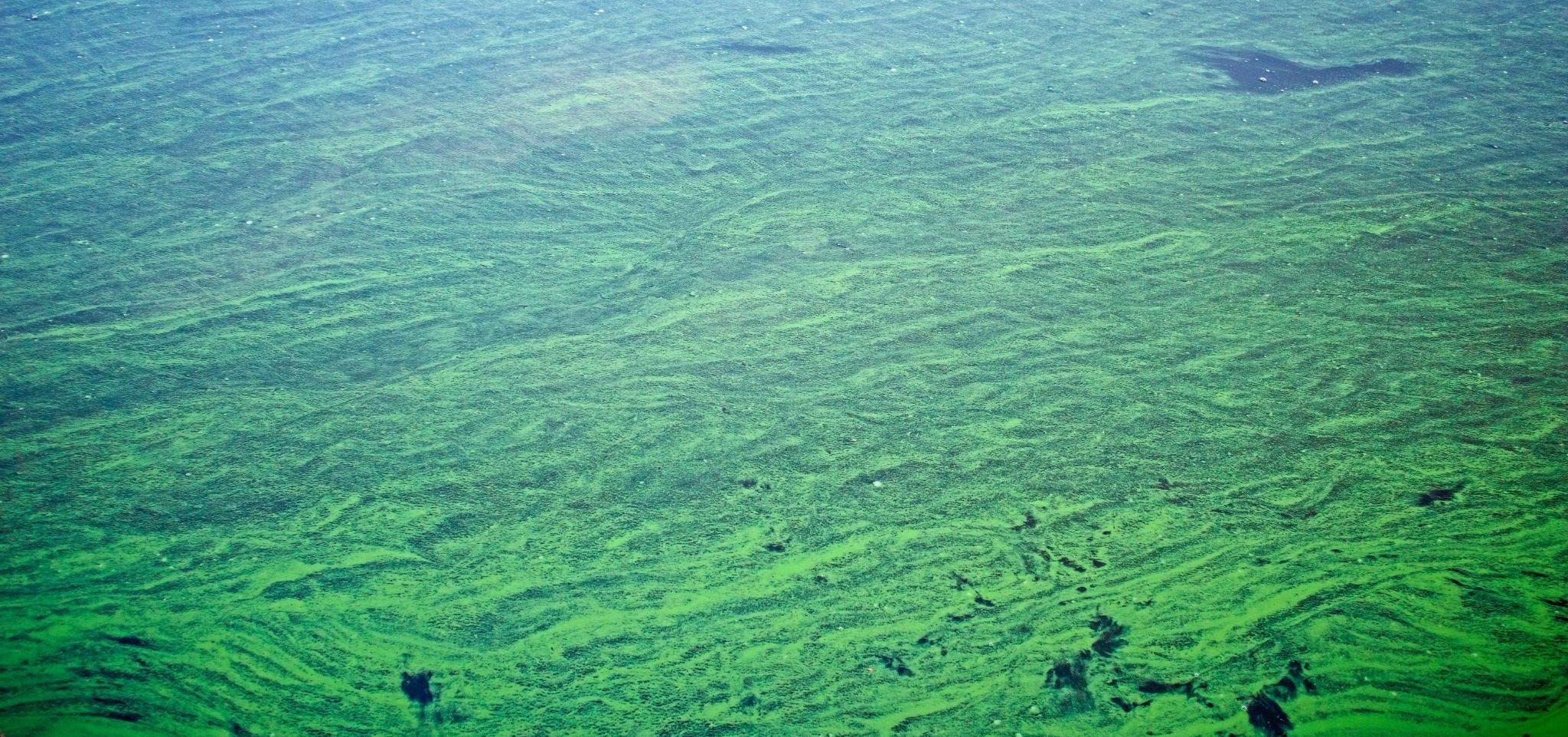
The modern food system is one of the least circular large-scale systems humans have ever created. While it is easy to recognize that burning fossil fuels is not circular, the food system also relies on inputs that break natural cycles. Modern agriculture is heavily fueled by petroleum-based fertilizers, disrupting nutrient cycles in ways that undermine the long-term sustainability of earth’s systems. Yet the consequences of these disruptions on biosphere functions often receive far less attention.
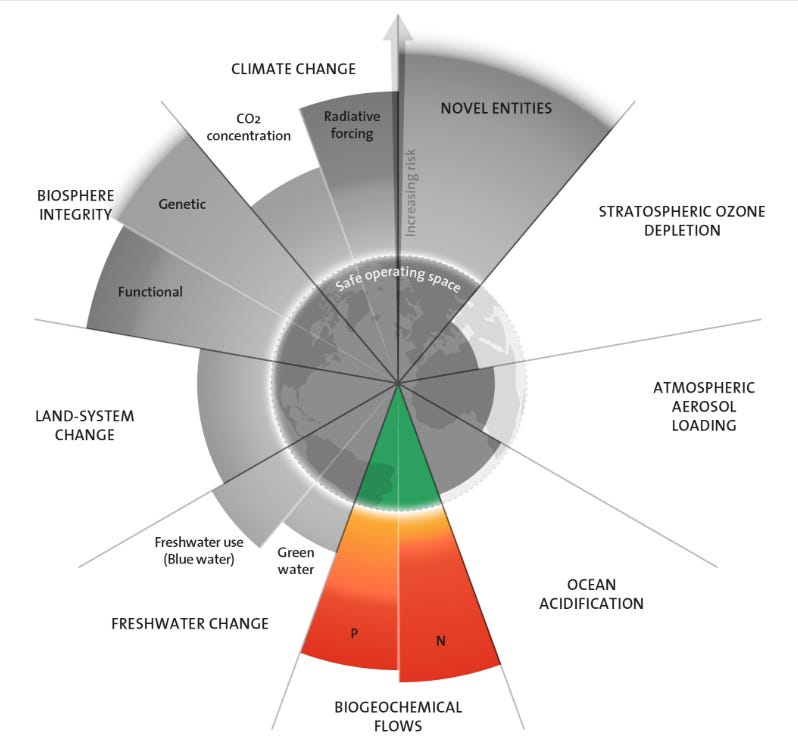
Of all the planetary boundaries (limits that define a safe operating space for humanity on earth), the boundary for biogeochemical flows is among the most severely and longest transgressed. Yet it also receives comparatively little public attention. Unlike terms such as biodiversity loss or ocean acidification, “biogeochemical flows” is more difficult to grasp intuitively. Yet despite its relative obscurity, this boundary may be one of the clearest indictments of the modern food system.
When scientists discuss biogeochemical flows, they are primarily referring to two nutrients: nitrogen and phosphorus. The movement of these nutrients through earth’s systems profoundly influences life and ecosystem functioning.
Scientists estimate the planetary boundaries for these nutrients at
62 teragrams (Tg) per year for nitrogen and
11 teragrams (Tg) per year for phosphorus
Human activity currently releases approximately
190 Tg of nitrogen annually and
22 Tg of phosphorus annually
Humanity is therefore operating at over three times the safe boundary for nitrogen and double the proposed safe operating space for phosphorus.
These limits were established by estimating the capacity of earth systems to maintain stable conditions for life. Geological records from past mass extinction events demonstrate just how powerful disruptions to nutrient cycles can be.
During the End-Permian extinction, roughly 252 million years ago, massive eruptions from the Siberian Traps, which lasted two million years, triggered intense warming and accelerated weathering across continents. This weathering washed large amounts of phosphorus into the oceans.
The influx of nutrients fueled eutrophic conditions and facilitated massive growth in marine ecosystems, likely causing enormous algal blooms. Eventually, as the aquatic plants died, they sank into deeper waters where bacteria decomposed the organic matter.
This decomposition and explosion of bacteria consumed dissolved oxygen in the water. As oxygen levels declined, hypoxic zones (areas where the water contains less than 2 mg/L of oxygen) developed, and in some areas oxygen disappeared entirely, creating anoxic conditions where most life could not survive.
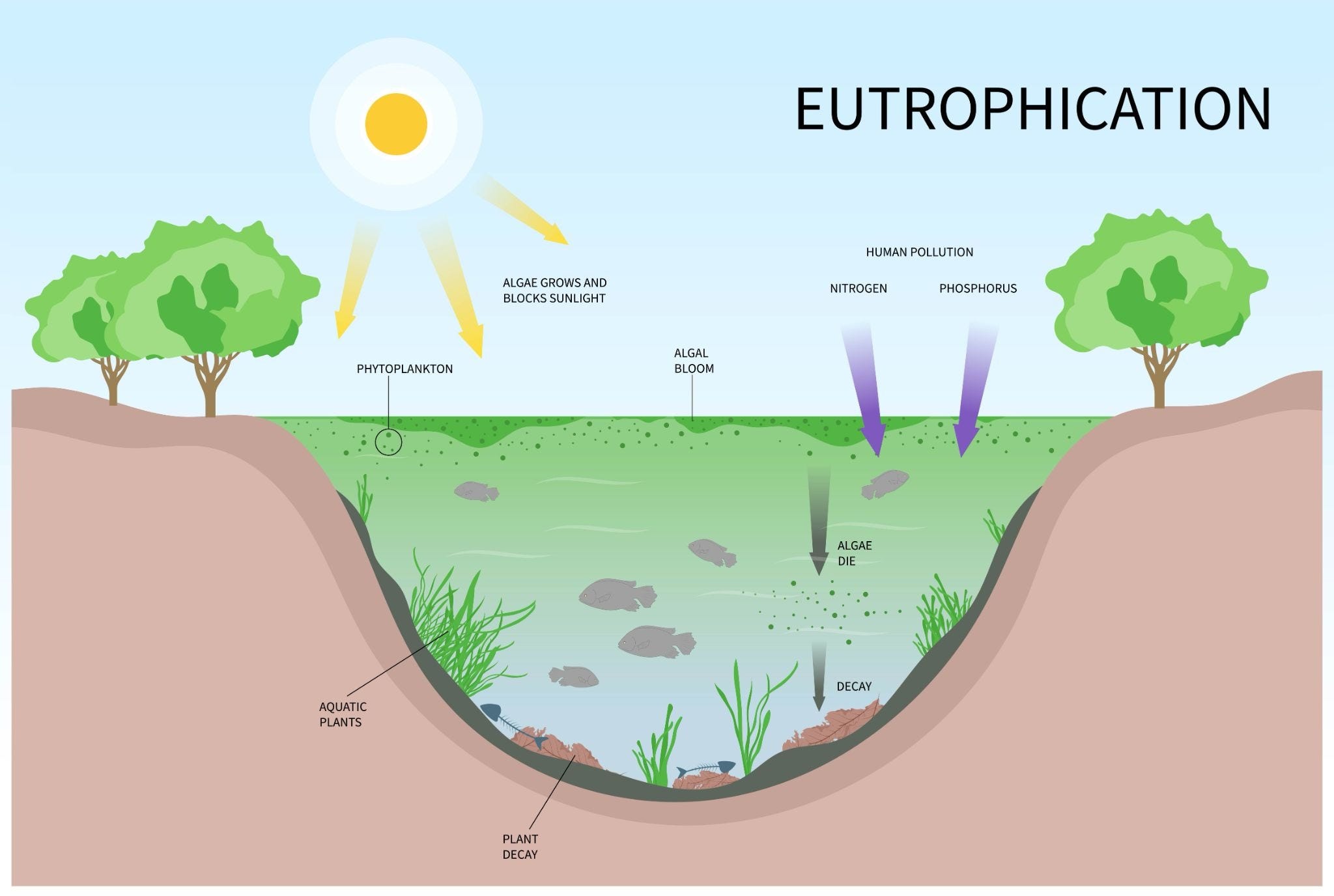
The expansion of these dead zones on a planetary scale became a major driver of marine extinction during the Permian extinction event, which ultimately eliminated roughly 90 percent of marine species.
A similar process likely occurred during the Devonian extinction, approximately 372 million years ago. During this period, plants evolved more advanced vascular systems through their co-evolution with fungi, allowing them to develop deeper roots and grow much larger. Early plants could only penetrate a few centimeters into the soil and reached heights of roughly 30 centimeters. Newly evolved trees could send roots several meters into the ground and grow as tall as 30 meters.
Over millions of years, forests of these newly evolved trees spread across the earth, aided by the evolution of seeds. In doing so, they transformed landscapes, created what we would recognize as soil, and accelerated weathering. Nutrients previously locked in rocks were consequently broken down and transported into streams, rivers, and oceans. As nutrient delivery increased, oxygen depletion expanded through processes similar to those seen during the Permian extinction, contributing to widespread marine ecosystem collapse.
These extinction stories are not simply fascinating tidbits from earth’s past. They are warnings.
Today, dead zones are expanding around the world at alarming rates. Yet there is still time to reduce nutrient pollution and decrease our dependence on artificial nutrient inputs.
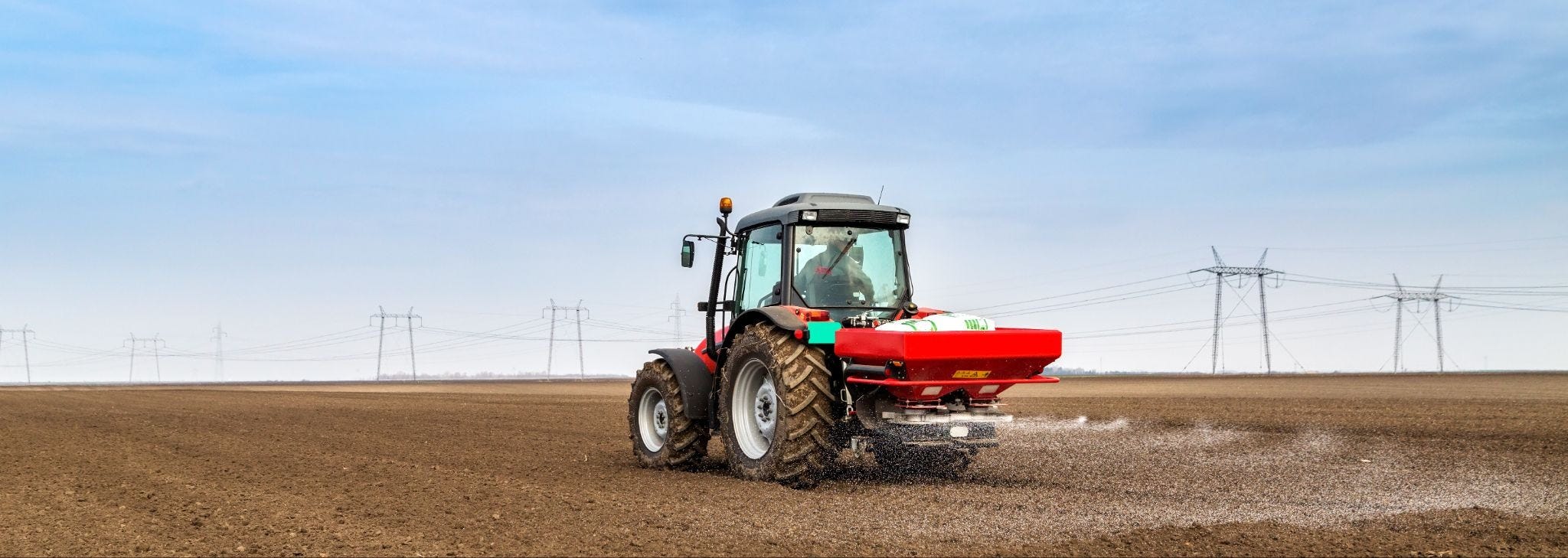
The modern food system is now the largest driver of nitrogen and phosphorus pollution. Globally, more than 115 million tonnes of synthetic nitrogen fertilizer and 25 million tonnes of phosphorus fertilizer are applied to cropland every year. The production of synthetic nitrogen fertilizer itself is also highly carbon intensive, generating more greenhouse gas emissions than the global commercial aviation sector and accounting for more carbon dioxide emissions than any other industrial chemical reaction.
Yet the majority of these nutrients are never even taken up by crops. Approximately two-thirds of the nitrogen (~75 million tonnes) and over half of the phosphorus (~14 million tonnes) applied to crops are not absorbed by plants. Instead, these nutrients move through soils into streams, rivers, lakes, and, eventually, oceans.
Additional nutrient pollution comes from livestock manure. In the United States alone, 24,000 factory farms together produce over 940 billion pounds of manure annually, or twice as much as the sewage produced by the entire country’s population.
The nutrients contained within this manure are enormous—7.4 Tg of nitrogen and 2.3 Tg of phosphorus, based on the most recently published estimates, from 2017. These quantities represent a substantial fraction of the global planetary boundary. Much of this manure is spread onto agricultural land, where excess nutrients similarly wash into waterways.
The story then begins to resemble the ancient extinction events. Excess nutrients fuel algal blooms. Algae die and decompose. Oxygen disappears. Hypoxic and anoxic zones form where life struggles or cannot survive.
Today, almost one thousand hypoxic or eutrophic hot spots exist globally, particularly where rivers meet oceans and lakes. Nearly every major river outflow now shows signs of nutrient-driven oxygen depletion. Inland, “Forty-two percent of the nation’s river and stream miles are in poor condition, with elevated levels of phosphorus, and 44% were in poor condition for nitrogen,” according to the United States Environmental Protection Agency.
These dead zones, now visible from space, are devastating aquatic ecosystems. Green regions visible in satellite imagery often indicate nutrient-fueled algal blooms associated with oxygen depletion. These algal blooms are often toxic to fish; one notable example occurred in 2021 in Florida, when thousands of dead fish washed ashore during a red tide bolstered by nutrient pollution, closing many miles of beaches.
The largest dead zone in the world, now over 63,700 square miles, is in the Arabian Sea, stretching and extending into large areas of the Indian Ocean. This dead zone is semi-permanent and growing year over year. Another, in the Baltic Sea, grows to larger than 34,000 square miles during its peak, covering roughly one-fifth of the seafloor. The largest dead zone in North America, by comparison, is in the Gulf of Mexico and was measured at 6,705 square miles in 2024, an area larger than the state of Connecticut.
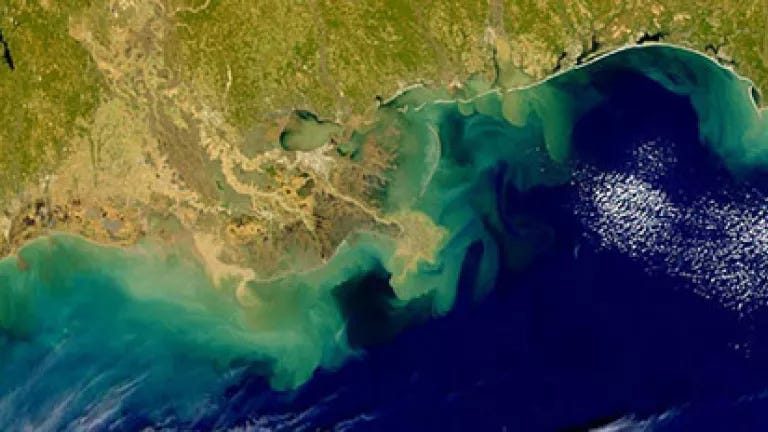
Photo credit: NASA
Yet the spread of oxygen-depleted waters is no longer limited to coastal regions. Scientific monitoring increasingly shows oxygen decline occurring in the open ocean as well, with a recent analysis claiming that “oxygen-minimum zones in the open ocean have expanded by several million square kilometers and that hundreds of coastal sites now have oxygen concentrations low enough to limit the distribution and abundance of animal populations and alter the cycling of important nutrients.” These emerging hypoxic zones function almost like underwater deserts. Marine life flees when possible, and once the hypoxic zone is established, food webs and aquatic life are altered in devastating ways.
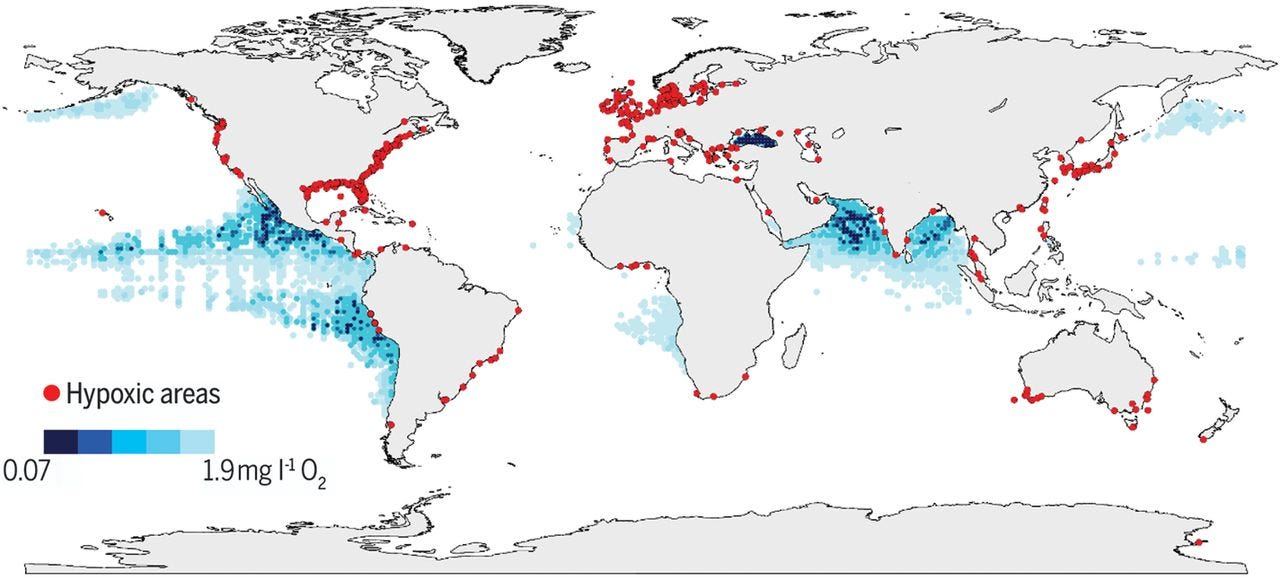
Photo from study: Declining oxygen in the global ocean and coastal waters
Like many other planetary boundary challenges, understanding the causes of nutrient pollution also provides clear pathways toward solutions.
Although synthetic fertilizers have been credited with supporting rapid population growth and increased agricultural production, their widespread use does not mean they are the only path forward or even the most productive way to grow food.
Research from organizations such as the Rodale Institute suggests that organic systems can achieve yields comparable to conventional agriculture. Their Farming Systems Trial, now running for over four decades, has shown that systems using crop rotations and ecological farming practices can match conventional yields and outperform them by up to 30 percent during periods of extreme weather while increasing soil organic matter and carbon storage. By integrating nitrogen-fixing cover crops that bind nitrogen in the soil, farmers can eliminate the need for fertilizers that easily wash away and the consequent nutrient leaching.
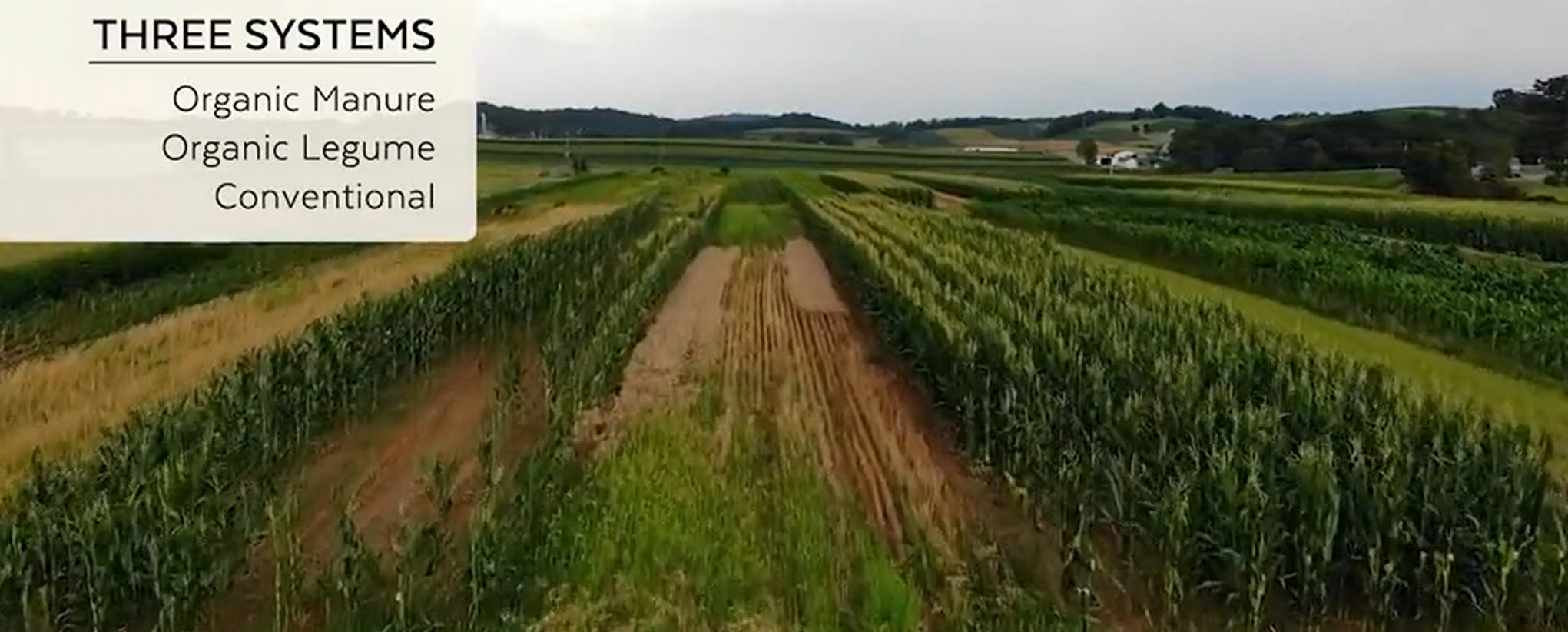
The Rodale Institute has trialed conventional systems against two organic systems for over four decades, showing that yields of organic systems are equal to conventional systems and more productive during years of extreme weather due to improved soil conditions.
Dietary and policy changes could also significantly reduce fertilizer demand. Large areas of cropland currently grow corn and soybeans primarily for livestock feed and biofuel production. Research suggests that a global transition toward plant-based diets could reduce agricultural land use by roughly 75 percent while maintaining food supply. Reducing land requirements at this scale would also substantially reduce demand for fertilizers. Reducing or eliminating animal consumption would simultaneously solve the manure problem.
Like many of humanity’s most pressing challenges, the crisis of biogeochemical flows is not difficult to understand. The science is remarkably straightforward: we are mining phosphorus from places where it has remained locked away for millions of years and creating nitrogen from petroleum-based processes, concentrating them at unprecedented scales, and releasing them into ecosystems faster than the earth can absorb them. The consequences are already visible, in rivers choked with algae, coastlines stripped of oxygen, and dead zones spreading through waters that once supported abundant life.
What makes this crisis difficult is not a lack of knowledge. It is our reluctance to transform the systems that created it.
The choices before us are larger than fertilizers or farming practices alone. They concern the kind of world we wish to build and the legacy we intend to leave behind. Every meal ties us to landscapes, waterways, farmers, forests, and oceans. Our food choices ripple outward through ecosystems and connect us to people and forms of life we may never see.
The same systems that now push us beyond planetary boundaries can be redesigned. We can grow food differently. We can waste less. We can reduce our dependence on systems that demand endless nutrient inputs and ecological sacrifice zones.
The dead zones expanding across the world today are not simply environmental statistics. They are warnings written into the fabric of the living planet. The geological record shows us where this path can lead. The question is whether we choose to listen before those warnings become something far more permanent.
Have you seen the impacts of nutrient pollution near you? What do you feel when looking back and reflecting on life and its evolution through these mass extinction events, and contemplating where we stand today?
This article is part of the Planetary Boundaries and Food series. This series explores how the global food system has pushed humanity beyond seven of the nine planetary boundaries, including climate change, biosphere integrity, land-system change, ocean acidification, biogeochemical flows, novel entities, and freshwater use. Each article examines how food production and consumption have driven us past these critical limits, and how reimagining our food system can help bring human activity back within a safe operating space for life on earth. To follow the series and read more about Food for a Sustainable Future, subscribe to stay up to date with the latest articles.
No posts
Comments
Nothing yet. Say the first thing.
Sign in to join the conversation.