
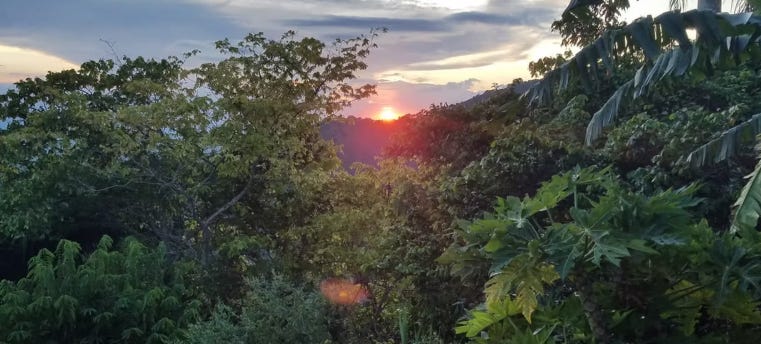
For years I have written about planetary boundaries, biodiversity loss, and the environmental consequences of food production. I have written less about what it feels like to truly understand these realities, to recognize both the scale of the crisis and the possibility of a different future.
Writing about these issues in an academic way, allowing the facts and information to speak for themselves, is important. Yet facts alone rarely capture the emotional experience of coming to terms with what is happening around us. Lost in the purely facts-based approach is the human element of how each of us is personally affected by these issues.
In a departure from how I’ve written in the past, this essay is my attempt to share some of that more personal side of the story.
I started working for the Center for Nutrition Studies (CNS) in 2018 as an instructional designer helping develop a new course focused on food and the environment. CNS was founded by my grandfather, Dr. T. Colin Campbell, to advance nutrition education and share in an online format the science behind the health benefits of whole food, plant-based diets. While the organization’s roots were in human health, building on his research at Cornell and the class he taught there, its mission naturally expanded into broader questions about the food system and its impacts on the world around us.
Developing the course, I had the opportunity to collaborate with scientists, conservationists, economists, and food-system experts from around the world. Ultimately, the course explored lessons on topics related to how our food system impacts the environment and biosphere more broadly, how our food systems are structured and organized to create outcomes incentivizing environmental destruction and waste, and importantly, how individuals, businesses, and organizations are working to create more resilient and sustainable food systems.
What began as a professional project gradually became a personal transformation.
Like many people, I had never fully appreciated the scale of humanity’s relationship with the biosphere through food. I understood environmental issues in broad terms, but I did not grasp how deeply food production shapes land use, biodiversity, climate change, freshwater systems, and planetary stability itself.
As I researched these topics and worked with the experts featured in the course, I found myself questioning not only how we produce food but also our broader fundamental assumptions about progress, economics, and humanity’s relationship with the living world.
Ultimately, developing the course completely changed the way I perceived the world and the life I wanted to lead.
The deeper I went, the more I realized that food is not simply a matter of personal health or consumer choice. It is one of the primary ways humanity interacts with and transforms the living systems upon which all life depends.
This growing awareness had a profound impact on me, and it sometimes came with deeply uncomfortable feelings.
The more I understood humanity’s impact on the living world, the harder it became to ignore what was being lost. I felt grief for the disappearing species and degraded ecosystems. I felt shame for the ways we have commodified and reduced living systems to economic inputs to bolster our bottom lines. And at times I felt pessimism about a future that seemed to be moving steadily toward ecological unraveling. Reckoning with mass extinction and biosphere decline meant facing anxiety, grief, and periods of despair.
I’ve come to learn that these feelings are not all that uncommon. In today’s world, environmental angst and grief are logical next steps to increased biosphere consciousness and awareness of the global ecological systems integrating all living beings and their relationships. They may even be healthy responses to understanding the realities of our moment.
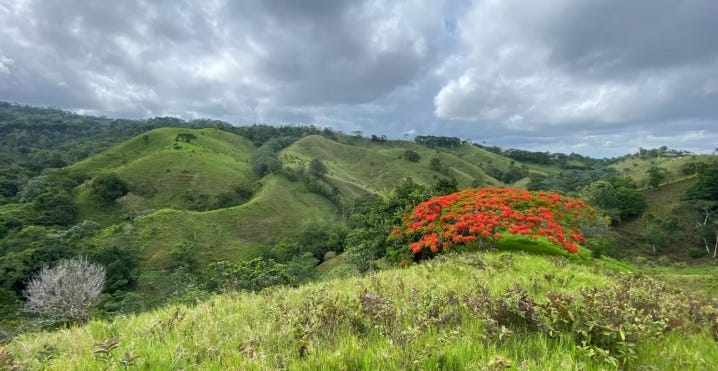
We are born with this incredible capacity for empathy, and once we see ourselves as integral participants of this larger living system that we are pushing to the brink, it becomes impossible to not grieve in some way. In one way or another, we have this innate biophilia, and bearing witness to this moment of intense destruction and environmental chaos inevitably affects us.
Yet while wrestling with these feelings, I was being exposed to a very different side of the story. Through the development of the course, I discovered so many individuals and organizations working to rewrite the narrative and reimagine humanity’s relationship with the natural world.
What struck me was not simply that solutions existed, but that many of them were already being implemented. Around the world, people are demonstrating that it is possible to produce food while creating space for nature, to restore ecological function while meeting human needs, and to move from extraction toward stewardship.
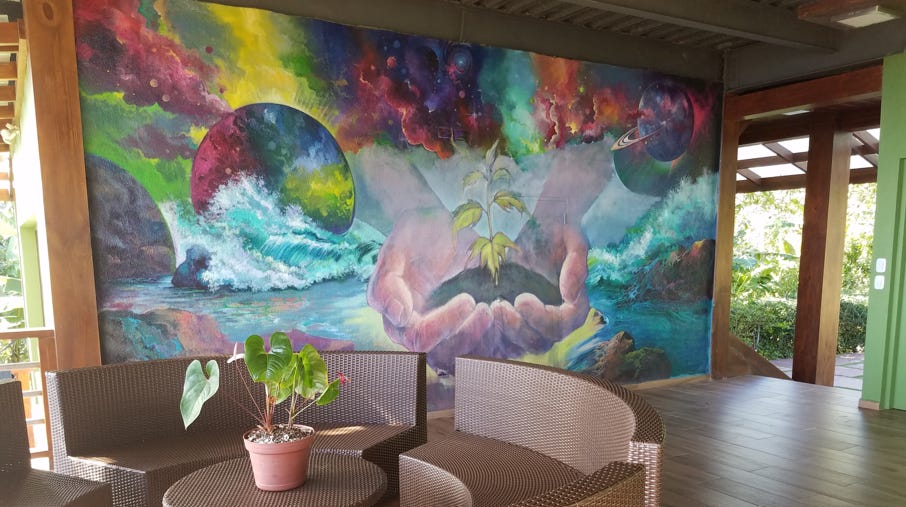
These examples did not erase the grief I felt. They gave it somewhere to go.
The tension between grief and hope, between pessimism and possibility, remains with me today. The ecological challenges we face are immense, and many are deeply embedded within the economic and social systems that shape modern life. At times they can feel overwhelming, as though the forces driving environmental decline are too large to meaningfully challenge.
Yet I no longer believe that awareness alone is enough. If understanding the problem creates grief, then participating in solutions creates agency.
That realization has shaped much of what I have focused on in the years since the course was released. I continue today as an instructor in the course and write about the connections between food, biodiversity, and planetary health. But increasingly, I find myself drawn toward something beyond education and communication.
I want to experience solutions, not simply describe them.
Part of this journey has led to the development of leadership programs offered through Global Roots in collaboration with CNS. At an education center in the Dominican Republic, participants have the opportunity to engage directly with food’s impact on the environment and explore how food production can contribute to ecological restoration rather than environmental degradation. Located in a region shaped by deforestation and agricultural land-use changes, the site serves as a small but tangible example of what it means to work with ecological processes rather than against them.
The same desire has also shaped my life closer to home. In North Carolina, I have spent the last several years stewarding a small piece of land, experimenting with agroforestry systems, and developing a nursery focused on perennial plants. The scale is modest, but the lessons have been profound.
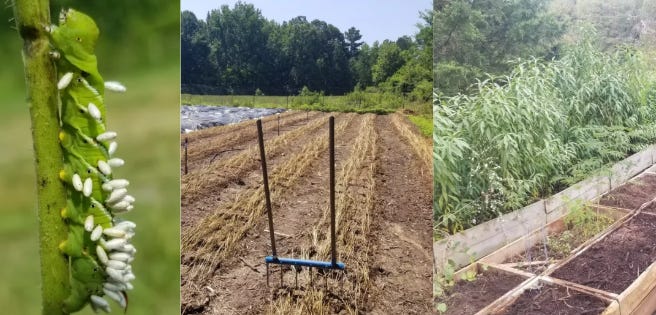
Working directly with the land has taught me things that writing or reading never could. Progress often feels painfully slow. The world moves on timescales that do not often conform to human expectations, and meaningful change rarely happens overnight.
During moments of frustration, I often return to a simple reminder: we tend to overestimate what can be accomplished in the short term and underestimate what can be accomplished in the long term.
Environmental restoration is, by necessity, an act of long-term optimism. It is a vote of confidence in a future we may never fully see ourselves, but one that we can nevertheless help create.
The countless reports, studies, or warnings about biodiversity loss, climate change, and planetary boundaries remain important, but what excites me most today are the people actively building alternatives. People restoring degraded land. People experimenting with agroforestry. People creating plant-based food enterprises. People finding practical ways to reconnect conservation, food production, and community.
Over the years, I have become increasingly convinced that food is one of the most powerful tools we have for addressing environmental decline. Not because it solves every problem, but because it touches so many of them simultaneously.
The more I have learned about the relationship between food production, land use, and biodiversity, the more I have come to see that restoring ecosystems at scale will require us to rethink how we feed ourselves. The opportunity to create more plant-centered and land-efficient food systems is an opportunity to give land back to nature.
That possibility continues to fill me with hope.
The future we need will not emerge from a single organization, idea, or leader. It will emerge from thousands of experiments, collaborations, and projects spread across the world. Yet we could still do more to explicitly connect plant-based food systems, conservation, and personal well-being.
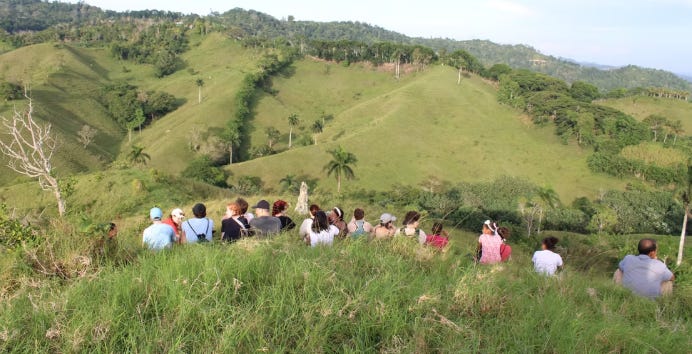
This is why I increasingly see my work as more than education; our goal is to model and share what these possibilities might look like in practice. Whether through agroforestry systems, ecological restoration, leadership programs, or new approaches to food production, we want to move beyond discussing solutions and toward experiencing them.
And this is where I would love your help.
I know many of you are carrying similar questions. Some of you are researchers. Some are farmers, educators, conservationists, entrepreneurs, students, or simply people who care deeply about the future of life on earth.
If we are serious about reversing biodiversity loss and creating space for large-scale ecological restoration, then food must be part of the conversation. In many ways, they are inseparable.
What are you working on? What ideas are you exploring? What projects have you dreamed about but not yet begun? Where do you see opportunities to connect food-system transformation with conservation, rewilding, and ecological restoration?
My hope is that this publication becomes a place where ideas do not remain ideas. A place where conversations lead to experiments, experiments lead to projects, and projects help demonstrate what a more regenerative relationship with the living world can actually look like.
As we continue developing projects in the Dominican Republic and North Carolina, I will share both our successes and failures along the way. But just as importantly, I want to learn from and highlight the work others are doing.
If any part of this resonates with you, I would genuinely love to hear from you. Reach out, share your ideas, tell me what you’re building, or simply introduce yourself. The challenges we face are immense, but so is the collective creativity of people who care enough to act.
Perhaps the most important thing we can do right now is find each other and begin building together.
A note on this format
Essentially everything I have written for this platform has been more analytical and written from a third-person perspective. Sharing some of these personal reflections and uncertainties feels unfamiliar, but it also somehow feels important.
Do you relate to any of the feelings I described around environmental grief, hope, or uncertainty? Have you found projects, communities, or ways of working that help transform those feelings into action? Have you seen or been part of projects that are trying to connect food systems with ecological restoration or rewilding? What brought you here and what you’re most interested in building or learning next? What are you building, exploring, or hoping to bring into the world?
No posts
Comments
Nothing yet. Say the first thing.
Sign in to join the conversation.