
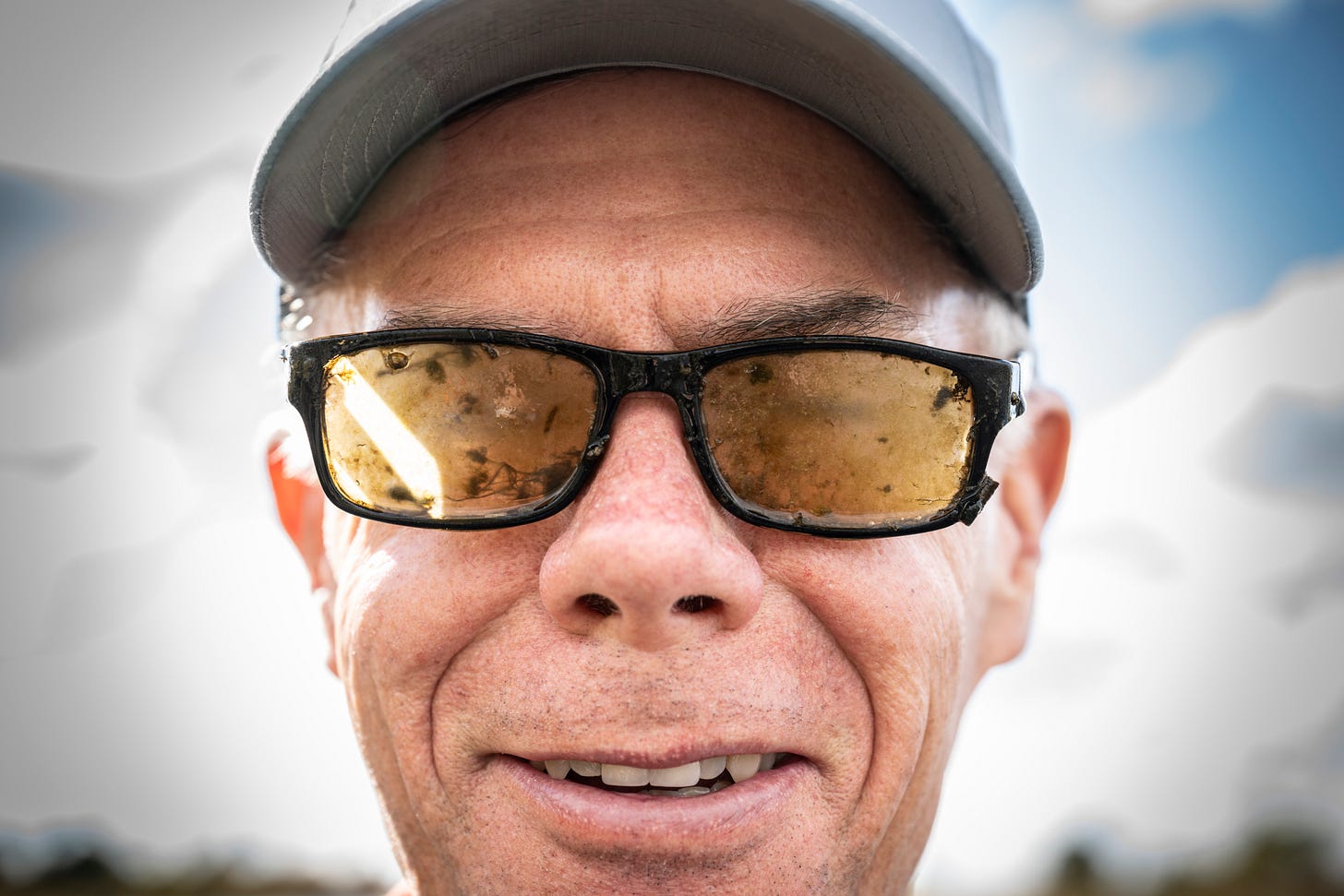
I met John during my first year guest facilitating at The School of Trout on the Henry’s Fork of the Snake River. I’d made a bold move and cold-called Todd Tanner, the owner and mastermind behind the school, asking if he might ever consider incorporating some of my movement, mobility and mindfulness programming into his curriculum. He was interested in what I was up to, but first he wanted me to come to Idaho, audit his dry fly course and get to know the crew (and have them get to know me).
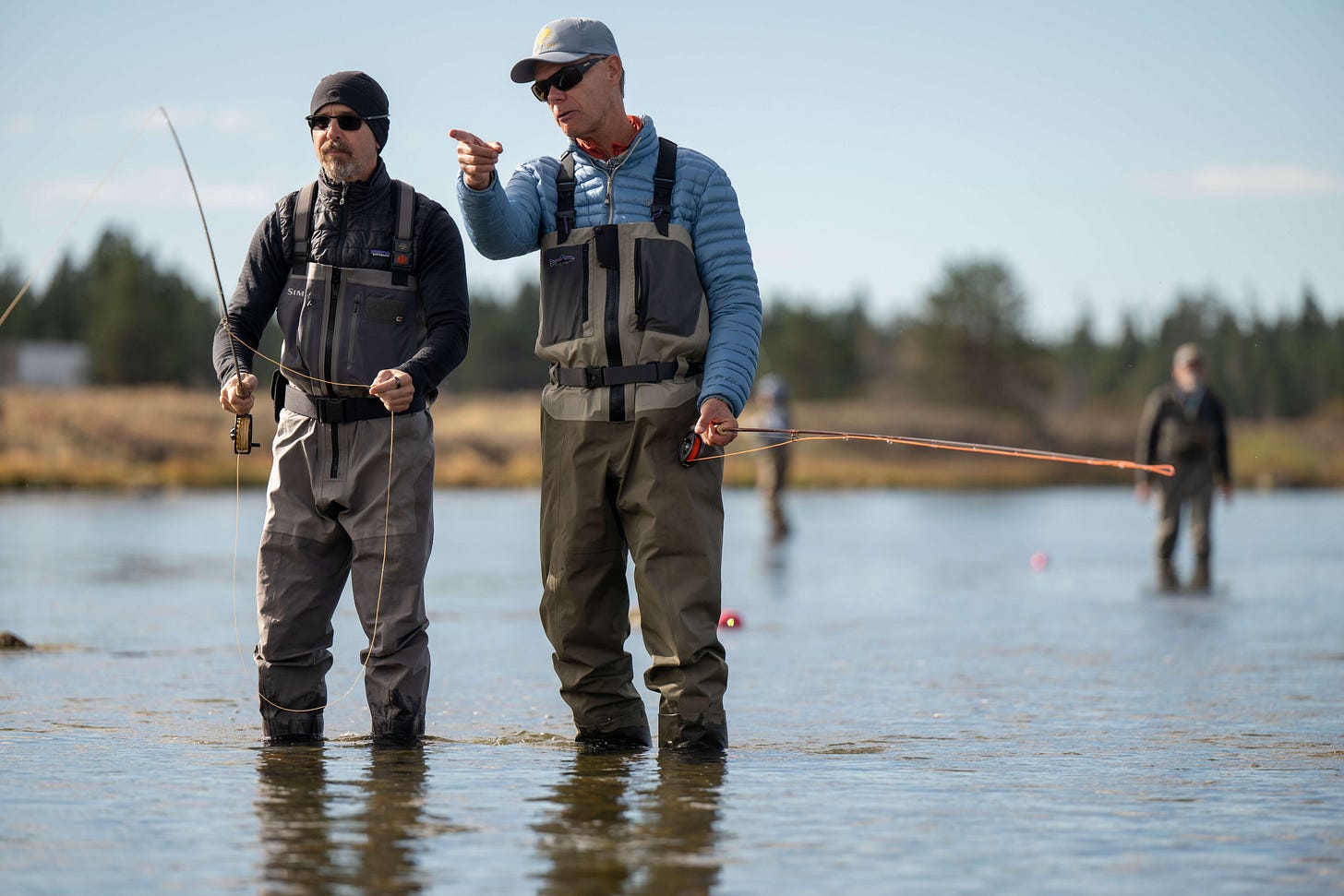
It’s a little embarrassing to admit that at the time I didn’t fully appreciate the caliber of anglers, educators and industry leaders who made up his team. After taking my first casting lesson with John Juracek, I immediately realized that my own way of seeing and approaching fly fishing was about to change exponentially. And it wasn’t because he taught me how to cast better, although he certainly did do that.
What really stood out to me most about John was the way he observed the world around him. After sitting in on his presentation on rise forms one of the evenings during the school, I started to key in on the fact that there was an entirely different layer of fly fishing altogether that was rooted less in technical ability, and far more so in learning how to pay attention. I believe that skill–the work of seeing and interpreting–is what John’s really spent a lifetime refining, teaching and sharing.
John has spent 57 years in fly fishing. Based in West Yellowstone, Montana, his career has touched nearly every corner of the sport, especially trout angling in the Greater Yellowstone Ecosystem. He’s worked as a guide, fly shop owner, photographer, writer and teacher, while also spending more than two decades as a partner at Blue Ribbon Flies and now serving as head casting instructor for School of Trout and Anglers Academy.
But long before fly fishing became a career, it began with his curiosity as a kid. Growing up in Illinois, John and his brother received McClane’s Standard Fishing Encyclopedia for Christmas one year and immediately began tying up fly pattern recipes from its pages. After finishing their first set of flies, the next step was obvious: they needed to go fling them out onto the water and see about finding some fish.
They started chasing bluegills, crappie and bass close to home. What began as a childhood experiment soon transformed into a lifelong passion and pursuit that would define much of John’s future. Nearly six decades later, he still describes his relationship with fly fishing with the same amount of enthusiasm that existed from the very beginning.
“There’s something about seeing fish in water, or just knowing that they’re there, and wondering to myself if I could catch them,” John said. “That is completely entrancing to me.”
That sense of fascination was really never confined to learning how to catch fish. Over the course of his career, it slowly evolved into something much bigger, broader and all encompassing–a dedicated lifelong practice of keen observation.
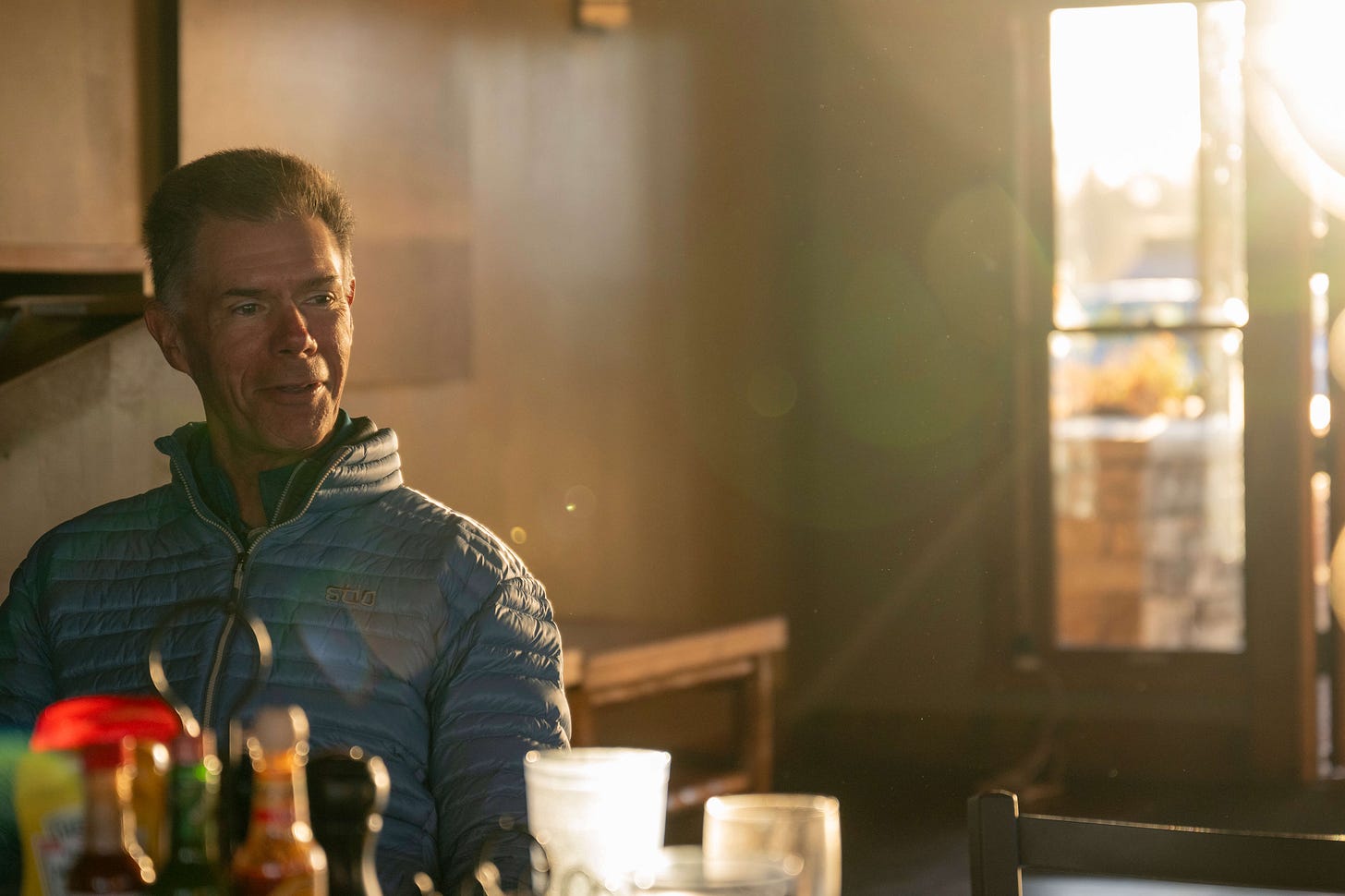
Photography requires the development of an eye for light, composition and the ability to capture a near tangible feeling. Fly tying asks for attention to detail, texture and movement. Teaching fly casting requires noticing subtle changes in timing and biomechanics. And sight fishing asks for engagement with the visual system and conditions to eventually transform what once looked like visual noise into a coherent conversation. In many ways, John’s built an entire life around training his perception.
The single rise of a trout, regardless of its specific rise form, rarely lasts much more than a fraction of a second. It could be characterized by a slight interruption in the rhythm of the current, a subtle dimple, or in some cases, a dramatic full send splash. But then it’s gone. And to many anglers, that brief moment simply confirms one thing: there’s a fish present. But to John, it reveals an entirely different and far more detailed storyline.
A rise form can suggest the size of the fish, the direction it’s facing, how it’s moving through the current, and precisely where in the water column it’s feeding. It also offers insight about insect activity, trout behavior, water quality and conditions and what respective decisions an angler might make next in response to the information that they’ve gathered.
When we discuss sight fishing, we often frame it exclusively about eyesight, and we may even make the assumption that the most exceptional sight anglers simply possess better vision. This isn’t entirely untrue, but the more interesting conversation isn’t actually about eyesight at all, it’s about perception.
Experienced anglers aren’t just those who see more clearly. Over time, they’ve developed the ability to interpret more of the information that’s in front of them in a deeper and more nuanced way. Through years of repetition and analysis, the brain learns which details matter, which signals can be ignored and how seemingly insignificant observations set the stage for better decisions.
For John, that process remains endlessly fascinating, which is why sight fishing is still one of his favorite ways to engage with the sport. He also acknowledged that it’s very cognitively demanding. “Sight fishing requires the most mental energy from me,” John explained. “Attention can never waver, and an intense focus is necessary, especially in demanding water and light conditions.”
When people think about the physical characteristics of fly fishing, they usually picture hiking, wading, rowing, casting, or standing in tumultuous conditions for hours on end. Those elements are most certainly relevant. But John’s career points toward something we don’t always consider: fly fishing also places extraordinary demands on the brain. Hours spent scanning water require sustained attention, visual processing, pattern recognition and constant decision-making. That kind of attention requires cognitive capacity.
Over the years, John’s relationship with that capacity has evolved. At one time, twelve-hour days on the river felt completely normal. Today, at sixty-seven, he chooses to fish a bit differently. Rather than maximizing hours spent on the water, he pays closer attention to conditions, hatches and the windows when he knows that fish are most likely to be active. The passion hasn’t changed, but his strategy has shape-shifted into one that’s in better alignment.
“I think that’s a normal evolution from the days of youth,” John said. “Now, a little fishing goes a lot further than it did then. But make no mistake, every day I wake up and think, this would be a great day to go fishing. I’ve got to get out there.”
After navigating injuries including a herniated disc and multiple knee injuries, John understands that physical capacity isn’t separate from fly fishing. Maintaining his body has always been part of protecting his relationship with the water. “I’ve long paid attention to my overall health, knowing that if I lose my mobility, I lose the ability to fish many places that I love.”
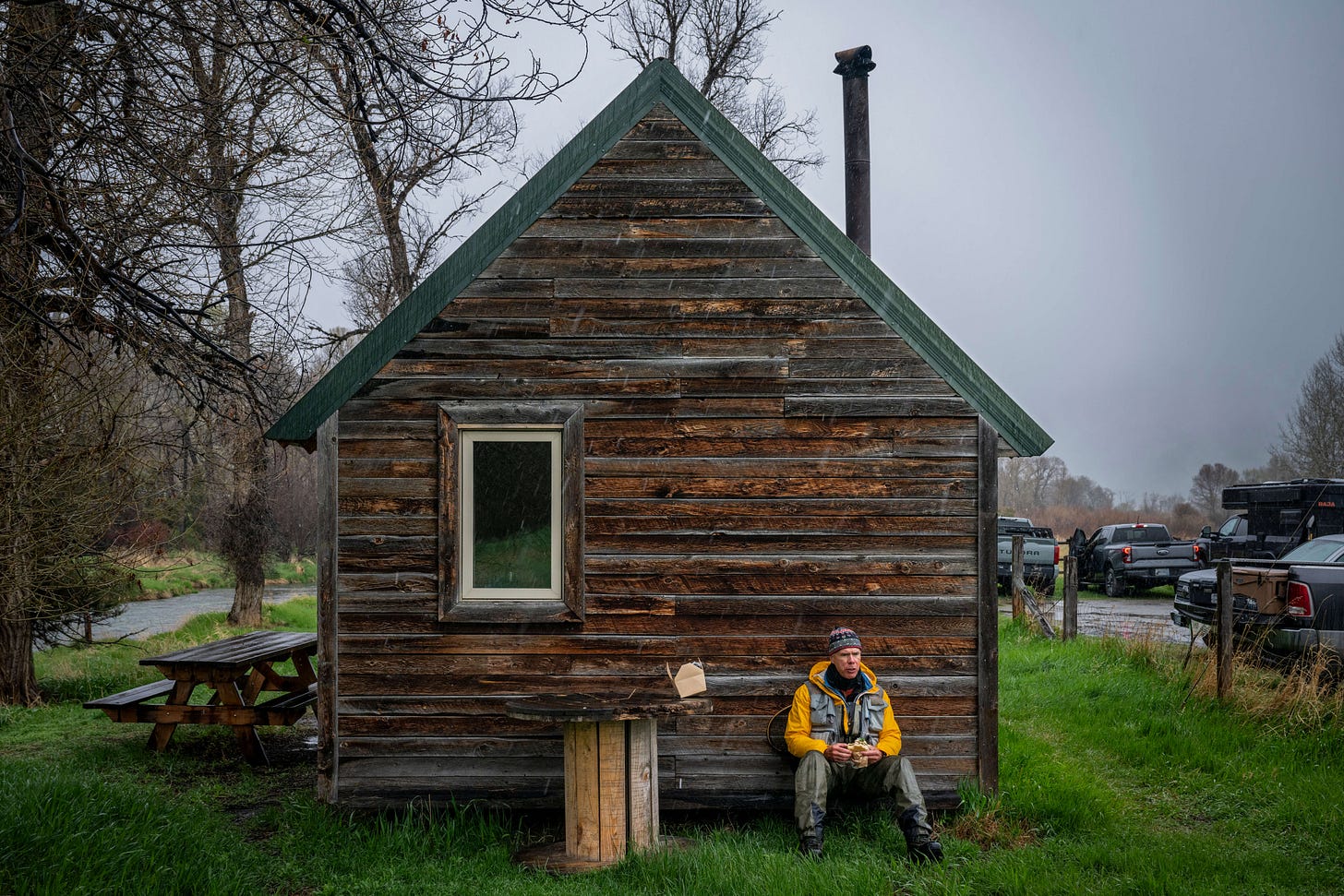
His approach to taking care of his body is refreshingly uncomplicated. He stretches daily, strength trains, walks regularly, prioritizes sleep and takes care of himself–not because he’s chasing performance metrics, but because he’s protecting the life he wants to continue living.
That ability to adapt may be one of the most important pieces to be considered within the longevity conversation. Staying in a sport for decades doesn’t mean that we turn a blind eye to the aging process, while digging our heels into the sand and insisting upon doing things the exact same way that we always have. Instead, it requires a willingness to allow ourselves to change so that we can actually stay connected to our passion.
But perhaps the most standout part of John’s lived expression of longevity has less to do with physical health and mobility, and more to do with his approach to being a lifelong student. “An aspect of fishing that is often misunderstood is the idea that fly fishing is a monolithic endeavor: that everyone who’s fly fishing is doing the same thing,” John explained. “Nothing could be further from the truth.”
After so many years wholly dedicated to the sport, John isn’t motivated by mastery. On the contrary, he’s motivated by the realization that mastery will always remain just out of reach. “I am always seeking to improve as an angler, and I often tell people that the angler I want to be is still theoretical.”
That statement says a lot. Here is one of the most respected casting instructors in the country, and someone who has spent nearly six decades completely immersed in fly fishing, still describing his best self as someone he’s still becoming. This speaks to someone who’s made a very deliberate choice to remain teachable, and to let curiosity and a growth mindset lead the way.
A well known sentiment inside of our sport is that it offers endless opportunities to learn new water, new species, new techniques, new insects, new casts and new ways of thinking and seeing. That complexity isn’t something that John believes should be stripped down and simplified away. Instead, he believes that it’s precisely what acts as the foundation to keep us devoted to fly fishing for a lifetime. “The truth is that it’s not simple and it’s not easy to do well, and I believe that’s what we should be embracing and celebrating.”
I had a short follow up call with John after writing the first draft of this piece to inquire about one more thing that I’d forgotten about during our initial interview. “John, if I remember correctly, you’re a pretty devoted pickleball player too, right?” He affirmed that yes, every Winter season, while many anglers of the west flock to saltwater fisheries or South American destinations, he takes a different approach. He heads to the Tucson area to embark upon four months of near daily pickleballing.
I asked if he saw any common threads shared between his relationship with fly fishing and his relationship with pickleball. As the conversation continued, we uncovered some really interesting parallels.
“You can dive as deep as you want in either sport, and that level of sophistication isn’t always apparent to the casual observer. You can lob a nymph over the side of a boat and catch fish, and you can also take a very similar approach to pickleball, too. That’s all perfectly fine. But if you want to go deep, you definitely can. Pickleball is actually an extremely difficult game of strategy. And fly fishing is exactly the same.”
John shared that pickleball has also become a direct outlet for becoming a beginner again while learning another visual, physical and strategic language over the past five years, where he gets to step back into the seat of being a brand new student.
When I think about John, it isn’t his impressive résumé that comes to mind–it’s the way he watches a river, picks apart a run, studies light, analyzes the most minute details of a cast stroke, and notices things that many of us pass by without ever realizing they were there.
His story isn’t simply about becoming an exceptional angler, or an exceptional teacher. It’s really about spending a lifetime cultivating a deep, refined and ever evolving way of seeing. The young boy tying his first fly and chasing bluegills in Illinois never really disappeared, he’s still asking questions, and remaining curious about what’s beneath the surface.
Lindsay Kocka is the founder of the Wade Well Method, a movement and mobility system designed to help anglers and guides move well, build long-term capacity and stay active and on the water for life. She works remotely with personal training clients, leads the Wade Well Online Training Studio, and partners with destination travel companies, lodges and outfitters to develop movement and preparation programs that help guests arrive confident, capable and ready to fully experience their adventure. Learn more at www.lindsaykocka.com
Comments
Nothing yet. Say the first thing.
Sign in to join the conversation.