
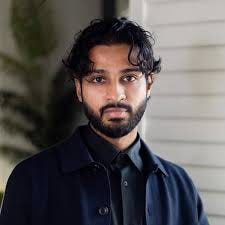
Adil Abbuthalha is the founder of Boycat. Built the product using vibe coding, shipping fast and learning as he went. Went to Umrah in 2019 and 2020, experiences that changed how he moves. Focused on building systems and infrastructure for the Ummah.
Q1: Take me back to the moment you became the person you are now. What happened, and how you came to what you do today?
I don’t think it was one clean moment. It was more things building up over time.
But if I had to point to one, it was Umrah.
In 2019, I went for the first time in almost 10 years. Every dua I made felt like it was answered straight away, even before I got back home. I came back thinking I was unstoppable.
Then I went again in 2020. This time, nothing happened immediately.
That contrast stayed with me.
I realised I don’t control outcomes at all. My job is to try, use whatever is in front of me, and push as far as I can. The result is from Allah, in His timing.
That changed how I move. Less hesitation, less overthinking.
Everything since then has just been me trying to take what’s in front of me seriously, build something that helps people, and trust the outcome isn’t mine.
Q2: What’s the belief you hold that most people around you disagree with, and what did it cost you to keep believing it?
I think a lot of Muslims in the West have a victim mindset.
We don’t need to build for Muslims. We need to build as Muslims for the world.
Islam was never meant to sit in a corner. It’s meant to shape things.
In the West, we over-label everything. Muslim this, Muslim that. But if you go to the East, you don’t see Muslim AI Conference. It’s just an AI conference.
That difference matters.
A lot of people assume the world is against them, so they think smaller than they should. They cut corners, look for quick wins, try to get a deal instead of building something properly.
If you build something genuinely good, people will use it. It’s that simple.
Holding that belief means you can’t hide. You actually have to perform. You have to build at a high level.
But that’s exactly where we should be.
Q3: Why did you build Boycat? How did you calculate risk as you were building?
It started with Islam.
Just the idea that what you do every day matters. What you spend on, who you support, all of it.
At the same time, I was learning how to build. Not in a formal way. Just understanding how fast you can actually ship something now, test it, adjust it. What people call vibe coding.
And I understood distribution. How to get something in front of people.
So it wasn’t just an idea sitting there, I could actually act on it. I didn’t sit there calculating risk in a deep way, there was a clear gap. People cared, but it was inconvenient to act on it.
So the bigger risk felt like doing nothing. I just moved. Built fast. Learned as I went. Failed along the way.
Once people started using it, it stopped being about risk. It felt like responsibility, especially with the moon shot vision of changing how the global economy spends their money.
The deeper answer is, I didn’t want to face Allah and say I tried my best when I didn’t do everything I could.
Q4: What’s your advice to Muslims trying to get into a similar space and make an impact?
Raise your standard.
Not just in intention, but in execution.
A lot of people want to do something meaningful, but they don’t want to go deep. They don’t want to master a craft, understand systems, or operate at a global level.
Islam is not asking you to be average with good intentions. It’s asking for ihsan. Excellence.
That means:
Learn how systems actually work, not just how they look from the outside. Build things people use, not things people agree with. Be patient enough to go long term, not chase quick validation.
Also, detach yourself from outcomes.
If you tie your motivation to success metrics, you’ll burn out or compromise. If you tie it to service, you’ll keep going even when things are unclear. Remember, you just need one dua from someone to go to Jannah.
We don’t need more voices, rather, we need people who can build, endure, and deliver at a high level.
Q5: What should the Ummah be focused on for the next 10 years?
Ownership of infrastructure.
Our parents came to the West to build security. Stability. A better life.
Our generation has a different responsibility, we need to build the systems.
Financial rails. Media platforms. Supply chains. Education. Technology.
Right now, we operate inside systems we don’t control. That creates long-term fragility, instability, and chaos when we see things happen around the globe to our brothers and sisters.
The next generation should not just participate. They should inherit systems that allow them to lead.
So the next 10 years should be about:
Building, not just reacting. Coordinating, not just operating individually. Creating institutions that outlast us.
If we do that properly, the generation after us won’t be trying to catch up. They’ll be setting the direction.
Connect with Adil:
Email: adil@boycat.io
Website: boycat.io
Links: linktr.ee/boycatapp
About Five by Friday
Five by Friday is a weekly newsletter interviewing successful Muslim founders in the startup space, sharing their experience through five questions. New interview every Friday.
Friday is a 501(c)(3) that supports Muslim-led businesses through connection to community and capital. We connect founders, investors, operators, and industry experts to unlock expertise, capital, and collaboration.
How you can help power our mission:
Donate: Every dollar counts. Contribute now to help us reach our goal.
Share: Share with friends, family, and on social media. Your advocacy can amplify our impact.
Volunteer: Your time and skills can make an impact too.
You can also find us on LinkedIn, X, Instagram, WhatsApp or join our community directly.
No posts
Comments
Nothing yet. Say the first thing.
Sign in to join the conversation.