
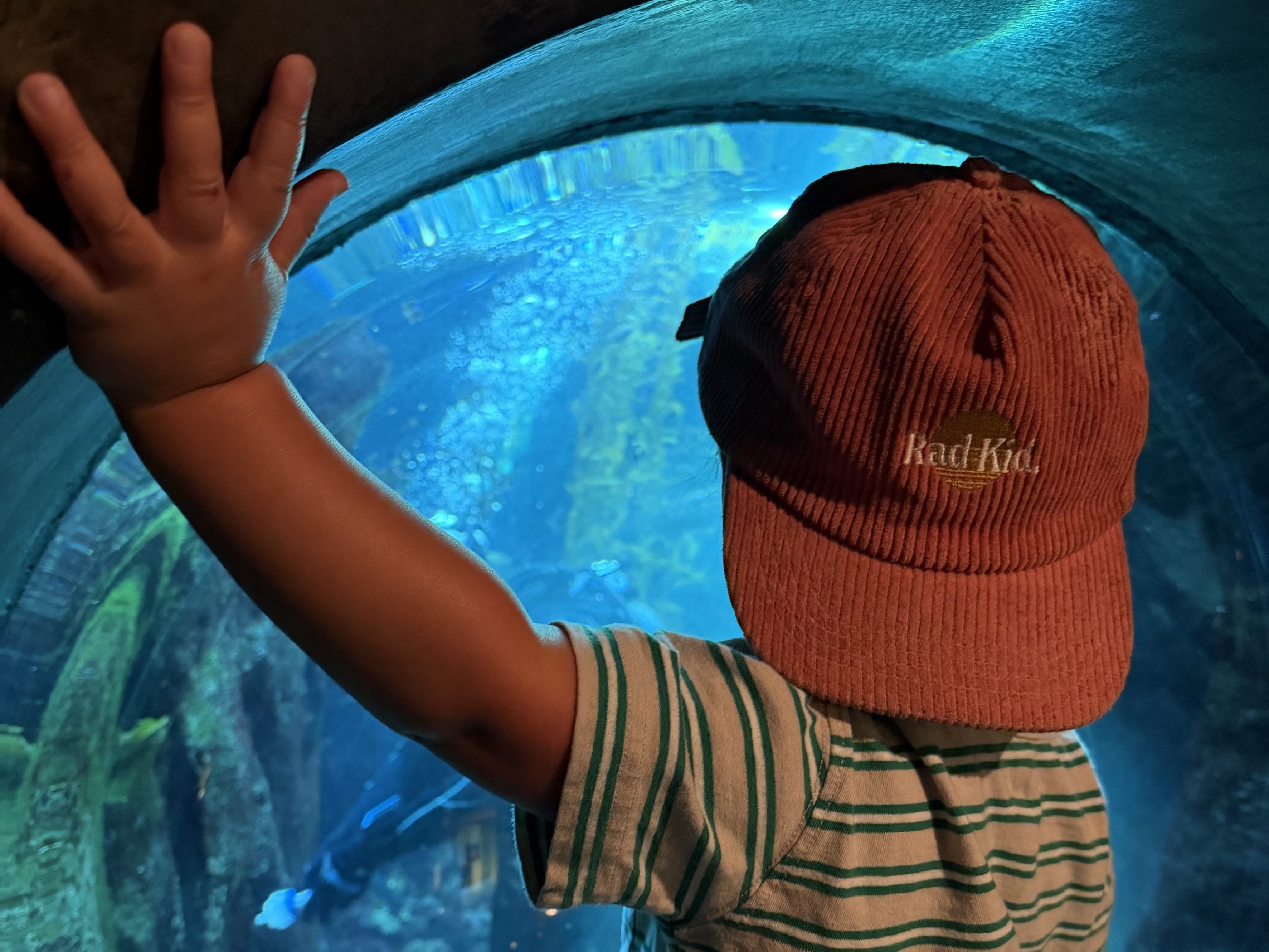
My dad worked nights at a fulfillment warehouse, so the weekends I spent with him had a different texture. The mornings would be spent in the expansive den at my grandparents’ house, eating breakfast on the slightly itchy couch. From the TV cabinet that now reeks of the 90s, the early morning action of X-Men, Captain Planet and The Teenage Mutant Ninja Turtles would transition into the afternoon and evening of Jerry Springer. Soul Train. COPS. Showtime at the Apollo. I was somewhere between 8 and 11, and my brain was absorbing all of it: from “Cowabunga” to “Jer-ry, Jer-ry” and everything in between. While somewhere in the back of my mind the prevailing parental wisdom of the era ran on a loop: watching too much TV will rot your brain.
I turned out okay. I think. Less certain about that lately, though.
A few weeks ago, screentime came up in our toddler class. The conversation went where those conversations always go — the research, the recommendations, the quiet inventory everyone takes of their own choices while pretending to listen to someone else’s. I sat there waiting to feel something clarify about Rheo, about what we were doing and whether it was right.
Instead I kept thinking about myself. About my own relationship with screens. About what I’d quietly let become normal.
What I kept coming back to was a feeling I’d lost something I couldn’t quite name. A gap somewhere.
That felt like information worth sitting with.
I’ve been thinking a lot about what it was like before streaming existed, not with nostalgia exactly, but with a kind of curiosity about what that world required of people. A show aired on a specific day at a specific time. You were there for it, or you missed it and hoped for a rerun. The scarcity wasn’t a limitation so much as a structure. It made the watching intentional, even when it wasn’t. When it was over, it was over. The television went off and the evening had space in it again.
What I find myself missing isn’t the content. It’s the gap that used to exist after it. Those few minutes of just sitting with what you’d watched before the next thing arrived, before there was always a next thing arriving, before the choice was taken away by an algorithm that had already decided for you. That gap is where you processed things. Where you got a little bored. Where your mind wandered somewhere that wasn’t curated.
I notice it beyond myself too. The way adult conversation has quietly reorganized itself around screens, not just the shows, though we do spend a considerable amount of time trading opinions on the latest episode of whatever everyone is watching, but the way we’ve started using our phones as punctuation. Someone mentions something that happened and within seconds a phone is out, the video is loading, because apparently we can no longer relay an experience without producing evidence of it. What started as sharing has become a kind of one-upmanship.
I see your video and I raise you mine.
We are more connected to content than we are to the people sitting across from us, and we’ve normalized it so thoroughly that pointing it out feels rude.
The worry I carry about Rheo isn’t separate from this. Teachers are already reporting it in early classrooms: a measurable decline in imaginative play, shorter attention spans, a diminished capacity to just be somewhere without stimulation. These are the first results coming in from an experiment nobody consented to run. I find it hard to talk about screen limits for a toddler while ignoring the fact that I am also a subject in that experiment, also being shaped by it, also losing something I haven’t fully named yet.
I don’t know exactly when I lost the ability to just stop. I notice its absence most in small moments, reaching for my phone when I’m not looking for anything, just holding it. We’ve put pockets in everything, designed bags for the express purpose of carrying these devices, and still we choose to hold them in our hands.
Like an appendage we didn’t have twenty years ago but can no longer imagine moving through the world without.
Rheo will reach for my hand when we’re out, or want to hand me something, a rock, a leaf, whatever matters urgently to a toddler, and there are times I can’t take it. Not because my hands are full, but because one of them is holding a device I’m not even using. I’m not frustrated with him in those moments. I’m frustrated with what I’ve been trained to do without noticing I was being trained.
The screentime conversation at toddler class was ostensibly about our kids. It is, of course, about our kids, the research is real, the effects on developing brains are real, and the fact that the people who built these platforms quietly keep them away from their own children is something I find difficult to sit with casually. The conversation also has a way of becoming a mirror when you let it, and what I saw in mine wasn’t primarily about Rheo.
It was about what I want to be able to model. Not as a rule I set for him, but as a way of being that he can actually observe. If I want him to grow up knowing how to sit in the gap, how to be somewhere without immediately reaching for something to fill it, then I have to be able to do that first. I have to relearn it, maybe, or at least practice it consciously enough that it becomes visible.
That’s a different conversation than the one about screen limits and age-appropriate content and whether Bluey counts. It’s harder and quieter and it doesn’t have a recommendation attached to it.
If I want him to know how to sit in the gap, I have to stop filling mine.
Comments
Nothing yet. Say the first thing.
Sign in to join the conversation.