
In today’s post I want to share the gut protocol I walk through with the parents I coach.
Not the $80-a-month probiotic capsule version. The version that runs off food you can buy at your normal shop, on your normal Tuesday.
And something changed recently that makes this worth your time.
The 2025–2030 Dietary Guidelines for Americans were released after a delay, and for the first time they address gut health and the microbiome directly. They name fermented foods, including sauerk
raut, kimchi, kefir and miso, as supportive of microbial diversity.
For decades the official message was count calories, cut fat. Nothing about the bacteria doing half the work.
Your bloating was never a discipline problem. It’s more likely a bacteria problem.
Fair warning before you get excited: guidelines are a framework, not a prescription, and plenty of nutrition researchers have criticised parts of this update. I’m not here to sell you a government document.
I’m here because the food advice underneath it is sound, and it’s cheap.
There’s one tip in this list that isn’t food at all. It’s usually the one holding people back. I’ll flag it when we get there
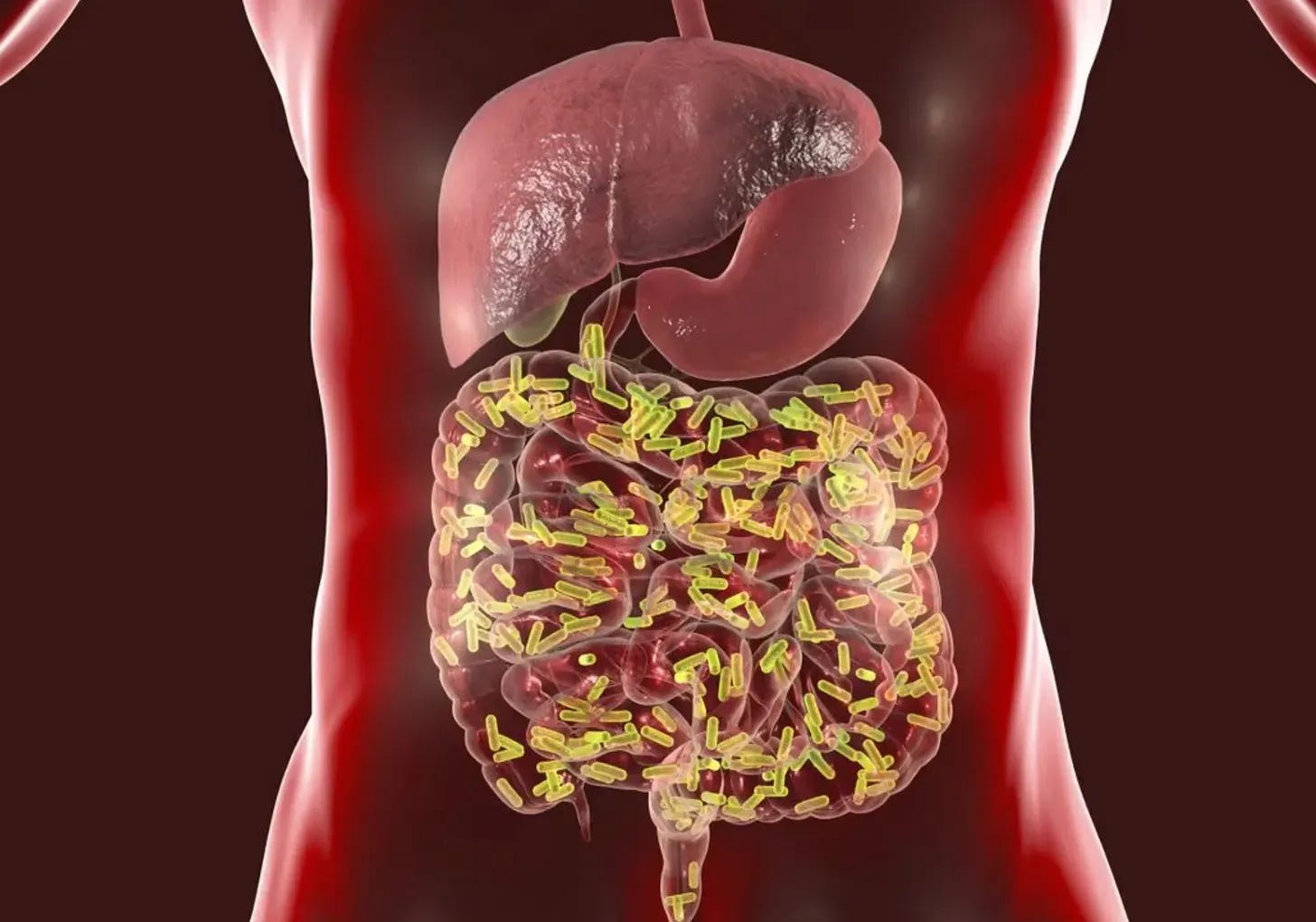
You eat a normal dinner and your stomach looks four months pregnant by 9pm.
You wake up puffy. Your rings are tight. Your face looks different in photos and you can’t explain why.
You’re not imagining it.
Here’s the daily reality:
→ Bloated by mid-afternoon, every single day
→ Energy that falls off a cliff after lunch
→ You feel “inflamed” but can’t point to a cause
→ Foods you ate for 30 years now upset you
→ The scale says one thing, the mirror says another
This isn’t a willpower failure. You can’t discipline your way out of a bacterial imbalance.
The modern shop is built on shelf-stable, low-fibre, heavily processed food. Your gut bugs are starving.
So let’s feed them.
Ten tips is a lot to remember. Nobody remembers ten things.
So here’s how I teach it. Three pillars. Every tip lives inside one of them.
Add. Feed. Protect.
Add the good bacteria. Feed the ones you already have. Protect them from what wipes them out.
That’s the whole system.
This is the highest-leverage move on the entire list, and I want to give you the full picture on it, because the research here surprised the researchers themselves.
The study that changed the conversation
Stanford ran a 10-week trial, published in Cell in 2021. Thirty-six healthy adults, split into two groups.

One group ate more fermented food. Yogurt, kefir, sauerkraut, kimchi, fermented vegetables, kombucha.
The other group ate a high-fibre diet.
The fermented food group’s gut bacteria grew noticeably more diverse. Nineteen inflammatory markers in their blood went down.
The high-fibre group? Their microbial diversity barely moved over the same 10 weeks.
The team expected the opposite result. Stanford’s Dr. Erica Sonnenburg said plainly: “We expected high fiber to increase microbiota diversity.”
It didn’t. The fermented food did the work.
Now, read that carefully, because this is where most people online get it wrong.
This does not mean fibre is useless. Fibre did other things in that same study, and it remains one of the most important foods you can eat. Pillar 2 is entirely built on it.
It means fermented food is the faster lever for diversity. Both matter. Start with the fast one.
The newer evidence points the same direction
A 2026 study in Frontiers in Nutrition followed close to 5,000 Korean adults for nearly two decades. People eating fermented cabbage daily tended to have healthier cholesterol readings.
Be honest about what that is. It’s an observed pattern in a population, not proof that kimchi fixed anyone’s cholesterol. Observational studies can’t prove cause.
It also carries a real sodium load, which matters if you watch your blood pressure. More on that in a second.
Your four fermentation rules
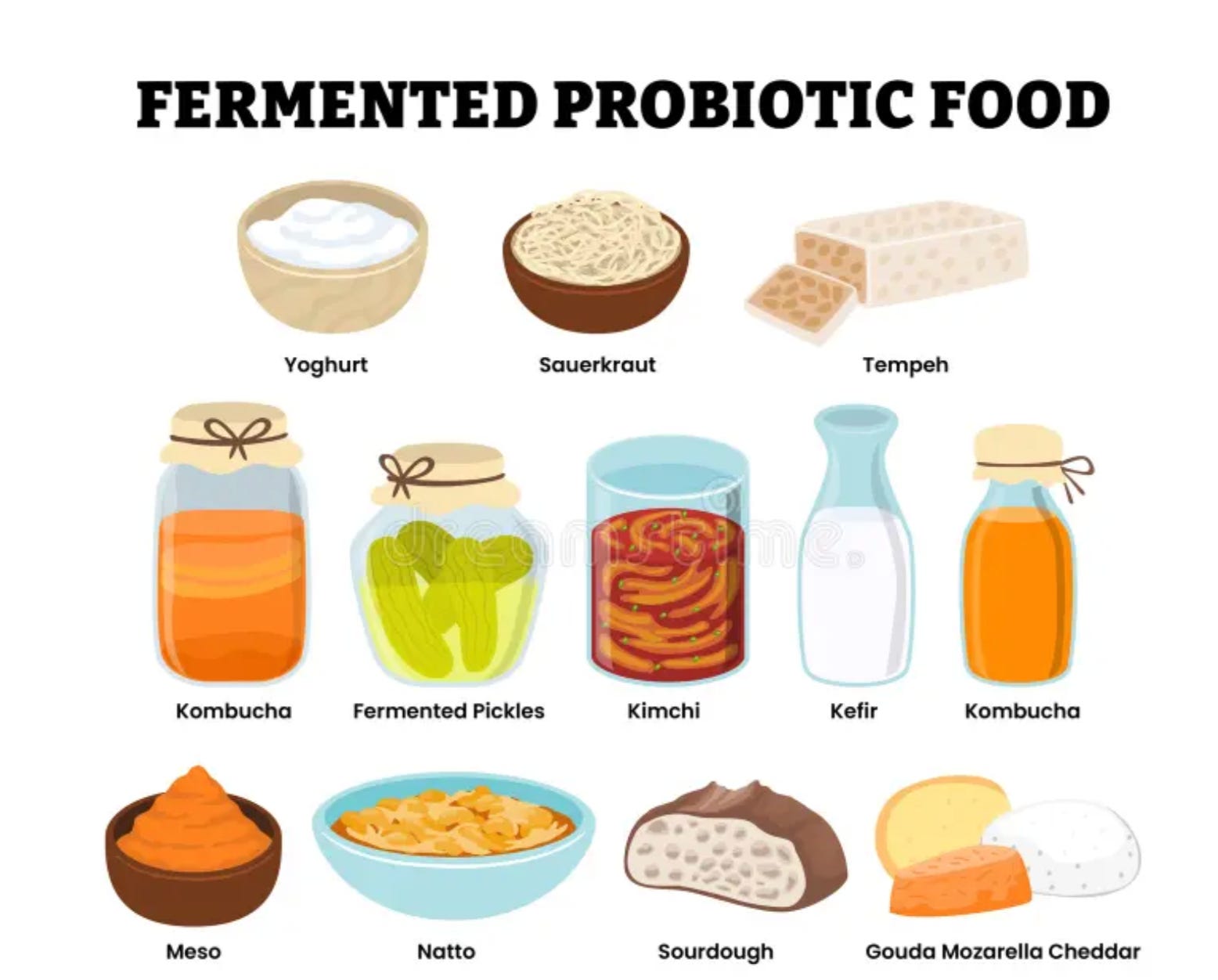
→ One fermented food a day, with live cultures. Consistency beats volume. A daily spoonful outperforms a heroic Sunday.
→ Rotate them. Yogurt Monday, kefir Tuesday, sauerkraut Wednesday, kimchi Thursday. Different ferments carry different bacteria. Variety is the whole point.
→ Skip the pasteurised jars. Heat kills the bacteria you’re paying for. Check the fridge section, look for “live cultures,” and be suspicious of anything shelf-stable at room temperature.
→ Make your own if you can. Cabbage, salt, a jar. You control the salt level and the freshness, and it costs pennies. It’s also the single best way to cut the sodium problem down to size.
That last point matters. Shop-bought sauerkraut and kimchi can be high in salt. If you’re managing blood pressure, keep portions small, make your own where possible, and talk to your doctor.
Where to start tonight: plain yogurt with live cultures, or a forkful of sauerkraut on the side of your dinner plate. That’s it.
Same principle as fermented food, wider net.
Probiotics aren’t just “good bacteria.” They’re live microbes that, in the right strain and dose, may do real work for you.
What research suggests they may help with:
→ Crowding out less helpful bacteria
→ Calming inflammation
→ Supporting your gut lining
→ Supporting immune function
→ Talking to your brain through the vagus nerve
That last one surprises people. Your gut and your brain are in constant conversation, which is part of why your mood and your digestion tend to move together.
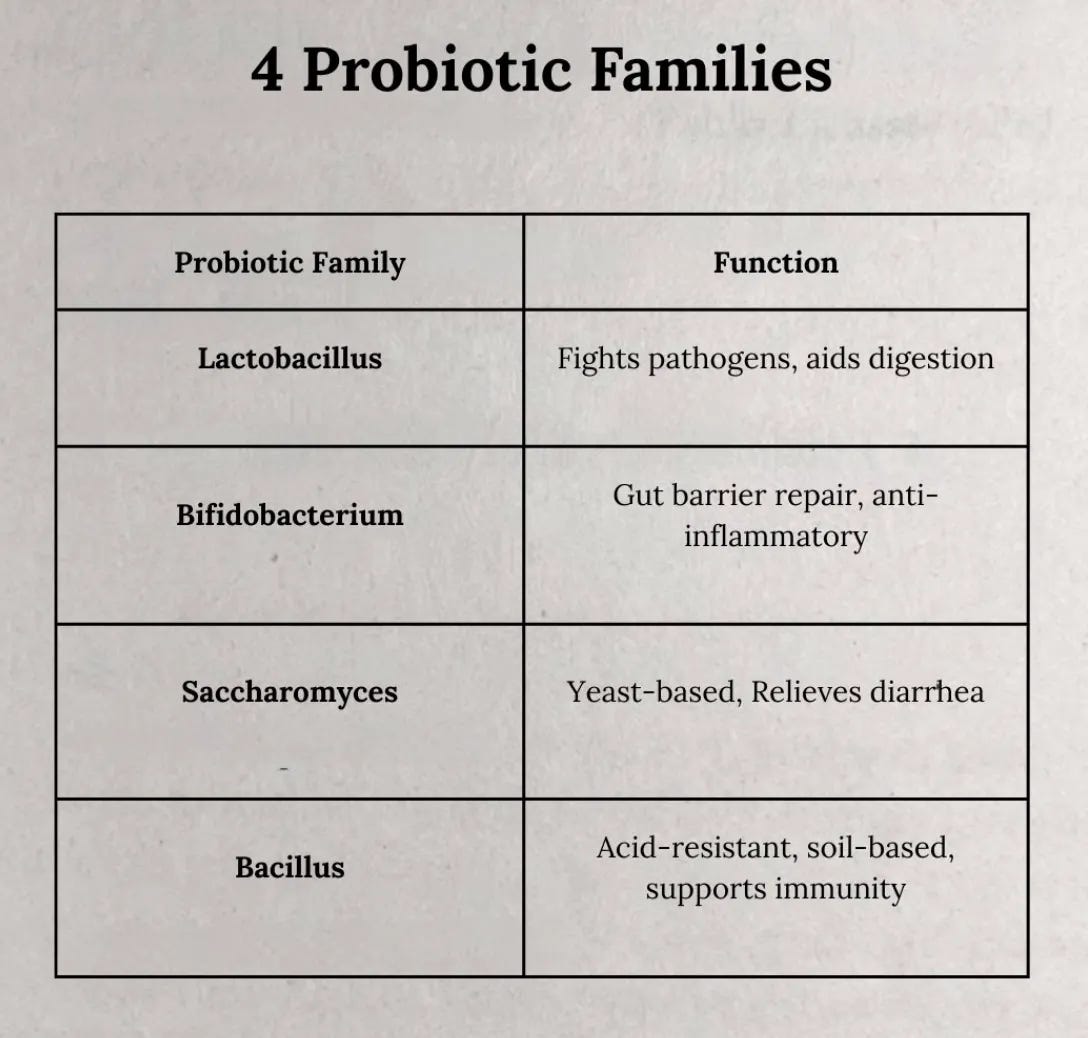
Think of them as reinforcements for an ecosystem that’s been under-staffed for years.
One thing to know before you buy anything: different strains do different jobs. There’s no single “the” probiotic, and results vary a lot between people.
Which is why I’d start with food, not a capsule.
→ Yogurt
→ Buttermilk
→ Sourdough bread
You don’t need a supplement. You need a spoon.
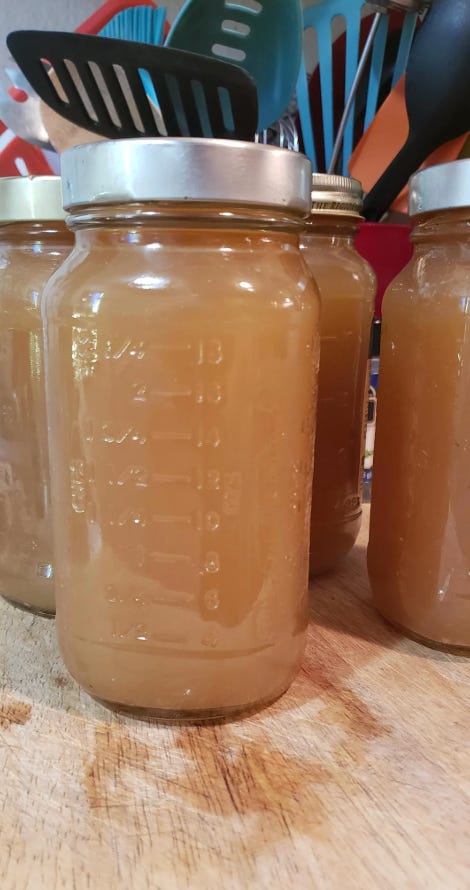
Bone broth contains amino acids like:
→ Glycine
→ Glutamine
→ Arginine
All three are being studied for their role in gut lining repair and inflammation.
It also carries sodium, potassium and magnesium. Those electrolytes support hydration, which matters more for digestion than most people realise.
The idea is that broth may help support the mucus layer lining your intestines, the barrier that keeps your gut bacteria where they belong.
It also just keeps things moving.
The evidence here is thinner than the fermented food evidence, so treat it as a nice-to-have, not a cornerstone. But it’s warm, it’s cheap, and the kids will drink it as soup.

Fermented food adds new bacteria. Fibre feeds the ones already living there. You need both jobs done.

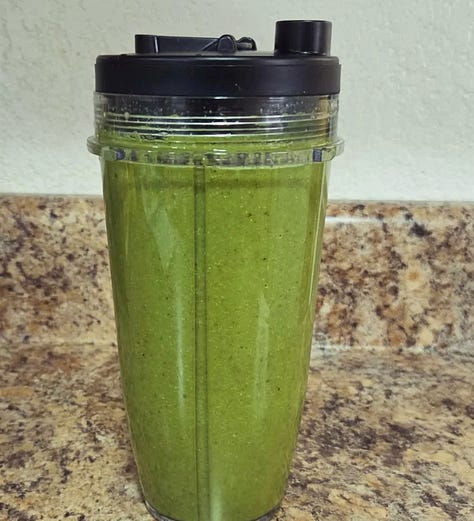
Your gut bacteria eat fibre. No fibre, no bacteria. It really is that direct.
Your free fibre list. Add three of these this week.
→ Lentils
→ Beans
→ Chickpeas
→ Apples
→ Bananas
→ Raspberries
→ Broccoli
→ Artichokes
→ Popcorn
→ Whole grains
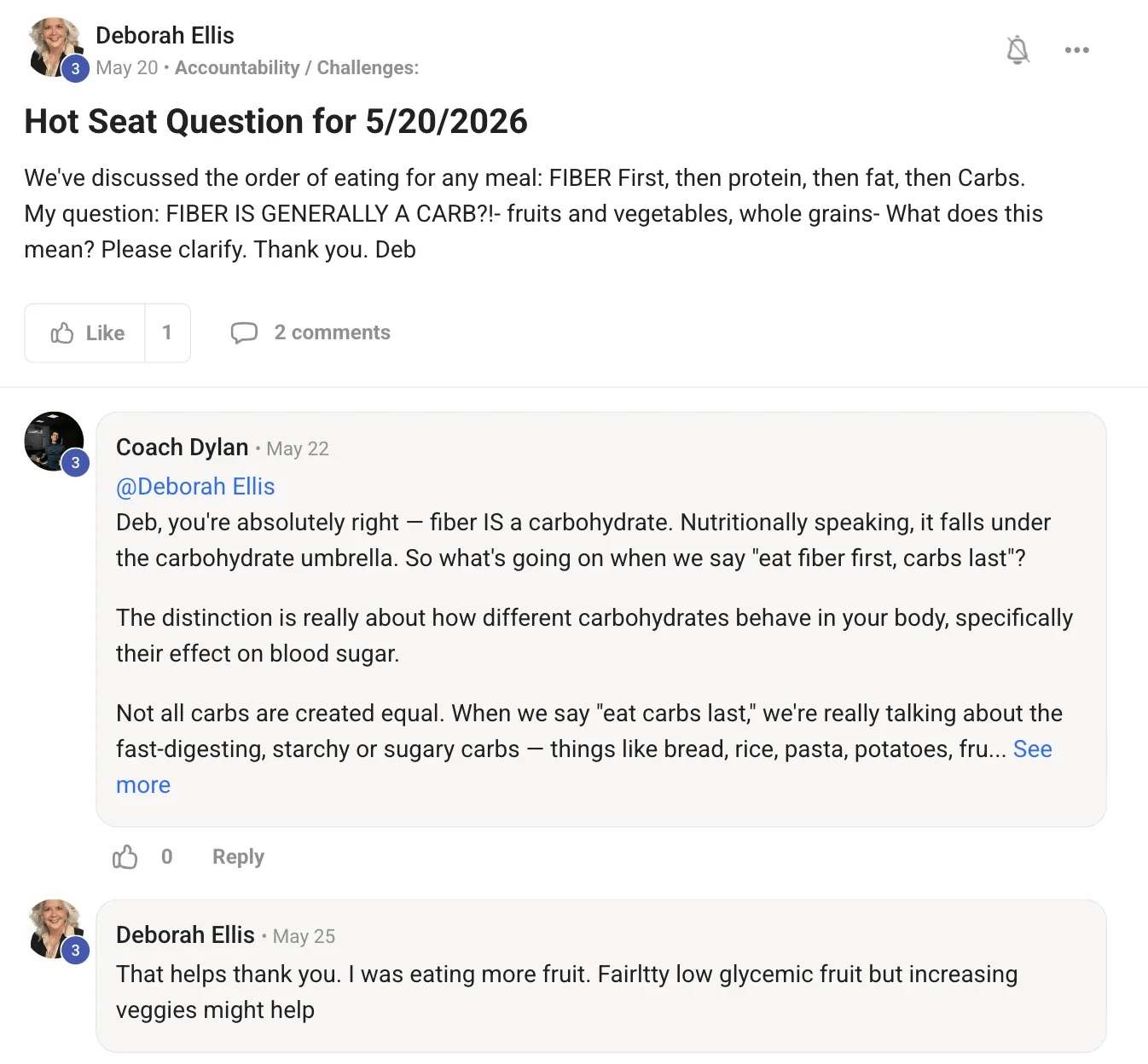
One of our members, Deborah, asked this on a call and I still think about it.
She said: you keep telling us fibre first, then protein, then fat, then carbs. But fibre is a carb. Fruit, vegetables, whole grains. So what am I actually doing here?
Fair question. Nobody had put it that plainly before.
Here’s the answer. Fibre is technically a carbohydrate. But your body can’t break it down for energy the way it does bread or rice.
So it passes through mostly intact and reaches your large intestine, where your bacteria eat it.
Fibre isn’t food for you. It’s food for them. That’s why it sits in its own category, separate from the carbs on your plate.
Eating it first also slows everything that follows, which steadies how you feel an hour later.
That’s what our weekly calls are for. Somebody says the thing everyone was quietly confused about, and the whole group gets sharper.
If you want to be in the room for those calls, that’s what Parent Fit Club private community is. Or just reply “coach me” and I’ll tell you if it’s a fit.
This is the one most people get wrong. They eat “healthy” but they eat the same six healthy things forever.
According to the 2018 American Gut Project study in mSystems, people who ate more than 30 different plant types per week had more diverse gut microbiomes than those eating 10 or fewer.
Thirty sounds impossible until you realise herbs, spices, nuts, seeds, and grains all count.
A sprinkle of oregano counts. That’s the game.
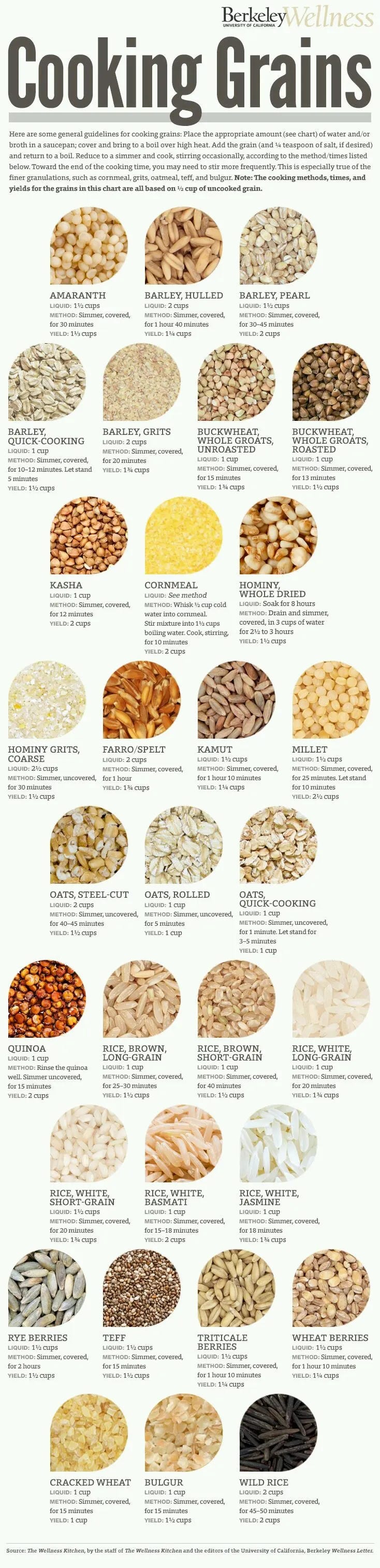
Two jobs at once. High in fibre, and they contain carbs your small intestine can’t absorb.
Those carbs travel down to your large intestine and feed the good bacteria there.
7. Eat foods high in polyphenols.
Plant compounds that may support the gut bacteria and are being studied for effects on inflammation and oxidative stress.
→ Dark chocolate (yes, really)
→ Blueberries
→ Green tea
→ Almonds
→ Broccoli
→ Onions
→ Grapes
8. Limit artificial sweeteners.
Comments
Nothing yet. Say the first thing.
Sign in to join the conversation.