
In 1789, Alexander Hamilton became the first Secretary of the Treasury of a country that had barely learned how to govern itself. The Revolutionary War was over, the Constitution had been ratified, and the new federal government was finally taking shape. Even so, independence had left behind roughly $75 million in war debt, few reliable sources of revenue, and little financial credibility.
America had won the war, yet it still had to convince those who had financed it that the new republic would honor its promises. Hamilton understood that this was not simply a problem of paying old bills; rather, it was a problem of public credit. Years earlier, in 1781, Hamilton had already articulated that he believed public debt could be a source of national strength rather than merely a burden:
“A national debt, if it is not excessive, will be to us a national blessing.”
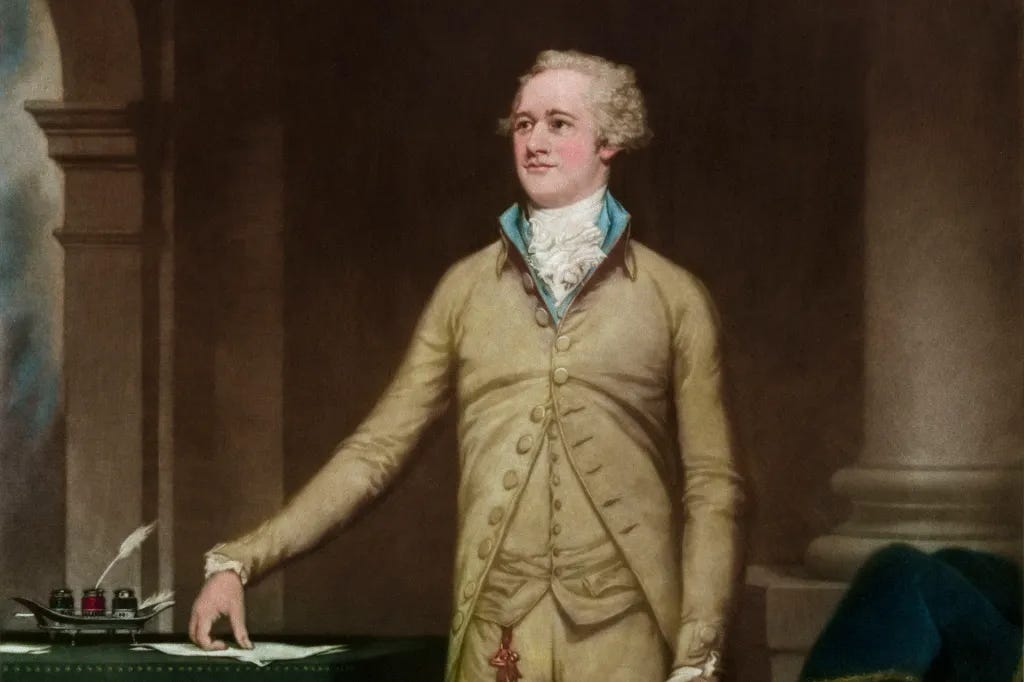
To achieve this vision, they built an entire financial system around the government’s obligations. Hamilton persuaded Congress to assume the states’ war debts and refinance them into standardized federal bonds. At the same time, he proposed using tariff revenues and excise taxes, including a controversial tax on whiskey, to service the debt, while establishing the First Bank of the United States as part of a broader system for mobilizing capital.
The objective was to make American securities credible, liquid, and attractive enough that investors would willingly hold them. Hamilton succeeded. By 1792, the newly structured government bonds were trading at roughly $1.20 for every dollar of face value, a remarkable turnaround for a government whose credit had been deeply uncertain only a few years earlier. He had transformed the obligations of a fragile new republic into securities that investors were willing to pay a premium to own.
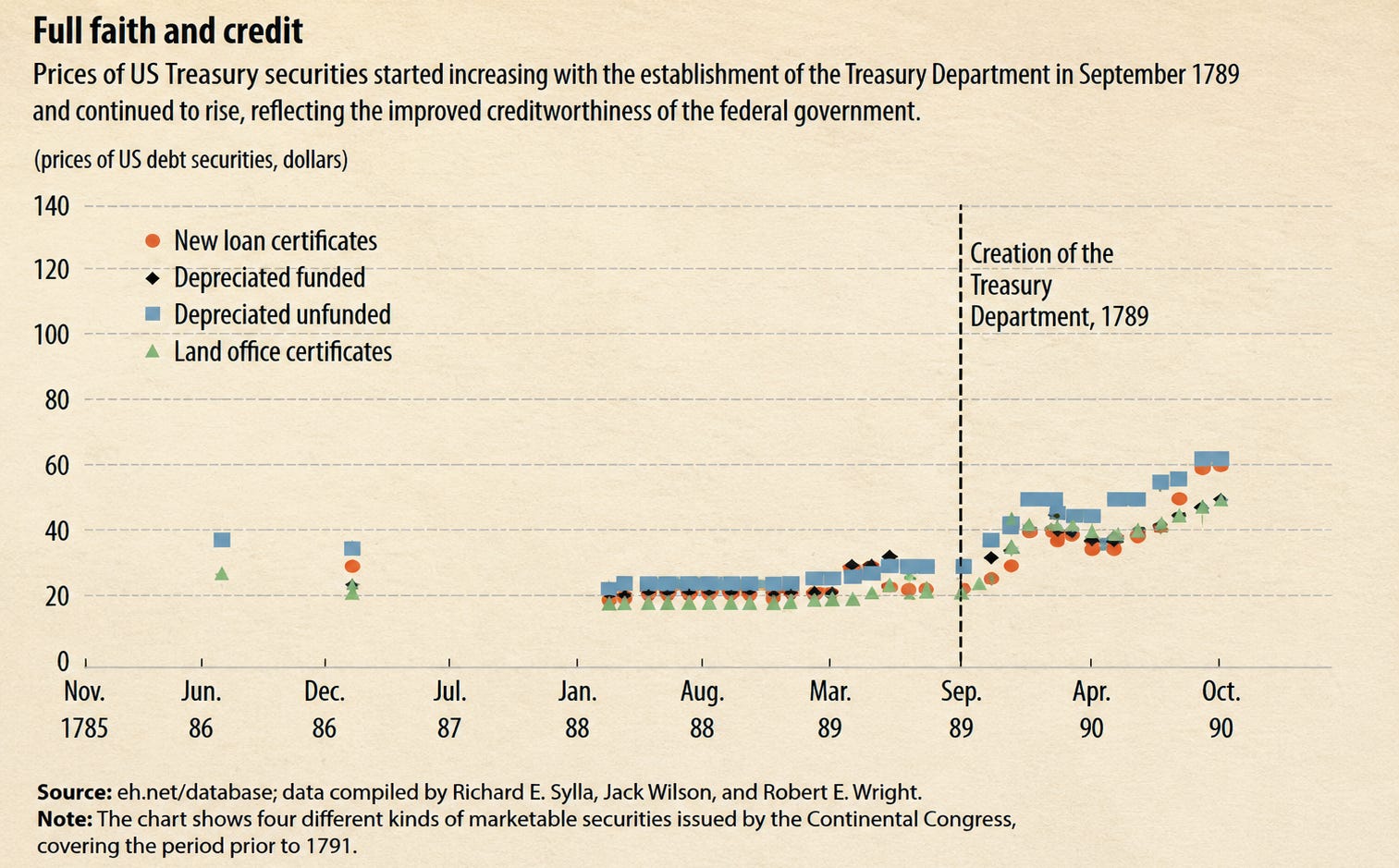
Ultimately, that distinction would become one of the foundations of American financial power. Hamilton did not simply create a way for Washington to borrow; instead, he helped establish a market where government debt could circulate through the economy. As the country grew, so too did that market, evolving until Treasuries became standardized, liquid, and widely held—a system fully capable of absorbing the liabilities of an expanding state.
However, Hamilton was under no illusion that debt could simply grow without limits. In his 1790 Report on Public Credit, he argued that borrowing had to be matched by a credible means of repayment:
“The creation of debt should always be accompanied with the means of extinguishment. This he regards as the true secret for rendering public credit immortal.”
This principle laid the groundwork for American statecraft. Whenever government borrowing outgrew the existing financial architecture, Washington found ways to adapt it. The methods changed, but the objective remained constant: preserve the liquidity and credibility of U.S. debt while enabling the state to keep expanding.
Despite this adaptable approach, the first attempt at building a national financial institution did not last. The First Bank of the United States lost its charter in 1811 amid political opposition, and the Second Bank, created in 1816, met the same fate when its charter expired in 1836.
As a result, for much of the nineteenth century, the United States operated without a central bank, while repeated banking panics exposed the weakness of a fragmented financial system. To address this instability, the Federal Reserve was finally created in 1913—largely in response to this instability and the Panic of 1907—to create a more stable banking system and a more elastic supply of money and credit.
By 1942, however, the nature of the challenge shifted entirely. The problem was no longer whether investors trusted the United States—they did. Instead, the challenge was how much debt Washington was about to issue. The country was preparing for a war that would require an extraordinary expansion of federal spending, while officials wanted to prevent rising interest rates from making that borrowing prohibitively expensive.
The solution was found in an extraordinary agreement between the Treasury and the Federal Reserve. In April 1942, the Fed agreed to hold three-month Treasury bill yields at 0.375% and long-term Treasury yields at approximately 2.25%. If investors demanded higher returns, the central bank would buy enough securities to defend the ceiling. In short, it was America's first experiment in yield curve control.
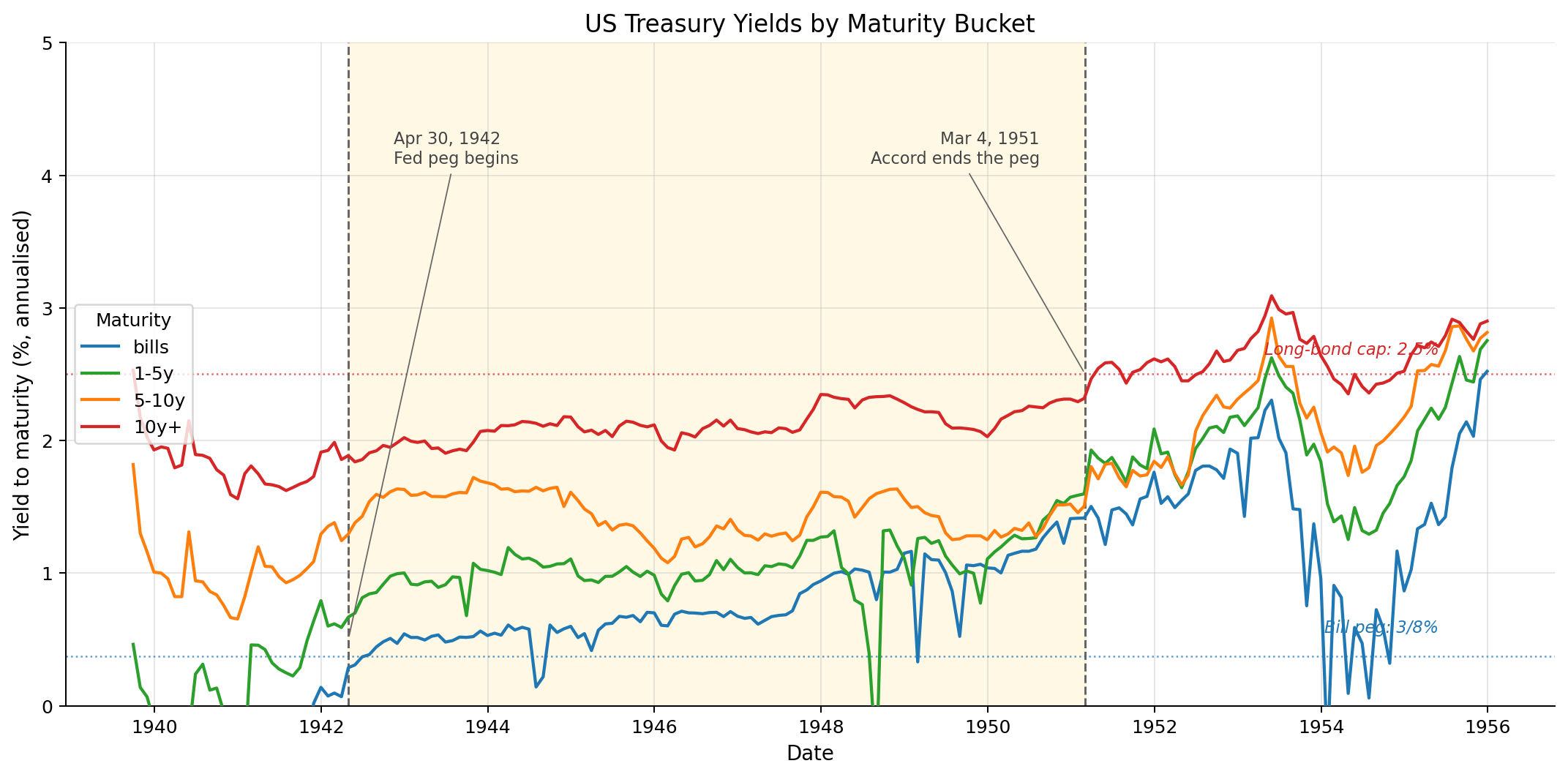
The numbers show just how powerful the arrangement was. Federal debt rose from roughly $43 billion before the war to about $269 billion by 1946—more than six times its prewar level. Despite this, the cost of servicing that debt remained remarkably contained. In 1946, the federal government paid roughly $6 billion in interest, equivalent to an effective rate of about 2.2%. Thus, Washington had effectively insulated itself from the price a freely moving bond market might otherwise have demanded for such a rapid expansion in borrowing.
The arrangement worked because the Federal Reserve was willing to make the government’s financing problem part of its own balance sheet. Once the war ended, though, the trade-off became painfully clear. Inflation surged, nearly reaching 20% in 1947, while the 2.5% ceiling on long-term Treasury yields remained in place.
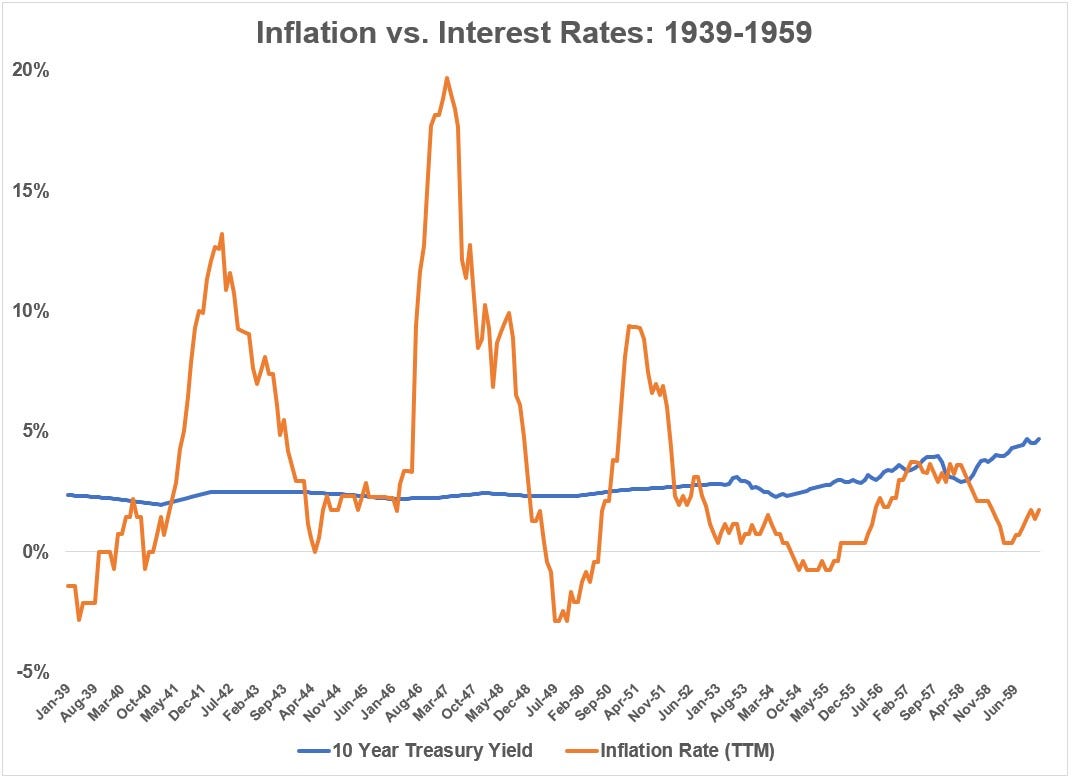
Naturally, the Treasury wanted to preserve cheap financing, whereas the Federal Reserve increasingly needed freedom to fight inflation. The conflict eventually contributed to the 1951 Treasury-Federal Reserve Accord, which ended the formal yield caps and restored greater independence to monetary policy.
The lesson was clear: Washington could influence the price of its debt, but it could not permanently suppress the forces that determined that price.
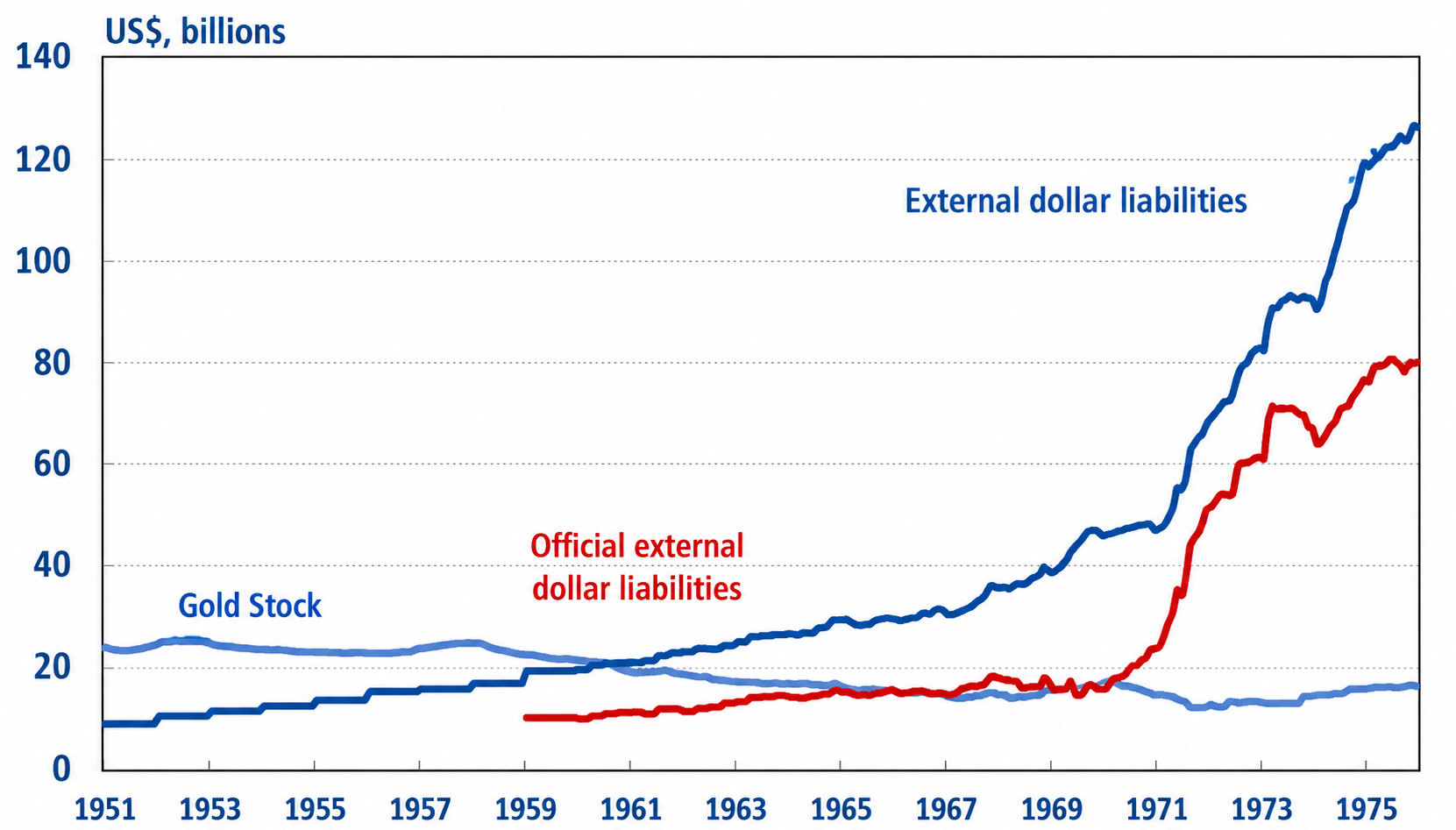
What followed was a more subtle form of financial engineering. After World War II, the Bretton Woods system made the dollar the anchor of the international monetary system: other currencies were tied to the dollar, and the dollar itself was convertible into gold. This gave foreign governments a reason to accumulate dollars as reserves, while Treasuries became the system’s safest and most liquid assets. When Bretton Woods collapsed in 1971, the dollar lost its gold anchor but not its global role. The world still needed dollars for trade, commodities, and finance—and increasingly held Treasuries as the place to store that liquidity.
The pattern continued after 2008. Post-crisis regulations such as the Supplementary Leverage Ratio (SLR) made banks safer, but also limited their ability to hold and intermediate Treasuries. When the Treasury market seized up in March 2020, regulators temporarily relaxed the rule to give banks more capacity to absorb government debt. More recently, the SLR has again been loosened, another example of the financial system being adjusted to accommodate America’s growing debt.
The pattern is remarkably consistent. Whenever the scale of American debt increases, the financial architecture around it adapts: Hamilton built the market, the wartime Fed controlled its price, Bretton Woods created global demand for dollars, and post-2008 regulation expanded the system’s capacity to intermediate Treasuries. Each time, Washington found another way to make a larger supply of government debt easier to absorb.
And now, the scale of the underlying problem has become difficult to ignore.
Last week, U.S. federal debt crossed $40 trillion. It had taken more than two centuries to accumulate the first $20 trillion; the second $20 trillion arrived in roughly a decade. Interest payments have also become one of the largest items in the federal budget, while long-term Treasury yields have come under renewed pressure as investors demand more compensation for absorbing the government's expanding borrowing needs
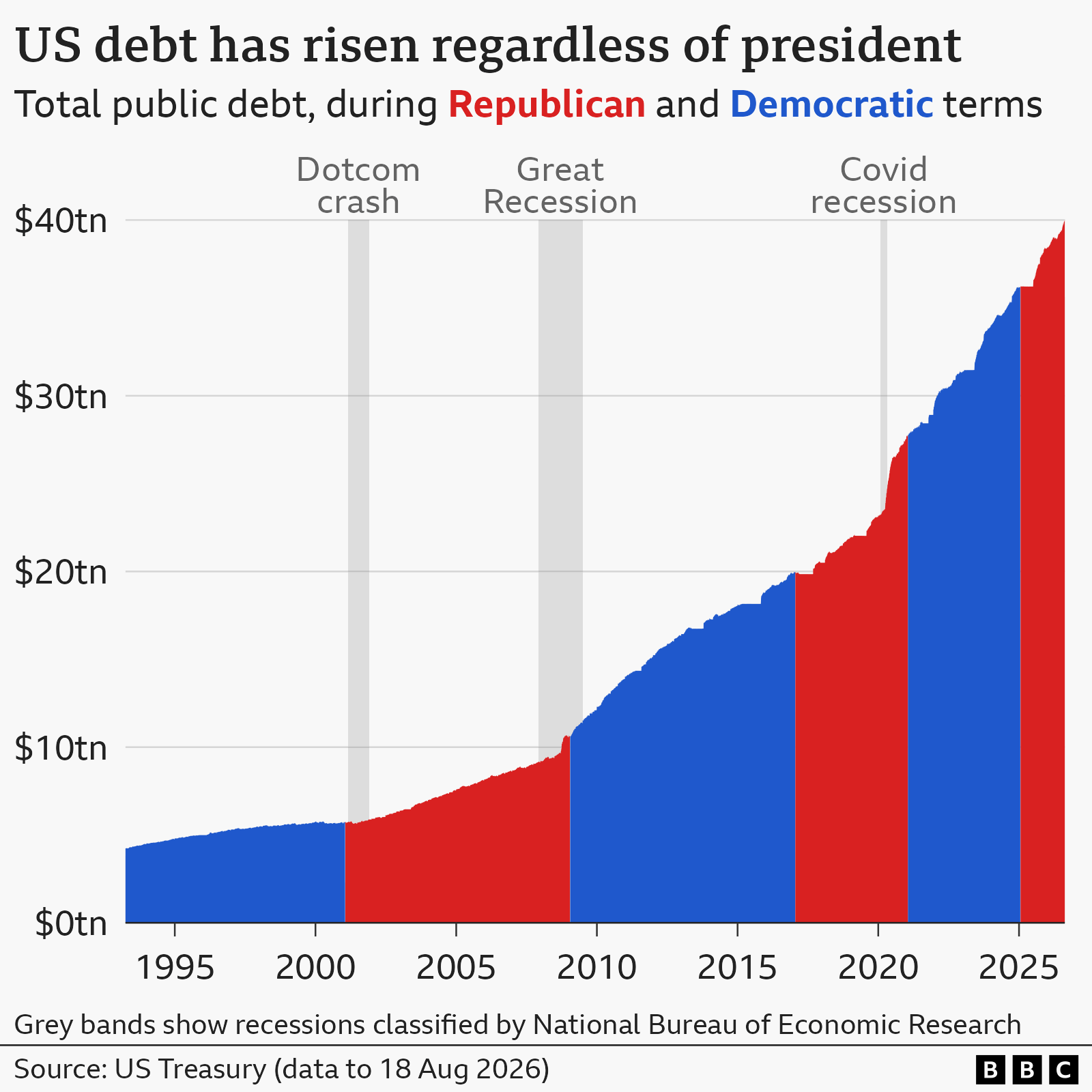
The number is staggering, but you might begin to understand how the United States has been able to finance such an expansion without the Treasury market simply rejecting it. The answer is the same one that runs through its financial history: the system keeps adapting.
At $40 trillion, the question is no longer simply whether Washington can issue debt. It is whether the financial system can continue absorbing it without forcing the government to pay materially higher rates. And once again, Washington is responding by changing the architecture of the market itself.
Treasury Secretary Scott Bessent has increasingly emphasized the short end of the Treasury curve, while the Treasury has also used buybacks to support liquidity in longer-dated securities. At the same time, policymakers have been looking for ways to increase the capacity of banks to hold and intermediate Treasuries.
This is not 1942. There is no explicit yield ceiling, and the Treasury is not ordering the Federal Reserve to finance the government. The strategy is more indirect. Instead of controlling the price of debt outright, Washington is attempting to influence the structure of the market so that sufficient demand exists to keep that price from becoming unbearable.
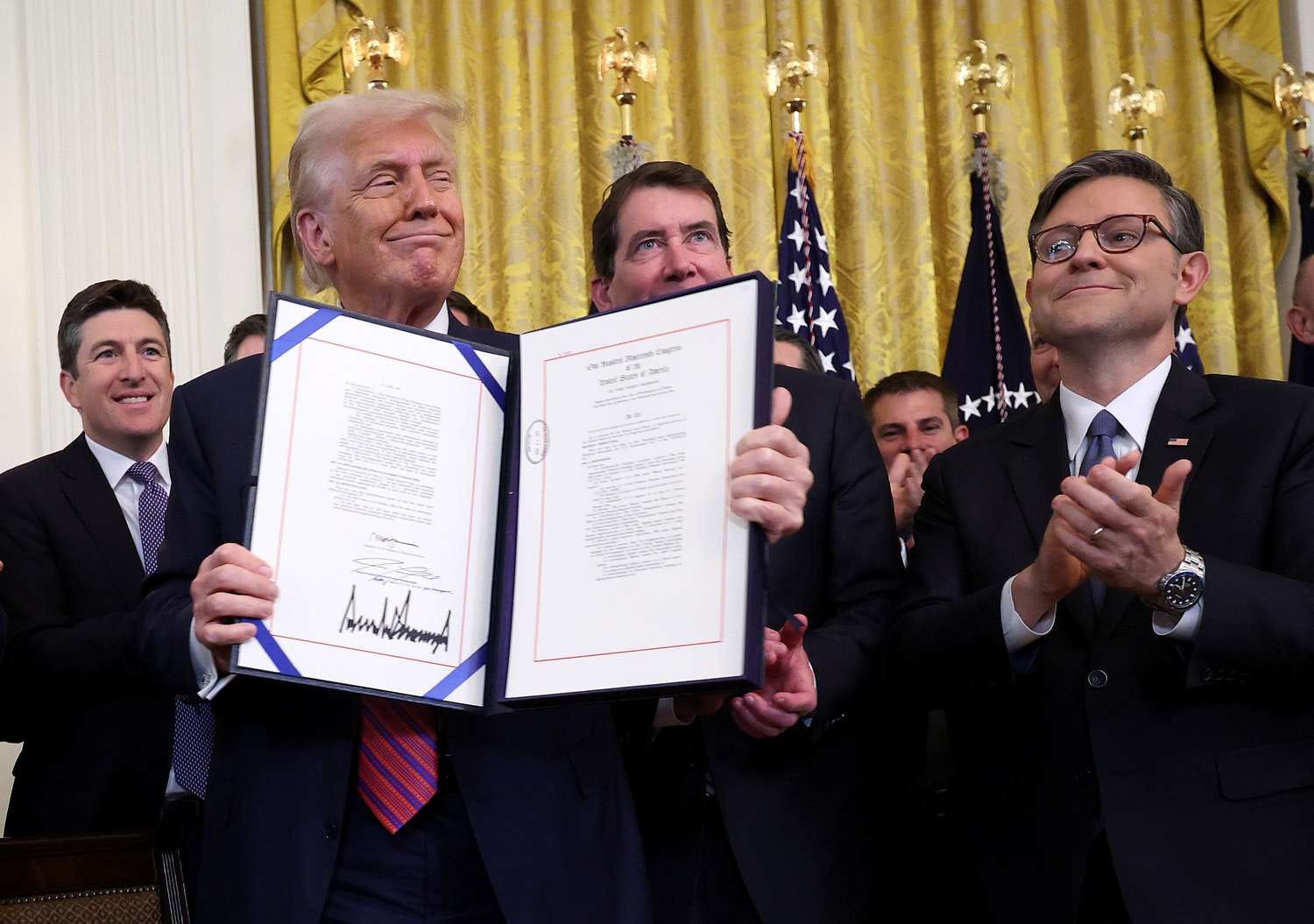
The GENIUS Act, signed into law in 2026, may ultimately be remembered as more than a piece of cryptocurrency legislation. By requiring regulated stablecoins to maintain one-to-one reserves in approved dollar assets, including short-term U.S. government securities, it links the growth of a new form of digital money to the demand for Treasury bills. The stablecoin itself does not give its holder a claim on the interest earned by those reserves.
The market is already large enough to matter. Stablecoin market capitalization has surpassed $300 billion in 2026. Tether, the largest issuer, has approximately $141 billion in direct and indirect exposure to U.S. Treasuries, including roughly $122 billion held directly. That puts Tether among the largest holders of U.S. government debt in the world—remarkable for a private company whose core product did not exist two decades ago.
But the more important number is the one Washington is planning for. On the day the Senate passed the GENIUS Act, Treasury Secretary Scott Bessent cited a Citi forecast that the stablecoin market could reach $3.7 trillion by 2030. Citi’s April 2025 report put $3.7 trillion at its bull-case estimate and projected up to $1 trillion in net new Treasury purchases under a U.S. regulatory framework. Citi has since revised its 2030 bull case to $4 trillion, reflecting faster-than-expected growth.
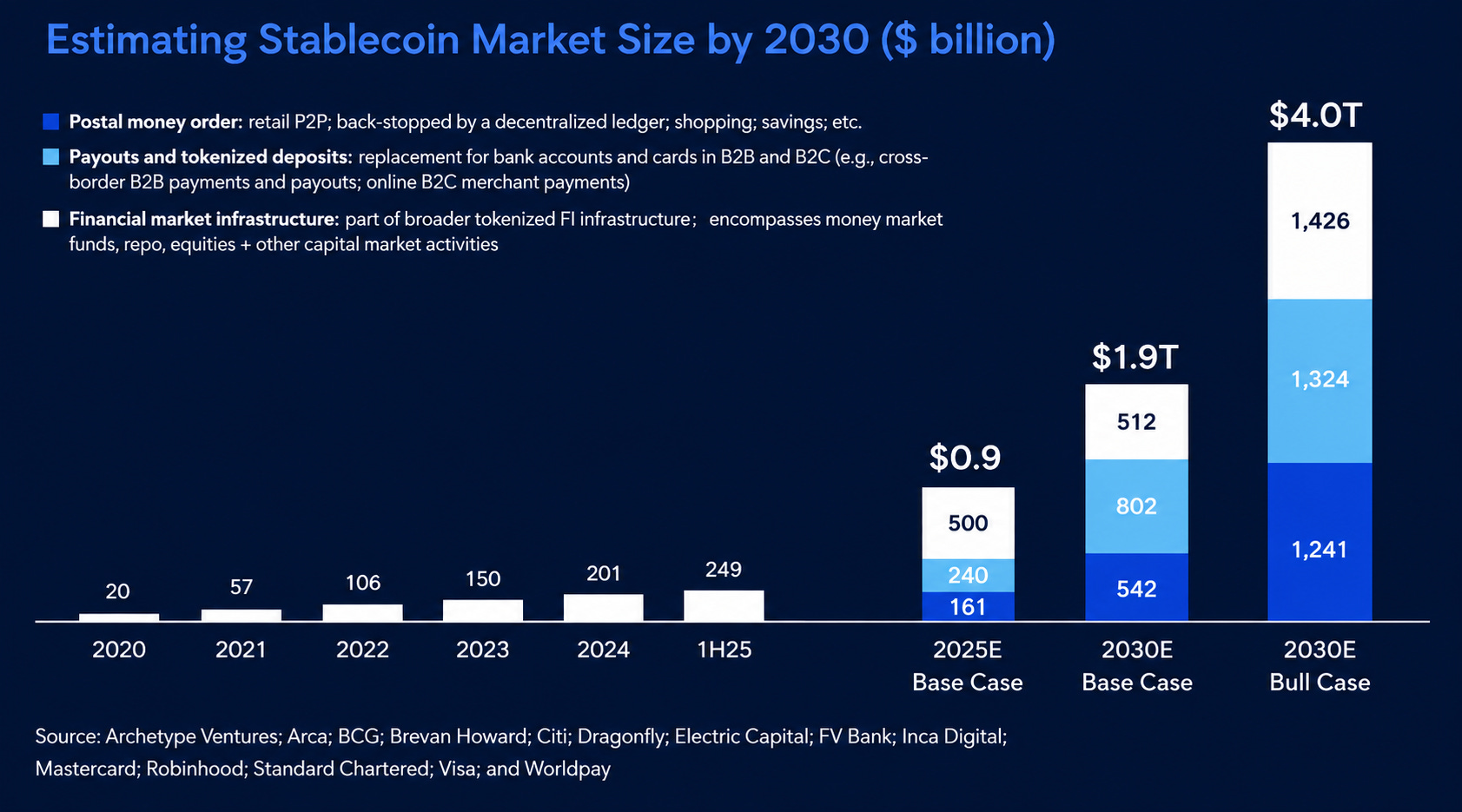
That is the strategic significance: Washington is not simply regulating a new form of digital money, but actively extending the dollar system into the digital economy. As stablecoins grow as a settlement layer for cross-border finance—which remains overwhelmingly dollar-denominated—their reserves must grow with them. Because those reserves are largely held in short-term government debt, every new digital dollar creates a fresh pool of demand for U.S. Treasuries, reinforcing global dollar dominance much like Bretton Woods did for postwar trade. Citi itself expects on-chain money to remain heavily dollar-bound, providing vital incremental demand for American liabilities.
This explains the unusually favorable regulatory treatment. However, whether this strategy will succeed remains a question for time to tell. Experts point out that stablecoins risk masking public debt, sparking comparisons to the financial repression of the 1940s when inflation eventually broke the system.
For more than two centuries, Washington has repeatedly engineered its financial environment to manage rising debt—from Hamilton’s public credit and wartime borrowing controls to Bretton Woods and post-2008 intermediation rules. Where Hamilton once spoke of a "means of extinguishment," modern Washington pursues a means of absorption.
Ultimately, America's $40 trillion debt is not merely a measure of how much has been borrowed, but of how successfully the nation has engineered a financial system capable of absorbing it.
If you enjoyed this piece, I’d appreciate it if you subscribed to my publication.
Your support is truly invaluable!
Comments
Nothing yet. Say the first thing.
Sign in to join the conversation.