
A simple loaf of bread gives little indication of the extraordinary revolution that brought it to the supermarket shelf. Modern agriculture produces more food with fewer people and less land than ever before, transforming what was once a localized, weather-dependent gamble into a remarkable exercise in global efficiency.
Historically, a farm’s success depended entirely on local inputs and immediate surroundings, leaving it completely vulnerable to regional shocks. Intuitively, you might expect today’s interconnected world to have solved this. By sourcing nutrients, labor, and transport across a vast global web, the modern food system should be more resilient than ever. If a disruption hits somewhere in the chain, the network should easily absorb it by rerouting, using different suppliers, or drawing from diversified buffers.
However, maximum efficiency often comes at the cost of redundancy. As multiple compounding pressures now begin to mount simultaneously across the globe, they are driving the food system toward a scenario that would immediately remind meteorologists of the Perfect Storm.
The phrase entered the public lexicon after the catastrophic 1991 storm off the coast of New England, when a developing low-pressure system, a powerful blocking high, and the remnants of Hurricane Grace converged under highly unusual conditions. The result was a nor’easter far more powerful than any of those individual forces could have produced alone. The danger lay not in any single weather system, but in their precise, fateful convergence.
Today, that exact dynamic is no longer just a metaphor. The convergence of compounding disruptions is the reality unfolding across our food chain.
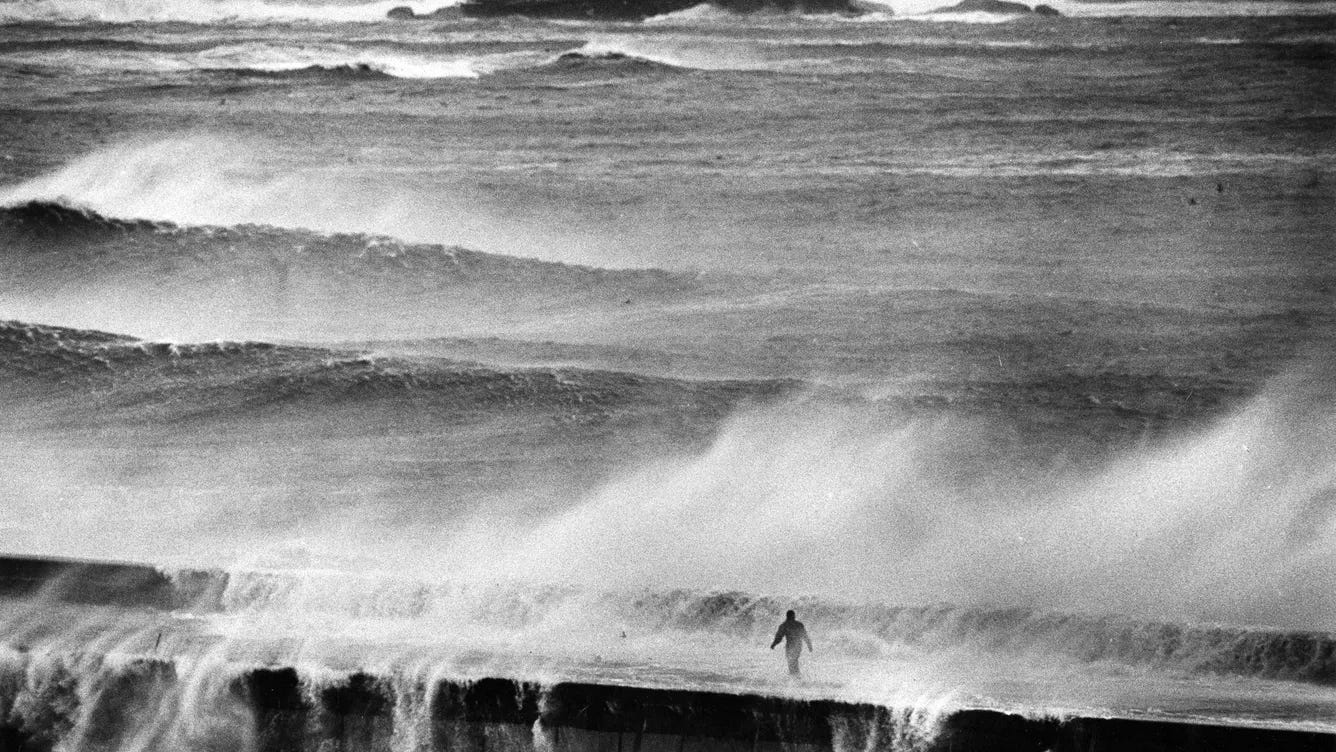
As a foundational staple food and critical grain, wheat sits close to the core of the global food system, yet its production is unusually concentrated.
Russia is the world’s largest exporter, while Ukraine remains one of the world’s most important suppliers of wheat, corn, and other grains. Together, the two countries account for roughly 30% of global wheat exports, shipping the vast majority of this harvest across the waters they share. This makes the Black Sea far more than a regional shipping corridor; the body of water is instead one of the world’s most important arteries for moving calories from surplus regions to food-importing countries.
Tragically, the war is now choking that vital food artery from both sides. While Russia initially held a monopoly on terrorizing Ukrainian ports and grain routes around Odesa back in 2022, Kyiv is no longer hesitating to return the favor by dismantling Russia’s own export infrastructure. Last week, Ukrainian drone and missile strikes on the Russian port of Novorossiysk damaged two major grain export terminals, while Russian strikes targeted grain cargo vessels in Odesa.
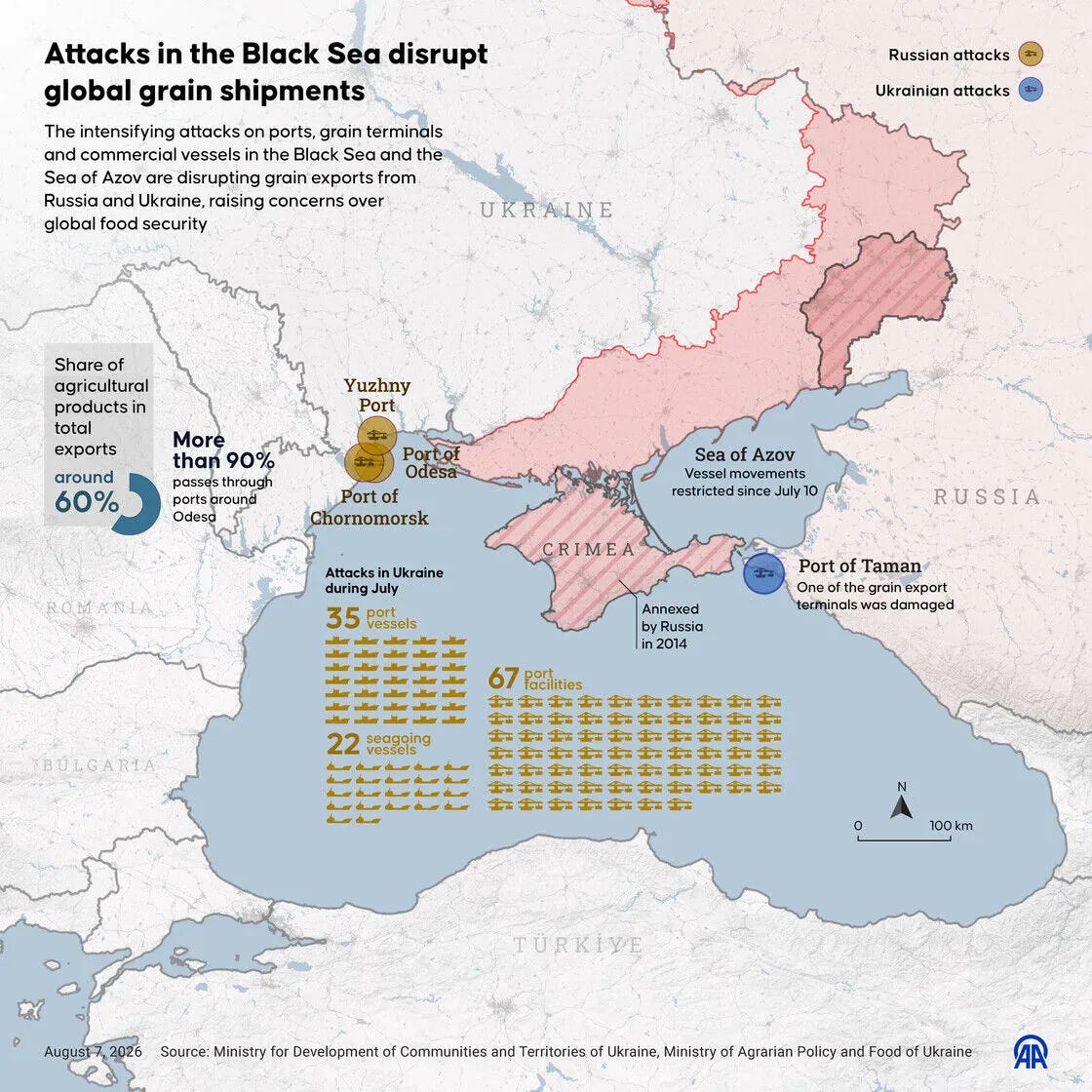
Ukraine has aggressively rerouted exports through roads, railways, and the Danube ports of Reni and Izmail, while Russia routes its exports through the same region. These alternatives offer redundancy rather than equal capacity, and the waterways are fast reaching their limits. By late August, up to 70 vessels were backed up near the Sulina Canal with a throughput of just three ships a day. With costs reaching $8,000 per vessel daily, exports have plummeted to a fraction of normal volumes.
As a direct result, Chicago Wheat Futures surged to a 3-year high last week, underscoring how quickly physical disruptions translate into severe global market shocks.
The crisis has shifted downstream to the rivers. Yet, for a different reason.
Take the Rhine, Europe’s vital inland waterway connecting North Sea ports to the German industrial heartland. It handles everything from agricultural commodities to fuel and other bulk goods, but its capacity is fixed by nature. When low water levels or blockages disrupt shipping, there are no extra lanes to open—and the shockwaves ripple immediately across the entire European logistics chain.
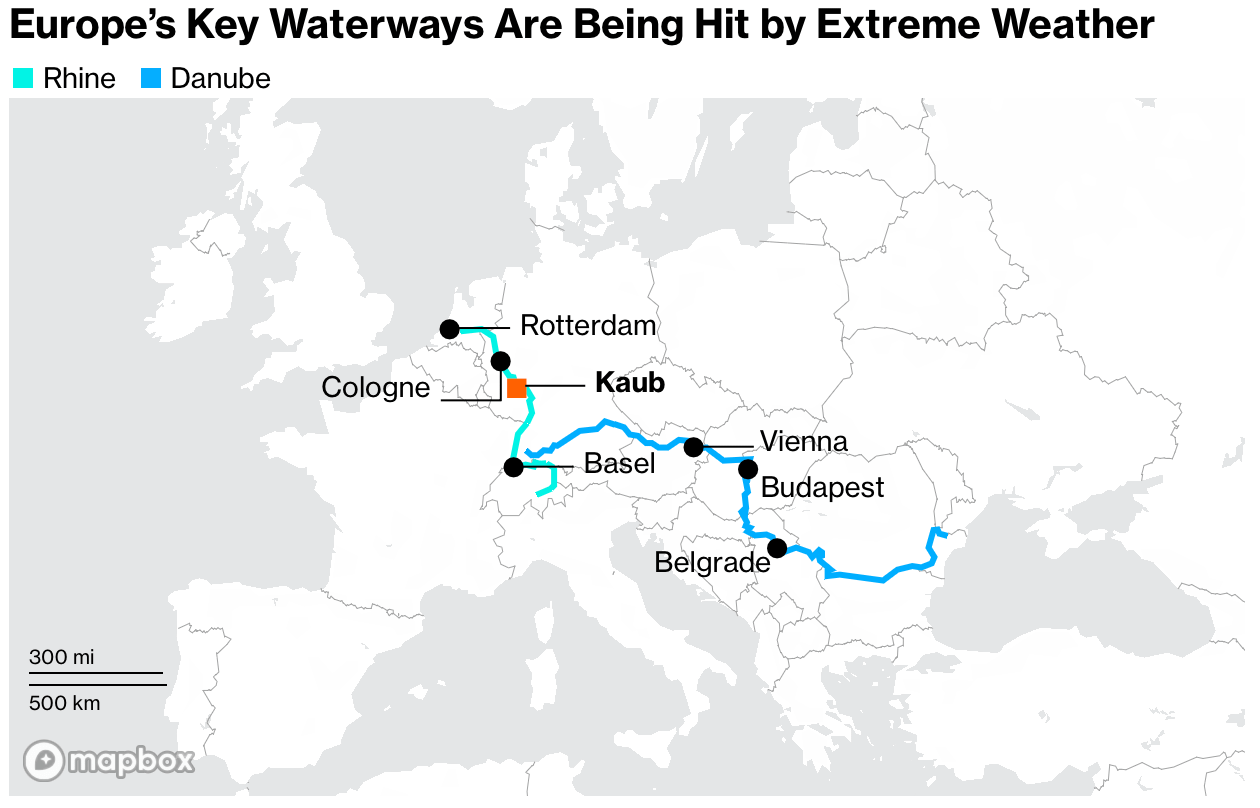
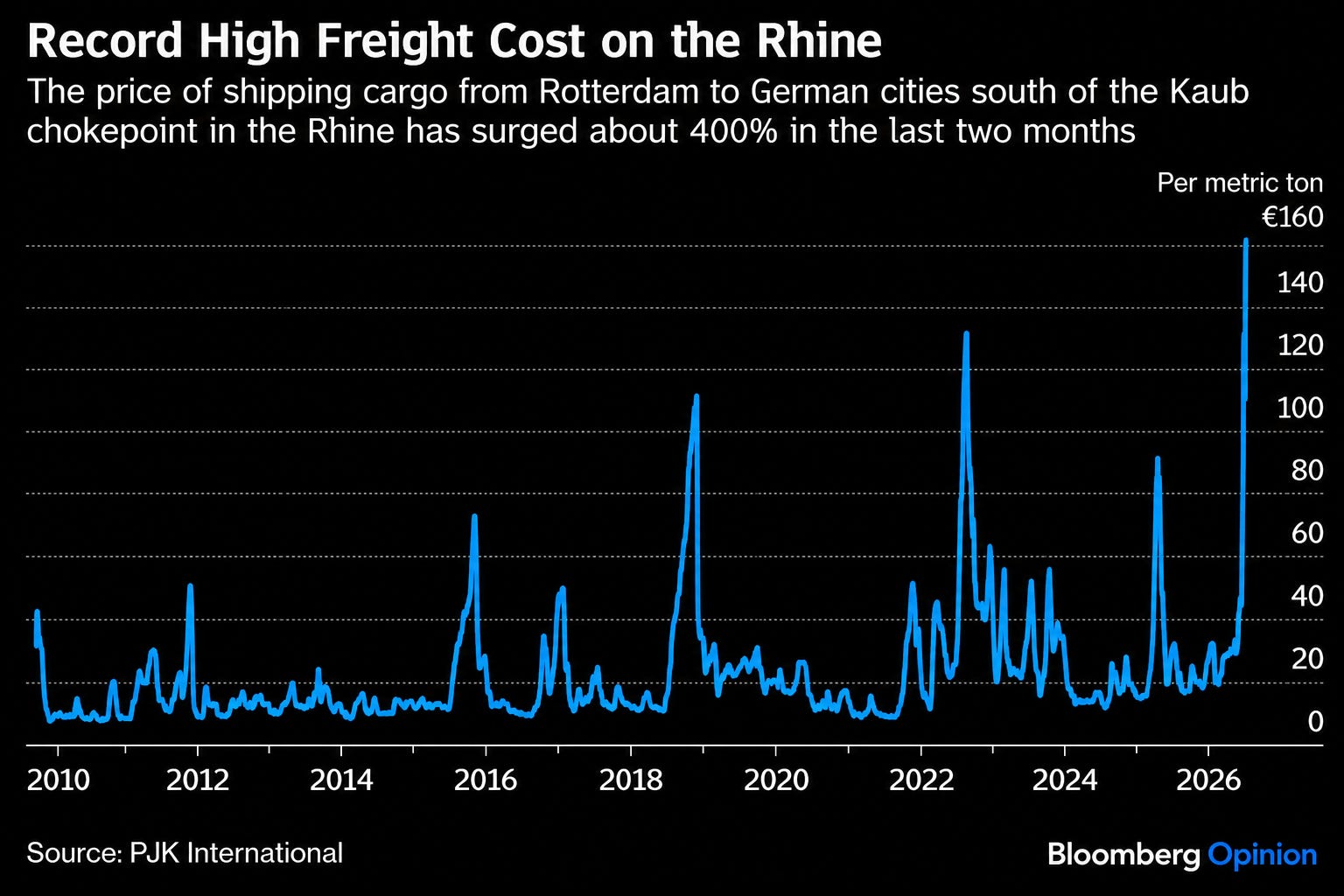
In August, water levels at Kaub, one of the Rhine's critical shallow points, fell below 10 centimeters for several days, effectively disrupting shipping south of Mainz. Barge operators were forced to slash payloads as freight costs surged to record highs. The crisis grew so severe that French shipping giant CMA CGM introduced an emergency inland surcharge to offset the paralyzed traffic across the Rhine and other vital European waterways.
For farmers, rivers serve a dual purpose: they are essential for irrigation, livestock hydration, and crop production, but also act as the primary highway for exporting produce and importing agricultural inputs. Low water levels therefore trigger a severe dual squeeze, disrupting vital on-farm water supplies while sending transport costs for both imports and exports skyrocketing.
Crucially, this vulnerability is global. Vital shipping lanes for the global food chain are facing escalating threats from extreme weather. Prolonged droughts are repeatedly crippling traffic through the Panama Canal—the primary maritime shortcut connecting the Atlantic and Pacific oceans for major food and crop shipments. Meanwhile, extreme low-water levels on the Mississippi and the Danube are routinely forcing operators to slash cargo loads, directly threatening agricultural supply lines.
Ultimately, this demonstrates how food can grow more expensive without any actual shortage of supply. When vital waterways stall, soaring transport costs trickle down to your grocery bill. After all, if a barge is forced to operate at half-capacity, the number of required journeys multiplies, and consumers foot the bill.
Yet, transport is only half the equation. Before food can ever be shipped, it has to be grown—and modern agriculture depends on a handful of critical inputs. Chief among them is fertilizer, whose supply chain is itself inextricably tied to energy.
Within this category, nitrogen fertilizer is particularly vital. Ammonia, the basis of most nitrogen fertilizers, relies heavily on hydrogen derived from natural gas. This makes energy a fundamental input into the food system: from gas to fertilizer, from fertilizer to yields, and from yields to grain. Consequently, disrupt one link, and the effects travel relentlessly down the chain.
This interconnectedness explains why the Strait of Hormuz matters far beyond oil. Around 8% of global ammonia production sits behind the strait, while Qatari gas and LNG supply fertilizer plants around the world. As a result, any disruption can hit twice: by restricting fertilizer exports directly, and by cutting off the energy needed to produce fertilizer elsewhere—as recently seen when Middle Eastern conflict cut off Qatari LNG supplies and forced major gas-based fertilizer plants in India to temporarily shut down.
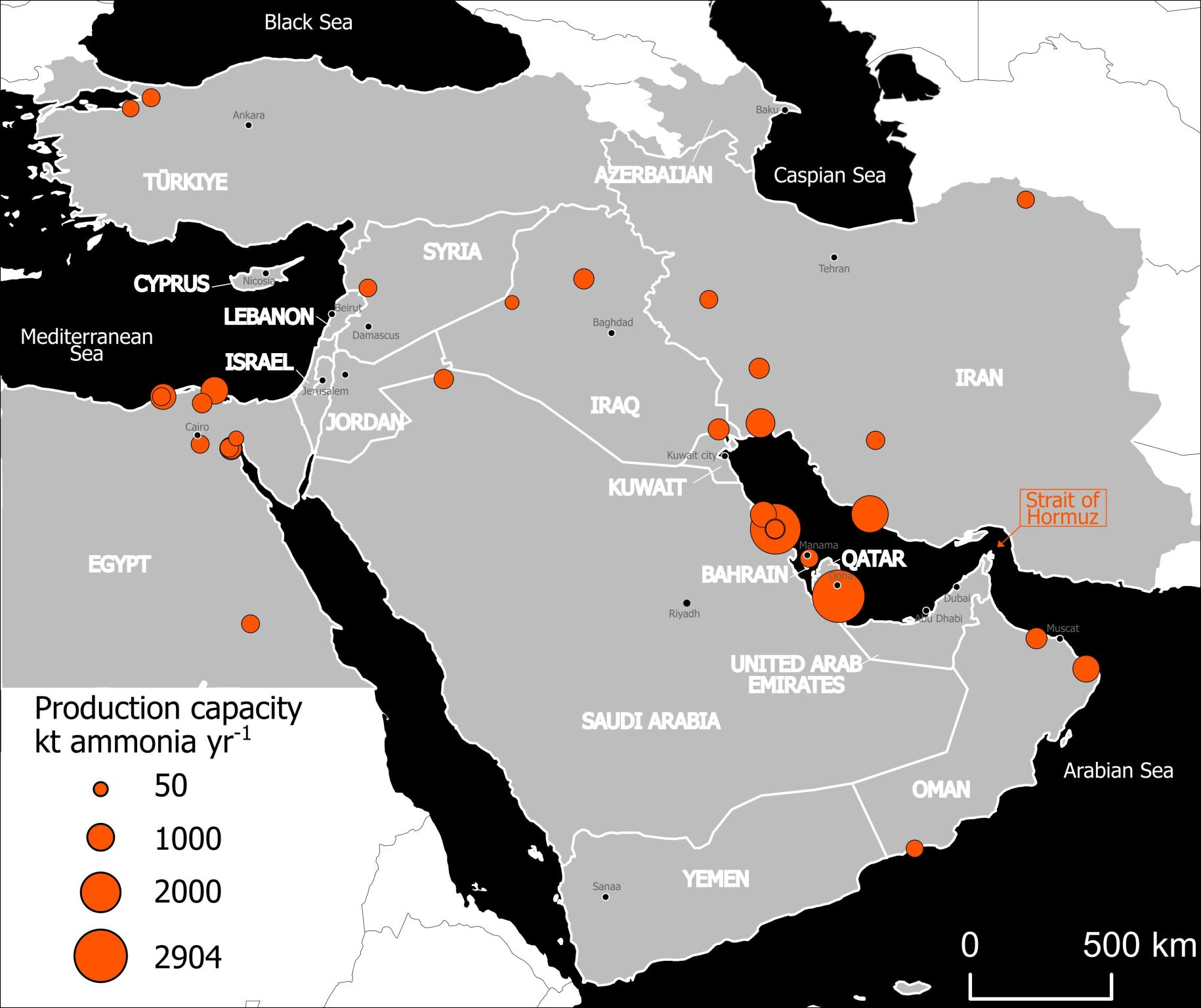
Alarmingly, the Food and Agriculture Organization (FAO) has warned that this fertilizer scarcity threatens to suppress yields and tighten food supplies well into 2027. They highlighted a strict agricultural reality:
“Agriculture operates within a crop calendar that cannot be postponed. Fertilizers must be applied at specific moments in the crop cycle. If they do not arrive on time, yields are reduced, regardless of what happens later.”
Because of this rigid timeline, the next planting season carries far higher stakes than the current harvest. Farmers may still be gathering pre-disruption crops, making today’s shortage feel nearly invisible. This persistent tightening continues to choke supply, as exporting nations have slammed the door, starkly illustrated when Russia suspended ammonium nitrate exports in April, cutting off roughly 25% of the global ammonium nitrate supply.
Adding to the strain, the Hormuz shock feeds directly into input costs farmers cannot simply absorb.
Modern farming relies heavily on diesel to power tractors, combines, and grain trucks—making fuel prices a critical variable that dictates the economics of every single planting and harvest season. Particularly in the United States and Europe, diesel prices are approaching all-time highs. The nationwide U.S. average hit $5.62 per gallon in August—just twenty cents shy of the record set in May 2022.
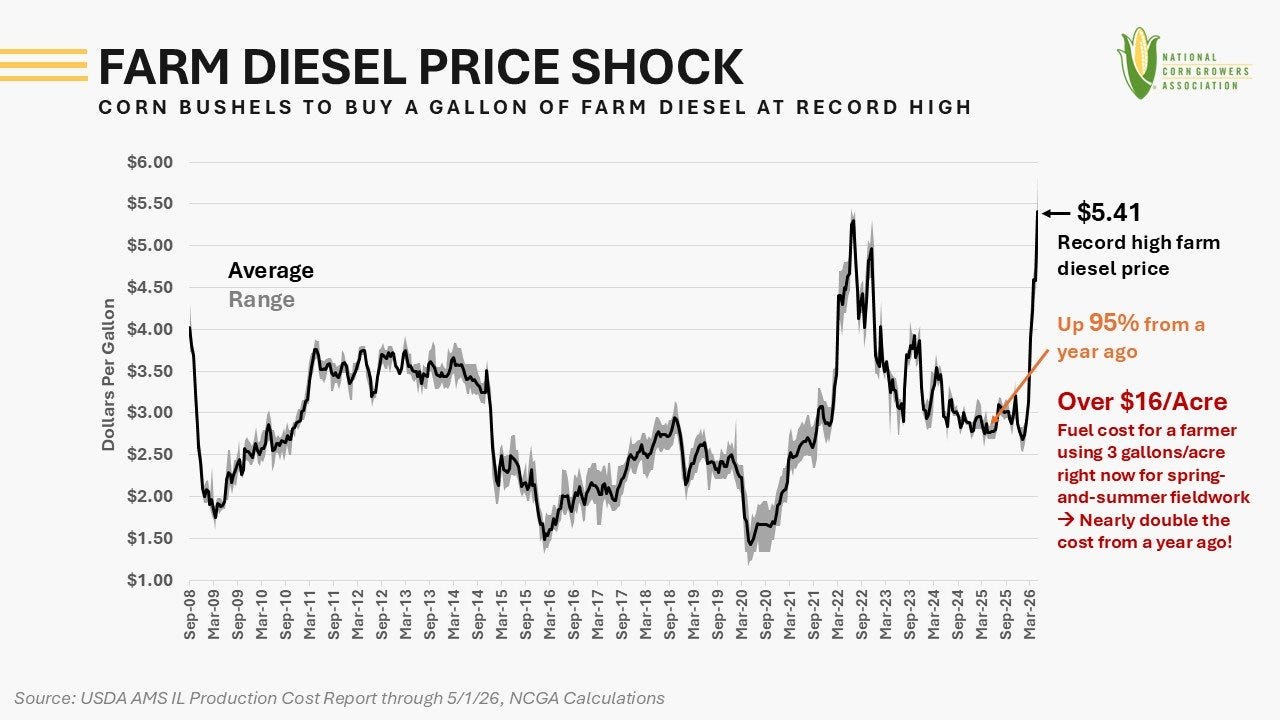
The drivers are clear: global supply shortages caused by refinery damage from conflicts, shipping disruptions in key waterways, and deeply depleted fuel inventories. For Russia—the world's second-largest diesel exporter—the crisis is so severe that domestic supplies have forced drastic intervention:
“Russia is set to extend its diesel export ban through September as fuel shortages persist in the domestic market, with a number of refineries still idle following repeated Ukrainian drone attacks, three industry sources told Reuters.
One of the sources said extending the ban until the end of the year is also under discussion.”
For American farmers, the timing couldn’t be worse. The United States is the world’s second-largest agricultural diesel consumer after China, far outpacing every other country. Diesel accounts for roughly 5% of production costs for major crops like wheat, corn, and soybeans, even before factoring in transportation. During the 2025–26 planting season alone, U.S. farmers spent an estimated $1.4 billion more on diesel than the year before—and costs heading into the harvest season are projected to eclipse even that figure.
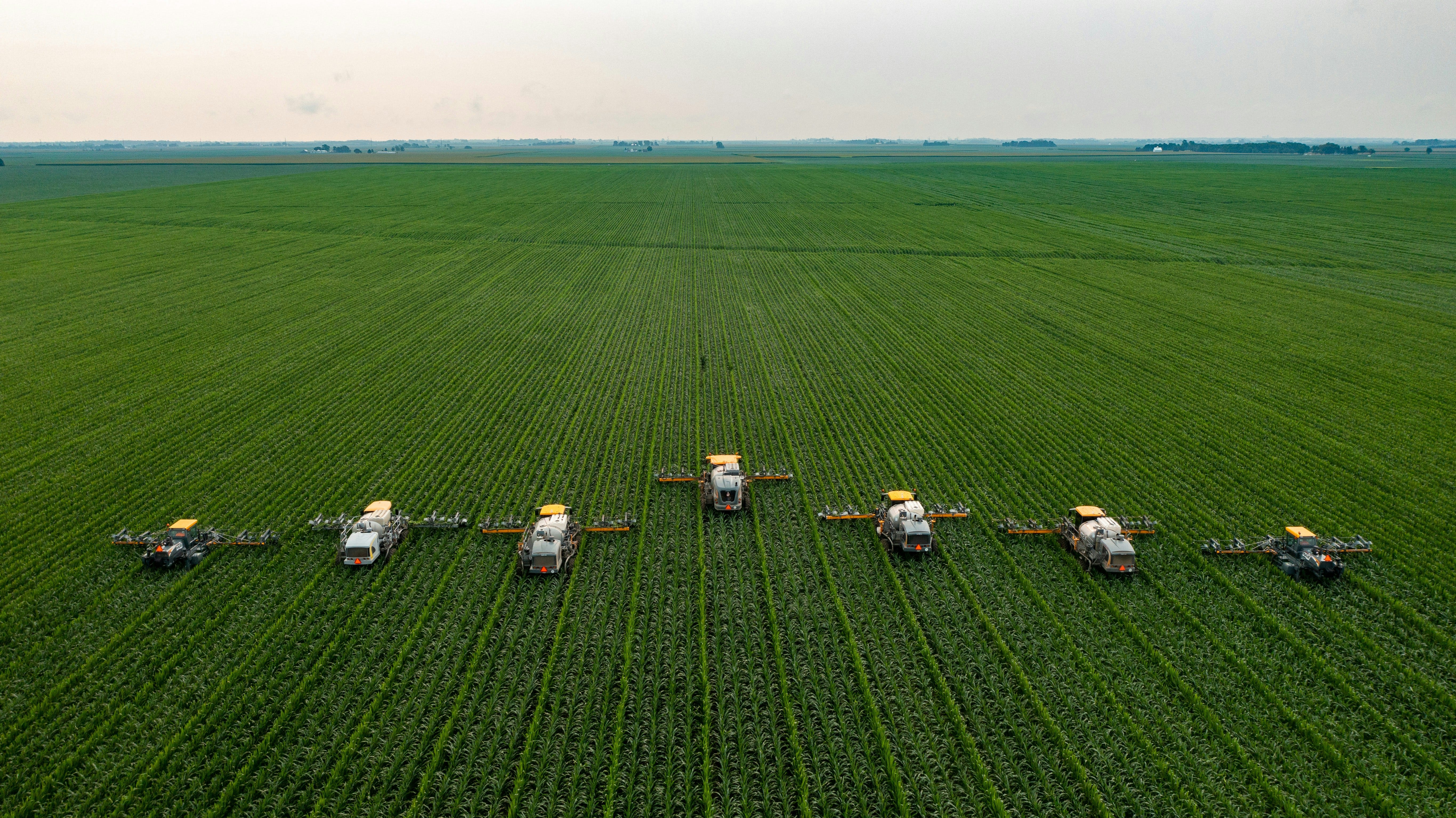
The high fuel prices compound the ongoing fertilizer shock. As a result, farmers are squeezed at every turn: paying more to prepare fields, plant, harvest, and transport yields to market. Unlike fertilizer, where application rates can sometimes be tweaked, the required fieldwork demands fuel. This relentless cost pressure cascades through every single stage of the agricultural cycle.
Consequently, the real question is how farmers will adapt when planning their next crops. They may shift their crop mix or plant fewer acres. While individual decisions might seem modest, multiplied across millions of hectares, they ultimately dictate the size of the next global harvest.
Skeptics might argue that food prices have peaked, argueing that high prices for some of these critical agricultural inputs have persisted throughout 2026.
However, the IMF estimates that it takes six to twelve months for commodity and producer price shifts to fully reach grocery store shelves, as goods move through processing, packaging, and distribution. Today’s supermarket prices reflect yesterday’s conditions rather than current production realities. By the time higher prices hit consumers, the decisions driving them were made months prior.
And precisely while that lag is playing out, tomorrow's harvests are already under threat.
According to the World Meteorological Organization (WMO), the Super El Niño continues to intensify steadily and is expected to dominate global climate patterns from August to October. The phenomenon is projected to drive price shocks through 2028, disrupting rainfall and temperatures in major agricultural regions and adding immense uncertainty to an already fragile planting season. Goldman Sachs analysts warn that the intensity of this weather pattern could trigger a 16% surge in global food commodity prices.
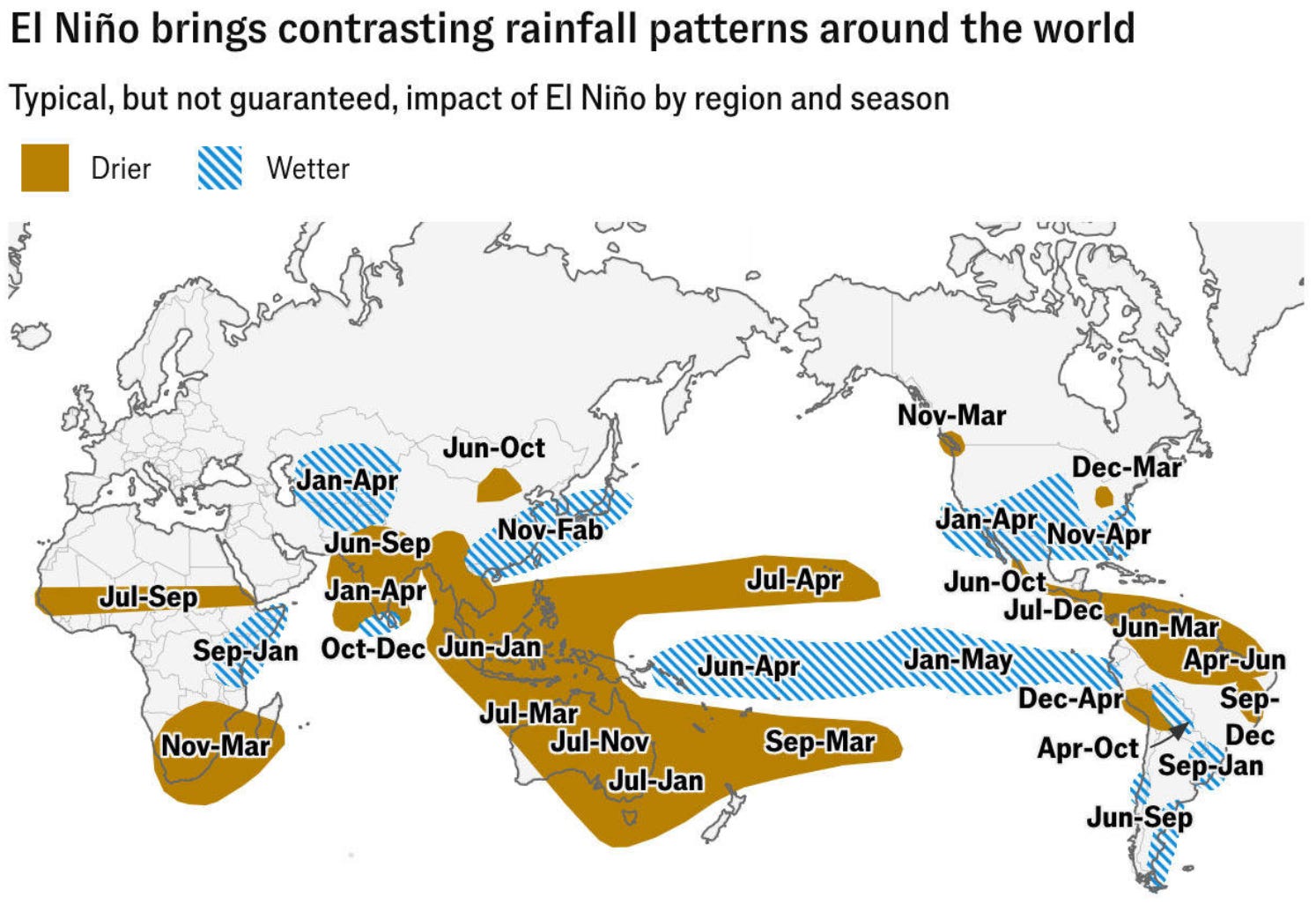
Crucially, El Niño doesn’t need to cause a total global crop failure to do damage. Normally, a poor harvest in one region is balanced by surplus elsewhere—the great advantage of a globalized food market. But that flexibility relies on having a safety margin. When shipping lanes are jammed, alternative routes congested, farm inputs overpriced, and margins razor-thin, a weather shock doesn’t need to destroy an entire harvest. It only needs to strip away the system’s last remaining layer of slack.
To illustrate, the Russian experience shows how quickly this crisis turns circular. Despite a massive grain harvest exceeding 100 million tonnes, Russia struggles to export its grain due to disrupted Black Sea routes. As unsold wheat accumulates, domestic prices plummet, forcing the government to weigh expensive alternative corridors through the Baltic, Caspian, and Arctic. Consequently, some farmers are already demanding reduced winter sowing to avoid another surplus—even as officials warn this threatens long-term food security.
Ultimately, this is the great paradox at the heart of today’s food system: a country can sit on a mountain of grain and still tighten the global market. The issue is rarely total production; rather, it is the ability to connect supply with demand at the right time and a reasonable cost.
The cruelest aspect of the crisis is where the burden ultimately lands. Many of the world’s developing nations remain deeply dependent on imported staple foods, while possessing zero financial cushion to absorb sudden price spikes.
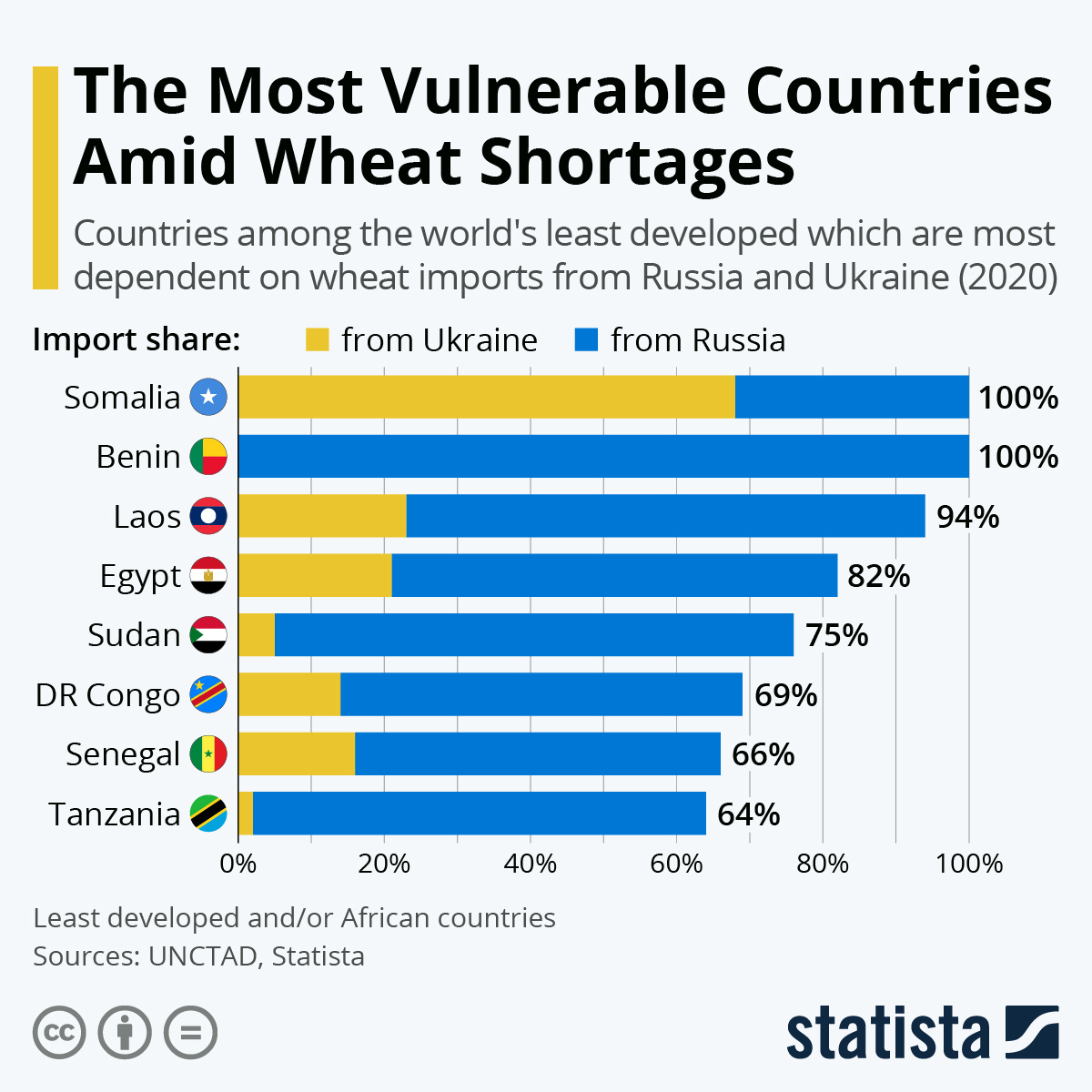
The underlying vulnerability is absolute: when supply chains break down, and essential operational costs surge concurrently, import-dependent nations run out of alternatives—and the means to pay for them. Because of this, the countries with the smallest buffers are facing some of the largest challenges
This is what makes the current environment so dangerous. The food system was engineered for efficiency, not for a cascade of compounding shocks hitting all at once. A blocked Black Sea corridor, a dry riverbed, an unaffordable fertilizer shortage, soaring diesel prices, or a shifting El Niño weather pattern could each be managed in isolation. When they lock together, however, they reinforce one another and rapidly strip away the very redundancy globalization was built to provide.
Much like the legendary convergence off the New England coast, the true threat is not any single force, but the fateful moment when multiple pressures collide—leaving the global pantry with nowhere left to absorb the blow.
Thank you for reading!
If you enjoy connecting the dots behind the headlines, subscribe for free. New pieces land straight in your inbox.
📨 If you think someone would enjoy this, send it their way!
Comments
Nothing yet. Say the first thing.
Sign in to join the conversation.