
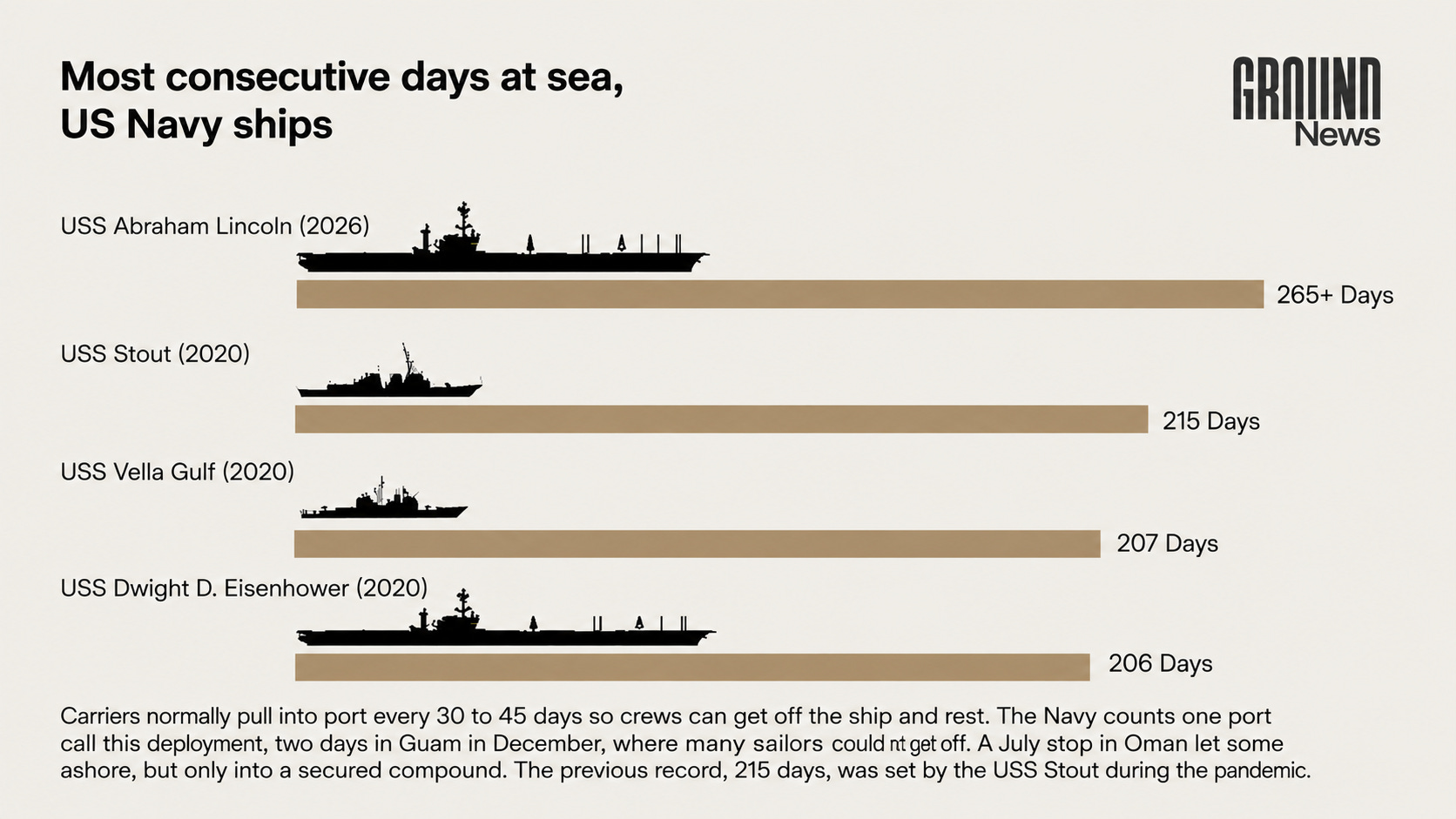
For decades, the standard assumption of American naval power was simple: the U.S. fleet could project overwhelming force anywhere in the world, indefinitely, and without missing a beat. But as the war with Iran nears its six-month mark, that timeless playbook is meeting a very different reality.
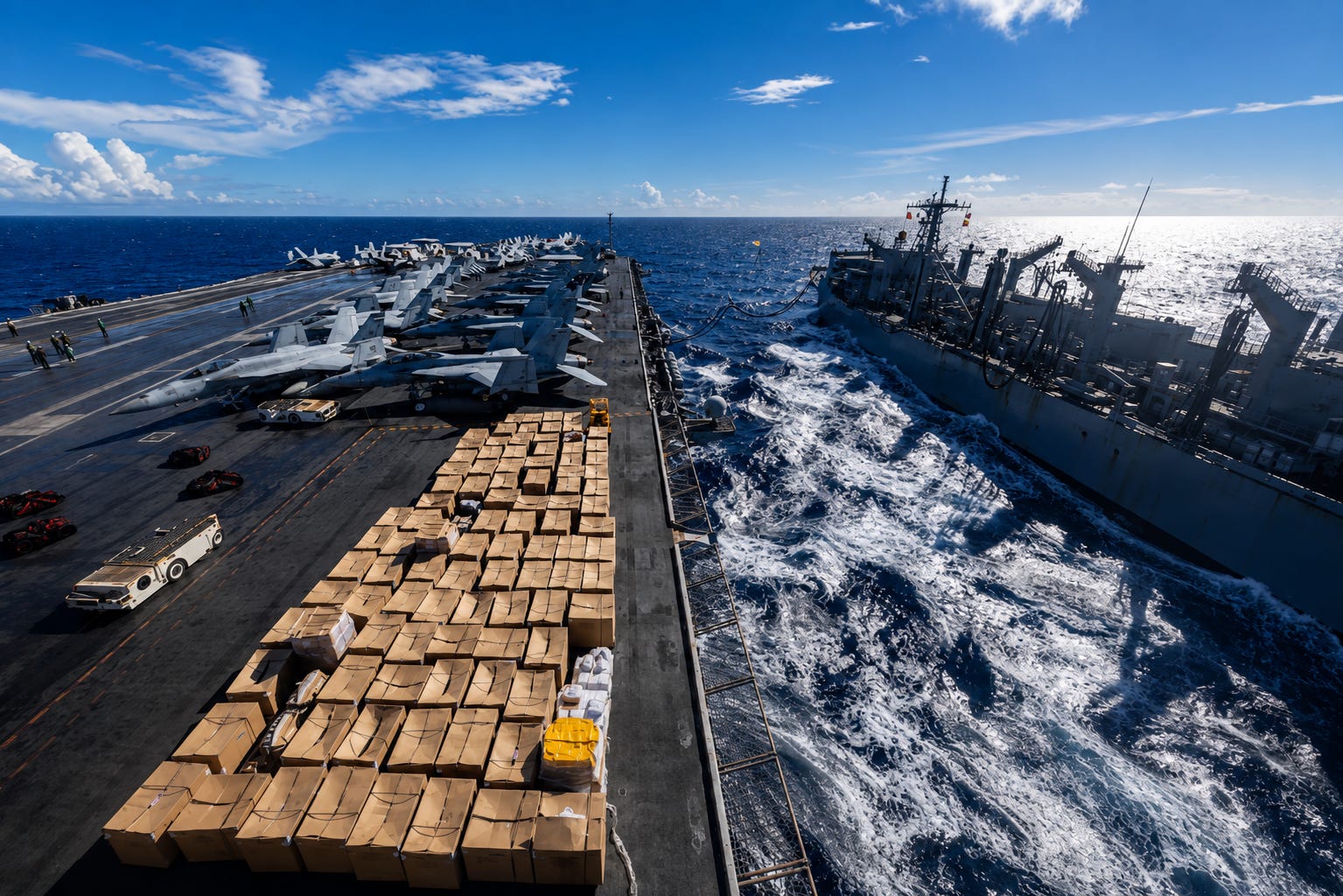
The USS Abraham Lincoln is on a historic streak of consecutive days at sea, with more than 200 days in a combat zone. On board are roughly 5,000 sailors and Marines, and keeping the crew and its entire air wing fully operational for months on end requires staggering amounts of resources. The ship’s galley prepares roughly 18,000 meals every day, and to support its Carrier Air Wing, the Lincoln carries approximately 3 million gallons of JP-5 aviation fuel. During heavy flight operations, its aircraft can consume between 150,000 and 300,000 gallons per day—all to power a relentless campaign that has now surpassed 10,000 sorties.
And that’s just the tip of the iceberg. According to USNI, more than 20 warships are currently operating in the Northern Arabian Sea region, constantly juggling refueling, resupply, and basic provisioning.
In short, it is a colossal operation where nothing can be left to chance.
However, last week, videos surfaced showing dire conditions on board, including moldy showers and broken toilets, while reports detailed weeks without working laundry, scarce food rations, and a total runout of basic toiletries like soap and toothpaste. At the same time, sailors on the Lincoln are suffering from low morale, with some reportedly even attempting to jump overboard amid their extended deployment. When asked about these reports, Trump dismissed the outcry with a blunt claim that the mission was "not nearly long enough.”
Professor at the U.S. Merchant Marine Academy, Salvatore Mercogliano, described the grueling reality of the extended deployment bluntly, exposing the stark contrast between those dismissive remarks:
“Every day on a ship is Groundhog Day. It's the same freaking day every day. It doesn't matter what day it is. It's a Monday. It doesn't matter because you're working 24/7. And if you work at that pace and that level for a long, protracted period of time, you’re going to get sloppy. You’re going to start losing your mental edge. And that’s the problem you’re seeing there. They’re conducting warfare, war-level operations, a blockade with just two carriers.”
As a result, the last remaining carrier in the Pacific has become the latest U.S. Navy ship drawn into the conflict with Iran. The USS George Washington is now headed to the Middle East to replace the Lincoln and finally relieve its exhausted sailors from their extended deployment.
But the Lincoln is not the only ship this month that the George Washington Carrier Strike Group has been called upon to support. Earlier this month, a U.S. Navy destroyer in the South China Sea went four days without power after an engineering failure, leaving its crew stranded without potable water, working toilets, galley services, or air conditioning. The stricken warship had to receive emergency provisions—including meals—directly from the George Washington before being towed into port for repairs.
It underscores a fleet-wide crisis stretching far beyond a single tired ship—a symptom of a much deeper, structural vulnerability.
These situations laid bare something few geopolitical “experts” have talked about. Most headlines discussed whether the U.S. should strategically seize Persian Gulf islands like Abu Musa or the Greater and Lesser Tumbs to break Iran's chokehold on the Strait of Hormuz, or whether capturing mainland oil terminals could force Tehran to the negotiating table. But high-level military strategy means nothing if you cannot physically sustain the force required to execute it.
As the old military maxim goes: Amateurs talk strategy, professionals talk logistics.
It is a phrase famously attributed to U.S. General Omar Bradley, who played a crucial role in Allied victories during World War II and ultimately rose to become a five-star general.
That lesson has defined American military power ever since. Historically, the U.S. military has operated close to secure forward bases since World War II. When fighting in Korea in the 1950s, there was Japan. In Vietnam, the Philippines. During Gulf conflicts in the 1990s and 2000s, short-staging hubs like Bahrain, the UAE, Oman, and Kuwait were right on the doorstep.
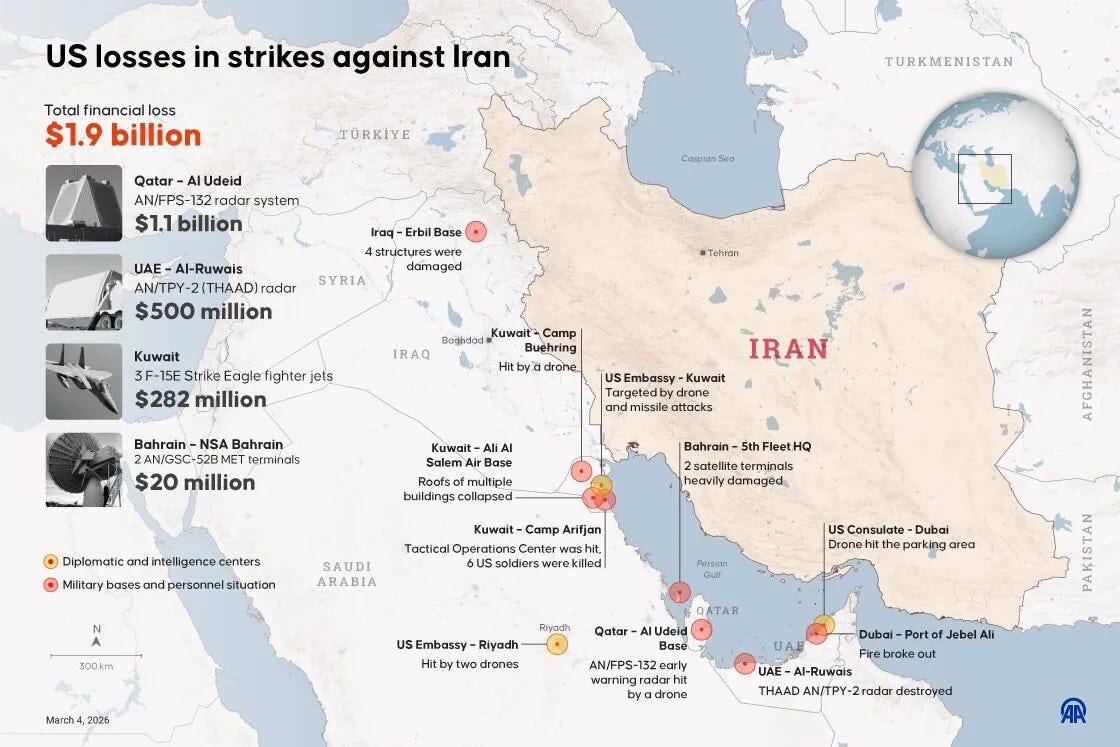
The conflict with Iran shattered that playbook entirely. The U.S. lost its foundational bases in the central Persian Gulf region, including its main logistical hub in Bahrain. As a result, the Navy has lost access to a vital liberty port, a designated harbor where sailors can finally step ashore for downtime.
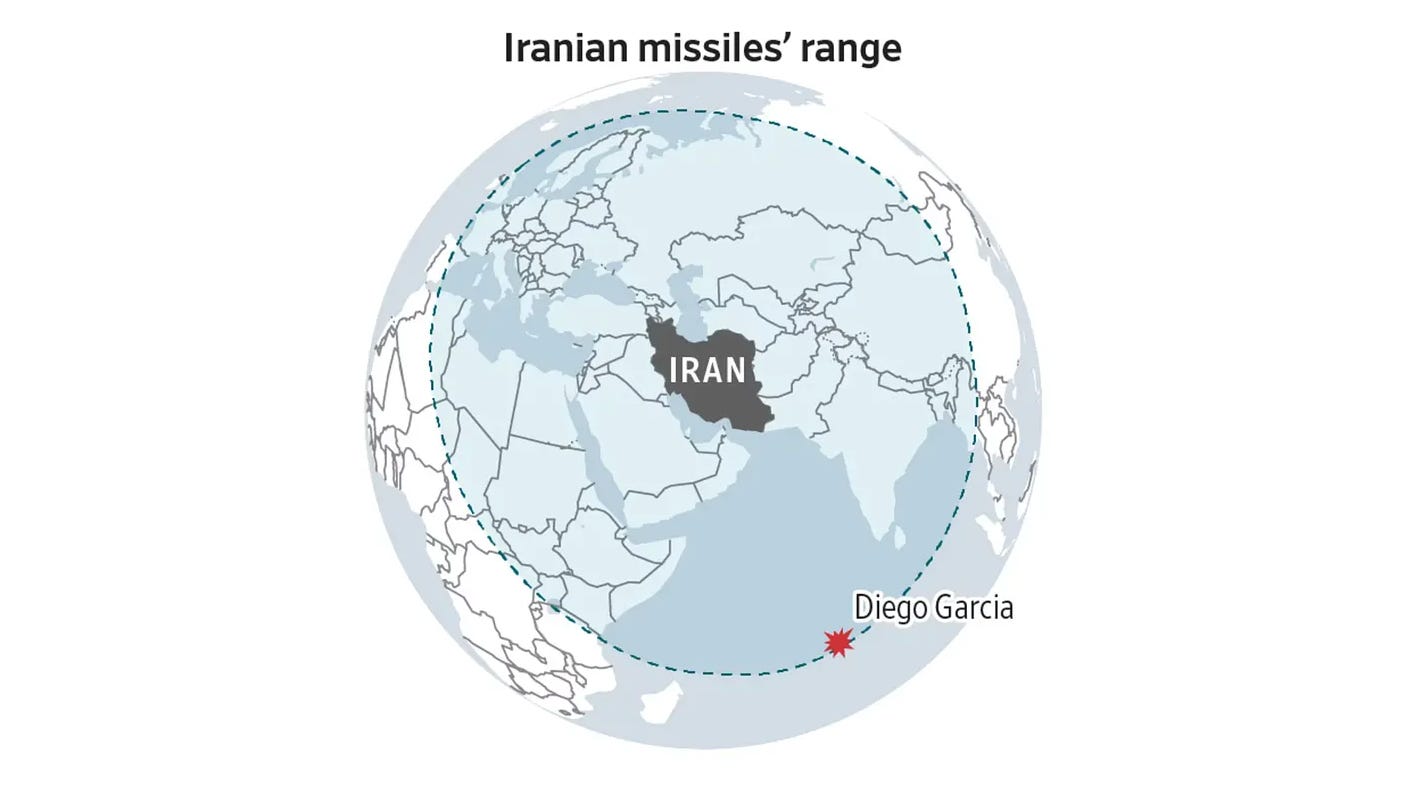
Stripped of these close-in facilities, the U.S. is forced to operate from extreme distances. Its only secure, heavily established hub in the region is located far to the south at Diego Garcia in the Indian Ocean, which the U.S. and the UK manage together, a staggering 2,500 miles (4,000 kilometers) away from the conflict zone.
While secondary options exist—such as Djibouti on the Horn of Africa (vulnerable to Houthi threats) or facilities at Salalah and Duqm in Oman, which are well within the strike zone—providing a continuous logistical lifeline from thousands of miles away is an immense strain. To keep the fleet forward-supplied, the Navy must constantly send Military Sealift Command (MSC) ships deep into contested waters or pull combat ships all the way back down to distant bases.
In March, Iran launched at least two intercontinental ballistic missiles toward the island of Diego Garcia. Neither missile struck the target, as one of the missiles reportedly failed in flight, while the other was intercepted by a U.S. warship. Though the strike ultimately missed, it served as a chilling reminder: even from thousands of miles away, the U.S. military’s most vital rear-area logistics hub is now firmly viewed as a viable target.
As this logistical collapse unfolds, military planners in the East are watching closely.
Not because Iran is a model for modern warfare. Instead, they are watching because the United States is revealing something far more valuable: how its military logistics behave under sustained pressure. Every conflict is an intelligence exercise for the next one. Washington is providing a masterclass in what happens when supply lines are pushed to the limit.
How long can a carrier remain at sea? How quickly do crews deteriorate? Which supply nodes become impossible to replace? China does not need to guess. It can watch the answers unfold in real time.
This highlights a hard truth. An aircraft carrier is one of the most powerful objects ever built, but its usefulness depends entirely on everything around it. On a map, American military power looks like a collection of ships and aircraft. In reality, it is a vast network of ports, airfields, fuel depots, repair yards, and bases. Remove enough of that network, and the platforms lose their value.
The U.S. has faced this friction before. When the USS George Washington was withdrawn from Japan in 2015 for a massive, multi-year nuclear refueling and overhaul, it was not just a matter of moving a warship. It meant stripping an entire piece of forward infrastructure out of the region. This included the maintenance, personnel, and repair capacity needed to keep the ship operational.
Now, history is repeating itself as the George Washington Carrier Strike Group sails toward the Persian Gulf. This time, however, tensions between the U.S. and China in the South China Sea are much more intense—a topic we explored in an earlier piece, Eyes on the Price. Former Indo-Pacific commander Admiral Philip Davidson warned that the move could become a national security threat.
The lesson stretches far beyond a single carrier. While missiles and aircraft fight the current war, external planners are taking notes. They track fuel consumption rates, replenishment cycles, and the heavy strain of missing infrastructure. For China, that information is priceless. The next major test of American logistics will not happen in the Arabian Sea. It will happen in the Pacific. There, distances are vaster, supply lines are longer, and the adversary is far more capable of disruption.
The ultimate irony is that Washington is learning this lesson at its own expense. The war is testing how effectively the United States can project power. At the same time, it is exposing how much hidden infrastructure is required to sustain that power once easy logistics are gone
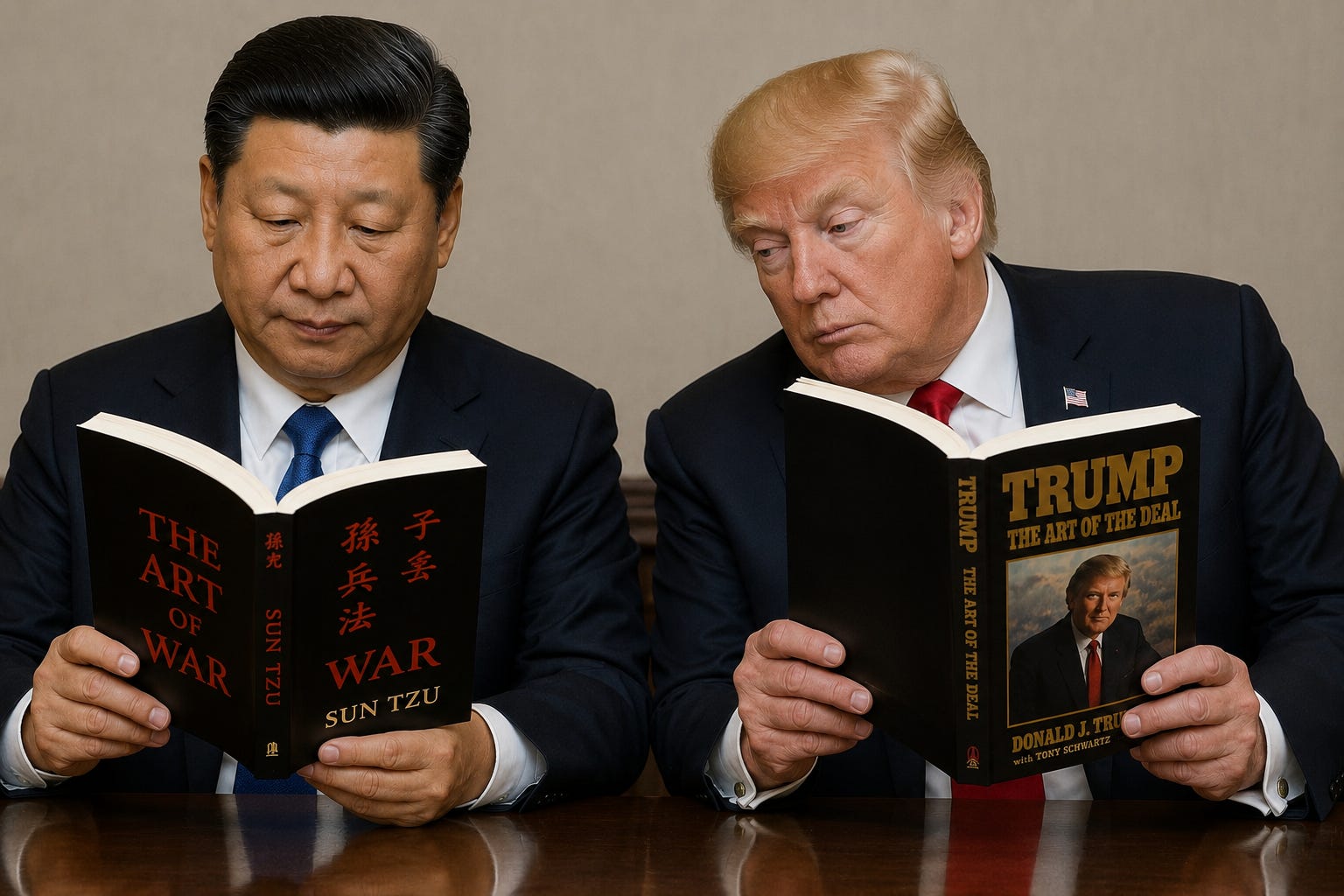
In the Art of War, Sun Tzu advised that victory is won before the battle is ever fought, decided entirely by the systems that sustain the army. Yet, there is another, perhaps more haunting, military principle at play here: “Never interrupt your enemy when he is making a mistake.”
China is not interrupting. They are simply watching. They understand that an adversary does not always need to strike to win. Sometimes, it is more than enough to simply stand back, wait for the logistics to fracture, and let the system reach its absolute breaking point.
Thank you for reading!
If you enjoy connecting the dots behind the headlines, subscribe for free. New pieces land straight in your inbox.
📨 If you think someone would enjoy this, send it their way!
Comments
Nothing yet. Say the first thing.
Sign in to join the conversation.