
Hello everyone,
I am starting to get ready for my first fermentation trip of 2026. I am putting together tasting samples and will be packing up vinegar mothers to share. I hope you can join me for the vinegar making class that I am excited to be teaching at a cider orchard in the Hudson Valley, more on why that is extra special in a moment. (I will also be on site at the festival all day, in case you make it to the festival.)
When was the last time you thought about vinegar?
Most of us don’t think much about it, though there are a few of us enthusiastic vinegar nerds who feel like we are in on a secret. Vinegar is amazing!
It is both, condiment and ingredient, that can be used front and center, as in a salad dressing, but more often it is used in the background complementing dishes in a way not many condiments, or ingredients can.
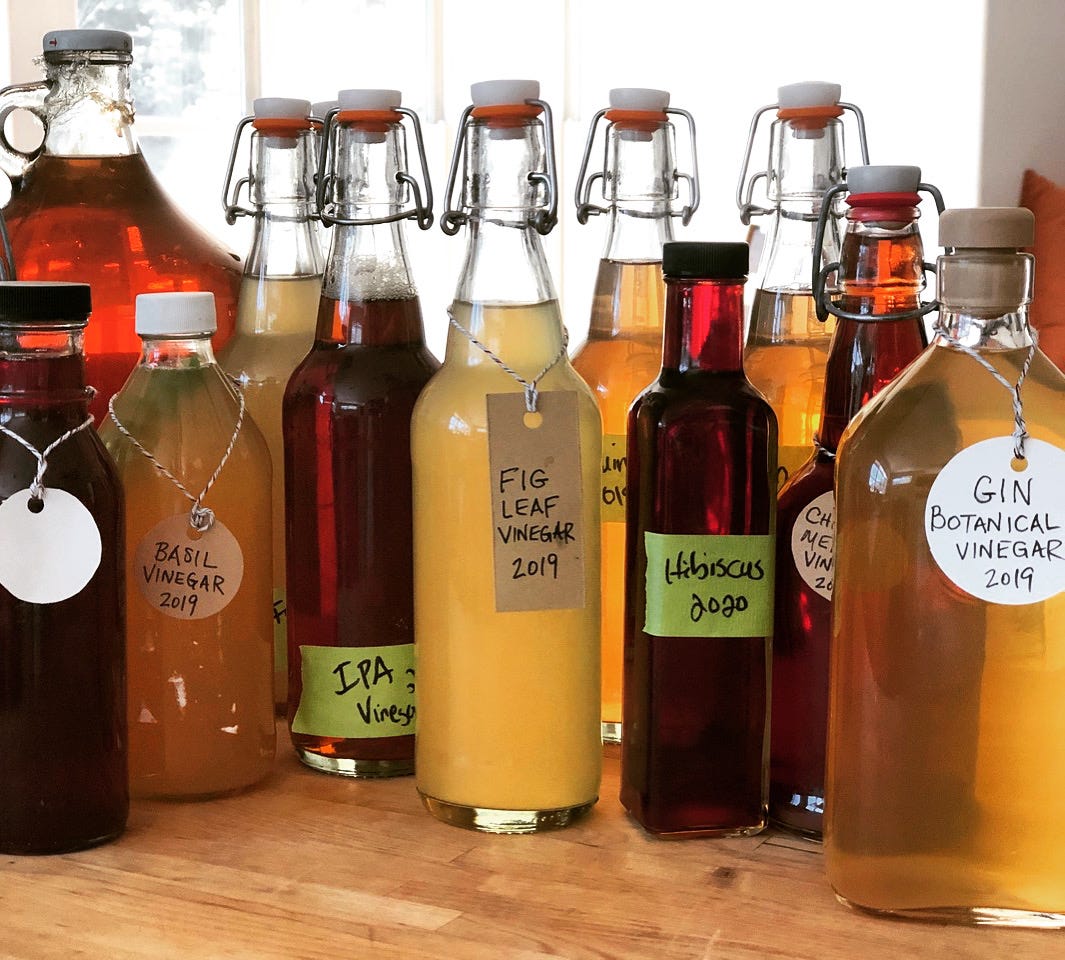
The thing is it comes in a million variations and flavors. Most of us see vinegar as a pantry staple and have no idea the of the possibilities. There is a whole world of options beyond store-bought apple cider vinegar (ACV) or distilled white vinegar. Especially if you make your own.
Imagine turning those overripe brown bananas into vinegar? How about grapefruit peels? The world of vinegar is limitless, something I discovered working on our cider book when just the breadth of ACV couldn’t be contained in a chapter. As many of you know, that was how Homebrewed Vinegar was born, and vinegar making became its own book.
I’ve included a simple ACV recipe at the bottom of this post, but first let’s hear from the folks at Twin Star Orchards about their upcoming Fermentation Festival on June 13, in New Paltz, NY.
What is the creation story behind Fermentation Festival? How long has it been happening?
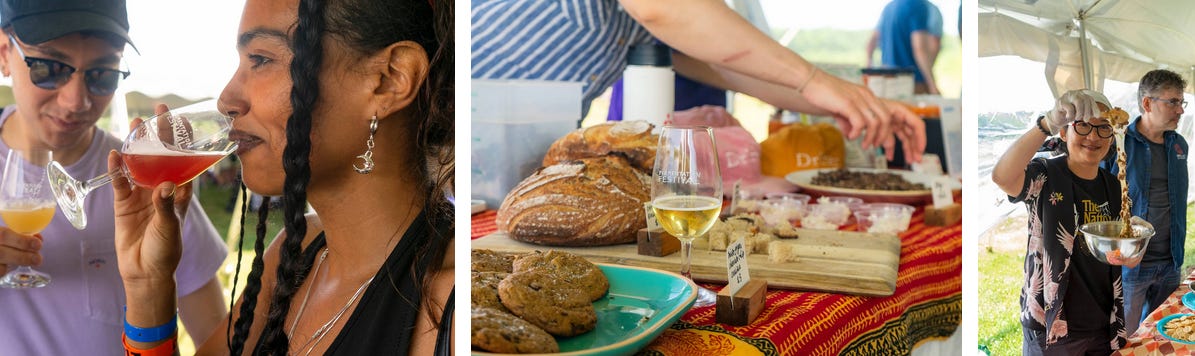
2026 marks the 5th Annual Hudson Valley Fermentation Festival at Twin Star Orchards! As fermenters ourselves, fermentation permeates our daily lives, rooted in the history and culture of our Korean heritage and Basque inspiration. Though it is no longer a necessity for survival, it is a necessity to create certain flavors that we crave. Fermentation is everywhere, in everything from chocolate to kimchi, and every culture has its own traditions around it, which really brings people together and makes it so fun to celebrate.
The idea for the festival first came to Olivia, our founder’s daughter and Cidermaker at the time, when she was 21. The concept was inspired by the sheer number of fermenters thriving in the Hudson Valley, NYC and the surrounding region. Many were already connected and collaborating, and the festival became a community-driven container for that energy to expand further into.
One of our favorite traditions is the vendor bottle share, where makers swap products and get to enjoy each other’s work, not just sell it. Even the two-session format was designed with that mindset, giving both guests and producers space to actually enjoy the day. And honestly, we love the alliteration. Fermentation Festival has a nice ring to it!
Tell us about Twin Star Orchards?
Peter and Susan Yi, our sibling founders, knew if they were going to make great cider, they needed great apples. That led them to purchase a 200-year-old, 200-acre orchard in New Paltz that had been lovingly stewarded under family ownership or generations. They built on that legacy by planting over 40 varieties of cider-specific apples, even helping to revive some almost extinct heritage varieties.
When our Bushwick location closed during the pandemic, the orchard was our refuge and silver lining, bringing us back to our roots, literally, and making the cider even better than before.
The Hudson Valley is incredible terroir for apples and has given us the space to host events like the Fermentation Festival, bringing people into nature and making local agriculture more accessible.
I love the logo, can you tell us a little bit about it and the artist?
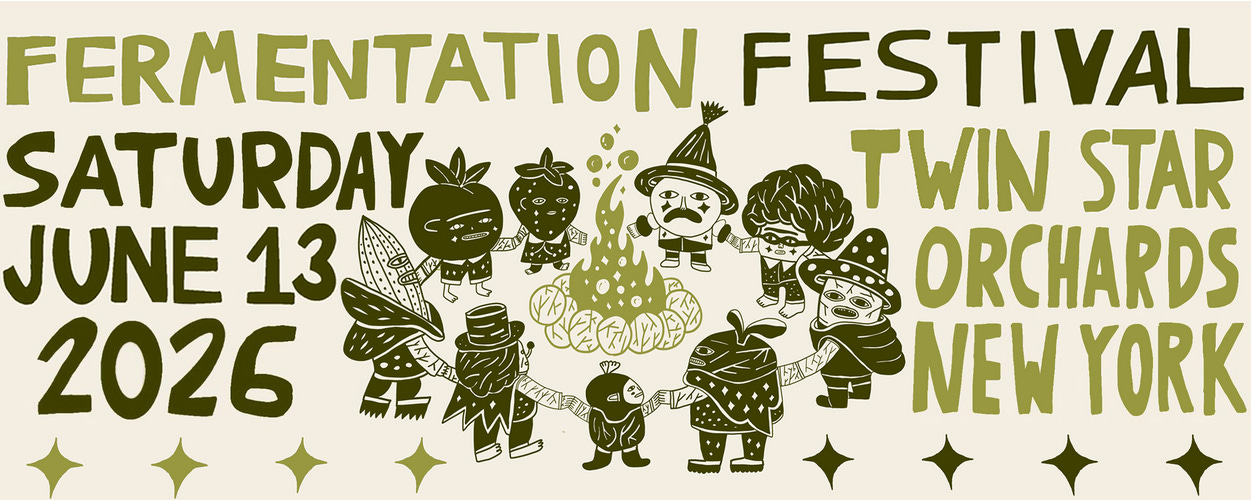
Each year’s festival poster is created by Brooklyn-based artist Keya Tama, whose art has long been an integral part of our storytelling. His work also appears on our core ciders, so there’s a natural connection between his style and our brand. Keya’s ability to translate ideas into something instantly alive and on-brand has made the collaboration feel more like creative synergy than just a commission.
His work has is a defining part of the festival’s identity, giving it a strong visual identity that people recognize and connect with. Working with an artist to create the event poster may be considered extra by some, but for us it sparks excitement and has helped make the festival into what it is today!
I just have to say, I looked up Twin Star’s labels, and they are fantastic. If you, dear reader, are interested in fun, dynamic labels, here is the link to check them out.
Okay, back to the questions. What is your favorite microbe?
Besides the obvious choice of yeast Saccharomyces cerevisieae used for cider and wine, the MVP of a wide variety of food ferments is Lactobacillus plantarum. It is similarly versatile to S. cerevisiea but instead of primarily creating ethanol from sugar, L. plantarum turns various plant sugars like glucose and fructose into lactic acid along with a bunch of other compounds, including acetic acid, ethanol, esters and aldehydes. It’s a bit of an unsung hero and very much deserves to be recognized for its alchemical abilities of preserving food while improving taste, lending zesty acidity and depth of flavor.
5. Where can we get tickets and more information?
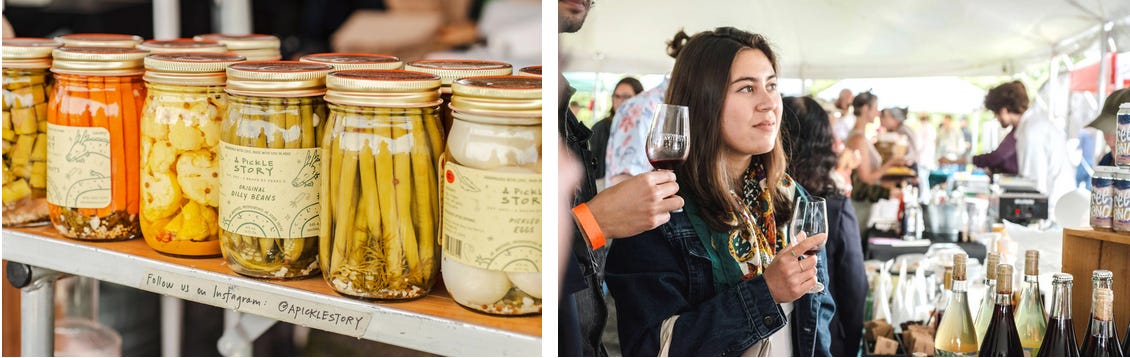
Mosey over to our festival webpage to check out everything we have planned for this year’s event! Not only do we have the honor of hosting you, Kirsten, for the festival keynote, but we’re also so excited for your fruit vinegar workshop, where people will learn the ways of apple cider vinegar and make a truly custom flavor for themselves with organic and hand-foraged additions, including fig leaves from your trees!
We encourage everyone to come learn, taste, sip and explore the world of fermentation with us on Saturday, June 13th, 2026!

Why not start with a classic? Apple cider vinegar has a long history as a folk remedy for a variety of health conditions and has achieved something akin to cult status among natural health enthusiasts
You can make your own delicious ACV from store-bought apple juice, or already fermented hard cider. If you’re starting with hard cider, you will pour it into an open container, and skip to part three. When starting out with pasteurized juice, you will need yeast. This recipe uses commercial yeast.
Apple juice falls beautifully in the specific gravity range for the perfect alcohol to create a good acidic vinegar. I have never had to adjust with any extra sugar so there isn’t a need to measure specific gravity or Brix for successful vinegar, but if you keep a vinegar log and have the tools, you may want to keep track of this. Apples are also naturally acidic fruit. This lower pH means that you won’t have to bring the pH down with lemon juice to help get a strong fermentation without surface yeast. This, and most of the recipes in this book don’t strictly need a vinegar starter. Vinegar will happen but in my years of making vinegar, the success rate is so much higher with the inoculation, so I don’t have any reason not to.
1 gallon (3.79 L) apple juice, with no added preservatives
1/2 teaspoon (1 g) wine yeast, or baker’s yeast in a pinch
1/4 cup (59 mL) unchlorinated water, heated to 104°F/40°C
1 cup (237 mL) raw, unfiltered vinegar starter (make sure it is unpasteurized), or a vinegar mother
1. Fill a sanitized 1-gallon jar with juice, leaving about 2 inches of headspace.
2. If using the wine yeast, hydrate the yeast by sprinkling it over the warm water in a cup. Stir gently, let it sit for 20 minutes, then add the hydrated yeast liquid to the jar and stir well.
3. Cover the jar with a basket-style coffee filter, a piece of unbleached cotton (butter muslin or tightly woven cheesecloth), or a basket-style paper coffee filter. Secure with a string or rubber band, or the screw on the ring from the jar over the cloth or filter. This is to keep out fruit flies.
4. Place in an environment where the temperature is between 55° and 65°F/13° and 18°C.
5. At 7 to 10 days, add the vinegar starter. Replace the cover on the jar. Store on your counter or in another spot that is 75° to 86°F/25° to 30°C. Over the next few weeks a mother will likely develop. It is a cellulose film that grows on top.
6. Check the vinegar in a month, when you should have nice acidity. However, it may take an additional month or two to fully develop, especially if your environment is cooler.
7. Bottle the finished vinegar in an airtight bottle. Save the mother for another batch or sharing with a friend. Use immediately, or age to allow it to mellow and flavors to develop.
I hope you enjoy!
XO Kirsten
No posts
Comments
Nothing yet. Say the first thing.
Sign in to join the conversation.