
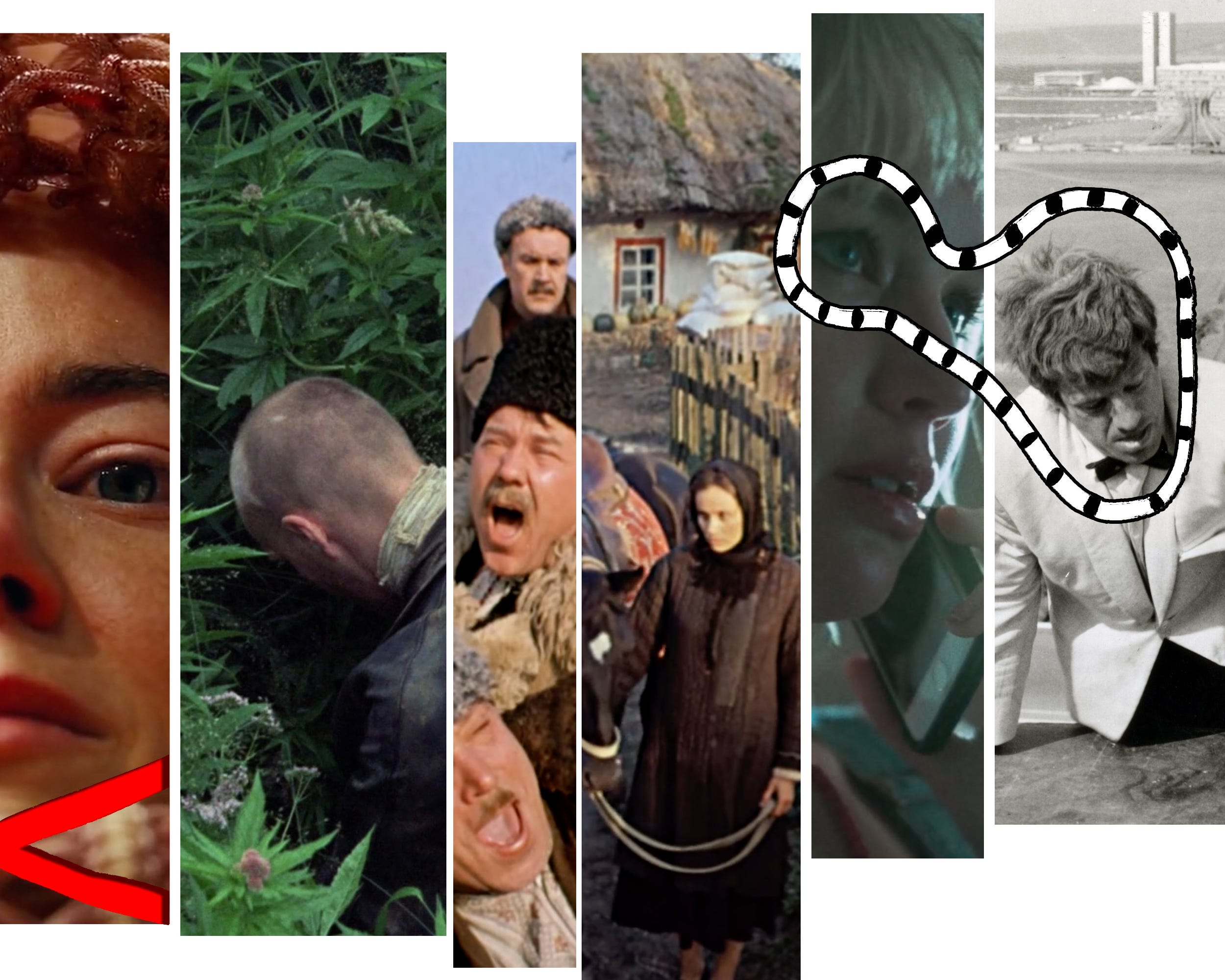
Spoilers abound, especially Bugonia spoilers.
When I went to see Yorgos Lanthimos’s Bugonia on November 1, I remembered why I sought out films as a high schooler—because of their Oscar chances. As Bugonia opened on Emma Stone’s stiff and calculating girlboss, I was reminded of how Stone anchored my bygone attachment to the Oscars, because she made smart choices and didn’t try too hard, and when she cornered a Best Actress win for La La Land she was already a star.
When I look back on my months-long obsession with La La Land, I remember watching the film at a special screening at the Castro Theatre and running a red light on the drive home because I was, embarrassingly, still in a kind of trance state. But that probably had more to do with waiting mindlessly in line for three hours to secure a rush ticket. A classmate came up to me and my friend Annabel in our second hour of waiting, having just arrived and aghast at her slim odds of entry. We were proud when she didn’t get in. We had done more work.
I paid attention only to the details that elevated the screening, like the Castro’s lush ornamentation, and not the ones that detracted, like the sound system that wasn’t equipped to reach the far depths of the mezzanine where we were sitting (there were lines I literally couldn’t hear), or the mezzanine’s pitched angle, which distorted the screen. I was so impressed by Damien Chazelle’s panache. I knew he was going to win something.
It has now been perhaps four years since I started watching films for a different reason, which is to catalog their pieces—compositions, sequence structures, camera movements, worldviews—so that I can steal them. But because I hadn’t been distracted by a strong awards season since at least 2019, the year of the The Irishman and Marriage Story, I leapt sentimentally at the prospect that Bugonia could be the prestige package which revived my affection for the whole Oscars apparatus.
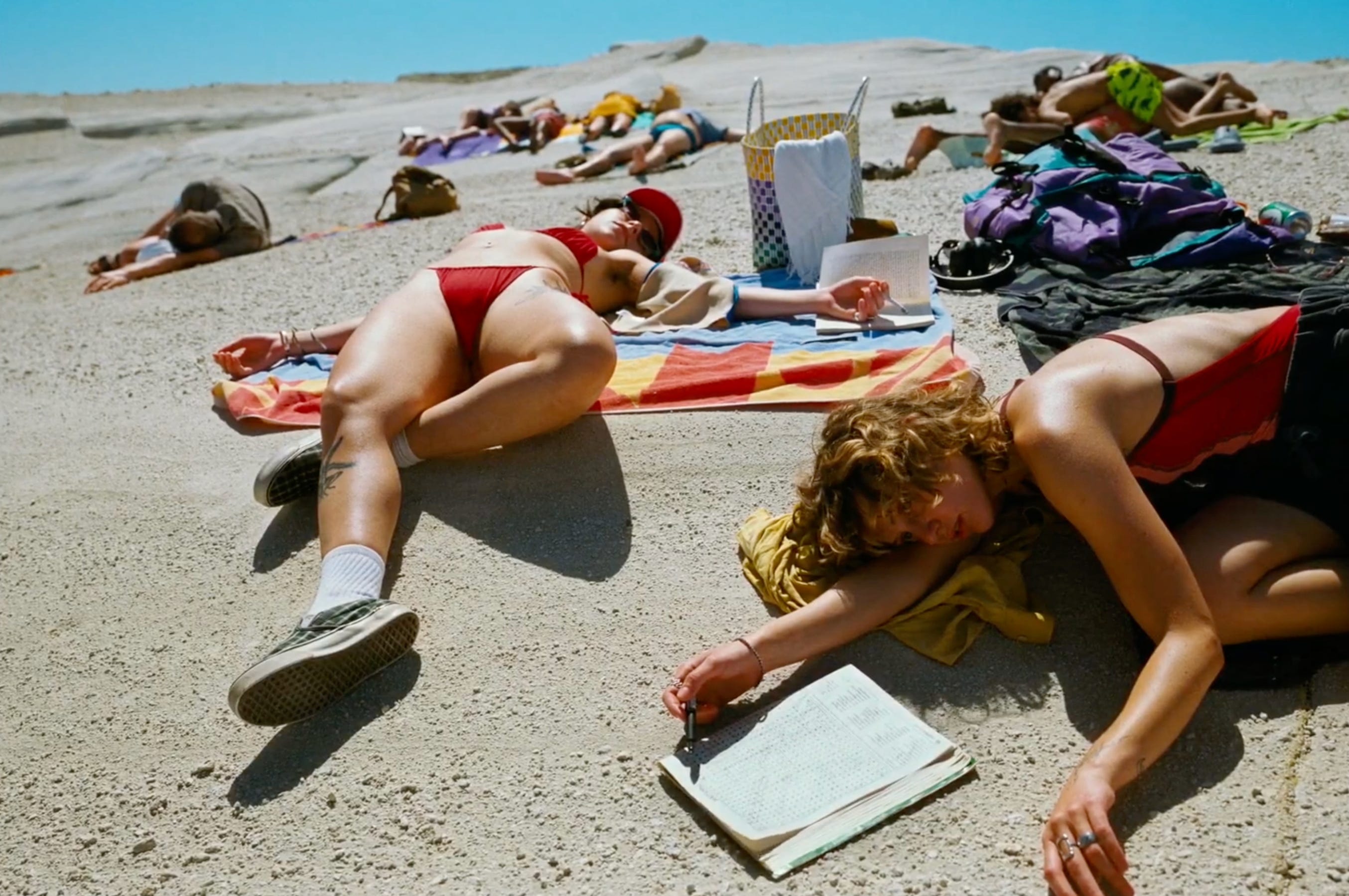
Bugonia so quickly becomes a drag—lazy and obvious in its deployment of contemporary cultural phenomena—that I decided around the half-hour mark to pivot to my more comfortable mode of theft. But the sequence which I should have stolen, which juts out from the rest of the film’s architecture like an archipelago, captures a turn of events I found upsetting and hypocritical. Our girlboss, kidnapped by Emma Stone’s co-lead Jesse Plemons and accused of being an alien bent on enslaving humans, turns out to actually be an alien, and after the whole saga of internment by Plemons, decides that humanity is a lost cause. With one prick of a wispy bubble, Stone wipes out the species, ushering in a series of carefully populated dioramas of collapsed, freshly dead bodies, strewn about museum atriums, fish markets, a classroom, third-world rubbish piles, a real archipelago.
The sequence betrayed a curiosity about the world—its ugly underbellies, its patterns of mindless activity, and its more noble pastimes, like sunbathing with the Sunday crossword—which Lanthimos stubbornly declines to explore right up until this point. His is another contemporary example of a European director “doing” America (see Luca Guadagnino’s After the Hunt); in this scenario an auteur packs together iconography which in the international media must appear to wholly represent American life (elite universities, the opioid crisis, incel conspiratorialism), then uses the size of these icons (they take up so much space) to avoid any perspective or environment that feels deeply meaningful or true. Everybody’s toast in Bugonia’s last four minutes because the man who put them in their hermetic, striking spaces couldn’t be bothered to think further about what their pasts or futures might contain.
This tease of a bounty, underlined by towering production design and an impulsiveness which momentarily reads as bravery, increased my desire and desperation for the eminently stealable. So I spent November evaluating candidates for theft.
Though I am perhaps most aware of this tendency toward theft, it became apparent while watching a second film in November that there are other less predictable or controllable pastimes wrapped up in my film-going. The first is an inescapable immersion, a nestling within a film’s space-time, which is not the same thing as wishing I lived within a film, but which has the effect of rendering whatever happens after the film ends (a return to activity outside the theater) a distant and abstract concept. This immersion is often heightened when I fall asleep, as I did at the Metrograph, during their screening of Andrei Tarkovsky’s Stalker.
There were other people who fell asleep during Stalker, because it is a film that is hypnotic, confounding but also quite temperamentally sensible. Stalker concerns a world—possibly a dystopia, but I would prefer if it was an alternate reality—where the state has cordoned off a mysterious and dangerous “Zone.” Here a supernatural incident killed a bunch of people and left survivors disabled. The “Stalker,” our protagonist, leads a curious professor and writer into the “Zone,” where their aim is to reach “The Room,” which has special powers.
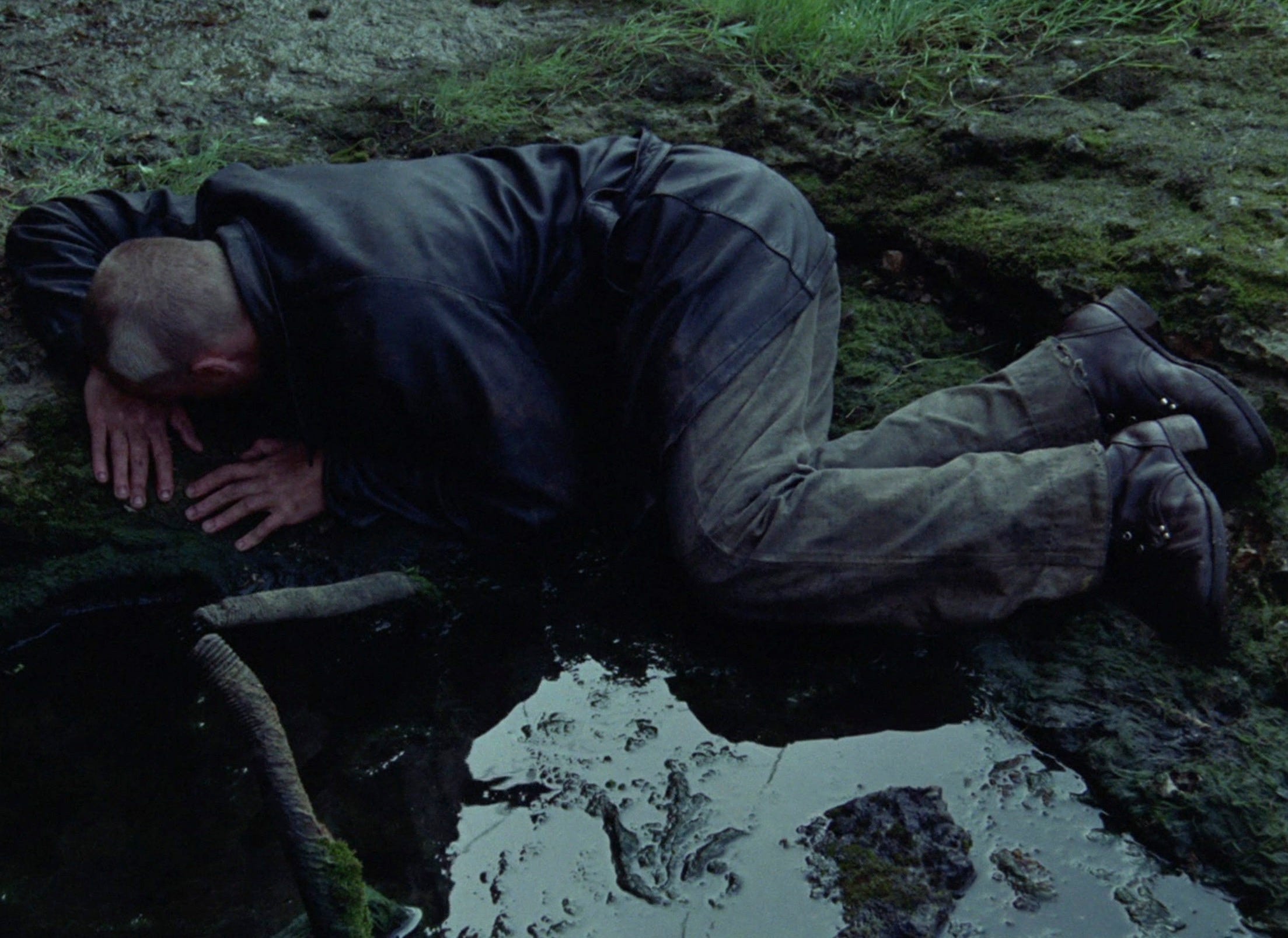
When you fight sleep in a theater, you inevitably miss out on more of a film than if you commit to dealing with the urge as soon as it’s detected. I was convinced I could conquer my fatigue and instead picked up spots of a descent across a green hillside, before waking up right as the Stalker and his clients enter the Zone. This timing brought about the sensation that the Zone surrounded me, too, that I’d been aware of its existence for hours, if not longer, rather than 45 minutes. And miraculously, right after the threshold is crossed, our trio curls up, supine, on various outcroppings of rock. I couldn’t believe that I’d emerged from semi-consciousness to witness characters settling into it.
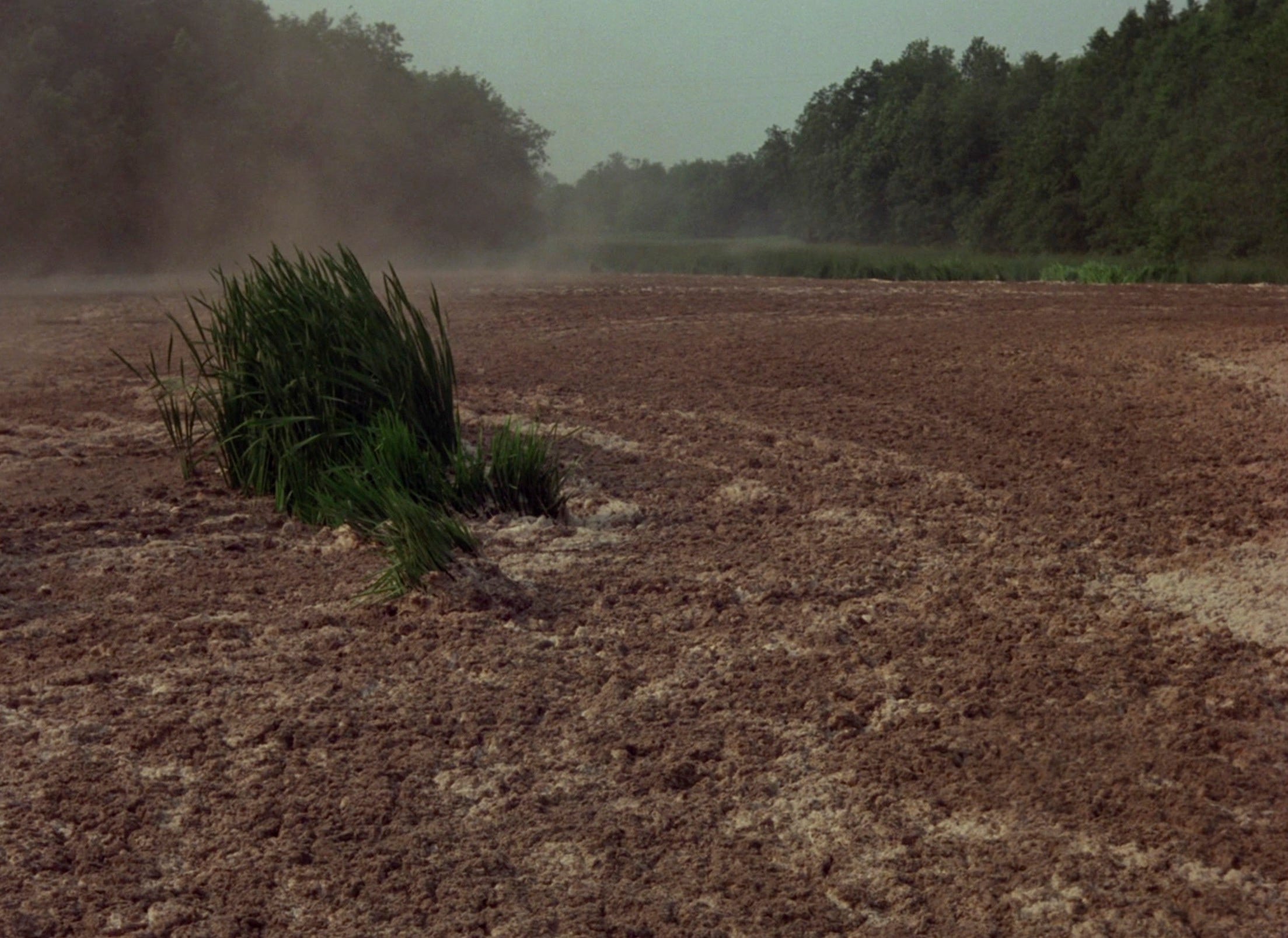
There is no explanation for why the Stalker would not immediately persist forward in his journey to the “Room,” not that it’s inconceivable that the trio needs a rest. The attitudes also suggest an atmospheric compulsion, which is perhaps to acclimate. The image sequence that follows could either be called an acclimation, or the total opposite—a dizzying merry-go-ground of connected ends. We watch the Stalker sleeping, returned to the sepia monochrome that defined the film’s first quarter, before toggling back and forth between there and sepia, upside down and right side up. Sandwiched between our views of the Stalker are tracking shots or pans that survey 1) in sepia, a shallow pool of detritus, including a gun, a pile of thick coins, an algae-encrusted pistol, a telephone cord, and is that a fishbowl? and 2) in color, either a wetland or a mass of lava, above which swirl snowflakes or pollen or foam.
I wanted so badly to internalize this sequence, to discern a pattern or decide whether the images could have followed one another in any alternative order, that I ran out of headspace to decide what I could steal. Perhaps one of Tarkovsky’s designs was to ensure that theft would not work very well.
I also fell asleep a day after watching Stalker, during Babylon XX, a Ukrainian film directed by Ivan Mykolaichuk and made in 1979 about a Bolshevik-era commune. But my somnolence in this case felt less predestined: it failed to line up with a narrative arc. I also had no idea what was going on in Babylon XX, which made it a candidate only for theft and not for immersion. The film toggles between summoning colorscapes and compositions I think Bruegel would have admired and succumbing to a hippie aesthetic which is easy to write off as boho-chic. During a steamy hook-up session on a mountainside, I felt like I was watching Zabriskie Point.
There’s this shot during a social dance where the camera is fixed to a swinging canoe which is perhaps spiritually akin to a maypole (and which is later ridden, solo and melancholically, by a white horned sheep). The camera swings up and down like a drunkard, catching sight of the dancers on each ascent. Then there’s this tracking shot foregrounded by shameless rain, where the commune’s female co-leader pulls a horse through a field of dry grass. A glorious windmill rises over the horizon line behind her, a pretty clear sign that Malick is on the mind. It would be cool if this film preceded his work, but it doesn’t. I decided to steal of all these shots. I decided also that I wanted to steal a sudden downward tilt used to capture the aforementioned tryst, which is nearly blown out by pinkish flare.
I nodded off yet again, but for a shorter amount of time, during Leos Carax’s 1999 film Pola X, also at Metrograph, which in retrospect looks like an inflection point between immersion as a secondary pastime versus theft as an exclusive pastime and an as-yet-undefined desire for personal replication. What I mean by this is, and as distinct from a tendency toward immersion, is that—and believe me, I mean this unironically, totally literally—my desire to steal from a film sometimes morphs into wanting to have what happens to the characters happen to me.
The reason Pola X does not fall into this category is because it is too grim. Up for debate: only how many siblings or cousins are having sex with each other—the incest itself is a foregone conclusion. A young girl is struck on the head by a suddenly menacing stranger, and dies overnight. Even when the set-pieces are decadent, they are still violent or distressed. And yet I will steal the soaring jib lift that reveals a heavy metal/orchestral hybrid band jamming cacophonously amid the stairwells and sparking machinery of the inner-city warehouse and resident cult we are discovering for the first time. This kind of production value is hidden until more than half of the film has elapsed, which I found restrained and strong-willed, but less stealable than the camera move itself.
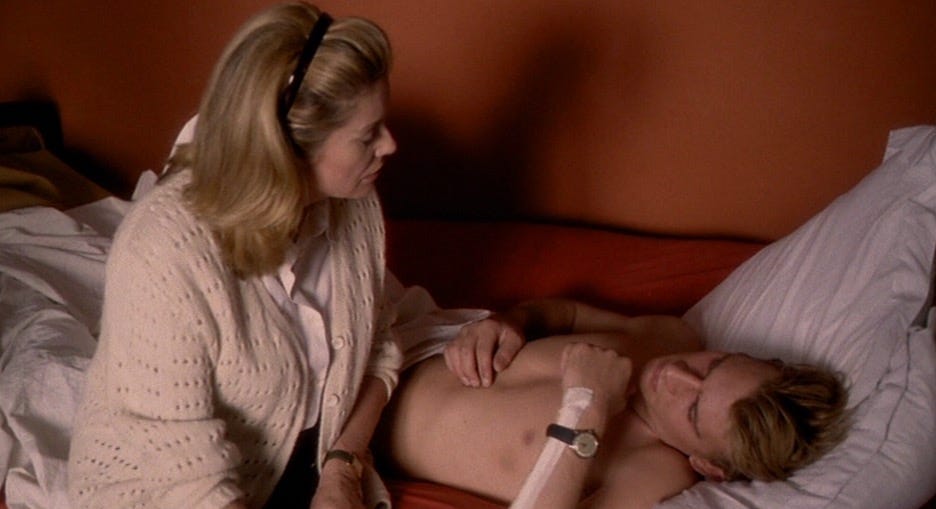
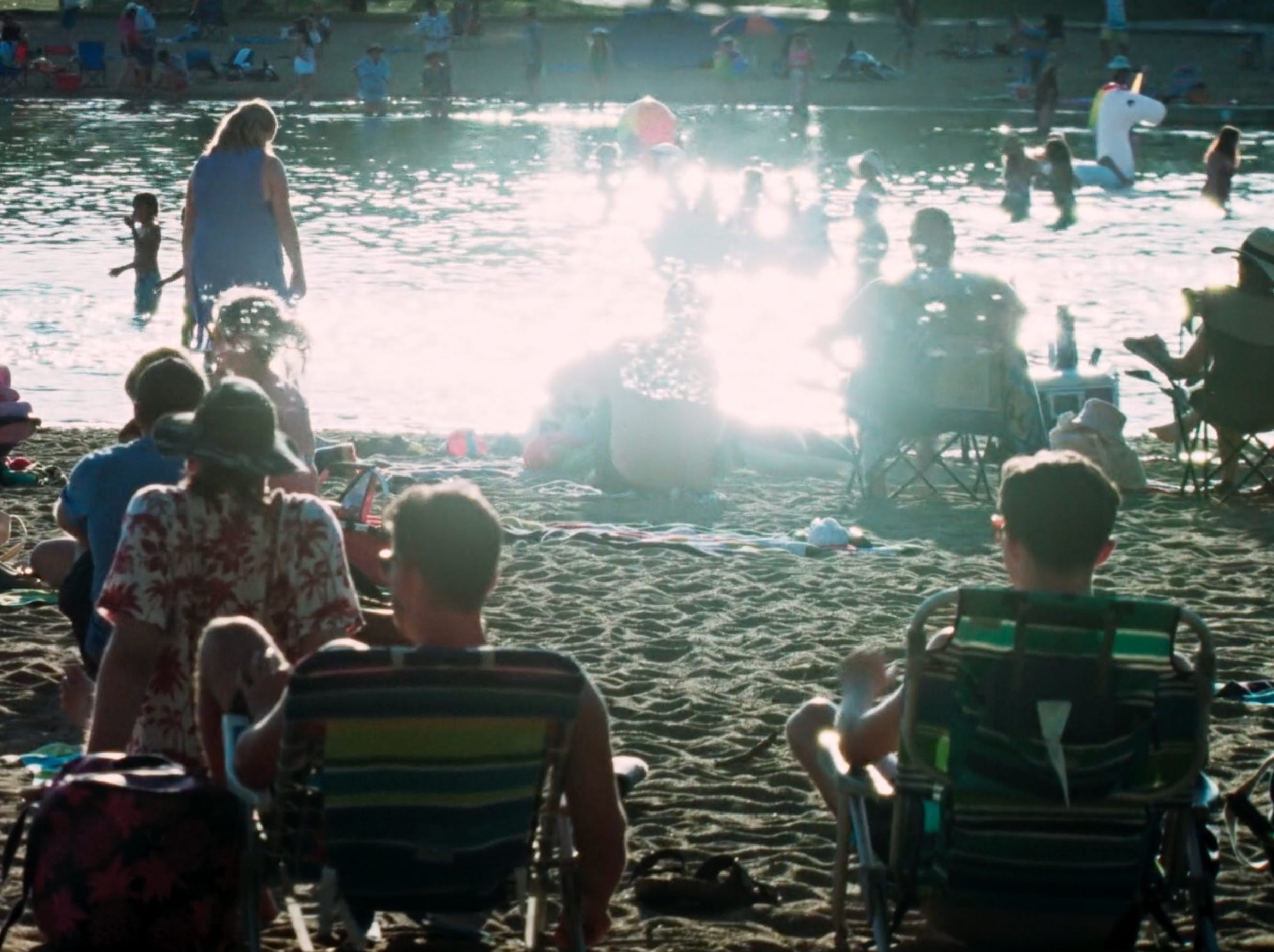
The films which did produce that fully formed desire for replication provided as generous an array of compositions as, say, Babylon XX, but each was anchored by a star’s performance. Die, My Love is the new Lynne Ramsay feature, which stars Jennifer Lawrence, and it is my favorite new film of the year. From it I planned to steal all the frames where Lawrence, a new mother suffering from postpartum psychosis, and her husband (Robert Pattinson) are casually but remotely placed, on asphalt outside a psychiatric hospital he’s “committing” her to, or on the porch of their modest house, not moving much but still bent over or standing with vibrating knowledge of the size of their bodies.* And also I planned to steal the mesmeric look at water glimmering on the drab beach visited by Lawrence and Pattinson soon after she finishes treatment. We’re almost witnessing a Stalker-esque sequence on the beach: the threshold, in this case of recovery, has been crossed, only for the protagonist and the viewer’s perceptions to melt and swirl in a sleepy, sinking haze.
What I didn’t want to steal were the day-for-night passages where Lawrence keeps encountering a motorcycle rider, first helmeted and then unmasked; he finds her in a field and leans right over her face, and on another occasion she asks him to cut his lip with a kitchen knife, either to prove that he can match her kink or that he’s real. I always want things to be real, no Bridge to Terabithia mumbo jumbo, and I was so relieved when Lawrence ran into this man and his family in the daytime. When the pair later consummates their nocturnal relations, I was overwhelmed by the idea of a night in the future where I myself will know that somebody is wandering the same field that I am, on a farm somewhere in America, and we will be there together because we like imagining the parts of each other that we can’t see, and on the other hand touching the limbs which confirm that this is actually happening.
It’s likely, based on this sensation, that theft happens separately from this desire to replicate. As much as I was drawn to the day-as-night and its blue hues, its void-like quietude, I couldn’t conceive of putting it in a film as well as hoping that it would appear in my life.
From L’homme de Rio, a 1964 espionage spoof starring my hero Jean-Paul Belmondo which I saw at Film Forum as part of their “French heist” series (Film Forum was the nonprofit fiscal sponsor for Sparks), I planned to steal the silhouetted outline of a romanticized shantytown in Rio, where Belmondo, on location to rescue his abducted fiancée (Françoise Dorléac) befriends an adorable and resourceful Brazilian boy who presents his makeshift bungalow to Belmondo, impressively pulling down a comfy bed and a dining table with strings from the walls, like he’s Mary Poppins. And I planned to steal the wit (is it melancholy? Industrious?) with which the whimsy of smuggled treasure in the mountains gives way to bulldozers and wide clay paths, the rainforest felled for suburban development.
This film, whose script is ripped plot-point-for-plot-point from Hergé’s Tintin, is too silly for immersion. The grander the photography gets, the more it channels the spirit of a pop-up book. But some details are confined to a car, like when after Belmondo rescues Dorléac they encounter a torrential downpour in their convertible, lose the top off the convertible, find two tree branches and string their clothes on a laundry line between the branches in the convertible’s backseat. Belmondo drives and smokes, shirtless and carefree, as if to say that inspired problem-solving is not only easy but obligatory.
Based on my analysis I doubt it’s possible for a film to possess stealable elements and also the ability to immerse a viewer (maybe submerge is a better word) and also the capacity to incite a desire for replicating (or seeking out) the film’s scenes and constructions outside the theater. The sample size is small, as it only includes November candidates. I guess I don’t really want to get a convertible hood blown off by a storm just so I can blithely merge the domestic with the vehicular. But what if I could do it, and in the short term? Of course if I can’t I will simply plan to steal the scene.
*I put “committed” in quotes because that’s the word Jennifer Lawrence’s character uses to describe her stint at the psychiatric hospital.
No posts
Comments
Nothing yet. Say the first thing.
Sign in to join the conversation.