
Fenbendazole Can Cure Cancer presents Case Reports of people who have treated their own cancers along with other articles to help understand how fenbendazole works to treat cancer. Previous articles covering other cancers are in the Archives link.
The elephant in the room: fenbendazole is a drug developed to kill parasites. It kills cancer cells by the same mechanism — disrupting tubulin polymerization to block cell division. If cancer and parasites did not share deep biological machinery, this could not happen. What follows is a systematic inventory of everything else they share.
This is where the case begins: a drug designed to kill parasites also kills cancer. That is not analogy. That is shared mechanism.
◆ Fenbendazole kills both: The same veterinary antiparasitic drug — fenbendazole — kills parasitic helminths and kills cancer cells by the same mechanism: binding to the colchicine-binding site on beta-tubulin and preventing polymerization into microtubules. This was not designed in. It was discovered by accident, which is precisely what makes it significant.
→ In parasites: disrupts the cytoskeleton of intestinal cells, impairs glucose absorption, blocks larval development, causes paralysis and death.
→ In cancer: prevents mitotic spindle assembly, induces mitotic arrest, triggers apoptosis, inhibits glucose transporter GLUT-4, impairs proteasome function, stabilizes p53.
→ The same drug. The same target. Two organisms sharing the same vulnerability.
◆ Mebendazole — the human-approved cousin: Mebendazole, fenbendazole’s near-identical chemical relative approved for human antiparasitic use, kills glioblastoma, colorectal, lung, and melanoma cancer cells through identical tubulin-binding. It has entered registered Phase I and II oncology trials and is associated with improved colorectal cancer survival in national registry data (Nygren & Larsson, 2014).
◆ Oncodazole — the smoking gun: In the early 1970s, Janssen Research Laboratories named a fenbendazole derivative ‘oncodazole’ — literally ‘cancer drug’ — because it killed cancer cells. The name was subsequently changed to ‘nocodazole’ and the discovery was shelved. The taxane chemotherapy drugs developed afterward target the same tubulin mechanism but non-selectively, producing severe side effects fenbendazole does not.
◆ Ivermectin, niclosamide, chloroquine, and the antiparasitic class: Multiple other antiparasitic drugs show independent anticancer activity: ivermectin (ion channel disruption, signaling pathway inhibition); niclosamide (anaerobic metabolism targeting); chloroquine (autophagy inhibition, a survival mechanism cancer shares with certain intracellular parasites). Each cross-activity reflects a shared vulnerability.
◆ Broad-spectrum activity across cancer types: Fenbendazole shows preclinical activity against lung, colon, lymphoma, melanoma, breast, prostate, glioblastoma, and leukemia. This breadth indicates it targets fundamental processes common to many cancers — not specific mutations. The same is true of its antiparasitic activity: it kills nematodes, hookworms, pinworms, whipworms, and tapeworms across species.
◆ Shared dependence on tubulin polymerization: Both cancer cells and parasitic cells depend on microtubule assembly for mitosis, intracellular transport, and structural maintenance. This shared dependence is the mechanistic basis for fenbendazole’s dual efficacy.
◆ Aneuploidy and karyotypic chaos: Over 90% of solid tumors are aneuploid — carrying the wrong number of chromosomes, with fragments, duplications, and rearrangements creating a genomically chaotic karyotype. The same karyotypic chaos is a regulated adaptive strategy in key parasitic protozoa.
→ Leishmania spp. maintain mosaic aneuploidy as a primary adaptive mechanism, using supernumerary chromosomes to amplify drug resistance genes and virulence factors under selective pressure.
→ Giardia lamblia, Trichomonas vaginalis, and Plasmodium falciparum under drug pressure all exhibit variable, unstable chromosome numbers.
→ In both cancer and parasites, aneuploidy is not a defect — it is an engine of rapid adaptation, enabling survival under immune attack and drug pressure.
→ CTVT cells (the canine transmissible cancer) carry 57–64 chromosomes vs. the normal 78; DFTD cells carry 13 vs. normal 14. These aneuploid karyotypes define the parasitic lineage’s identity across all hosts.
◆ P-glycoprotein efflux pumps — ancient defense, modern resistance: P-glycoprotein (P-gp) drug efflux pumps were first evolved by parasites as defenses against environmental toxins. Cancer cells have hijacked this same ancient mechanism to pump out chemotherapy drugs. The structural similarity between parasite and cancer P-gp pumps is so close that drugs targeting parasite P-gp can defeat cancer drug resistance.
→ Parasites: Haemonchus contortus overexpresses P-gp genes under ivermectin pressure; Plasmodium falciparum PfMDR1 drives resistance to chloroquine and quinine.
→ Cancer: P-gp overexpression predicts treatment failure in pancreatic, ovarian, breast, lung, and blood cancers.
→ Fenbendazole defeats P-gp by three mechanisms simultaneously: direct pump inhibition, suppression of NF-κB and PI3K/AKT pathways that order P-gp construction, and destruction of the microtubule network needed to deliver new P-gp to the cell surface.
◆ Extracellular matrix invasion via shared proteases: Cancer cells and migrating parasites both secrete proteases — matrix metalloproteinases (MMPs), cysteine proteases, serine proteases — to degrade extracellular matrix and penetrate tissue barriers. Schistosoma cercariae use MMPs to penetrate skin; cancer cells use MMP-2 and MMP-9 to invade adjacent tissue and establish metastases.
◆ Anoikis resistance: Normal cells die when detached from their matrix (anoikis). Both cancer cells and certain parasitic organisms have acquired resistance to anoikis, enabling survival in suspension during dissemination through blood or lymph to distant sites.
◆ Genomic instability as adaptive strategy: Both cancer and parasites use genomic instability not as a failure but as a tool — generating diverse subpopulations from which immune-resistant or drug-resistant variants are selected. Cancer does this through somatic mutation and chromosomal instability; parasites do it through aneuploidy, mosaic genomes, and gene amplification.
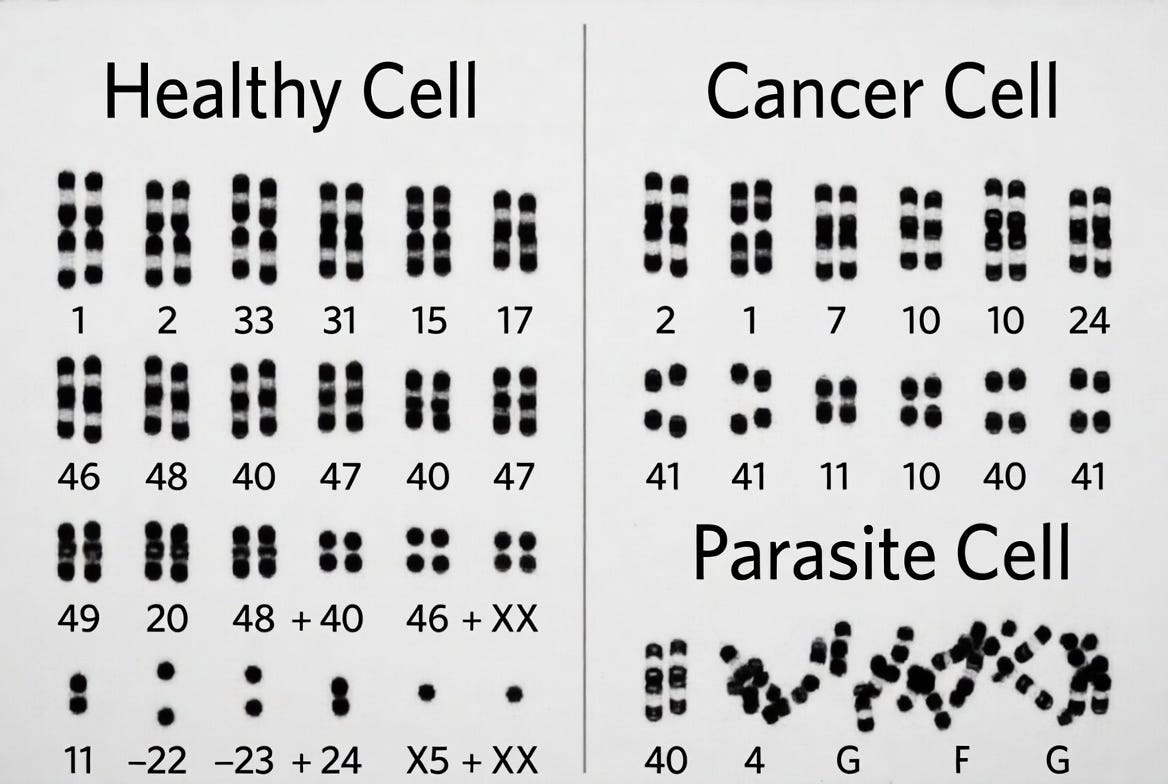
Karyotypes of healthy, cancerous and parasite cells. Healthy human cells have orderly paired chromosomes. Cancer and parasite cells have variable number, unpaired, disordered chromosomes.
◆ Foreign genetic material acquired during malignant progression: Advanced cancers incorporate foreign genetic material: activated retroelements (LINE-1 transposons, endogenous retroviruses) not present in host cells. In CTVT, a LINE-1 insertion upstream of c-myc is present in all tumors worldwide and defines the cancer’s parasitic identity in every host it occupies — a foreign genetic element constitutively marking the lineage across 11,000 years and five continents.
◆ Epigenetic immune camouflage: DFTD cells (the Tasmanian devil transmissible cancer) silence MHC class I surface expression through reversible histone deacetylation — meaning the MHC genes are present but epigenetically switched off. Treatment with interferon-gamma restores MHC expression and makes DFTD cells visible to T cells. The same epigenetic MHC silencing is documented in 40–70% of human solid tumors.
→ Both cancer and transmissible cancers use the same epigenetic tool — histone modification — to become invisible to host immunity.
→ This directly supports combining HDAC inhibitors with checkpoint immunotherapy: reversing the epigenetic camouflage restores immunogenicity.
◆ Telomerase reactivation and replicative immortality: Normal somatic cells have limited replicative lifespan due to telomere shortening. Both cancer cells and certain parasites reactivate telomerase (TERT), maintaining telomere length and enabling indefinite replication. Trypanosoma brucei maintains active telomerase, and its subtelomeric regions store the variant surface glycoprotein archive used for immune evasion.
◆ Transposable element exploitation: Cancer cells and some parasites activate transposable elements (jumping genes) that contribute to genomic instability, altered gene expression, and generation of novel antigens. In cancer, this is a driver of mutational burden; in parasites, it is a mechanism for generating antigenic diversity.
This is one of the least-discussed but most profound parallels. Both cancer cells and parasites alter their relationship to the host’s 24-hour biological clock — and they do it through overlapping molecular mechanisms.
◆ Cancer cells decouple from the host circadian clock: The mammalian circadian clock (CLOCK/BMAL1 driving PER1, PER2, CRY1, CRY2) governs cell cycle checkpoints, DNA repair, immune surveillance, apoptosis, and metabolic flux. In virtually every cancer type studied, these clock genes are downregulated or phase-shifted.
→ BMAL1 downregulation is documented in breast, colorectal, prostate, pancreatic, endometrial, and hematological malignancies and correlates with poorer prognosis.
→ PER1 and PER2 function as tumor suppressors: their loss removes circadian gating of cell cycle progression at G1/S and G2/M checkpoints.
→ Cancer cells are not merely disorganized — they run on their own schedule, independent of the host’s central pacemaker (SCN). This temporal independence is itself evidence of autonomous entity status.
◆ Parasites maintain their own independent clocks — deliberately out of phase: Plasmodium falciparum coordinates its 48-hour intraerythrocytic replication cycle to the host’s circadian rhythm, timing merozoite release to coincide with peak host body temperature — exploiting host chronobiology for its own transmission efficiency. Wuchereria bancrofti microfilariae concentrate in peripheral blood at night, coinciding with their mosquito vector’s biting window.
→ Parasites don’t simply respond to the host clock — they have their own internal timekeepers that interact strategically with host rhythms.
◆ Shared molecular effectors of clock disruption: Trypanosoma brucei (sleeping sickness) invades the suprachiasmatic nucleus — the master pacemaker of mammalian circadian rhythms — and disrupts host sleep-wake cycles through TNF-α, IL-6, and IFN-γ signaling that suppresses SCN neuronal firing. These are the same cytokines that mediate circadian disruption in cancer-associated fatigue and paraneoplastic sleep disorders.
→ Same molecular tools. Same biological target. Two different organisms.
◆ Melatonin pathway convergence: Melatonin is the primary output of the SCN clock and a documented anti-proliferative, immunomodulatory agent. Cancer suppresses melatonin production as part of clock desynchronization. Plasmodium uses melatonin as a synchronization cue; disrupting melatonin rhythms alters parasite replication periodicity. Both cancer and parasites interact with the same melatonin axis.
◆ Fenbendazole disrupts circadian CLOCK genes in cancer cells: Among fenbendazole’s documented mechanisms of anticancer action is disruption of circadian CLOCK gene expression in cancer cells — interfering with the tumor’s autonomous temporal program while the host’s circadian machinery remains intact. This selectivity is consistent with the view that fenbendazole targets what is foreign (the cancer’s autonomous clock) while sparing what is native (the host’s synchronized cells).
◆ The Warburg effect and obligate glycolysis: Cancer cells preferentially metabolize glucose through aerobic glycolysis even when oxygen is available (the Warburg effect) — trading ATP efficiency for speed, biosynthetic precursors, and redox balance. This is the same metabolic logic used by bloodstream-form Trypanosoma brucei, which relies on obligate glycolysis in specialized organelles (glycosomes) and cannot switch to oxidative phosphorylation.
→ Both cancer and trypanosomes share HIF-1α activation, mTORC1 upregulation, and LDHA-driven lactate production.
→ Both produce an acidic microenvironment through lactate export that suppresses local immune activity and promotes invasion.
◆ Glucose transporter exploitation: Cancer cells upregulate GLUT transporters (especially GLUT-1 and GLUT-4) to fuel their glycolytic demand. Fenbendazole inhibits GLUT-4 expression in cancer cells — starving them of fuel. Plasmodium and Trypanosoma similarly express specialized glucose importers to scavenge host glucose for their own replication.
◆ Host nutrient hijacking and cachexia: Both cancer and parasites function as metabolic sinks, diverting host glucose, amino acids, and lipids to fuel their own expansion. The debilitating wasting (cachexia) seen in advanced cancer patients mirrors the wasting associated with chronic parasitic infections such as sleeping sickness (T. brucei) and leishmaniasis.
◆ Glutamine addiction: Many cancer cells are addicted to glutamine as a carbon and nitrogen source beyond glucose. Certain intracellular parasites, including Toxoplasma gondii and Leishmania, similarly depend on host amino acid scavenging for their own biosynthetic needs.
◆ Lipid scavenging: Cancer cells and many parasites are unable to synthesize sufficient lipids independently and actively scavenge host lipids. Schistosoma mansoni lacks sterol biosynthesis and must import host cholesterol. Cancer cells similarly upregulate lipid uptake pathways.
◆ PI3K/AKT/mTOR pathway exploitation: The most consistently activated pro-survival and proliferative signaling axis in cancer is also exploited by intracellular parasites. Toxoplasma gondii and Leishmania activate host PI3K/AKT signaling to prevent host cell apoptosis, sustaining the metabolic environment they need to replicate intracellularly.
Perhaps the most compelling category. Cancer and parasites have converged on virtually identical molecular strategies to survive inside an immune system that is actively trying to kill them.
◆ MHC class I downregulation: The primary mechanism by which both CTVT and DFTD (naturally occurring transmissible animal cancers) survive allogeneic transmission is downregulation of MHC class I molecules — the cell-surface markers that identify cells as ‘self’ to cytotoxic T lymphocytes. The same MHC-I downregulation is present in 40–70% of human solid tumors and predicts poor prognosis and resistance to immunotherapy.
◆ PD-L1/PD-1 checkpoint exploitation: Cancer cells upregulate PD-L1 (programmed death ligand-1), engaging the PD-1 inhibitory receptor on T cells and shutting down the antitumor immune response. Leishmania and Plasmodium upregulate PD-L1 on infected host cells through the same pathway.
→ The mechanism checkpoint inhibitors target in cancer is the same mechanism parasites evolved to exploit for chronic immune evasion.
◆ Regulatory T cell induction: Both cancer tumors and helminth parasites potently induce expansion of regulatory T cells (Tregs) that suppress effector T cell responses. The molecular signals — IL-10, TGF-β — are identical in both contexts.
◆ Tumor-associated macrophage / M2 polarization: Leishmania, Trypanosoma cruzi, and helminths repolarize host macrophages from M1 (pro-inflammatory, pathogen-killing) to M2 (anti-inflammatory, tissue-repair) phenotypes using IL-10, arginase-1, and IL-12 suppression. Tumors use identical signals to polarize tumor-associated macrophages (TAMs) toward an immunosuppressive M2 phenotype within the tumor microenvironment.
◆ Antigenic variation and immune editing: Trypanosoma brucei cycles through a large archive of variant surface glycoprotein (VSG) genes, presenting a new antigenic surface coat faster than the adaptive immune system can respond — achieving indefinite persistence through constant identity change. Cancer achieves analogous immune escape through somatic mutation, copy number variation, and differential antigen expression across subclones (immune editing): the same strategic logic, different molecular mechanism.
◆ Molecular mimicry: Schistosoma mansoni eggs display Lewis X antigens that mimic human glycans, dampening innate immune recognition. Tapeworms incorporate host-like proteins into their surface coat. Cancer cells express CD47 (’don’t eat me’ signals) found on normal cells, shielding themselves from macrophage phagocytosis — the same logic of mimicking self-markers to escape clearance.
◆ Immunosuppressive cytokine production: Both cancer cells and parasites manufacture the same immunosuppressive cytokines — TGF-β, IL-10 — to create local zones of immune tolerance. Cancer secretes these from tumor cells and stromal cells within the tumor microenvironment. Helminths secrete them directly.
◆ Physical immune seclusion: Leishmania and Toxoplasma gondii hide intracellularly within host phagosomes, exploiting the very mechanism designed to destroy them. Trichinella spiralis larvae induce formation of a ‘nurse cell’ in host muscle tissue — a dedicated niche that insulates them from immune attack. Cancer cells form dense stroma and exploit abnormal vasculature to physically impede immune cell infiltration.
◆ Exosome-mediated remote immune suppression: Cancer cells release exosomes carrying immunosuppressive miRNAs, HSP70, and PD-L1 that paralyze immune cells at a distance. Leishmania and Plasmodium release exosomes that reprogram macrophages toward immunosuppressive phenotypes. Same strategy, same delivery vehicle.
◆ Sex hormone exploitation — Schistosoma and hormone-receptor cancers: Both Schistosoma mansoni and S. haematobium express functional estrogen-binding proteins. Host estrogen levels regulate schistosome growth, egg production, and reproductive maturation. The sex-differentiated clinical presentation of schistosomiasis directly reflects the parasite’s active responsiveness to host sex hormone levels — precisely analogous to the estrogen- and androgen-receptor sensitivity of breast and prostate cancers.
◆ Glucocorticoid-mediated immune suppression: Trypanosoma cruzi infection elevates host corticosterone and modulates hypothalamic-pituitary-adrenal axis signaling, suppressing Th1-mediated immune clearance through a host hormonal mechanism. Cancer cells exploit elevated glucocorticoids — whether from stress or pharmacological administration — through GR-driven suppression of NF-κB, IL-12 downregulation, and Treg expansion. Same downstream effectors.
◆ Reproductive hormones and transmissible cancer spread: The brown bullhead catfish transmissible melanoma (Curd et al., Nature, 2026) has not been documented in fish younger than reproductive age. The proposed transmission mechanism involves physical aggregation during spawning — when reproductive hormones are known to suppress fish immune responses. The window of vulnerability for cancer transmission is hormonal: the cancer exploits the endocrine-driven immune suppression that makes reproduction possible.
→ This is the first wild-population empirical model demonstrating hormonal immunomodulation as a mechanism facilitating transmissible cancer spread — exactly what the Cancer-as-Parasite framework predicts.
◆ Acid environment manipulation: Cancer produces and exports lactic acid, acidifying the tumor microenvironment (pH 6.5–6.9 vs. normal 7.4). This acidosis suppresses T cells and NK cells, promotes invasion, and induces angiogenesis. Hookworms secrete alkaline substances to neutralize stomach acid and protect their own enzymes. Both are actively engineering local pH to favor their own survival.
◆ Angiogenesis induction: Cancer induces formation of new blood vessels (angiogenesis) through VEGF secretion, securing the oxygen and nutrient supply required for growth beyond ~1–2 mm. Both mebendazole and fenbendazole demonstrate anti-angiogenic activity through inhibition of VEGFR2 phosphorylation — an activity orthogonal to their tubulin-binding mechanism, but relevant because parasites residing in tissues also require vascular access for nutrients. Schistosoma egg granulomas become vascularized through similar signaling.
◆ Bioelectrical membrane manipulation: Cancer cells show chronic depolarization of membrane potential, which drives proliferation, migration, and aberrant differentiation through voltage-gated ion channels. Certain parasites disrupt host cell ion transport — whipworm infection alters colonic epithelial chloride channel function. Both manipulate bioelectrical signaling to alter the cellular environment in their favor.
◆ Establishing a chronic, self-sustaining state: Unless treated, cancer progresses as a chronic disease — tumor cells persist for years, adapting to therapies, eventually overwhelming the host. Helminth parasites and certain protozoa establish chronic infections persisting for the lifetime of the host, achieved through the same immune evasion strategies that create a tolerant, low-level coexistence.
◆ Cancer dormancy — a parasitic life stage?: Cancer stem cells can remain metabolically quiescent for years to decades before reactivating as aggressive metastatic disease. This mirrors the hypnozoite dormancy stage of Plasmodium vivax and P. ovale — metabolically inert hepatic forms that reactivate months to years after initial infection. Several of the human case reports in Cancer Is a Parasite (Supple, 2026) document prostate or breast cancer recurrences more than a decade after complete surgical removal of the primary organ. Dormancy as a survival strategy is shared.
◆ Uncontrolled, selfish replication: The defining characteristic of both cancer and parasites is relentless replication that overrides host regulatory constraints. A single female Ascaris lumbricoides produces hundreds of thousands of eggs per day. Cancer cells bypass apoptosis, senescence, and contact inhibition to accumulate into tumors. Both prioritize their own propagation above host welfare.
◆ Invasion, migration, and colonization of distant sites: Cancer cells metastasize through the same sequence that parasites use to navigate host tissues: breach of local barriers, entry into circulatory systems, resistance to anoikis during transit, and establishment of new colonies in permissive microenvironments. Hookworm larvae penetrate skin, travel via bloodstream to lungs, ascend the respiratory tract, and mature in the small intestine — a multi-tissue migration with extraordinary parallels to metastatic dissemination.
◆ Apoptosis resistance through shared pathways: Both cancer cells and certain intracellular parasites prevent host cell apoptosis to preserve their survival environment. Toxoplasma gondii suppresses p53-mediated apoptosis; Theileria activates NF-κB/Bcl-2 survival pathways; cancer cells upregulate Bcl-2, Bcl-xL, and suppress p53 — the same molecular nodes, the same functional outcome.
◆ Blood-brain barrier penetration: Trypanosoma brucei crosses the blood-brain barrier through a combination of molecular mimicry and disruption of tight junctions. Brain-metastatic cancer cells use overlapping mechanisms — expression of chemokine receptors, exploitation of neuroinflammation, tight junction disruption — to achieve the same penetration.
◆ Transmissibility as latent capacity: Four naturally occurring transmissible cancers have now been confirmed: canine transmissible venereal tumor (CTVT, ~11,000 years old, globally distributed), Tasmanian devil facial tumor disease (DFTD, two independent lineages), bivalve transmissible neoplasia (at least ten independent origins across ten species), and brown bullhead catfish melanoma in Lake Memphremagog (Curd et al., Nature, 2026). Each arose independently. Each uses MHC downregulation for allogeneic immune evasion. The capacity for cancer to transmit between hosts is not a categorical impossibility — it is a latent property that evolves predictably under the right selective pressures.
→ The Gartner case (NEJM, 1996): A malignant fibrous histiocytoma was accidentally transplanted from a patient to a surgeon through a hand wound during surgery. The tumor was confirmed by genetic analysis to be patient-derived and grew progressively in the surgeon before surgical removal.
→ Donor-derived cancer transmission via organ transplantation is documented in ~0.01–0.05% of recipients, typically under pharmacological immunosuppression.
◆ Nations that deworm have half the cancer rate: An original analysis of 188 nations (Cancer Is a Parasite, Supple, 2026) using WHO GLOBOCAN data and WHO mass drug administration records found: 123 nations implement routine antiparasitic mass drug administration; 61 do not. Average cancer incidence in deworming nations: 133.95 per 100,000. In non-deworming nations: 268.05 per 100,000. Difference: statistically highly significant (t(184) = 18.45, p < .0001). Nations without antiparasitic programs have more than twice the cancer incidence.
→ India vs. USA: US men have a 23-fold higher prostate cancer risk. Americans have 8–14× higher melanoma, 10–11× higher colorectal cancer, and 9× higher kidney cancer rates compared to India. India conducts National Deworming Days using albendazole twice yearly.
→ Middle East control analysis: Of 22 Middle Eastern nations, only Israel does not implement mass antiparasitic programs. Israel’s cancer incidence is 244.3/100k; the regional average is 121.56/100k — again, more than twice.
→ The common denominator is not geography, diet, or genetics — it is the presence or absence of benzimidazole antiparasitic drug programs.
◆ Economic inverse correlation: Nations that deworm have average per capita income of $6,864/year. Nations that do not deworm average $39,299/year — nearly 6 times higher. There is a strong positive correlation between national per capita income and cancer incidence (r = +0.70, p < .001). The most lucrative pharmaceutical markets have the highest cancer rates and do not use the inexpensive antiparasitic drugs that would prevent them.
◆ Parasitic infections are ubiquitous in developed nations: CDC scientists have estimated more than 60 million Americans are chronically infected with Toxoplasma gondii alone. A 2002 study of US fecal samples found intestinal parasites in nearly half. A 2017 Alabama study found soil-transmitted worm infections in 34% of participants. Chronic subclinical parasitic infections drive persistent low-grade inflammation — the same inflammation that promotes carcinogenesis
.
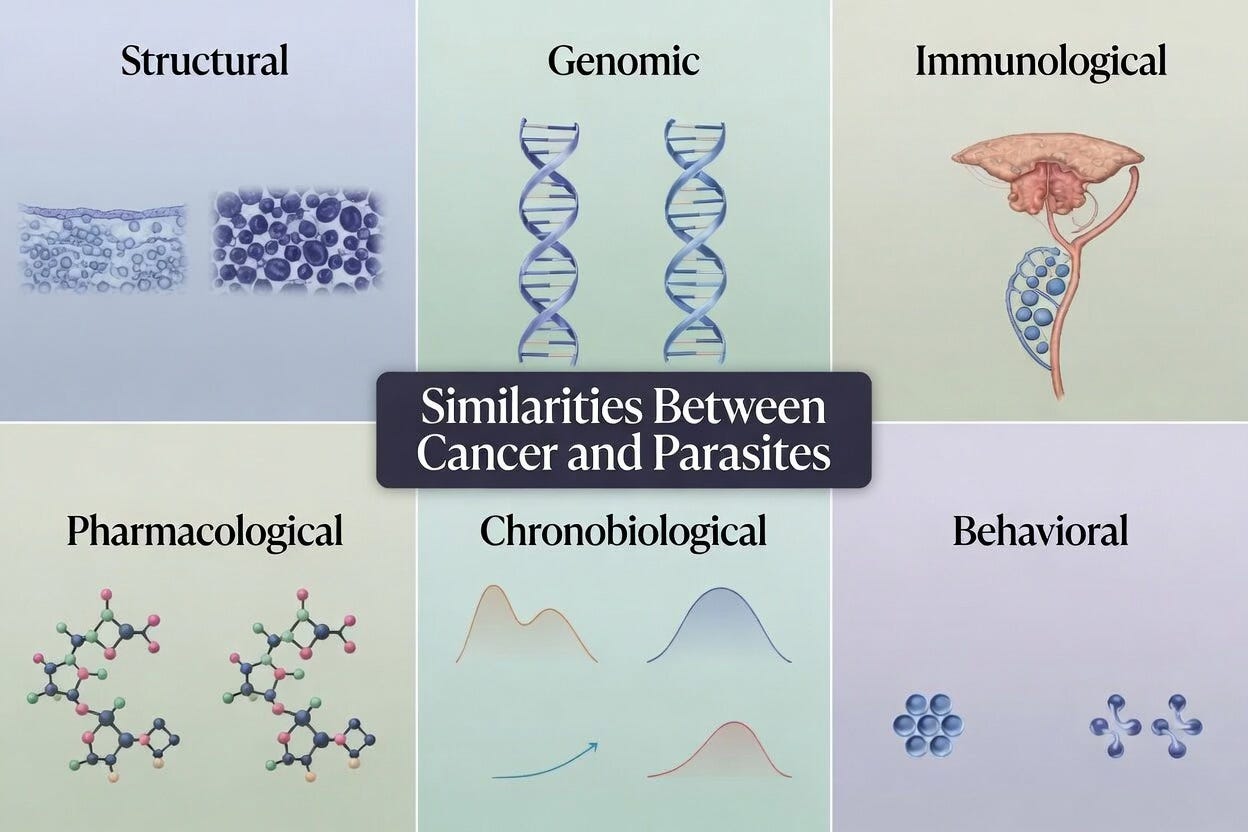
The list above is not a collection of coincidences. It is a pattern — a pattern of convergent evolution in which two biologically distinct entities have independently arrived at the same solutions to the same problem: how to survive indefinitely inside a hostile host. The molecular solutions available to biological systems facing immune destruction, nutrient competition, and hostile microenvironments are finite. Cancer and parasites have found the same ones.
The therapeutic implication is direct: if the vulnerabilities are shared, the drugs that exploit those vulnerabilities in one context will exploit them in the other. Fenbendazole did not accidentally kill cancer. It killed cancer because cancer earned that vulnerability by becoming, in every meaningful biological sense, a parasite.
Key Sources
• Supple WF Jr. Cancer Is a Parasite (Skyhorse / MAHA Books, 2026). Chapters 11–13.
• Curd EE et al. Brown bullhead catfish melanoma represents a novel transmissible cancer. Nature (2026). doi:10.1038/s41586-026-10828-6
• Murgia C et al. Clonal origin and evolution of a transmissible cancer. Cell 126, 477–487 (2006).
• Siddle HV et al. Reversible epigenetic down-regulation of MHC molecules by devil facial tumour disease. PNAS 110, 5103–5108 (2013).
• Dogra N et al. Fenbendazole acts as a moderate microtubule destabilizing agent and causes cancer cell death. Sci. Rep. 8, 11926 (2018).
• Sterkers Y et al. FISH analysis reveals aneuploidy and continual generation of chromosomal mosaicism in Leishmania major. Cell. Microbiol. 13, 274–283 (2011).
• Pawłowska M et al. Parasitic infections and carcinogenesis: molecular mechanisms, immune modulation, and emerging therapeutic strategies. Oncol. Res. 34 (2026).
• Gartner HV et al. Genetic analysis of a sarcoma accidentally transplanted from a patient to a surgeon. NEJM 335, 1494–1496 (1996).
• Bai RY et al. Antiparasitic mebendazole shows survival benefit in 2 preclinical models of glioblastoma multiforme. Neuro Oncol. 13, 974–982 (2011).
Cancer is a Parasite Book Notes
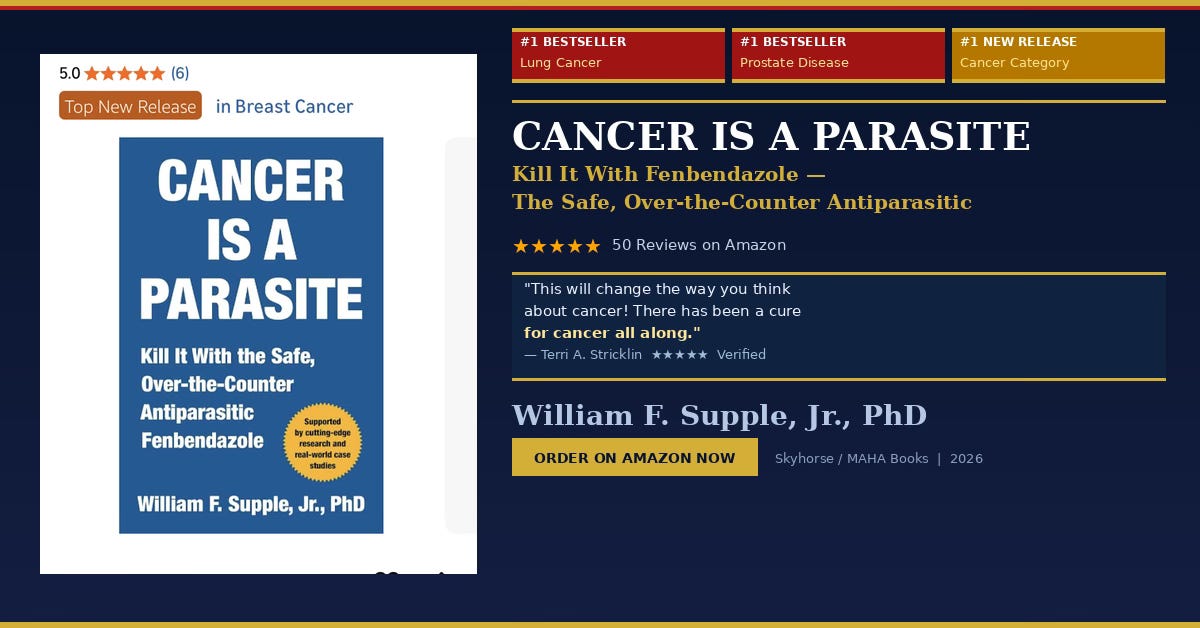
Cancer is a Parasite is the #1 book in many Amazon categories like breast, lung and prostate cancer! If you buy it on Amazon, please post your reactions and review on Amazon - a few words is all it takes. I think you can post comments on Amazon even if you obtained the book elsewhere. I would also ask that you comment here as well and as always, ask any questions that arise.
We are truly at a moment in time where a legitimate cure for cancer is about to enter the mainstream. The stars are aligned and the time is ripe for a real cure like fenbendazole. The ball is now in the court of the revamped Health and Human Services public health infrastructure. It is my hope that the shackles impeding progress from entrenched interests have been loosened enough to find the political will and courage to act in humanity’s best interests. It is truly a great time to be alive!
Thanks for reading Fenbendazole Can Cure Cancer! Feel free to share this article with someone who could benefit.
Items Included in All Posts
Fenbendazole vs. Mebendazole vs. Albendazole vs. Flubendazole: The benzimidazoles are very similar chemically and they have very similar mechanisms of action with respect to disrupting microtubule function, specifically defined as binding to the colchicine-sensitive site of the beta subunit of helminithic (parasite) tubulin thereby disrupting binding of that beta unit with the alpha unit of tubulin which blocks intracellular transport and glucose absorption (Guerini et al., 2019). If someone asks you how fenbendazole kills the cancer cells, the answer is in italics in the previous sentence.

The class of drugs known as benzimidazoles includes fenbendazole, mebendazole, albendazole and flubendazole. Mebendazole is the form that is approved for human use while fenbendazole is approved for veterinary use. The main difference is the cost. Mebendazole is expensive ~$555 per 100 mg pill, while fenbendazole is inexpensive ~48 cents per 222 mg free powder dose (Williams, 2019). As you may recall, albendazole is the form used to treat intestinal parasites in India and these cost 2 cents per pill. FYI, to illustrate how Americans are screwed by Big Pharma, two pills of mebendazole cost just $4 in the UK, 27 cents per 100 mg pill in India and $555 per 100 mg pill in the US.
While most of the pre-clinical research uses mebendazole, probably because it is the FDA-approved-for-humans form of fenbendazole, virtually all of the self-treating clinical reports involve the use of fenbendazole. Because the pre-clinical cancer studies use mebendazole (ironically the human form of fenbendazole) and humans self-treat their cancers with fenbendazole (the animal form of mebendazole) it is very reasonable to assume that mebendazole and fenbendazole are functional equivalents with respect to cancer. It would be helpful if future pre-clinical and clinical investigations simply used fenbendazole as a practical matter. For the purposes of this Substack, fenbendazole, mebendazole and albendazole are used interchangably.
Where to get fenbendazole
In our experience and the experiences of those that write in, it appears that the three readily available brands of fenbendazole (Panacur-C, FenBen Labs, Happy Healing Labs) are equally effective. Panacur-C can be obtained locally in pet stores, while they all can be obtained from Amazon. The article on Questions & Answers discusses the brands of fenbendazole in detail and shows photos of the various brands referenced.
If you would like to report your experiences with fenbendazole you can do so privately by email myfenbendazole@proton.me or more publicly in the Comments section in any of the articles.
Disclaimer:
Statements on this website have not been evaluated by the Food and Drug Administration. The contents of this website is for educational and informational purposes only and is not intended to be a substitute for professional medical advice, diagnosis or treatment. This website does not provide any kind of health or medical advice of any kind. Always seek the advice of your physician or other qualified health provider with any questions you may have regarding a medical condition. The case reports presented reflect the real-life experiences and opinions of other readers or users of the website. The experiences of those readers or users are personal to those particular readers/users and may not necessarily be representative of all readers/users. We do not claim, and you should not assume, that all other readers/users will have the same experiences. Do you own research, consult with relevant medical professionals before attempting to self-treat for any condition.
Comments
Nothing yet. Say the first thing.
Sign in to join the conversation.