
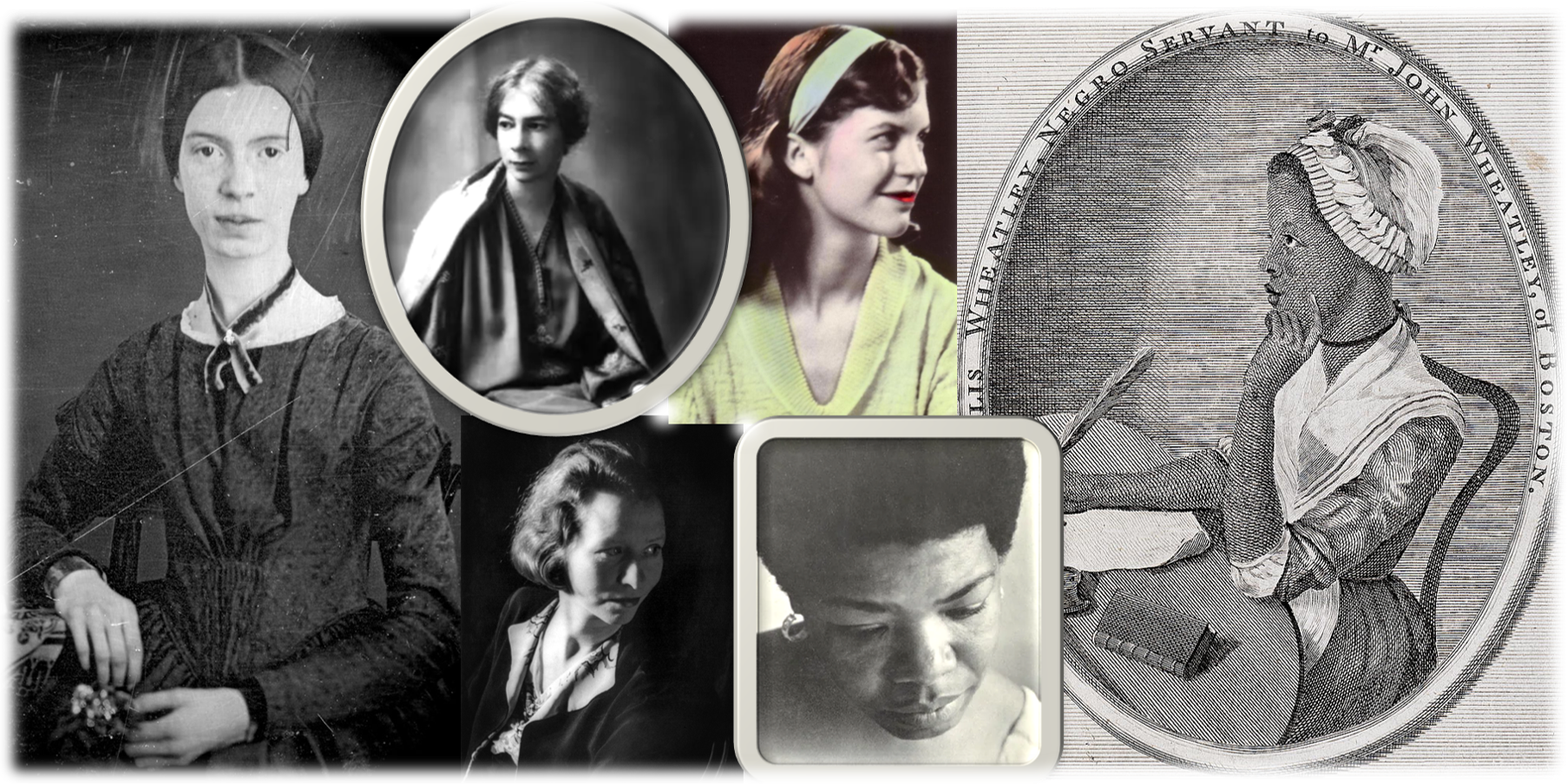
I have a deep love of poetry and write poetry frequently. Ever since I was 10 years old, started crafting poems for fun. In 4th grade, we were studying American history, and I heard the poem at the base of the Statue of Liberty. I was completely awed that human could write such mysterious profound words. Sure, we had learned about couplets, and other types of children’s poems in school. But this was real poem and I wanted to capture that beauty.
So, I wrote a lot. I had a poem accepted into Highlights magazine in 5th grade. In 6th grade I won a poetry contest at my school and me, and the other winners got to have lunch with a local visiting writer. In high school, I won a county-wide library contest for a poem. In freshmen year of college, I was published in a college lit mag. However, rejections started pouring in and the demands of undergraduate engineering meant that I relegated my poems to a hobby. However, I would sometimes scribble poems on sheets of notebook paper between classes and type them up on my computer, where they stayed for years until I buckled down and revised them. In 2020, I got serious again about submitting and have several acceptances in online literary journals (mainly lower circulation online journals).
“Poetry” has only the loosest definitions of length, meter, rhyme, and syntax construction. For example, Homer’s The Odessey though over 300 pages long is considered to be an epic poem. Classic examples of ‘difficult to understand’ poetry are Shakespeare’s sonnets. These sonnets have a mere 14 lines, but a complicated rhyming scheme, the use of archaic words, and complicated imagery and metaphors.
Poems, however, do not have to rhyme. Poems are embedded in song lyric, rap, nursery rhymes and other more popular forms of consumption, However, if Shakespeare’s sonnets were “rewritten” into something we could understand, then we would lose the amazing beauty and rhythms of the language.
Disturbingly, a study by the prestigious academic journal Nature published a study that AI-generated poetry is not only “indistinguishable” from human-written poetry but is rated more favorably!
Poetry is difficult to understand. Across high schools, students show signs of dread and resistance to studying poetry in school. A 2016 survey of high school teachers:
A primary concern of students is that poetry is not worthwhile to study, compared to novels. However, I suspect this fear of dread may mask a struggle to ‘understand’ poetry.
Since the advent of the digital era, texting, snapchats, tweets, IMs, are short forms of communication. These high school teachers indicated how these brief, truncated forms of communication have been influencing students’ tolerance of complex syntax.
Neverland said of his students, “The popular forms of communication and expression these days are those fast and easy, like texting, tweeting, snapchatting... Poetry doesn't fit in with that crowd.” Ms. Malcolm said her intuition is that her students won’t “dig Emily Dickinson” or any other poet, and that such an impression might lead herself as well as other teachers to avoid the subject. As Mrs. Dover stated, her students can be so “put off” by poetry, that she says, “We don’t really go there.” p100
For over two decades, teachers have anecdotally lamented the effect that these abbreviated forms of communication (texts, IMS, tweets = "LOL gr8t, emojis) affecting grammar and writing style of students. However, has it increased a tolerance for so called text-speak? These concerns about supposed declines in student grammar and writing were largely brushed off by many, with some considering adherence to syntax and grammar rules and long-winded writing as snobbish/classist/elitist.
However, the daily use of truncated language often conducted over faceless, digital interfaces (twitter, texting, ect) probably has prepared people for interacting with AI
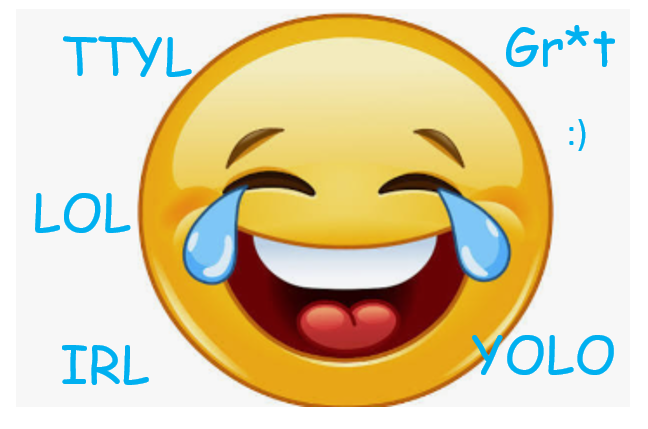
From abbreviated words and symbols using colon signs and parenthesis to emojis, short form digital communication has changed.
People have come to expect short, concise, straight-forward responses in communication, are averse to long-wined emails or letters for example. The faceless interactions with Twitter, texting (even though to a human), have groomed users to accept new forms of commutation methods. Emoji use (while still not prevalent on AI platforms, they are working adding emoji capabilities) has greatly simplified emotional communications of expression and sentiments. When people communicate through a simple smiley face it might be harder to grasp the meaning of a line in poetry.
The Nature study indicates that ‘readability’ and being able to ‘understand’ the poem is the primary reason that AI generated poetry is favored over human poetry.
people rate AI poems more highly across all metrics in part because they find AI poems more straightforward. AI-generated poems in our study are generally more accessible than the human-authored poems in our study. In our discrimination study, participants use variations of the phrase “doesn’t make sense” for human-authored poems more often than they do for AI-generated poems when explaining their discrimination responses (144 explanations vs. 29 explanations).
Over 1600 participants (they were not considered to be poetry experts) were randomly assigned poems written by well-known poets including Shakespeare, Walt Whitman, Emily Dickinson, T.S. Eliot, and Sylvia Plath and AI poems written in the style of these writers. Not only were participants not good at distinguishing between AI-generated poems and human poems, but there is a lot lost:
this complexity and opacity is part of the poems’ appeal: the poems reward in-depth study and analysis, in a way that the AI-generated poetry may not. But because AI-generated poems do not have such complexity, they are better at unambiguously communicating an image, a mood, an emotion, or a theme to non-expert readers of poetry, who may not have the time or interest for the in-depth analysis demanded by the poetry of human poets. As a result, the more easily-understood AI-generated poems are on average preferred by these readers, when in fact it is one of the hallmarks of human poetry that it does not lend itself to such easy and unambiguous interpretation.
Alas, this study didn’t seem to provide the AI-Generated poems.
When I consider how my light is spent,
Ere half my days, in this dark world and wide,
And that one Talent which is death to hide
Lodged with me useless, though my Soul more bent
To serve therewith my Maker, and present
My true account, lest he returning chide;
“Doth God exact day-labour, light denied?”
I fondly ask. But Patience, to prevent
That murmur, soon replies, “God doth not need
Either man’s work or his own gifts; who best
Bear his mild yoke, they serve him best. His state
Is Kingly. Thousands at his bidding speed
And post o’er Land and Ocean without rest:
They also serve who only stand and wait.”
The poem was supposedly written in response to Milton’s blindness—however, the meaning of the poem can be interpreted to not only mean physical blindness but other vocations or talents that are buried among our existence. Profound metaphors of light,
When I reflect on how my abilities are fading,
Before I've even lived half my life
And how that one gift—meant to be used, not buried—
Now lies dormant in me, though my soul longs
To serve my Creator with it, and to give
A faithful account when He returns—lest He rebuke me—
I ask, perhaps foolishly, “Does God expect work from me,
When He has denied me the light to do it?”
But Patience answers quietly, before I can complain:
“God doesn’t need your labor or your talents.
Those who bear His gentle burden with grace serve Him best.
His power is regal. Thousands rush to do His will
Across land and sea, without pause—
But even those who simply stand and wait also serve.”
The resonance of the lines is completely lost—
A more modern poetry instructor reported in a Lithub article that:
However, writing poetry is an activity that can stimulate creativity among students, whether in STEM or English class. Whether the writer is an expert or a novice poet, MRI studies have revealed that generates similar brain activity patterns in brain regions responsible for motivation, attention, planning, and self-control. Strong connections between language and control-related brain regions were linked to more original poems when the theme was familiar, but less originality when the theme was unfamiliar—showing that conscious control can help or hinder creativity depending on context.
This shift was especially strong in experienced poets, suggesting they are better able to “let go” of conscious control while creating and then re-engage it when editing. Higher-quality poetry was linked to different patterns of communication between motivation-related and control-related brain areas, with experience leading to more skilled and innovative writing.
Just reading poetry can boost the brain. It can stimulate the brain, increase empathy, increase cognitive function, and boost mental health. Multiple studies have shown that the more complex text you read, the more cognitive benefit it provides to the brain. Since ChatGPT writes often writes below a college level, this might not bode well.
Yet, AI use in human writing is starting to infiltrate major literary prizes, publication (more on that coming), and entering into workshops with prestigious writing organizations. However, poetry is not dead. New poems are published every day in literary journals. Even with the advent of social media “Instapoetry”, short poems are proliferating and being collected in print books. Social media makes it easy for poets to publish screenshots of their work online and many journals are not paywalled.
Please consider following me on my social media platforms:
No posts
Comments
Nothing yet. Say the first thing.
Sign in to join the conversation.