
This article will be part of Feed Your Mind’s “Larges Series.” It will focus on a slightly different topic, one that’s related to the mysteries of consciousness: near-death experiences, or NDEs. These near-death experiences involve people who exhibited all the signs of brain death but were brought back to life thanks to modern resuscitation techniques. I’m sure many of you know what these are. For the rest of you, I’ll let you discover this fascinating topic for yourselves. To read this article and get the most out of it, you need to keep an open mind and set aside what you think you know. Thank you so much for reading Feed Your Mind. It’s a joy to have you here with me. It’s also a joy to share these articles with you. Today, I’m taking you on a grand journey to the depths of consciousness, to the farthest frontiers of the human brain. The ultimate mystery: death.
Fasten your seatbelts.
Writing about near-death experiences is no easy task. Sure, I could write articles about how you should drink two liters of water a day, exercise, and get eight hours of sleep a night. But today, I’m going to share something else with you—something very different. It’s the end of summer. I'm currently in France, on the shores of the Atlantic Ocean.
My followers include people from diverse communities, with diverse beliefs and from various social and religious backgrounds. Whether you’re religious or not doesn’t really matter to me. The fact is that ever since I was 16, I’ve been deeply interested in consciousness and life after death. Life after death is a question as old as humanity itself. People of all cultures have asked it, throughout the ages. It’s a question that’s part of all of us. No human being, no matter how atheistic they may be, can say they’ve never asked it.
Life after death is an age-old question that will likely remain without a clear scientific answer. When we explore all the hypotheses, theories, and arguments to their fullest extent, we are confronted with the Mystery—with a capital M. All philosophical and religious traditions have a view on the subject. From a Christian perspective, the soul leaves the body after death and enters the afterlife—Heaven or Hell. Of course, I won’t delve into these religious notions and concepts, which belong to theology and to believers themselves. I am French, and in our country, whether one believes or not is not a matter for the government. It is a personal matter that should not be aired in the public sphere (in my opinion). I know that many Americans think differently.
Religion and Science are two different things. We all know that. I think it’s a mistake to refuse to examine religion from a scientific perspective. A terrible mistake. First of all, because religious practices have a direct impact on people, their health, and social bonds. Numerous studies have shown that regular religious practice has a positive effect on health and even improves life expectancy in the face of serious illnesses. From a strictly scientific perspective, religion is a kind of evolutionary advantage for humanity—a protective factor for humans. It is therefore irrational to categorically refuse to examine religion from a rational standpoint. However, in France, the scientific community is very hesitant on this subject. Materialism and secularism are overwhelmingly dominant and sometimes prevent certain issues from being discussed freely.
When you bring up the subject of God, you generally encounter two problems: first, the scientism advocates, who categorically refuse any debate on the existence of God, metaphysical phenomena, and parapsychological phenomena. Second, the religious people who refuse to engage in debate. Because when you talk about near-death experiences, it’s essential to address some unsettling topics. These include psychedelics, the chemicals released by the brain at the moment of clinical death, consciousness, archetypes, the unconscious, and so on. All of these are things that can make a deeply religious person uncomfortable. But I know there are many very open-minded people in this world.
Some courageous figures have attempted to bridge the gap between science and religion. One such figure is Teilhard de Chardin, whose work can guide us in reflecting on the topic I will be discussing today.
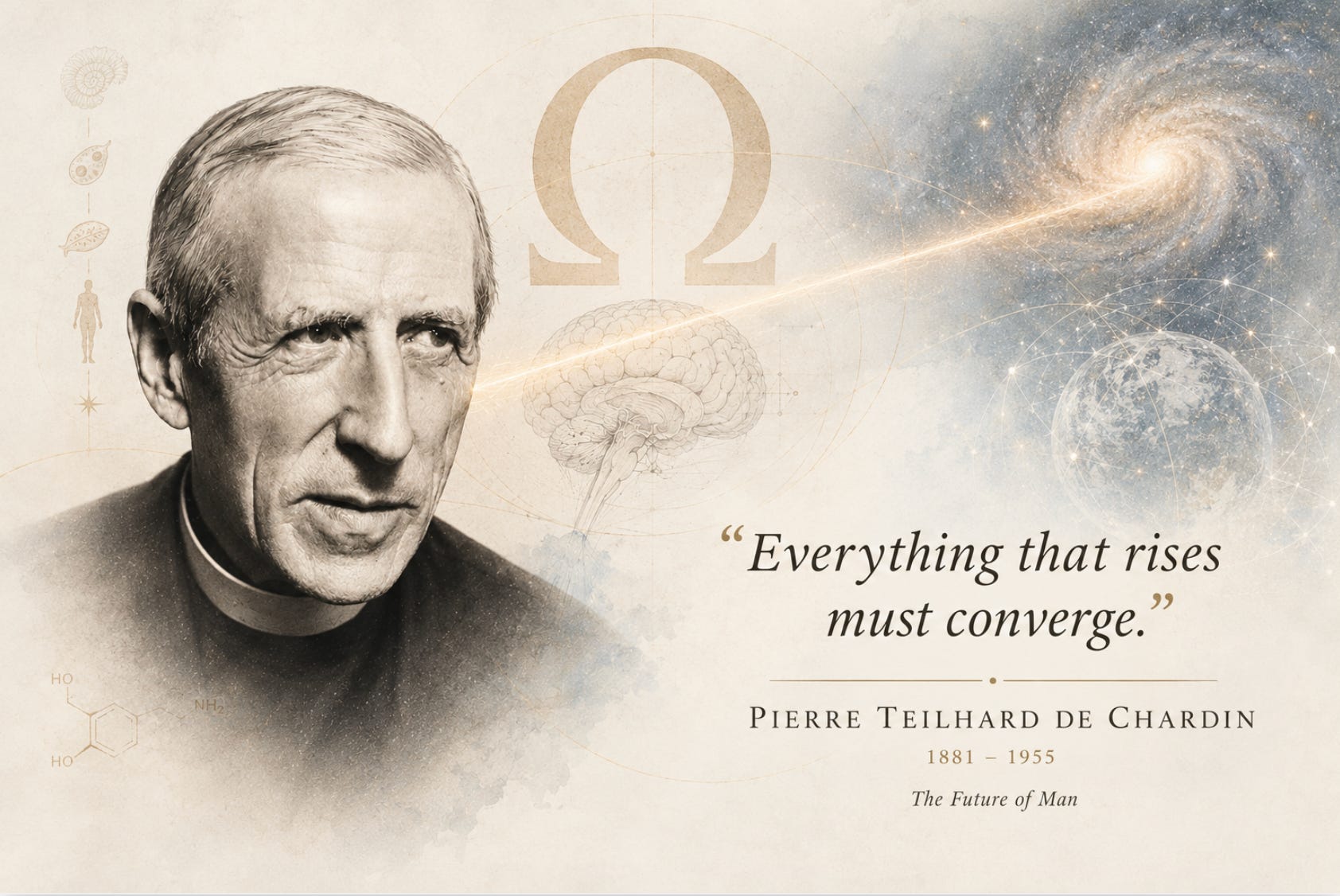
Pierre Teilhard de Chardin (1881–1955) was a French Jesuit priest, paleontologist, and philosopher who spent much of his life exploring the intersection between evolution, consciousness, and spirituality. He believed that evolution was not only shaping biological life, but also driving the emergence of increasingly complex forms of consciousness—a vision that made him one of the most fascinating and controversial thinkers of the 20th century.

The human brain is extraordinarily dependent on a continuous and stable supply of energy. If you have been reading my work since a few months, you know that the brain is characterized by a striking paradox. Despite the fact that it represents only a small fraction of our total body weight, the brain consumes a disproportionate amount of oxygen and glucose. Unlike other tissues, neurons have very limited energy reserves and rely heavily on the constant production of ATP to maintain their electrical activity. When a person’s heart stops, the brain enters a metabolic and energy crisis. Cerebral circulation collapse and the normal delivery of oxygen and glucose is dramatically reduced.
From a conventional medical perspective, a person should lose consciousness very rapidly, within a matter of seconds if not less. Without sufficient means to sustain its basic functions, the brain would simply shut off, cease to work. After all, on a biochemical level, this is what happens: ATP falls, ion gradients become unstable, neurotransmitters status is altered, and so on. This is precisely where the NDE mystery begins. Some cardiac arrest survivors describe extraordinary vivid experiences associated with this period:
leaving their bodies
moving through a bright tunnel
encountering light or deceased relatives
experiencing a life review
entering another reality
Those could be described as the core elements of Near-Death Experiences, or NDE. The strangest thing is that people having such experiences usually describe them as extremely vivid and realistic, far more than a usual hallucination or vision. Psychiatry recognize the existence of hallucinations, as we all know. Hallucinations have been described in textbooks, books, and thousands of case studies. They are often incoherent and tinged with all sorts of things—memories, archetypes—drawn from the collective or individual unconscious. From a medical and psychiatric perspective, they occur during psychotic episodes, such as schizophrenia, etc. Hallucinations are generally chaotic, scattered, and vary greatly from one individual to another. Most people have heard of them. In the case of NDEs, however, there is remarkable consistency in the accounts of millions of people worldwide who have had these experiences. The same images recur—the tunnel, the light, and so on. This is why it is inaccurate to describe NDEs as mere hallucinations. They represent a different kind of phenomenon.
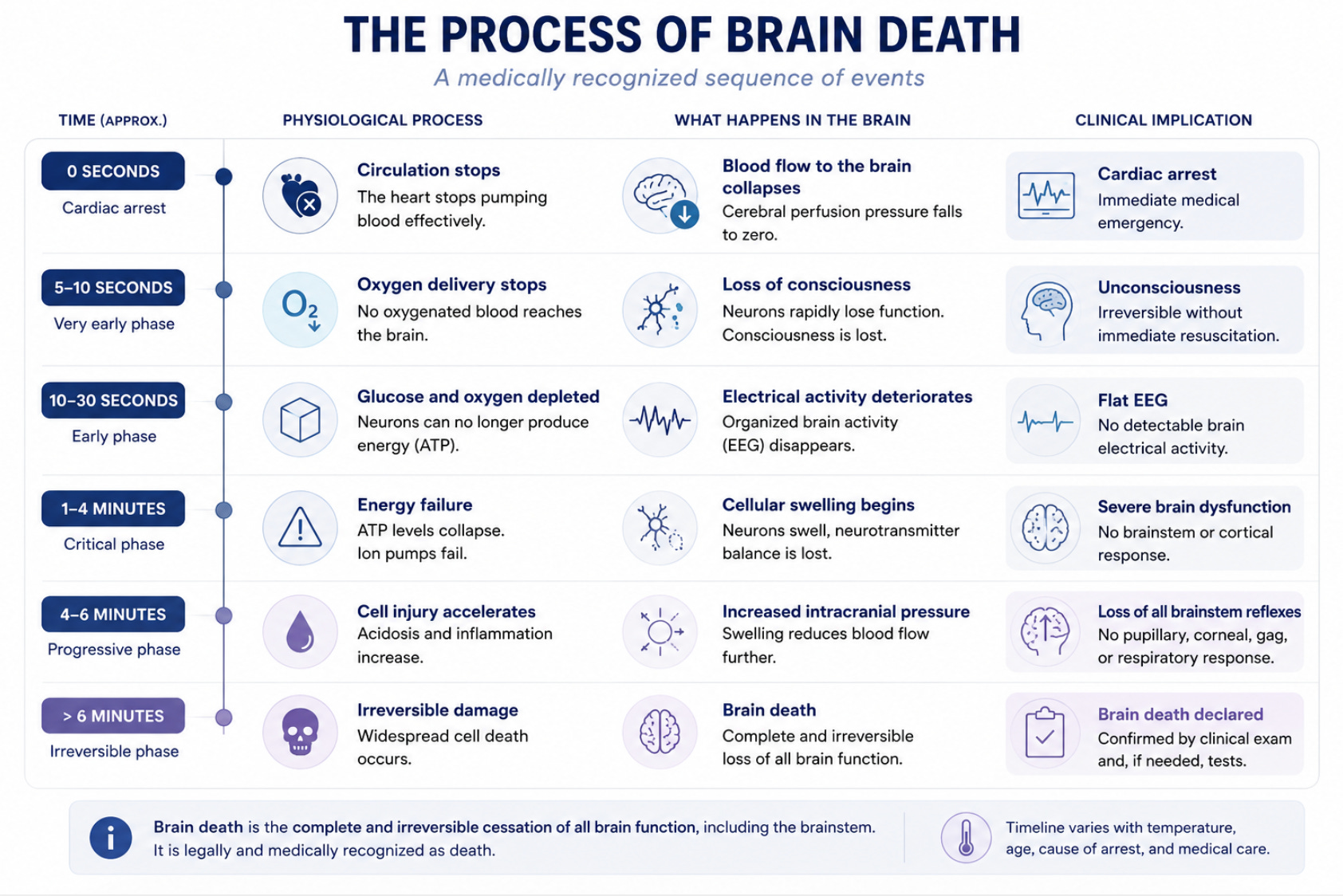
When the heart stops beating, the brain suddenly loses the continuous blood supply it needs to function. Within seconds, the delivery of oxygen and glucose falls dramatically, and consciousness is usually lost very quickly. The brain then begins to run out of energy: neurons can no longer communicate normally, electrical activity declines, and the organized activity associated with ordinary consciousness progressively disappears. That’s why some people say that consciousness is lost after approximately 10 to 12 seconds after a cardiac arrest.
If circulation is not restored, cellular damage develops and eventually becomes irreversible. Dying, however, is a process rather than an on/off switch, and this distinction is essential when discussing NDEs. Cellular damage is progressive but happens pretty quickly. In a matter of minutes.
Modern medicine has developed a much more precise concept for the final point of this process: brain death. Major neurological and critical-care organizations broadly agree on its fundamental meaning. The 2023 consensus guideline from the American Academy of Neurology and several other medical societies defines death by neurological criteria in terms of the “permanent loss of function of the brain as a whole, including the brainstem.” Clinically, this requires coma, absence of brainstem reflexes, and the inability to breathe spontaneously. The international World Brain Death Project, published in JAMA, similarly describes brain death as the complete and permanent loss of brain function, emphasizing that it constitutes the death of the individual, not simply a very deep coma.
This distinction matters enormously for NDE research. Cardiac arrest is not the same thing as brain death. Someone who is successfully resuscitated was never irreversibly brain-dead in the medical sense. This distinction is important in terms of scientific rigor, but one thing must be noted. The cases I am about to describe involve people who came back to life, but their brain conditions during their NDEs met many of the criteria for brain death. Their brain condition were not irreversible, in the strict sense of the term.
Nevertheless, during cardiac arrest, cerebral circulation can become profoundly impaired and the brain can temporarily enter conditions that are normally considered incompatible with ordinary waking consciousness.
This is where the real scientific mystery begins. Some survivors do not describe darkness, confusion, or an absence of experience. Instead, they report extraordinarily vivid, structured, coherent, and memorable states of consciousness. The question is therefore not how someone can “come back from brain death,” but something subtler and scientifically more interesting: how can such rich conscious experiences be reported around a period in which the biological conditions normally required to sustain consciousness are severely compromised?
One of the most unsettling aspects of NDE accounts is the incredible precision of the patients’ descriptions. These accounts are not limited to hallucinations, the tunnel, total inner calm, and the sensation of reliving one’s life. Many patients report leaving their bodies and observing the scene from above, providing specific details. These accounts are far from isolated. This is where scientific explanations of NDEs reach their limits. When they have these experiences, patients are able to describe scenes from the operating room, providing details about the clothing worn by specific medical staff and the words spoken. Even though they were clinically dead. These phenomena have been well documented, even though some closed-minded scientists still deny them. The problem posed by NDEs is this:
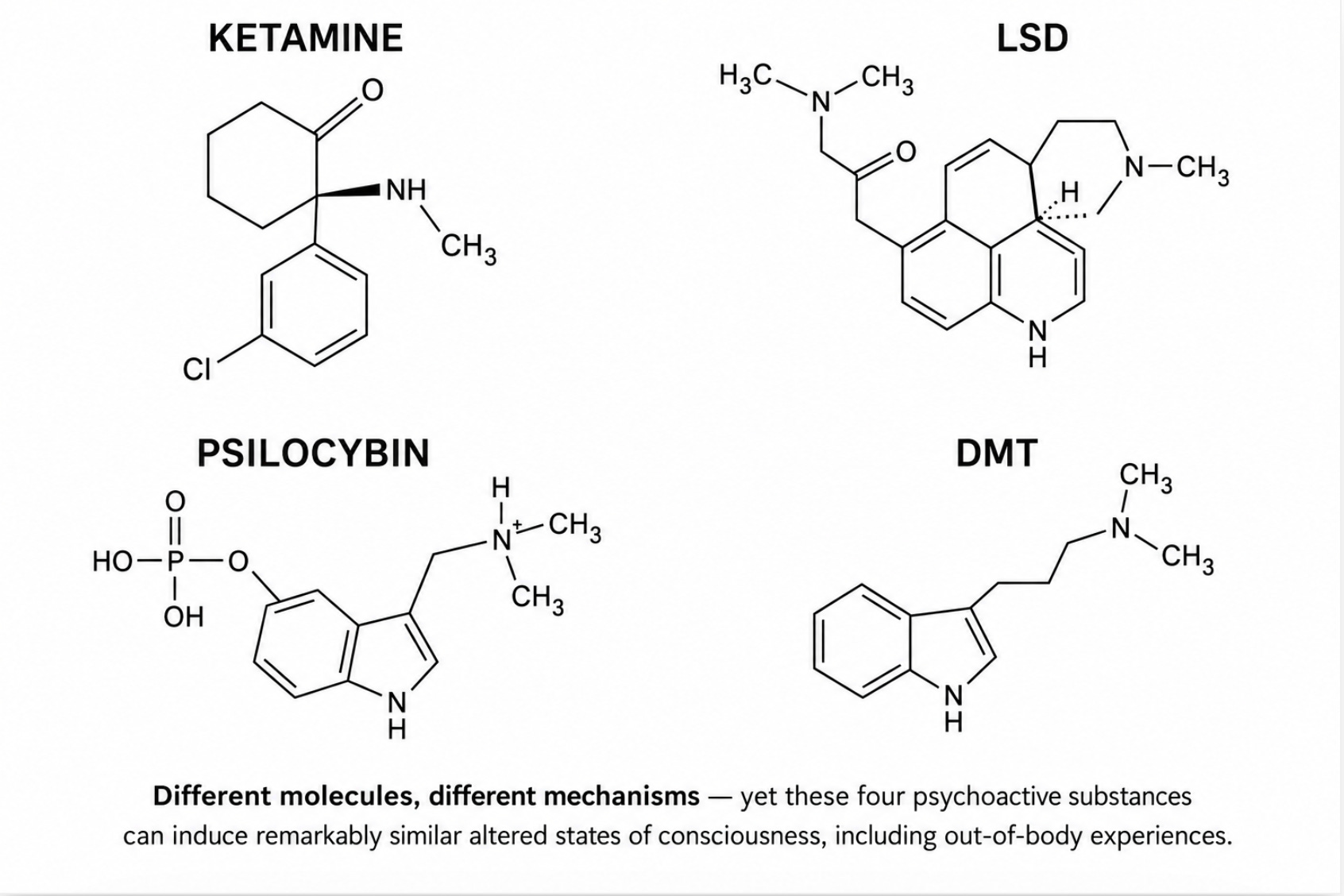
Therefore, NDE accounts raise an even more intriguing question: could it be possible to see without the eyes? If consciousness can accurately perceive its surroundings while normal sensory pathways are unavailable, this would suggest that some properties we normally attribute to sensory organs may, under extraordinary circumstances, belong to consciousness itself. In other words, the eyes may be the ordinary instruments of vision without necessarily being the ultimate source of perception. This element is also one of the teaching of psychedelics, in my opinion. Under the influence of LSD, Hoffer and colleagues already noted that it was possible to access out of body experiences. This is also true for other psychedelics, especially for the dissociative subtypes, such as ketamine for example. This anesthetic and street drug is famous for the dissociative effects it can trigger in some people. The OBE (Out-of-body Experiences) described by people during NDE could therefore simply be the result of a strong dissociative experience, caused by the release of DMT in the pineal gland. After all, the effects of those substance are highly unpredictable and can differ between individuals.
In the following section, I will present four NDE cases that are considered authoritative in the literature on the subject. These cases all involve people whose brains had completely ceased to function during a cardiorespiratory arrest. Their brains were therefore deprived of glucose and oxygen.
Some cases, such as that of Pam Reynolds, went even further, as she had been blindfolded and all the blood had been drained from her brain during surgery. Yet these individuals described very similar experiences—out-of-body experiences—and were able to recount with great precision what had happened during their surgeries. Those are cases of a supernatural phenomena that largely defies scientific explanation. Cases of people who could see even though their eyes were closed. Seeing without the eyes is purported to be impossible. The first case study, of Pam Reynolds, will make you think otherwise.
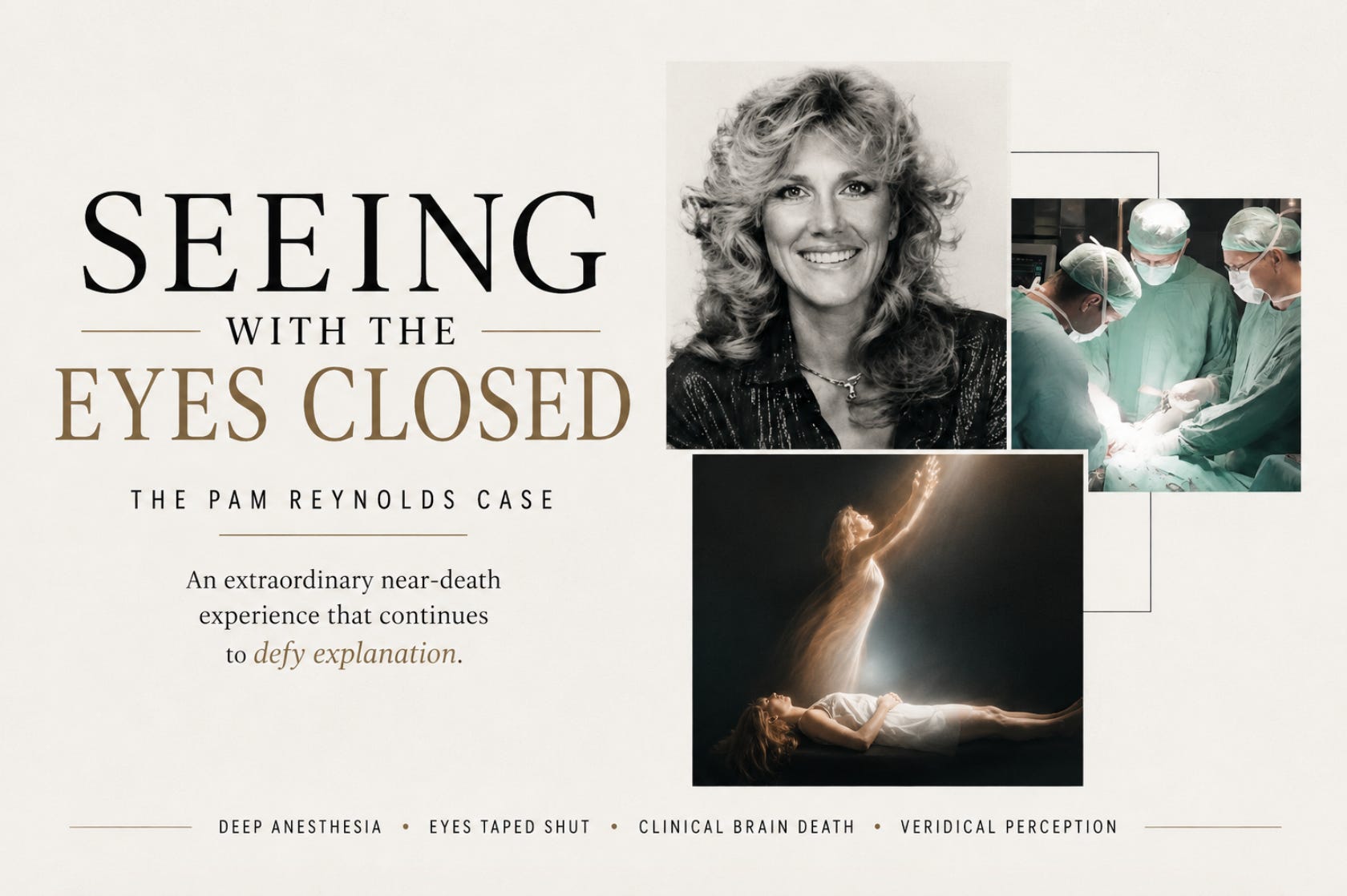
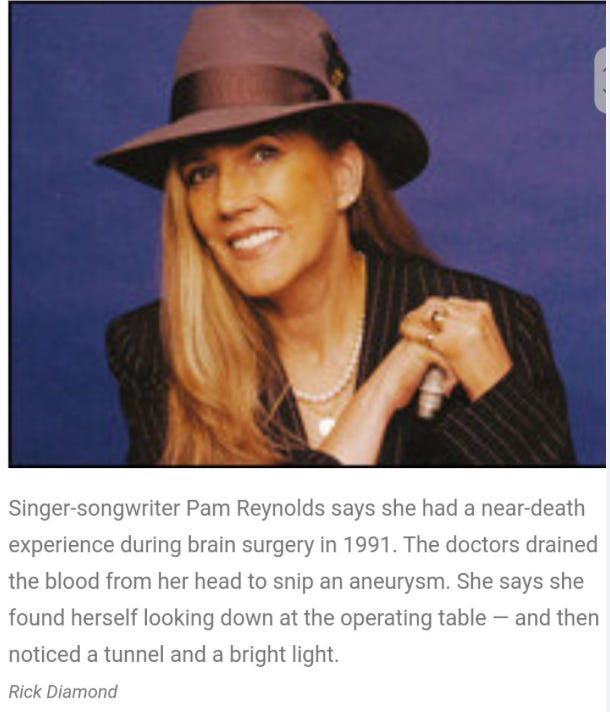
One of the most famous cases of apparent perception during an NDE is that of Pam Reynolds, an American woman who underwent an extraordinary neurosurgical procedure in 1991 to treat a life-threatening brain aneurysm. The operation was performed by Robert Spetzler at the Barrow Neurological Institute in Phoenix Arizona.
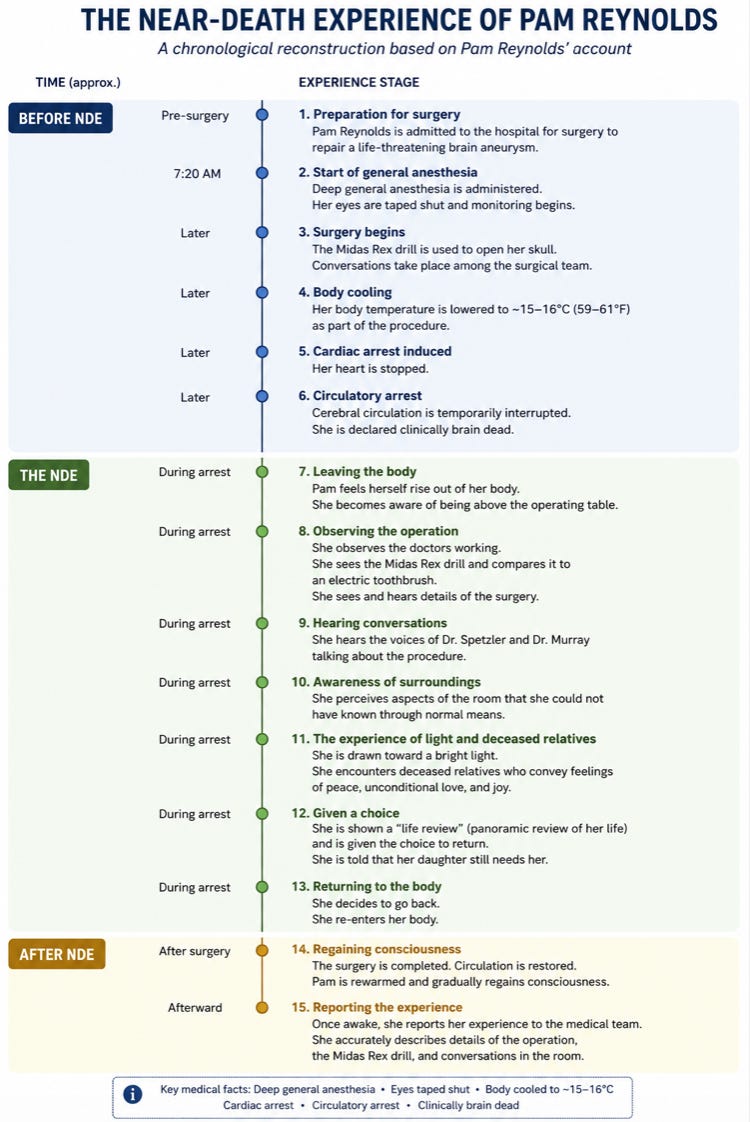
During the operation, she was placed under deep general anesthesia, her eyes were taped shut, and her brain function was closely monitored. At a later stage of the procedure, her body was cooled dramatically, her heart was stopped and cerebral circulation was temporarily interrupted. She had been placed in a coma and declared clinically brain dead because Spetzler deemed it necessary.
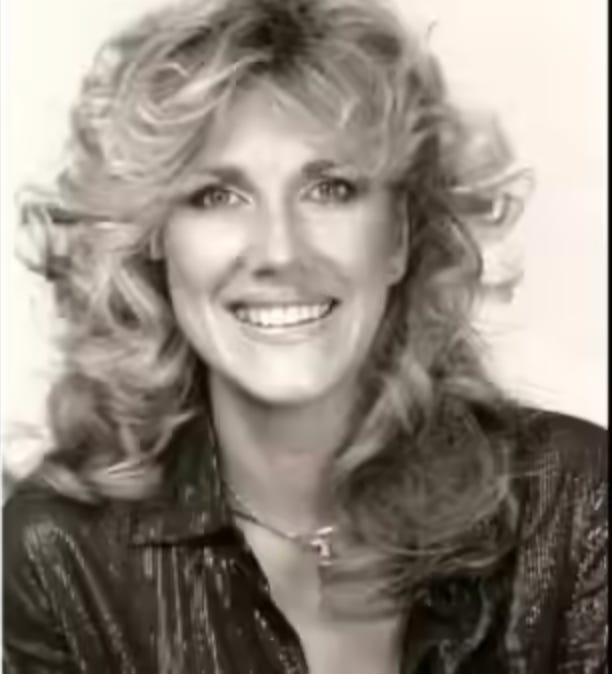
After the operation, Reynolds reported an intense out-of-body experience in which she felt herself leaving her body and observing the surgical procedure from above. Most strikingly, she described the appearance of the Midas Rex surgical drill used to open her skull, comparing it to an electric toothbrush, and recalled sounds and elements of conversations occurring in the operating room. Several aspects of her account corresponded to events and equipment actually used during the procedure. Some skeptics said that she could have acquired those informations after the procedure, or that some audition remained accessible to her, even in a total coma. This appears quite unlikely, as many papers noted. The description she gave of the scene was very precise and accurate to what happened in the surgery unit of the hospital. It is also important to note that Reynold was completely foreign to the world of medicine and even more foreign to the world of surgery. We must never forget that the doctors had drained the blood from her skull to perform the surgery, which makes it even harder to believe that she had any kind of brain activity.
What makes her NDE so unsettling:
Deep general anesthesia
Eyes taped shut throughout the procedure (eyes patches)
Accurate description of the Midas Rex surgical instrument
Recall of specific conversations in the operating room
Molded earphones delivering repeated auditory stimuli
Body temperature lowered to approximately 15–16°C (59–61°F)
Temporary cardiac arrest
Interruption of cerebral circulation
A structured out-of-body experience, apparently viewing the operation from above
Several reported details corresponding to actual events during surgery
A vivid and coherent NDE involving light and deceased relatives
Major limitation: the verifiable perceptions cannot be proven to have occurred during the period of complete circulatory arrest
It should be noted that the fact that her body temperature was lowered to 60 degrees (15–16 Celsius) makes it highly unlikely that she could have had sufficient brain activity to hear these details and recount them coherently. We are dealing here with true brain death—no glucose, no oxygen, and no brainwave activity. If we take all these factors into account and consider the precision of these descriptions, we are faced with an inconsistency: how could she have access to so much information when almost none of the vital signs necessary for the brain to function normally were present?
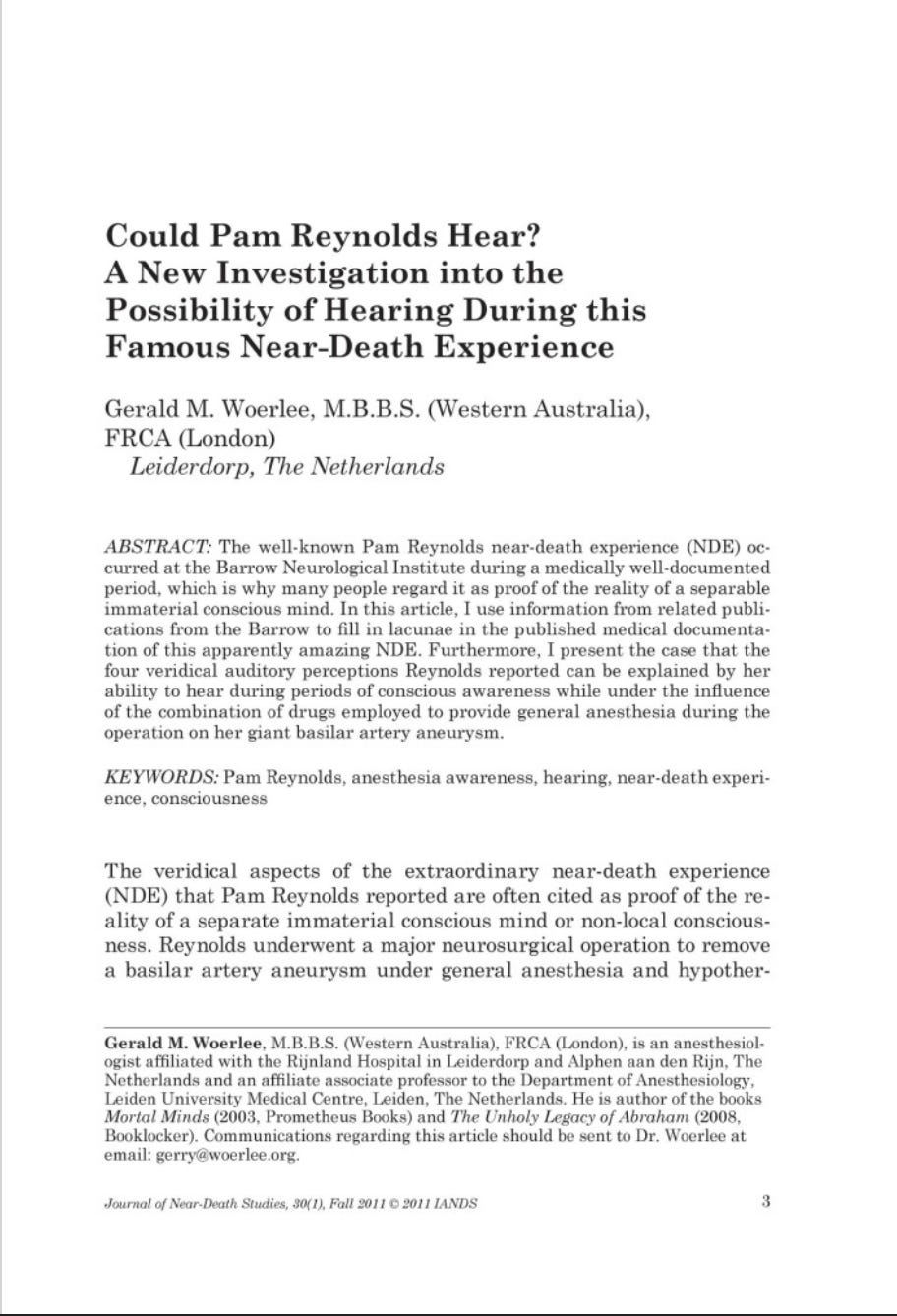
Skeptics say she could have accessed this information afterward, or upon waking, or that it was due to coincidence. But these kinds of explanations are wholly inadequate. “Coincidence” is often pulled out of thin air when it comes to explaining supernatural phenomena, but it is not satisfactory from the standpoint of intellectual rigor. At least this is my opinion. In the sources under this article, I will present a lot of sources allowing you to go deeper into the topic.
If you’re passionate about heated debates—and if you have some time to spare—this case has been the subject of hundreds of posts on forums. People are fiercely debating its veracity and whether it might be a hoax. And as always, skeptics are on the lookout, ready to expose any inconsistency in a testimony, any tiny error. As if a case involving anesthesia and a woman who underwent open-skull surgery could possibly satisfy their demands for pure methodological rigor.

Nevertheless, this story is absolutely extraordinary and defies all possible scientific explanations, just like the other NDE cases I’ll discuss in this article.
The most surprising case is the one known as the “denture case.” It involves a 44-year-old man who was found unconscious in a field in the Netherlands and taken to the hospital for resuscitation. This detail is very important. He was already unconscious when emergency responders took charge of him, in a pre-comatose state. This case study was included into a large study published by Pim van Lommell in 2001 in the Lancet, involving more than 344 case studies of cardiac arrests.
He therefore could not have been aware of or seen the people who came to pick him up in the ambulance. He did not know their names or identities, and could not have anticipated what they were going to do. It is very important to bear this in mind. He was cyanotic, unresponsive, had a very low body temperature, no pulse, no breathing. When the emergency care arrived, it was almost too late. This person was found into a field (meadow) in the Netherlands, near the city of Nijmegen.

According to all medical societies in the world and to all great professors, cyanosis and cardiac arrest basically means that there is no oxygen in the brain whatsoever. This person was basically saved and still had some blood pressure and blood flow in his body. Otherwise, he would have been found totally dead in the field. But he was still living, at some point. When the rescue team arrived, resuscitation was initiated.
Once at the hospital, the medical team continued the resuscitation. While preparing to intubate the unconscious patient, one of the nurses noticed that he was wearing an upper denture. The nurse removed it and placed it in a specific location: inside a drawer of the resuscitation cart. The man was completely unresponsive when this happened. After a prolonged resuscitation, his heart function was eventually restored, but he remained comatose and was transferred to intensive care.
More than a week later, the nurse who had removed the denture happened to enter the patient's room. To his surprise, the patient immediately recognized him and told him that he was the person who had taken out his dentures during the resuscitation. Even more remarkably, he knew where they had been placed and described the resuscitation cart in which the nurse had stored them. The patient explained that he had witnessed the scene during an out-of-body experience, apparently observing his own resuscitation from above. He stated that he saw everything, from the moment he arrived to the hospital to the moment the denture was placed in the chart. The nurse in charge was so surprised that he could not believed it. This person (the nurse) was later reviewed and interviewed, and had the same recollection of the event. He stated that the patient (Mr B.), said the same thing over and over with the same level of precision.
This is what makes the case so puzzling: the man had arrived at the hospital already unconscious, yet he later recognized a nurse he had apparently never consciously seen before and knew what that nurse had done with an object removed from his body while he was unresponsive. This case is extremely interesting, for many reasons. Firstly because it is highly documented and because it was published in the Lancet, a medical publication that cannot be suspected of methodological flaws. Secondly, because the person was unconscious and had no brain activity when rushed to the hospital. The patient explained that he saw the scene from an out of body experience. He stated he “saw himself from above” and that he clearly recognized the nurse in charge that day, despite the fact that he did not know him prior to that.
Found already unconscious in a meadow
No conscious contact with the medical team before resuscitation
Arrived at the hospital unresponsive
Upper dentures removed during resuscitation
Dentures placed in a specific location on the resuscitation cart
Patient later recognized the nurse who removed the dentures
Patient apparently knew where the dentures had been placed
Reported observing the resuscitation from above his body
Described aspects of the resuscitation environment
Central elements corroborated by the nurse involved
Case reported in connection with a major prospective cardiac-arrest study
Raises the question of how an unconscious patient acquired specific external information
One of the best-known cases of apparently veridical perception during an NDE
Once again, it is unlikely that this was simply a “hallucination,” as NDE skeptics claim. Even if this out-of-body experience were merely the result of a psychedelic effect produced by the pineal gland, it is unlikely that a person could have seen in such detail, recognized someone specifically, and followed their movements during a medical procedure.
All of this while being brain-dead, because that is indeed what we’re talking about here. Patient Mr. B showed no vital signs with regard to his brain or its functions.
We are therefore dealing with a person who had access to information despite having a non-functional brain. If we follow the case history, we must remember that he was unconscious from the very beginning. This makes the case even more interesting and mysterious.

The third case is very interesting too. It concerns the case of a patient, Maria, who was hospitalized in Seattle in the 1970s for cardiac arrest. She was under the care of social worker Kimberley Sharp. During her resuscitation, Maria described leaving her body, as if she were observing the entire scene from above and could see everything.
Even more astonishing, she described the people present during the resuscitation and noted a disturbing detail: a shoe was sitting on a small ledge on the third floor of the hospital—a blue sneaker. When she woke up, she explained this detail to Kimberley Sharp, who went to verify her account. She did indeed see a shoe in the exact spot Maria had described. What makes this case particularly fascinating is that Maria reportedly provided specific details about the shoe itself. She described the sneaker as worn, with a particular area of wear near the little toe, and mentioned that one of its laces was positioned underneath the heel.
According to Sharp, these details were confirmed when she examined the shoe more closely. The location of the sneaker is what makes the story so unusual: it was not an object involved in Maria's medical care, nor something she could reasonably have expected to be there. It was simply an ordinary object, sitting outside the hospital, apparently perceived during an extraordinary state of consciousness. The question raised by the case is therefore remarkably simple: if Maria's eyes were lying unconscious inside the hospital, what exactly was doing the seeing? Another important point is that the shoe was a few story above the floor where Maria’s operation took place, so she could not see it from her room. This a point that many skeptics missed when discussing the case. However, Kimberley Sharp made it really clear every time she mentioned the case publicly.
Maria reported observing her resuscitation from outside her physical body.
She described a blue tennis shoe located on an exterior third-floor ledge of the hospital.
The shoe was unrelated to her treatment and seemingly outside her normal field of vision.
She reportedly described specific details, including its wear and the position of a shoelace.
Kimberly Clark Sharp searched for the shoe and found it where Maria had described it.
The central mystery: how could Maria have acquired apparently visual information about an object located outside the hospital room?
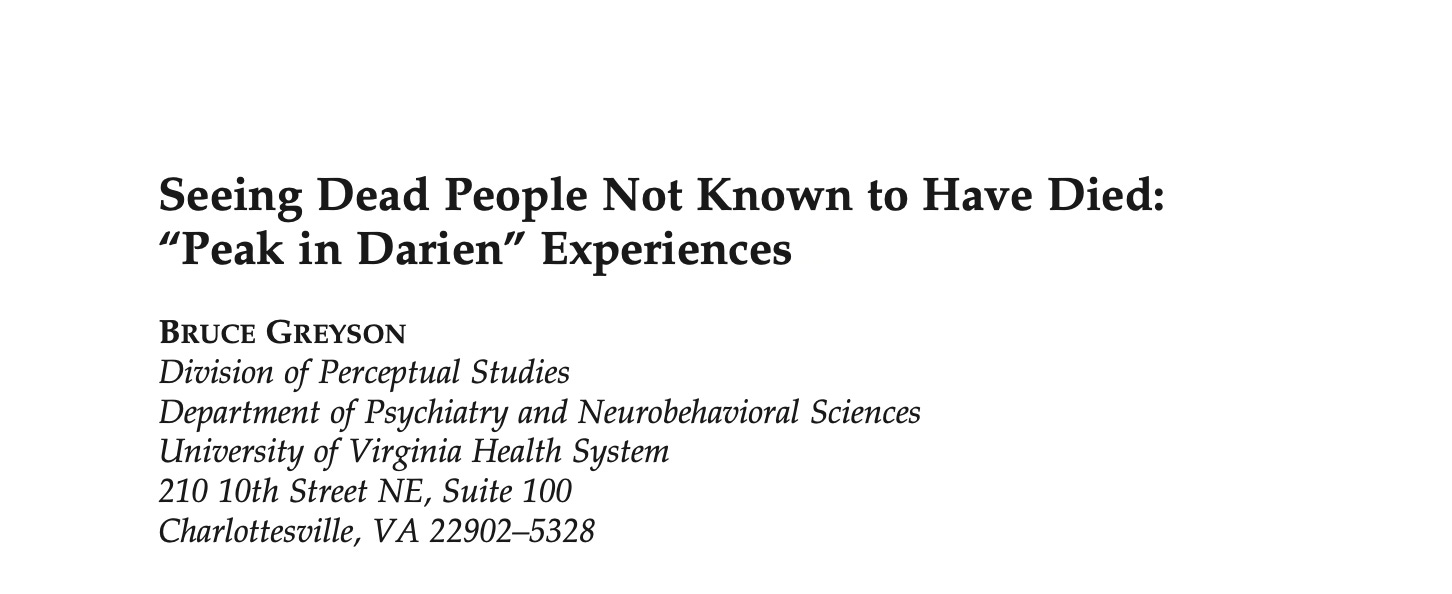
Eddie Cuomo was a nine-year-old boy who had been hospitalized with a severe fever. After nearly 36 hours, his fever finally broke, and at around 3:00 a.m., Eddie opened his eyes and urgently told his parents that he had just been to heaven. The boy then described a clear near death experience with OBE.
He said to his parents that he had encountered several deceased members of his family, including his grandfather, Aunt Rosa, and Uncle Lorenzo. His father initially dismissed the experience as fever-induced delirium. But Eddie then mentioned something unexpected: he had also seen his 19-year-old sister Teresa, who had told him that he needed to go back.
This deeply disturbed his father because Teresa was supposed to be alive and attending college in Vermont; he had spoken with her only two nights earlier. Later that morning, Eddie's parents contacted her college and learned that Teresa had been killed in a car accident shortly after midnight, only a few hours before Eddie reported seeing her. College officials had reportedly tried unsuccessfully to contact the family, meaning that neither Eddie nor his parents knew of Teresa's death when he described encountering her. The case was later discussed by psychiatrist Bruce Greyson as an example of a “Peak in Darien” experience—an encounter with a deceased person whose death was not yet known to the experiencer. With this case, we clearly enter into a new territory of NDE, meaning the encounters with deceased people. One interesting point here is that Eddie was only 9 years old. At this age, young boys are very imaginative and tend to have a high level of oneiric activity (dreams). This fact is often used to dismiss such parapsychologic phenomena in those type of people. But it does not explain the reason why Cuomo encountered his sister among his dead relatives. Knowing that she died exactly the day before he had his hospital procedure is surely surprising.
Comments
Nothing yet. Say the first thing.
Sign in to join the conversation.