
Two weeks ago, one of our team members used an unauthorized solution on a premium restaurant floor in a luxury hotel.
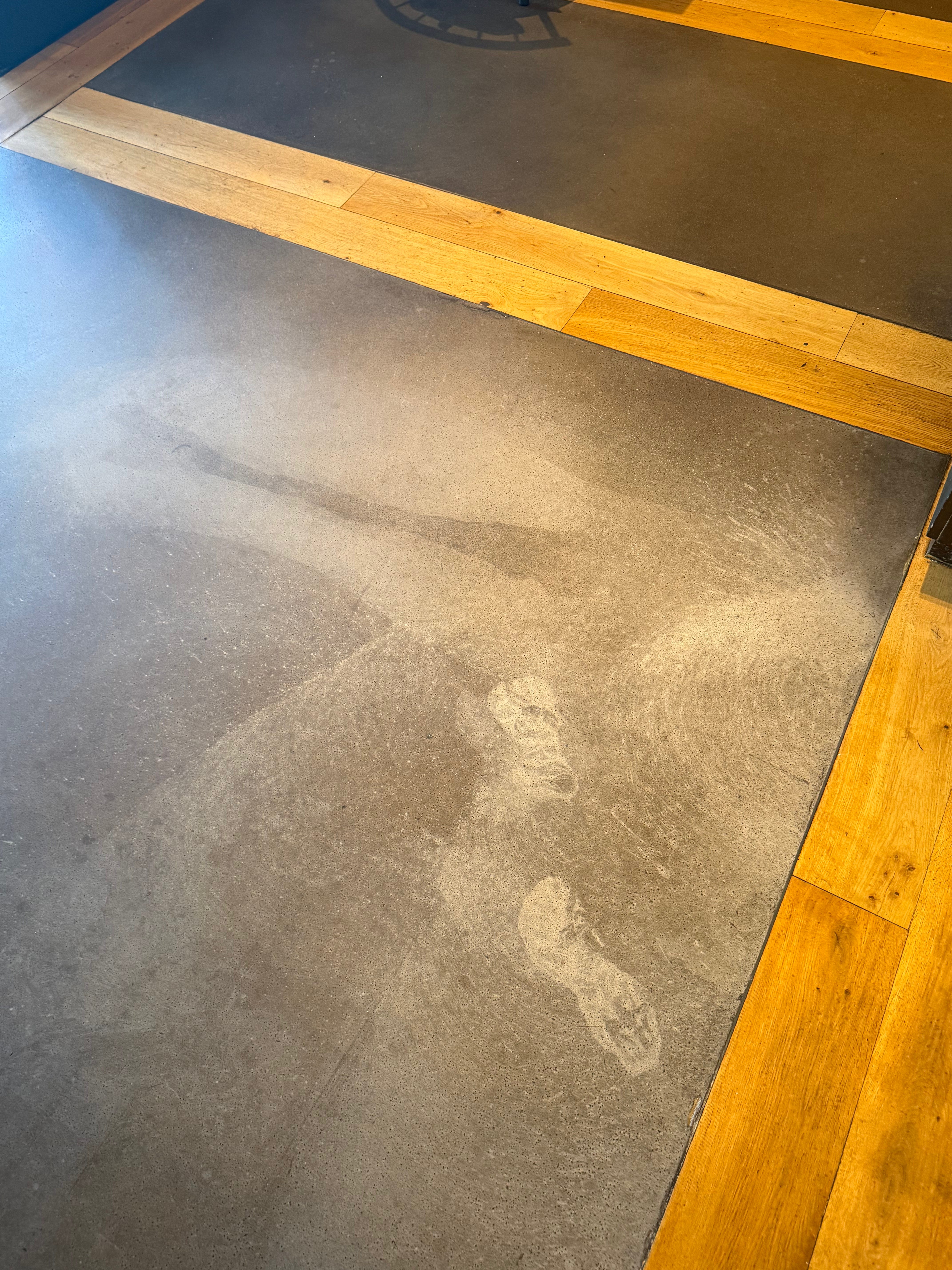
.The product was not on our approved list. The floor has wood inlays. The damage was immediate and irreversible. We are looking at about forty thousand dollars to fix it, roughly 7 months of profitability from that account, gone in an hour.
I am telling you this because I think operators need to hear that even the best-run service companies make serious mistakes, and to understand that the question is not whether they will, but what they do about it when it happens.
Here is what typically happens when a vendor causes significant damage to a client’s property.
The vendor goes quiet. They calculate exposure. They draft language designed to limit liability rather than accept it. They let the customer’s frustration build while the response is reviewed by people who were not in the room when it happened. By the time a communication arrives, it feels exactly like what it is: a managed response rather than a human one. And the customer, who may have tolerated any number of minor disappointments over the course of the relationship, now has everything they need to justify ending it.
The instinct to protect the company almost always defeats the instinct to protect the relationship.
But the two are not the same thing.
The industry is built, mostly, around the assumption that perfection is the product. That if the systems are tight enough, the training thorough enough, the protocols enforced consistently enough, failure can be engineered out of the operation.
It cannot.
And building your identity around the claim that it can leave you no room to be human when the floor gets damaged.
About five years ago, one of our managers brought an unauthorized wax from home to a five-star resort spa in the Bay Area. She applied it across the entire floor, a very large square footage. By the time she returned to where she started, the wax had hardened. We were looking at thousands of square feet of beautiful, natural-wood spa flooring, covered in clumps of wax.
I flew in personally. I gathered our local managers. I hired an outside specialist, had everyone present for the process, and we sanded and refinished the entire spa floor. The cost was also around $40,000. We lost money on that customer for the full year.
But we also kept the customer. And more importantly, we also kept our reputation and the trust of a team that watched their leader show up, absorb the cost without blame, and turn the mistake into a standard.
After this week’s incident, I drafted an email for our field president to send, not to take the work from him but to give him time back, and because I wanted every word to be right. The email accepted responsibility without hedging. It told the customer the truth, including the inconvenient truth: that the repaired section would look considerably better than the surrounding floor, which had years of ordinary grime, and that this would create an aesthetic problem of its own.
The customer read that and said: I’m worried it will look too different.
I wrote back that we had never lost a customer over service quality and that we were not going to start. If we need to restore the entire restaurant floor, we will…and we will!
He was reassured. More than reassured, I believe he left that exchange with more confidence in us than he had before the floor was damaged. Because the mistake had required us to show what we were actually made of. And an unblemished record never does.
The reason I am telling you this story is that someone recently asked me what hospitality is. And my response was immediate.
The easy answer is that hospitality reduces stress and saves people time. I believe this. But I think it is pointing at something deeper.
Because after the incident above, I would also answer that hospitality is what you do and how you recover, and how you act when things don’t go according to plan.
This does not happen by accident.
The companies that handle failure with grace are not luckier than the others. They have built specific habits in advance that make recovery possible when the moment arrives. Here is what that looks like in practice.
Establish your never-evers before anything goes wrong.
Every operation has non-negotiables, actions so consequential that no individual judgment call should override them. Write them down. Say them out loud in every team meeting. Make them so familiar that violating one feels like crossing a bright line, not a gray area. Ours include: never use a product that is not on the approved list, never act on a client request without clearing it through your direct management chain. The floor got damaged because a never-ever was crossed. The never-ever existed because a spa floor taught us that lesson five years ago.
When something goes wrong, communicate before you have all the answers.
The instinct is to wait until you know everything before you say anything. Resist it. Your client’s imagination is often far from reality. A message that says we are aware of what happened, we are assessing the full scope, and we will have a complete response to you by a specific time is worth more than a polished email that arrives two days late.
Accept responsibility in plain language.
Not “there was an incident involving.” Not “our team member made a decision that resulted in.” Own it directly. We made a mistake. We caused this damage. We are going to fix it. Plain language communicates confidence, not weakness. Hedged language communicates that you are more concerned with your exposure than with their floor.
Tell the inconvenient truth. If the repair will create a new problem.
If a restored section looks better than the surrounding area, say so. If the timeline is longer than the client would like, say so. Clients who are told the full picture, including the uncomfortable parts, trust you more than clients who later discover you withheld something. The full picture, delivered honestly, is a form of respect.
Make the remedy proportionate to the relationship, not just the damage.
The question is not what the minimum acceptable repair looks like. The question is: what response would make the client feel that you value this relationship more than the cost of protecting it? Sometimes those are the same. Sometimes, when you sand and refinish an entire spa floor, you only damage one corner — they are not. That difference is what clients remember.
Follow up after the fix.
Most service recovery ends at the repair. The best service recovery ends with a conversation, some weeks later, that confirms everything is right, invites the client to say if it isn’t, and signals that this was not a transaction but a commitment. The loop is only closed when both parties agree it is.
The goal of Fallon Hospitality has never been to be the company that never makes mistakes.
That company does not exist.
The goal is to be the company that, when mistakes happen, responds with accountability rather than deflection. With genuine communication rather than managed language. With the willingness to absorb a forty-thousand-dollar loss rather than let a relationship erode.
And beyond the recovery, to build a daily practice of genuine attention.
Hospitality is not the absence of failure. It is what you do inside failure, and around it, and in spite of it, consistently enough that the people who experience your work begin to feel that they are known.
That is the standard we hold ourselves to. It is also, I would argue, the only standard worth holding.
— Paul Fallon
Founder, Fallon Hospitality

No posts
Comments
Nothing yet. Say the first thing.
Sign in to join the conversation.