
All my life, living in post-WWII America, the water was always available. In the kitchen, in the bathroom, in the laundry room, it was always available. It was expected that fresh, filtered [by the city, the county, the state] water would always be available. It was taken for granted, that in America, in the 1960s,1970s, 1980s and 1990s water, fresh water, was always available.
It is said that a human can live for several minutes without oxygen, hours without water and days without food. So, oxygen and water are the two most important things for a human to survive.
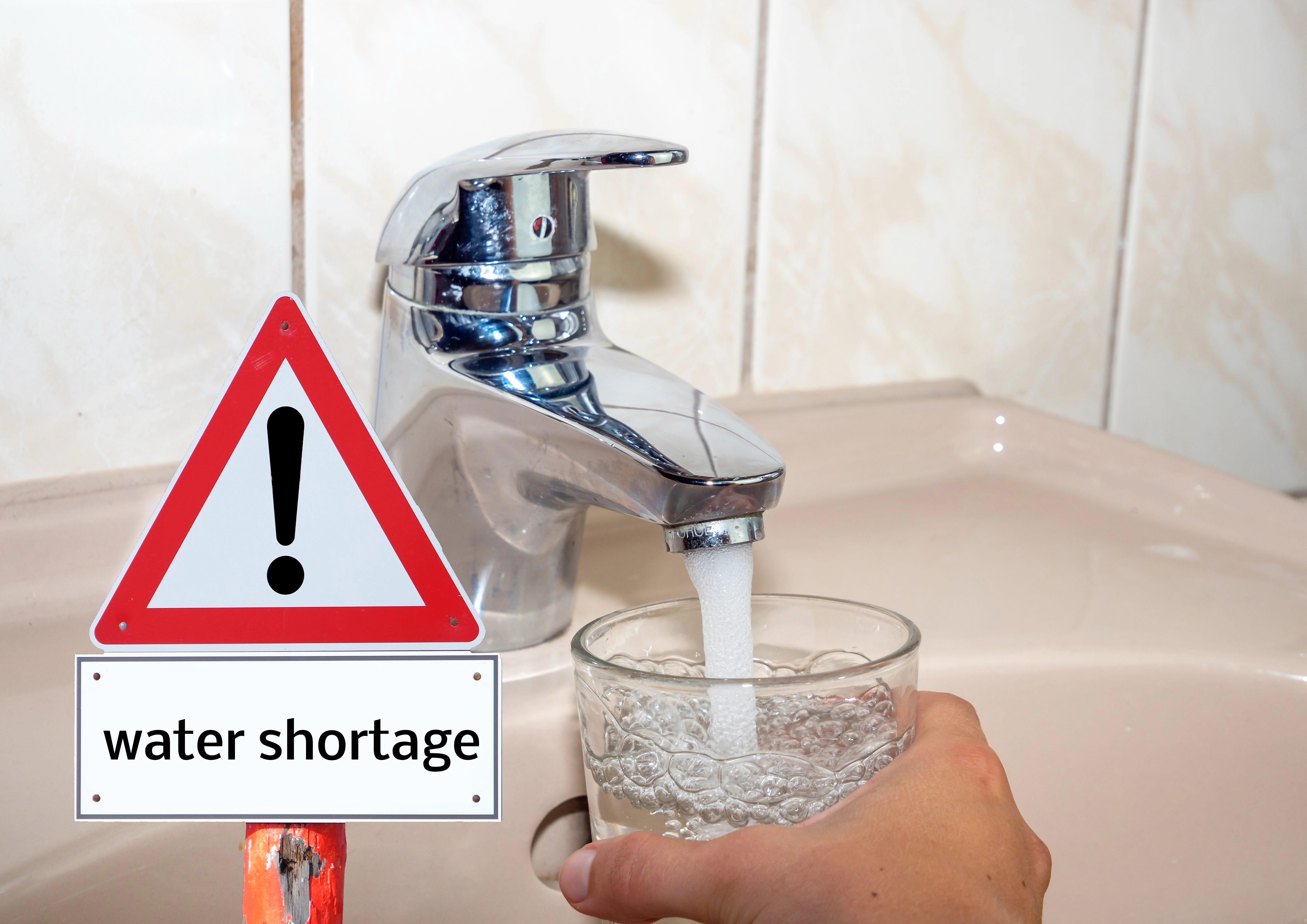
There is not much fresh water on planet Earth. Our per capita consumption of water continues to increase
The human usage globally has gone up 600 percent since 1900 when there were 2 billion humans on earth. We have increased by 400% in total population, but usage has gone up 600 percent
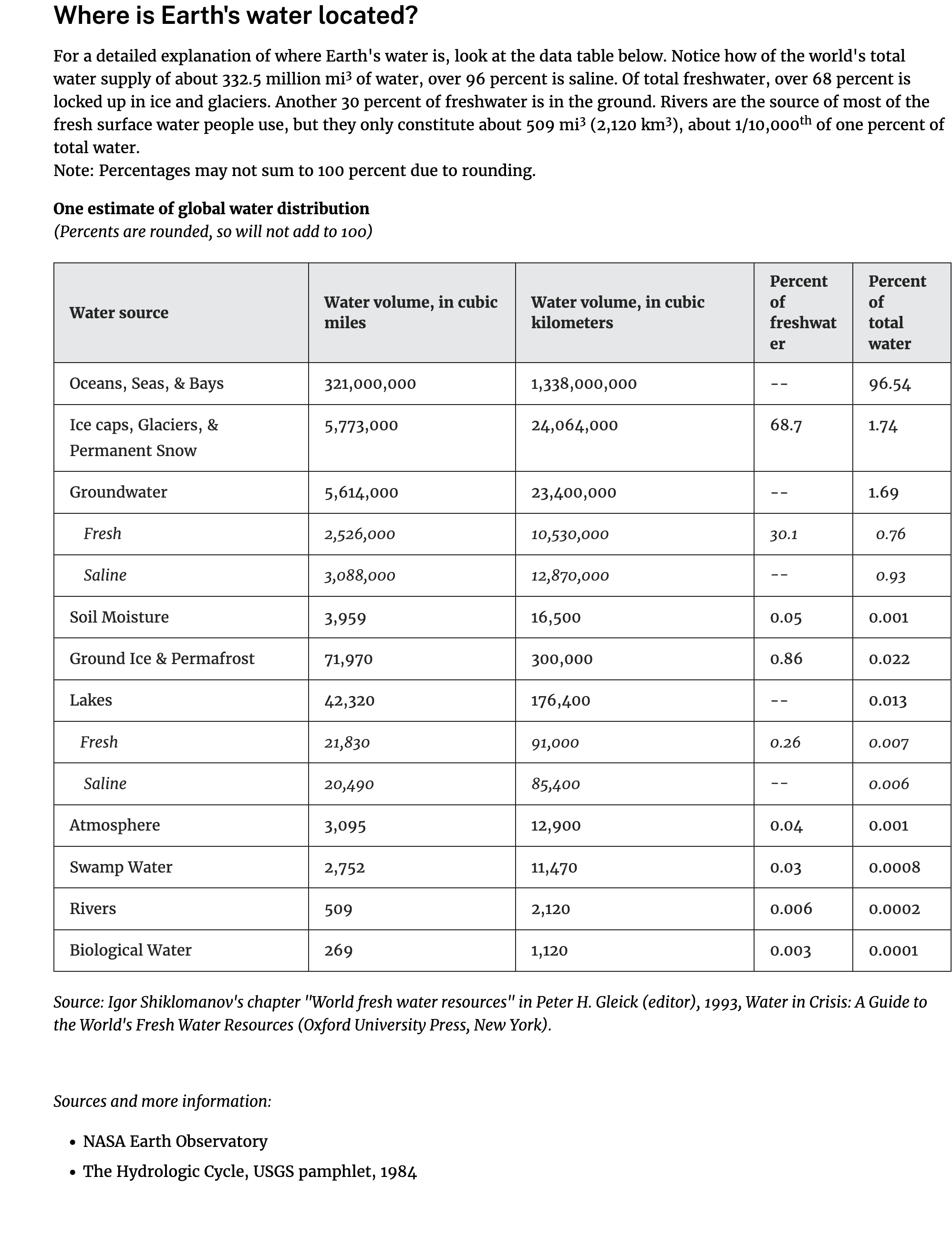
There is a total of approximately 326 million cubic miles of water on Earth. 97% of this water is saline, and 3% is fresh. Here is how it all breaks down:
The total usage amounts for the top three countries globally in the world are:
India 761 cubic meters of use
China 581 cubic meters of use
U.S. 444 cubic meters of use.
Globally, some 70% of fresh water is used for agriculture, 20% for industry and 10% for municipal and urban uses. So only 10% of the available fresh water is used by humans for daily use. That has caused several major cities to come close to “zero days” for water availability. São Paulo, Brazil in 2015, Cape town South Africa in 2018, Chennai, India in 2019 and Monterrey, Mexico in 2022. The situations for each of these four are different:
São Paulo in 2015 faced severe shortages of water with several million residents having daily 12 hour shut offs of water
Cape town, South Africa in 2018 came within weeks of water shutdown. There was massive resident conservation and some massive rainstorms that ended this drought.
Chennai, India in 2019. Reservoirs were down to less that 1%
Monterrey, Mexico in 2022. There was no running water for weeks during this zero day for water.
There have been other near ‘zero days’ for cities with water shortages. Currently there are some 20 major global cities that are at risk of getting to a ‘zero day’ with fresh water.
What would you do if you went to the bathroom or kitchen faucet, turned it on and nothing came out? You would be surprised and immediately going into survival mode very quickly, as oxygen and fresh water are the two things’ humans need on a daily basis to survive. That is the situation today with fresh water. When will it run out, and what can we do to prevent any more ‘zero days’?
There are many reasons why the slowing rate of global population growth is a good thing long-term, the fresh water supply is one of them. I wrote about this here in this column. Conservation, lower birth rates and redeployment of fresh water to where it is needed are straight ahead. The over population of humanity, and its ongoing denial of the climate crisis, will trigger more water ‘zero days’ if we are not careful
[Please hit the like button below. Please comment if you are paid subscriber. Please access the archives. It all matters as to rankings and vitality. Thank you!]
No posts
Comments
Nothing yet. Say the first thing.
Sign in to join the conversation.