
The obvious new technology today in 2026 is Technological Intelligence/Artificial Intelligence. Right now, it has become a new “other” for large parts of humanity. People are expecting massive unemployment, robotic overlords, and whatever their projected sense of an apocalypse might be.
A few months ago, news outlets covering commencement addresses, a common theme was that the graduates – basically Gen Z – booed every mention of AI. They feel threatened that they might not find entry-level jobs because of AI. The larger reaction in America and around the world is that AI will take away jobs and increase human unemployment.

I have written numerous columns on TI/AI and this reaction is basically a Luddite reaction. The best analogy to AI would be the moveable type printing press that Gutenberg invented in the middle of the 15th century. This led directly to the opening of many print shops, which triggered migration to large cities. So, employment went up as there were jobs using this new technology. What needs to be remembered is that this invention in the 1450s, triggered all new kinds of professions and jobs in the 1500s, 1600s and 1700s: publishers, editors, proofreaders, writers, advertisers. The entire publishing, advertising and communications industries were created in part by this new technological invention in the centuries after Gutenberg’s invention.
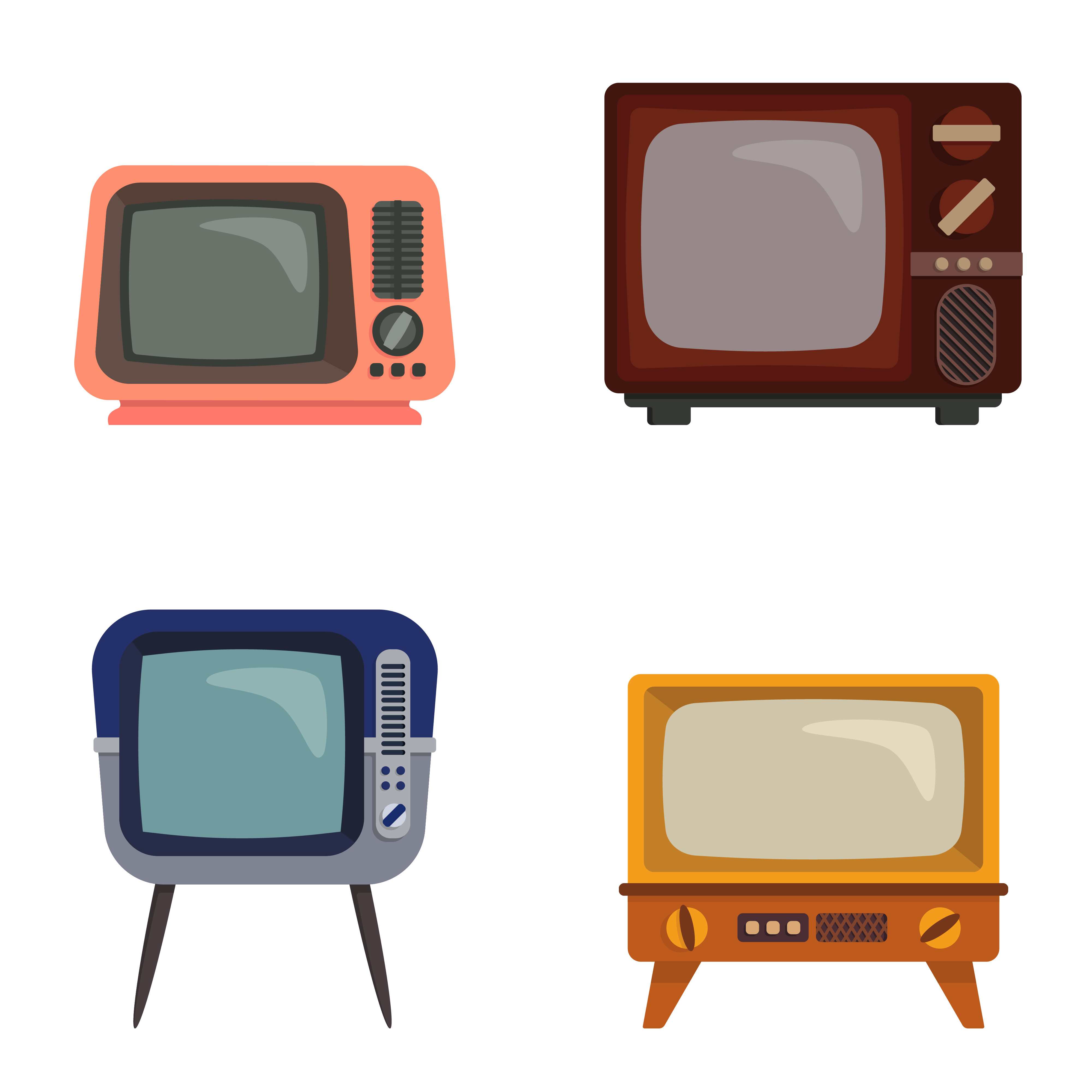
A transformative new technology always disrupts the existing reality. When humans see their own realities changing, they are resistant and reactive to these technologies that disrupt. This is exactly what happened to television, at least in America.
Television – Boob Tube
TV came into the American households in the late 1940s and really took off in the 1950s. The percentage of U.S. homes that had a TV was 9% in 1950 and was 90% in 1960, one of the fastest technological adaptions in history. This new phenomenon was perceived as being a lesser cultural technology than newspapers, magazines, books and radio. In 1959, a journalist who covered television, lamenting the poor quality of commercial programming, coined the phrase “Boob Tube”. The thinking at the time was that a TV in every home would mean the dumbing down of America.
This expectation was completely wrong!
In America, the average IQ went up three IQ points per decade in the 1960s, 1970s, 1980s and 1990s. There were many other reasons that this occurred, but near the time of 90% penetration of television, the reaction of Americans was that watching television would make the citizens dumber. This increase in IQ points was called the Flynn Effect, named after James Flynn a researcher on the subject. [Growing up in Chicago, the PBS station was/is WTTW, which stands for Window To The World.]. That is the reason the technology lifted IQ, it gave the person in the small American town or the person in neighborhood in a big city a window to what else was going on in the world.
The point here is that the initial reaction to a disruptive technology is to think negatively of it, as the full scope of its power is unknown. The unknown is a place or concept that makes most humans feel nervous or negative. So television was going to make us more stupid, and AI is going to eliminate [only in the short term] jobs. Wrong and wrong.
What is disconcerting and plays to the recent columns about the reality that is the Big Stupid is that there is a ‘reverse Flynn effect going on in the 21st century.’ While in the later third of the 20th century IQ scores increased every decade, in this first third of the 21st century, IQ scores are going down. The biggest drop was among those aged 18 to 22. [those graduates booing at commencement mentioned above]. The “primary areas of decline are matrix reasoning, letter-and-number series, and abstract problem-solving.” There was/is an increase in “spatial rotation skills” performance [3D visualization] probably due to video games. Researchers in this area think that the IQ decline is environmental rather than genetic. There is the question as to whether the IQ measurements are even still accurate and appropriate.
This decline in IQ scores is global, not just the U.S. but also countries in Europe experienced major declines. It seems to be in the most affluent and technologically advanced countries. This decline has been attributed to the ubiquity of smart screens and heavy use of them. In addition, we have outsourced our thinking to technology with the use of GPS, spellcheck, and the use of search engines for every question.
The point of this column is that when a new transformative, disruptive technology first gets into society, the members of that society are reactively negative; television will make us stupid, and AI will take away jobs.
Relative to the decrease in IQ in this century, there is a clear generational delineation. A study published in the “Proceedings of the National Academy of Sciences” showed that the exact peak of the original Flynn effect with those born in 1975. Those people born after 1975 – Millennials and Gen Z – had a drop of 7 IQ points per generation. This was noticed first in the late 1990s and early 2000s. There was an acceleration of decreasing IQ point from 2010 to now. This obviously is congruent to 100% penetration of smart phones in the global population and high levels of ever faster connectivity. [This is not the case with we Boomers, we just have ‘senior moments’]
Maybe our politicians and mainstream media with their Big Stupidity are on to something with the population? That we are all getting more stupid. Hopefully not.
No posts
Comments
Nothing yet. Say the first thing.
Sign in to join the conversation.