
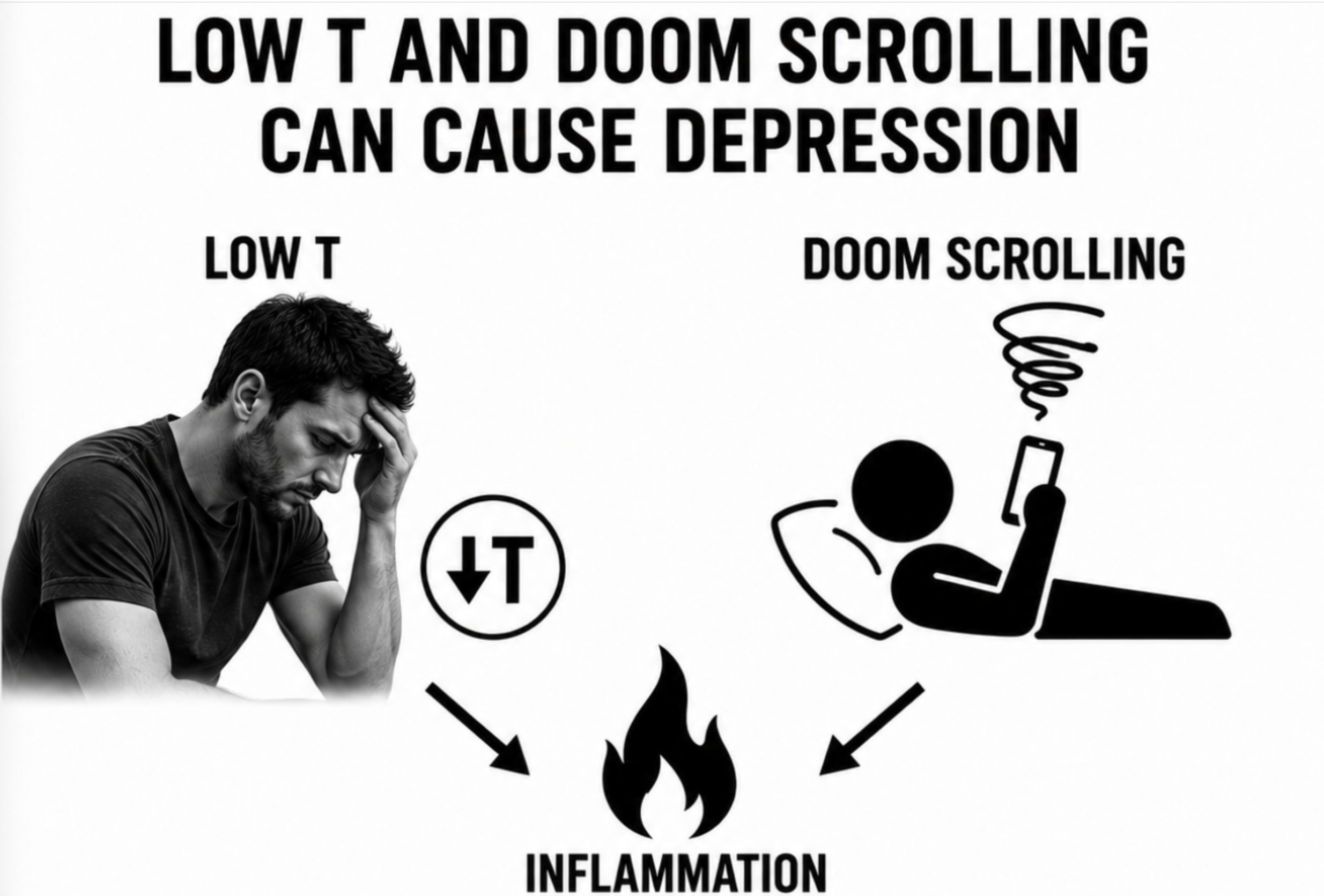
One is a hormonal condition. The other is a modern digital behavior. Yet both may converge on several of the same biological pathways—including inflammation, sleep disruption, and depression.
That matters because it changes how we think about these problems.
Instead of asking, “Why don’t I have more willpower?” we should also ask, “What is happening biologically?”
Inflammation: A Common Denominator
Low testosterone has been associated with increased inflammatory activity, and testosterone appears to influence immune function. Multiple studies suggest that testosterone may exert anti-inflammatory effects, although the relationship is complex and varies among individuals. (ScienceDirect (https://www.sciencedirect.com/science/article/pii/S0165032721003670?utm_source=chatgpt.com))
At the same time, excessive smartphone use—particularly compulsive doomscrolling—has repeatedly been associated with depression, anxiety, poor sleep, and psychological distress. While researchers cannot yet conclude that doomscrolling directly causes inflammation, chronic stress and sleep loss resulting from excessive digital engagement are well-established drivers of inflammatory signaling. (ScienceDirect (https://www.sciencedirect.com/science/article/abs/pii/S0165178119317408/?amp=1&utm_source=chatgpt.com))
Sleep: Where the Two Meet
Sleep may be the strongest biological connection.
Low testosterone is frequently associated with fatigue and impaired sleep. Doomscrolling, especially late at night, delays sleep, fragments sleep quality, and reduces the restorative value of sleep.
Poor sleep, in turn, increases inflammatory markers such as C-reactive protein (CRP) and interleukin-6 (IL-6), both of which have been linked to depression and poorer overall health. (PubMed (https://pubmed.ncbi.nlm.nih.gov/26140821/?utm_source=chatgpt.com))
The result is a vicious cycle:
Poor sleep → more inflammation → worse mood → less motivation → more scrolling → even poorer sleep.
Depression is often viewed as purely psychological.
Increasingly, research suggests it is also biological.
Low testosterone has been associated with depressive symptoms, and a large meta-analysis of randomized controlled trials found that testosterone therapy reduced depressive symptoms in appropriately selected men, particularly at adequate doses. (JAMA Network (https://jamanetwork.com/journals/jamapsychiatry/fullarticle/2712976?utm_source=chatgpt.com))
Likewise, systematic reviews consistently report that problematic smartphone use is associated with depression, anxiety, and poor sleep quality. These studies do not prove that smartphones are the sole cause, but they strongly suggest that excessive, compulsive use is linked to poorer mental health. (ScienceDirect (https://www.sciencedirect.com/science/article/abs/pii/S0165178119317408/?amp=1&utm_source=chatgpt.com)
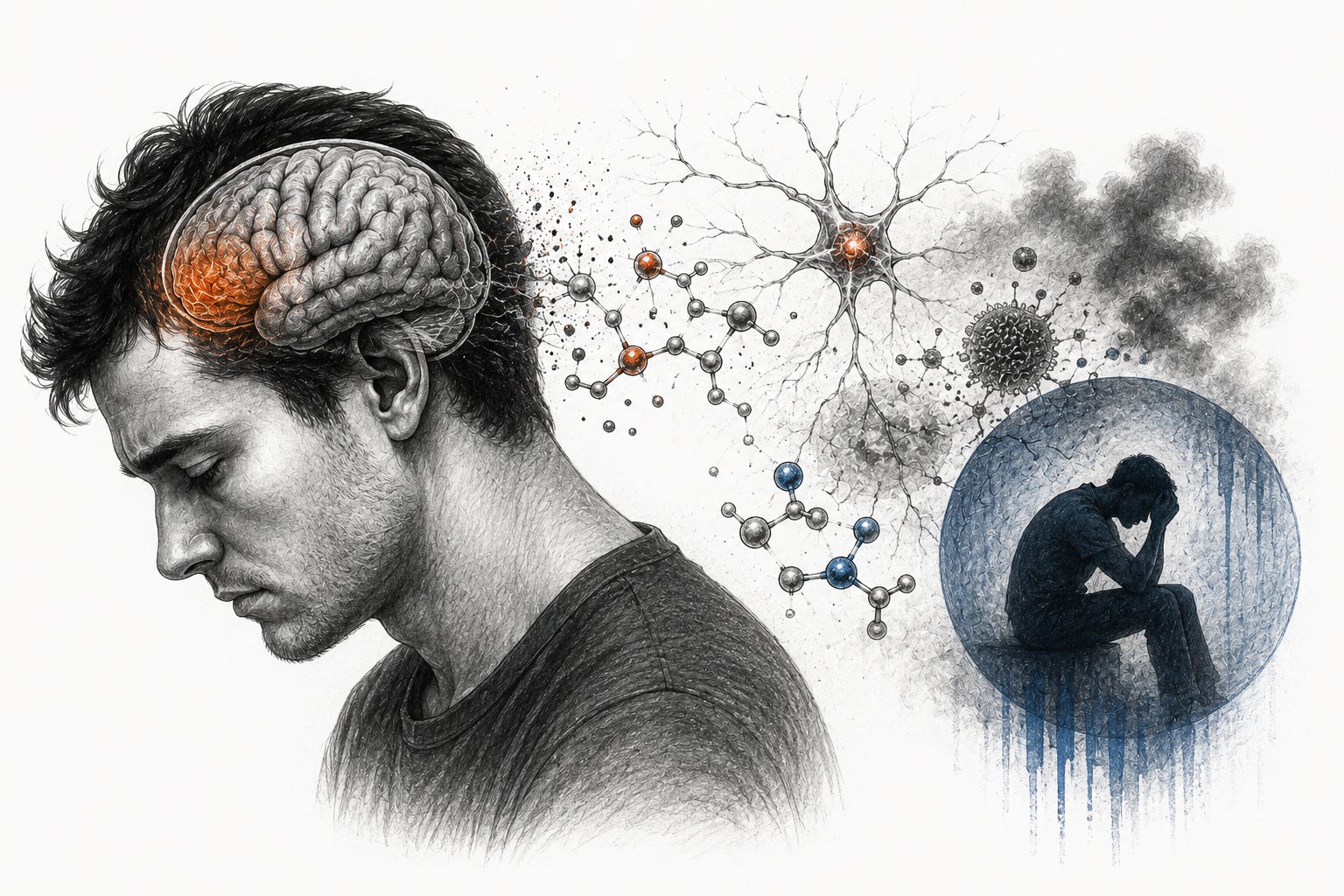
None of this means everyone with low testosterone doomscrolls, or that everyone who doomscrolls has low testosterone.
It does mean that two seemingly unrelated problems may amplify one another through shared biological mechanisms.
If someone has untreated low testosterone, poor sleep, chronic stress, and spends several hours each evening consuming emotionally negative content, the combined effect may be far greater than any one factor alone.
The encouraging news is that biology can change.
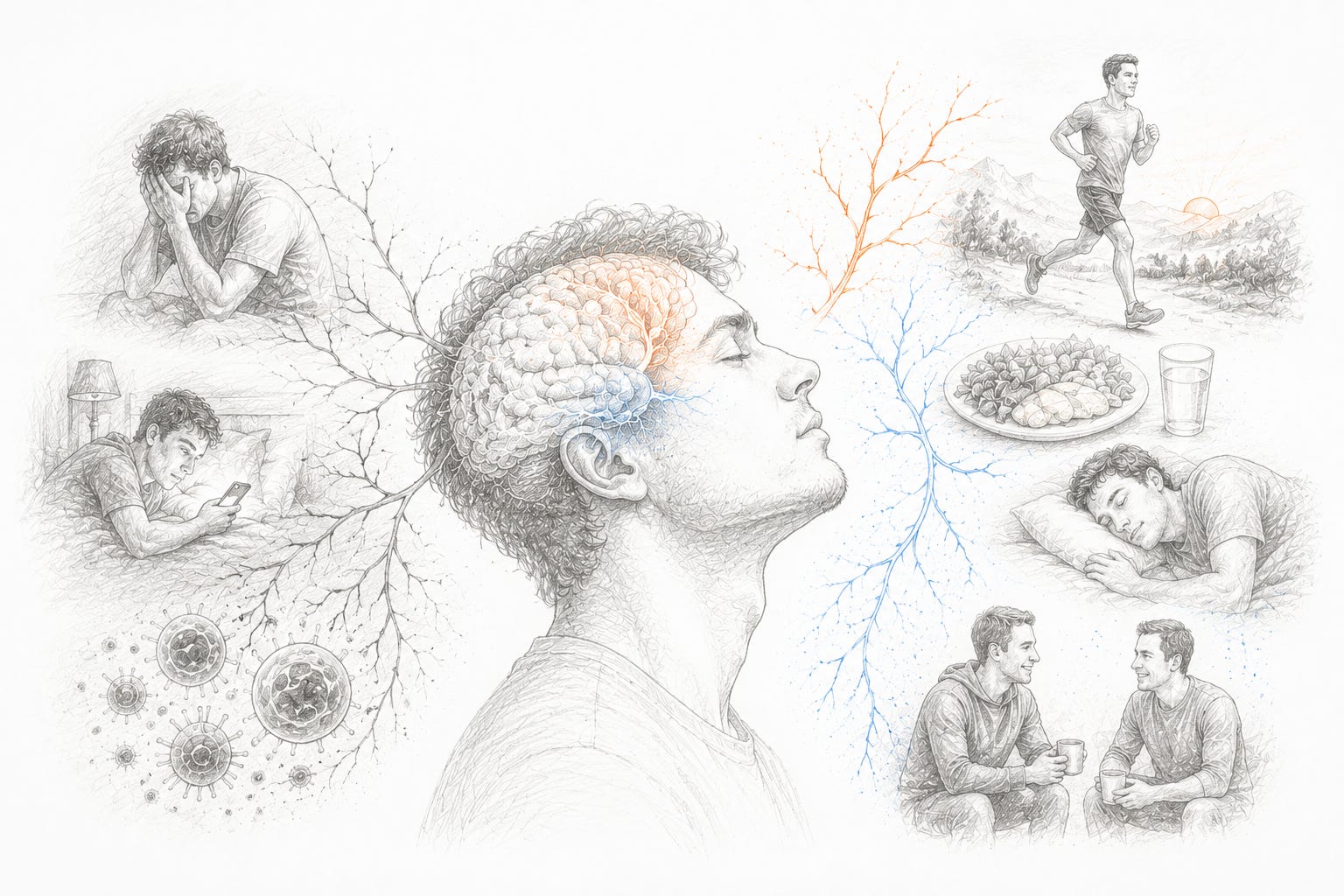
Optimizing sleep, exercising regularly, reducing chronic digital overstimulation, spending time outdoors, strengthening face-to-face relationships, treating hormone deficiencies when medically appropriate, and reducing inflammation may all improve brain function and mood.
The goal is not simply to spend less time on your phone.
The goal is to create a healthier brain.
Walther A, Breidenstein J, Miller R. Association of Testosterone Treatment With Alleviation of Depressive Symptoms in Men: A Systematic Review and Meta-analysis. JAMA Psychiatry. 2019. (JAMA Network (https://jamanetwork.com/journals/jamapsychiatry/fullarticle/2712976?utm_source=chatgpt.com))
Misiak B, et al. Sex hormones and immune system: A possible interplay in affective disorders? A systematic review. Journal of Affective Disorders. 2021. (ScienceDirect (https://www.sciencedirect.com/science/article/pii/S0165032721003670?utm_source=chatgpt.com))
Yang J, et al. Association of problematic smartphone use with poor sleep quality, depression, and anxiety: A systematic review and meta-analysis. Psychiatry Research. 2020. (ScienceDirect (https://www.sciencedirect.com/science/article/abs/pii/S0165178119317408/?amp=1&utm_source=chatgpt.com))
Li Y, et al. Correlations between mobile phone addiction and anxiety, depression, impulsivity, and poor sleep quality: A systematic review and meta-analysis. 2020. (PubMed (https://pubmed.ncbi.nlm.nih.gov/32903205/?utm_source=chatgpt.com))
Irwin MR, et al. Sleep Disturbance, Sleep Duration, and Inflammation: A Systematic Review and Meta-analysis. Biological Psychiatry. 2016. (PubMed (https://pubmed.ncbi.nlm.nih.gov/26140821/?utm_source=chatgpt.com))
August 2 is Digital Toxicity ‘Brain Rot’ Awareness Day - the first effort to give this harm a name.
PTSD become real to the public when we had a word for it. Digital toxicity needs the same.
Share this essay. Subscribe. Send it to one person.
This essay is part of a larger conversation.
Watch and subscribe one YouTube for the biology behind PTSD, digital toxicity, and the modern mind.
No posts
Comments
Nothing yet. Say the first thing.
Sign in to join the conversation.