
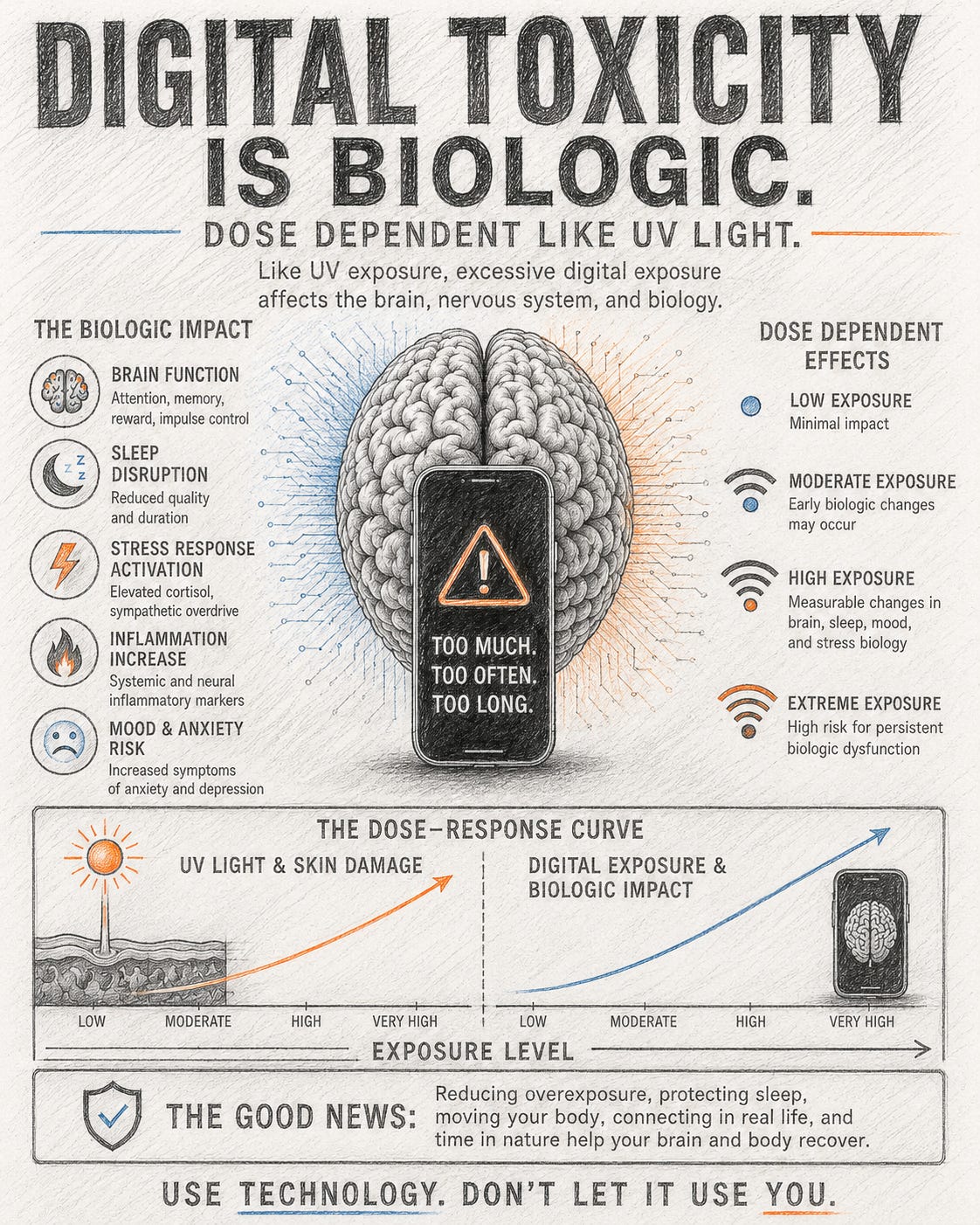
In recent years, the phrase has appeared in academic literature to describe several different problems. Some authors have used it to describe toxic online behavior—harassment, hate speech, cyberbullying, and polarization on social media. Others have applied it to the burden of digital health technologies, referring to the frustration, workload, and unintended consequences created by electronic medical systems. During the COVID-19 pandemic, the term was even used to describe the physical effects of excessive screen exposure, such as digital eye strain.
Each of these definitions captures an important problem.
But none fully explains what many physicians are now seeing every day.
As a trauma physician who has spent more than two decades studying the biology of stress, I believe Digital Toxicity should describe something far broader: the cumulative biological effects of chronic digital exposure on the brain and nervous system.
This definition shifts the conversation from behavior to biology.
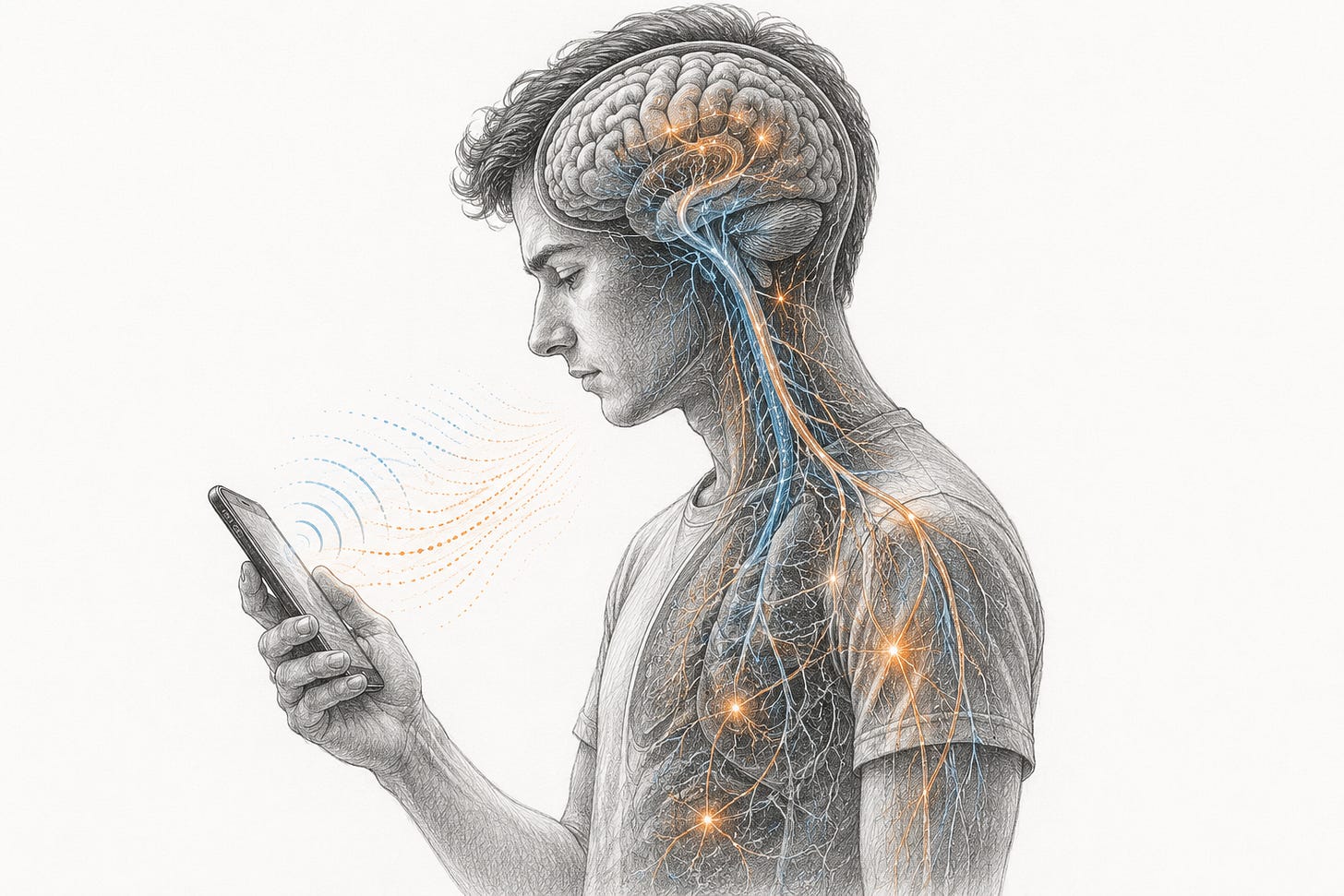
The issue is not simply that people spend too much time on their phones. The concern is that continuous digital stimulation—constant notifications, algorithm-driven novelty, fragmented attention, emotional arousal, and disrupted sleep—may repeatedly activate stress and reward pathways that the human brain never evolved to experience at such intensity or frequency.
The consequences are not limited to distraction.
Emerging research has linked excessive digital media use with poorer sleep, reduced attention, increased anxiety and depression symptoms, impaired emotional regulation, and altered activity in brain networks involved in reward, executive function, and social cognition. These associations do not prove that smartphones alone cause these changes, but they strongly suggest that our digital environment can influence brain health, particularly in vulnerable individuals and developing adolescents.
This is why I define Digital Toxicity as:
The cumulative biological, neurological, and psychological effects of excessive or maladaptive digital exposure that disrupt normal brain function, autonomic regulation, sleep, attention, emotional regulation, and overall health.
This definition recognizes that technology itself is not the enemy.
Just as sunlight is essential but excessive ultraviolet exposure can damage the skin, digital technology provides extraordinary benefits while excessive, poorly regulated exposure may have biological costs.
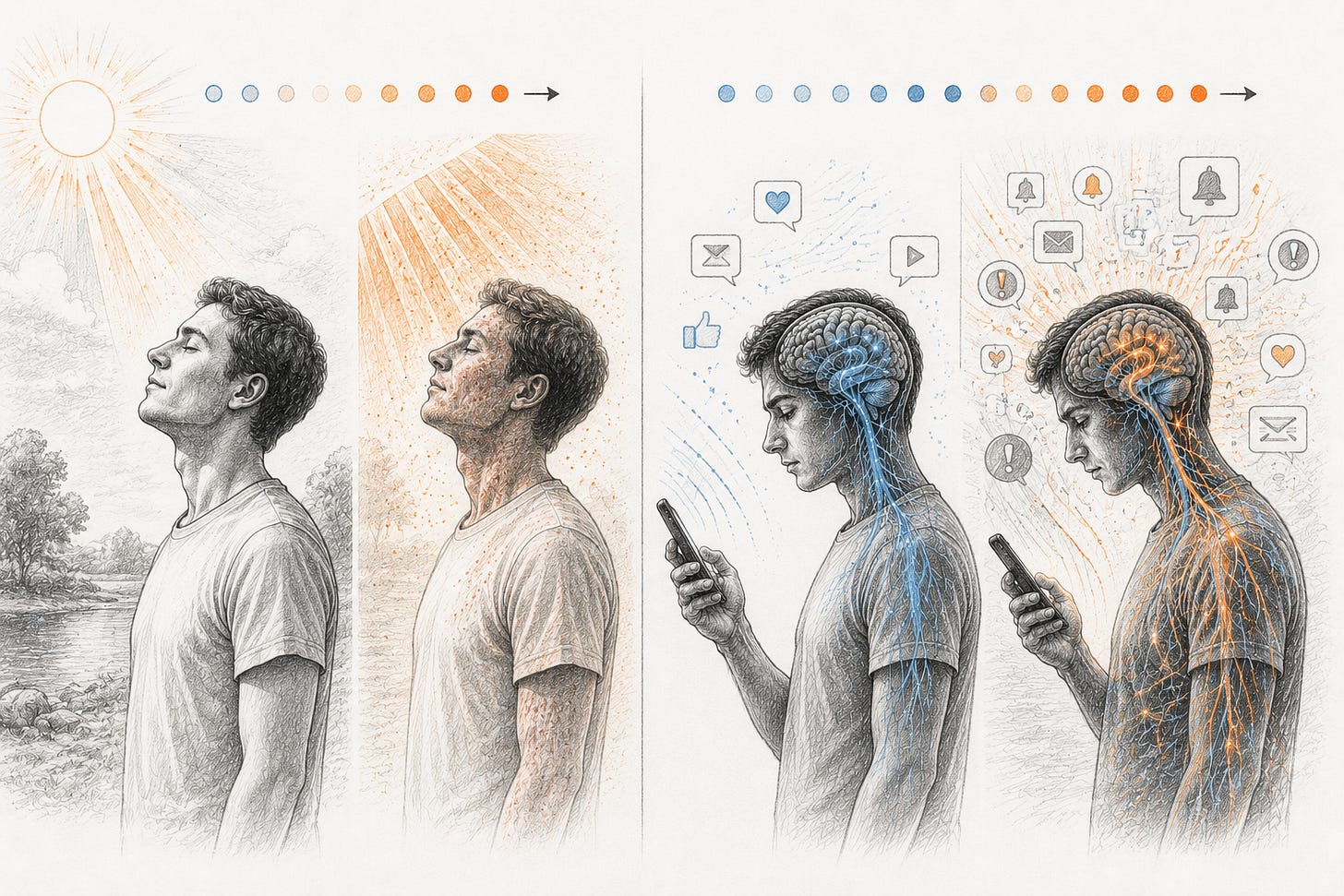
The solution is not abandoning technology.
It is learning to use technology in ways that support—not undermine—human biology.
History teaches us that society eventually recognizes when an environmental exposure affects health. Cigarette smoke, leaded gasoline, asbestos, and chronic sleep deprivation all required decades before their biological consequences were widely accepted.
Digital Toxicity may represent the next chapter in that story.
The question is no longer whether digital technology changes our lives.
The question is whether we are willing to recognize how it may also be changing our biology.
If this is intended to become the foundational essay for your work, I would recommend consistently capitalizing Digital Toxicity as a defined medical concept, analogous to terms such as metabolic syndrome or adverse childhood experiences (ACEs). This helps distinguish your proposed framework from the earlier, unrelated uses of the phrase.
Whether you’re a parent, teacher, healthcare professional, student, or simply someone seeking a healthier relationship with technology, your voice matters. Share the message, and help protect the human brain in the digital age.
This essay is part of a larger conversation.
Watch and subscribe one YouTube for the biology behind PTSD, digital toxicity, and the modern mind.
No posts
Comments
Nothing yet. Say the first thing.
Sign in to join the conversation.