
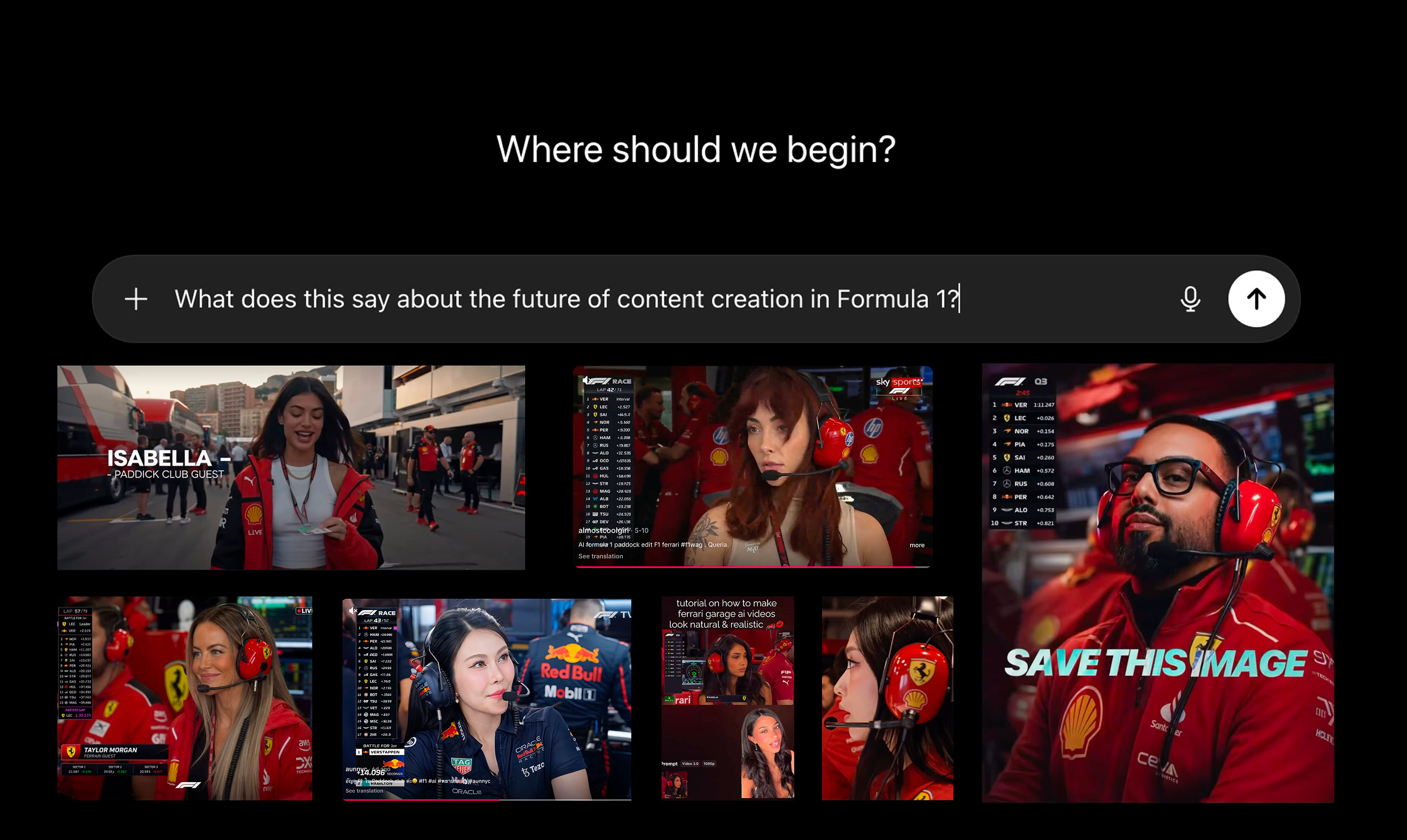
The only thing more ubiquitous than AI these days is conversations about AI. So, apologies in advance but this one is too good to sit out.
At the Miami GP — always a magnet for A-listers and influencers (The Cut explained this year as “a particularly starry annual occasion”) — access is everything. To be in the paddock, snapping photos of the likes of Colin Farrell, Shaboozey, Serena Williams, and Alix Earle and taking selfies beside the F1 garages is algorithmic gold. Obviously, it’s a big deal to make your way into the paddock on a race weekend.
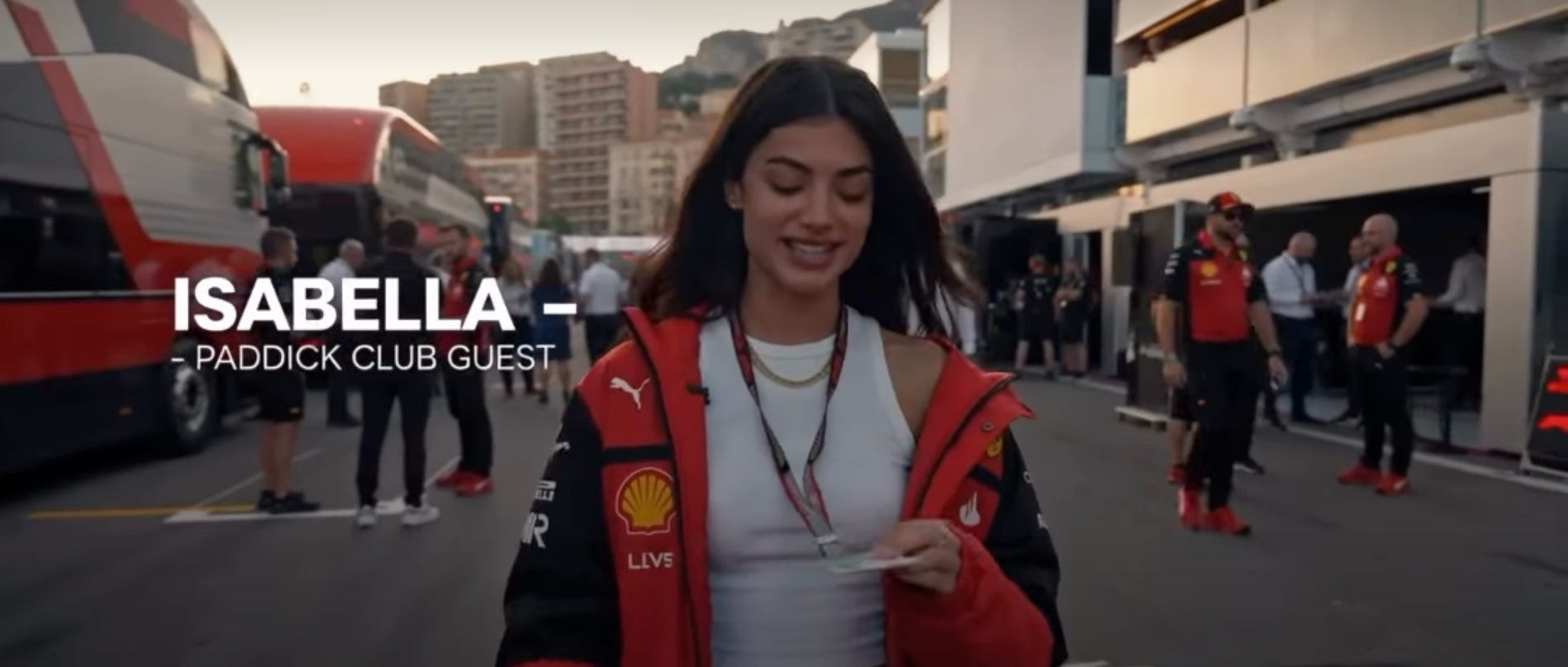
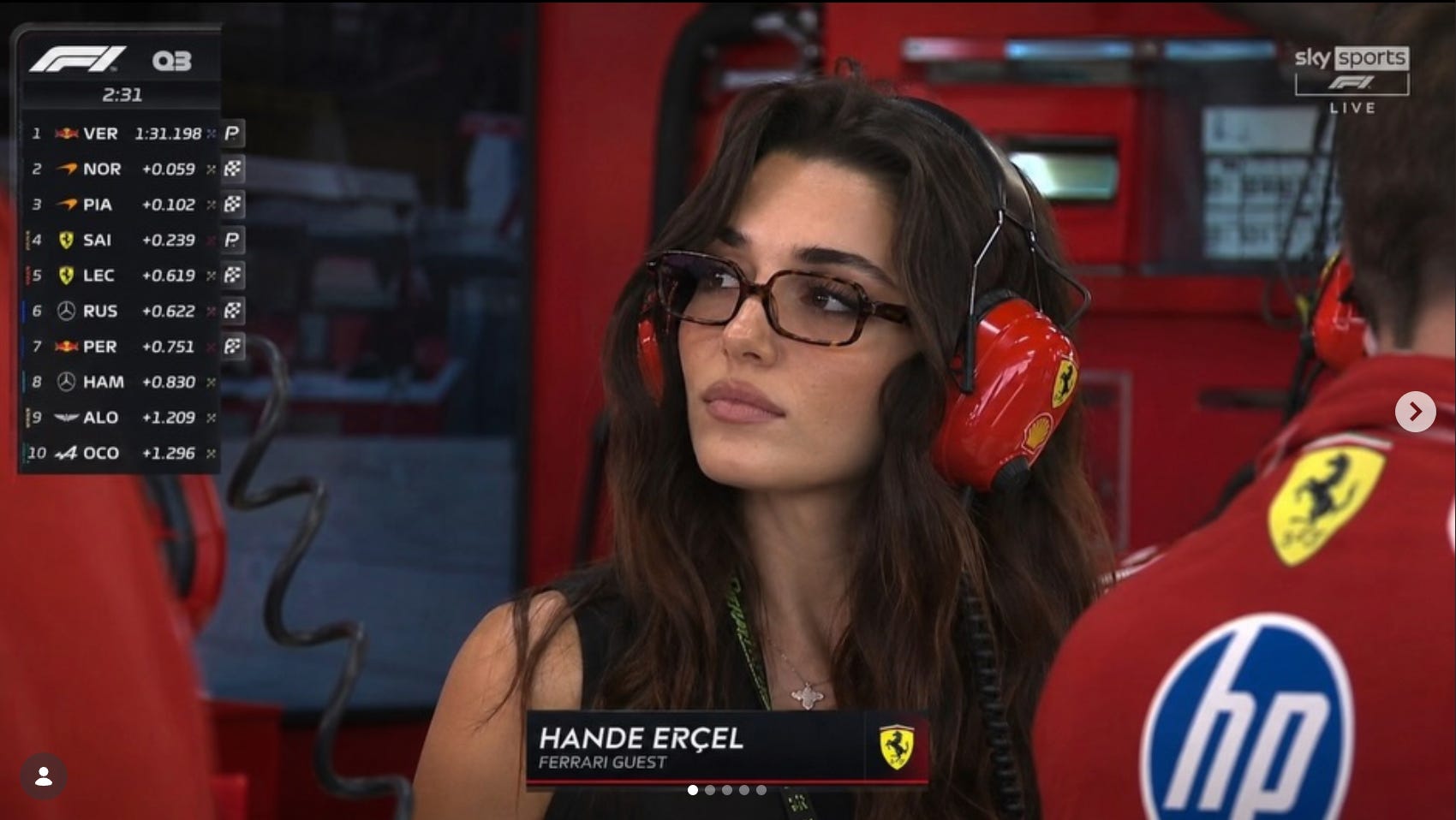
But something happened that had those who’d managed to snag that access up in arms: AI-generated videos of creators standing in F1 garages started popping up all over TikTok and Instagram. Many influencers and creators, who make a living by being in those rarified spaces, responded with outrage or “proof of life” videos showing they’d actually been there.
Our editor-at-large Toni Cowan-Brown clocked it right away and put out a fascinating Story on her Instagram explaining her take. Michelai Graham noticed the AI phenomenon, too, though she admits some were so good she was at first fooled.
For Graham, the videos themselves were less fascinating than the response and what it says about the future of content creation in Formula 1.

By Michelai Graham
The digital landscape of Formula 1 fandom has officially tripped into a bizarre new reality.
If you’ve spent any time scrolling TikTok or Instagram lately, you’ve likely encountered them: hyper-realistic, AI-generated videos of creators standing casually inside simulated F1 garages. (Interestingly, mostly inside the Scuderia Ferrari HP garage; clearly, AI already understands the most FOMO-inducing garage.) Many of these clips show creators sporting team headsets, looking around as pit lane action ensues. Some even feature realistic digital avatars walking the paddock, delivering news-style standup videos.
I won’t dive too deeply into the implications of faking proximity to an environment like the F1 paddock. On one hand, it’s a room that countless storytellers have spent years working tirelessly to earn credentials for; on the other, it’s a VIP space where many are granted entry simply by virtue of their social status. Either way, I found the reaction to this paddock slop from the F1 creator community far more interesting because there was a palpable sense of panic. These AI videos are highly engineered synthetic fakes designed to mimic the exact visual expectation of motorsport lifestyle content. It’s a silly trend, but I have to be completely transparent: I was fooled more than once because of just how realistic the rendering has become.
I understand why the F1 creator community wasn’t amused by the trend. But the response to these digital deepfakes has taken the form of a collective, real-world flex. Creators are rushing to their feeds to post “proof of life” content, aggressively flashing their physical access and proximity to the paddock just to prove they have been inside or near the real thing. The underlying message is loud and clear: You cannot fake this access or replicate this reality.
I find the irony here completely overwhelming.
By rushing to defend their legitimacy through the sheer flex of physical proximity, creators are inadvertently reinforcing the exact culture of clout and gatekeeping that fuels the AI slop trend in the first place. If the ultimate defense of your work, your storytelling, or your journalism is simply “I am standing behind this velvet rope and a computer prompt isn’t,” you aren’t actually defending the craft. You are just defending your proximity to the paddock. You are validating an industry hierarchy that says worth is determined entirely by how close you are allowed to stand in a space historically gatekept for wealth, luxury, and hyper-exclusivity.
But let’s pause for a bit and connect a few dots.
How and what you publish online is what ultimately declares whether you are labeled a creator, an influencer, a journalist, or something else entirely. But the truth is, the modern media landscape demands a refusal to silo yourself into just one role. Almost every journalist has felt an industry pull to do a straight-to-camera video these last 12 months. Almost every influencer has tried to add a storytelling component to their content.
I attempt to operate intentionally in the space between institutional reporting and digital-native storytelling. My ultimate goal is to educate and inform. But the nature of modern platforms means that sometimes I also just want to be candid, yap, and share unhinged opinions with an audience that values transparency over corporate polish.
This dual identity isn’t a compromise; it’s a necessity in an ecosystem where 61% of fans now engage with F1 content daily, heavily relying on independent voices to contextualize the sport. We are operating within a global creator economy projected to exceed $500 billion by 2030, driven by a highly discerning, mobile-first audience. To take that further, F1 generated $665 million in sponsor media value in the first half of 2025 alone, with social media driving over 63% of that impact. So, I completely understand why someone would want to mimic this space. There is immense power, opportunity, and money tied to that visual aesthetic.
But still, the harsh reality is that AI paddock slop works because standard creator content has largely become an algorithmic checklist of status symbols. When the prevailing formula for F1 content relies on the same repetitive aesthetic, it becomes incredibly easy for an algorithm to copy it. Generative models didn’t invent the aesthetic of exclusivity as the means and the ends; they just scaled it. They realized that in the current creator economy, proximity is routinely treated as a substitute for substance.
So, by prioritizing access over insight, creator culture built a house of cards. If the content produced with that real-world access offers no more depth, critical analysis, or human narrative than a cute candid video in a coveted hospitality suite or team garage, then the distinction between the real creator and the digital mirage ceases to matter to the audience. In either case, the viewer is not there — the question is: what’s the value of the real glimpse behind the curtain compared with a believable facsimile?
F1 has always been an elite, socioeconomically gatekept sport. The American fandom that has blossomed around it over the last few years succeeded precisely because it broke through that insularity, building digital spaces, group chats, and communities that didn’t require an entry fee to justify worth. It was built on a collective interest and genuine human connections.
The creator industry risks losing that foundation if it spends its energy playing defense against software. The way to beat the algorithm isn’t by screaming about the legitimacy of your credentials or clutching your lanyard tighter. The algorithm wins the moment the conversation becomes entirely about who gets to be inside the room.
The only real defense against digital automation is human execution. Creators don’t prove their worth by showing us the garage; they prove it by telling us what the people inside that garage are actually doing. The value of your access is as a window for those of us who will never get a chance to step inside the paddock or the garage. So, what can you tell me about this space that I can’t learn or see from my couch? That’s the perspective that will break through the AI slop.
Everything else is just noise, no matter how exclusive the room it’s generated in.
No posts
Comments
Nothing yet. Say the first thing.
Sign in to join the conversation.