
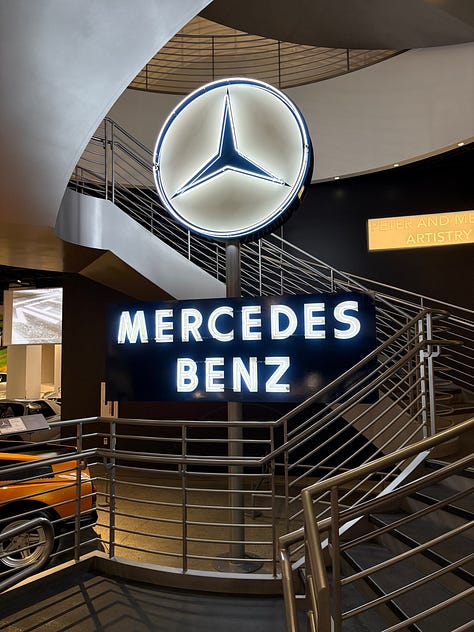
Last Friday, the Petersen Automotive Museum invited me to come by and check out “World-Class: 100 Hundred Years of Mercedes-Benz” a day before it opened to the public. Tucked into the first floor of the Los Angeles museum, “World-Class” is a jaw-dropper of an exhibit.
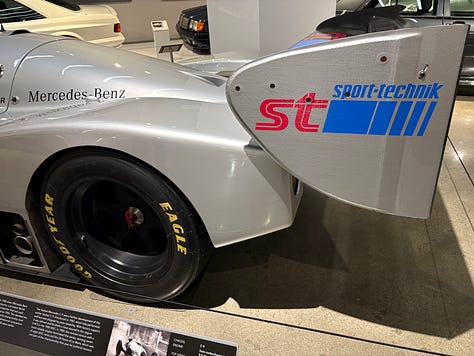
As you walk through the room, you trace the history of the German car manufacturer from a replica of Carl Benz’s first car — an 1886 Benz Patent Motorwagen — through the partnership with Gottlieb Daimler a century ago, and all the way to the present day. There is a 1956 Mercedes-Benz 300 Sc Cabriolet that once belonged to Clark Gable and a 1964 Mercedes-Benz 230SL first purchased by Walt Disney. There’s also some legends of the racing world, like a 1938 Mercedes-Benz W154 Grand Prix car and a 1989 Sauber-Mercedes C9 Group C prototype race car.
Racing fans, gearheads, and anyone who can appreciate the art of automotive design should make their way to “World-Class” at the Petersen. The exhibit runs through April of next year.


Speaking of century-old brands, Gucci made headlines yesterday by becoming the first luxury fashion house to be a title sponsor in Formula 1. A name like Gucci entering the sport delivered the expected flood of headlines. But to editor-at-large Toni Cowan-Brown’s eye, this is not what it looks like at first glance.
A decade ago, Formula 1 would have been desperate for an association with Gucci. Now, it’s the other way around.

By Toni Cowan-Brown
I watched yesterday as social accounts copy/pasted the press release, talked about Gucci for Formula 1 (when it’s an Alpine F1 Team story) or came out with bold claims about Gucci changing the fashion game. None of it felt interesting, let alone accurate or researched.
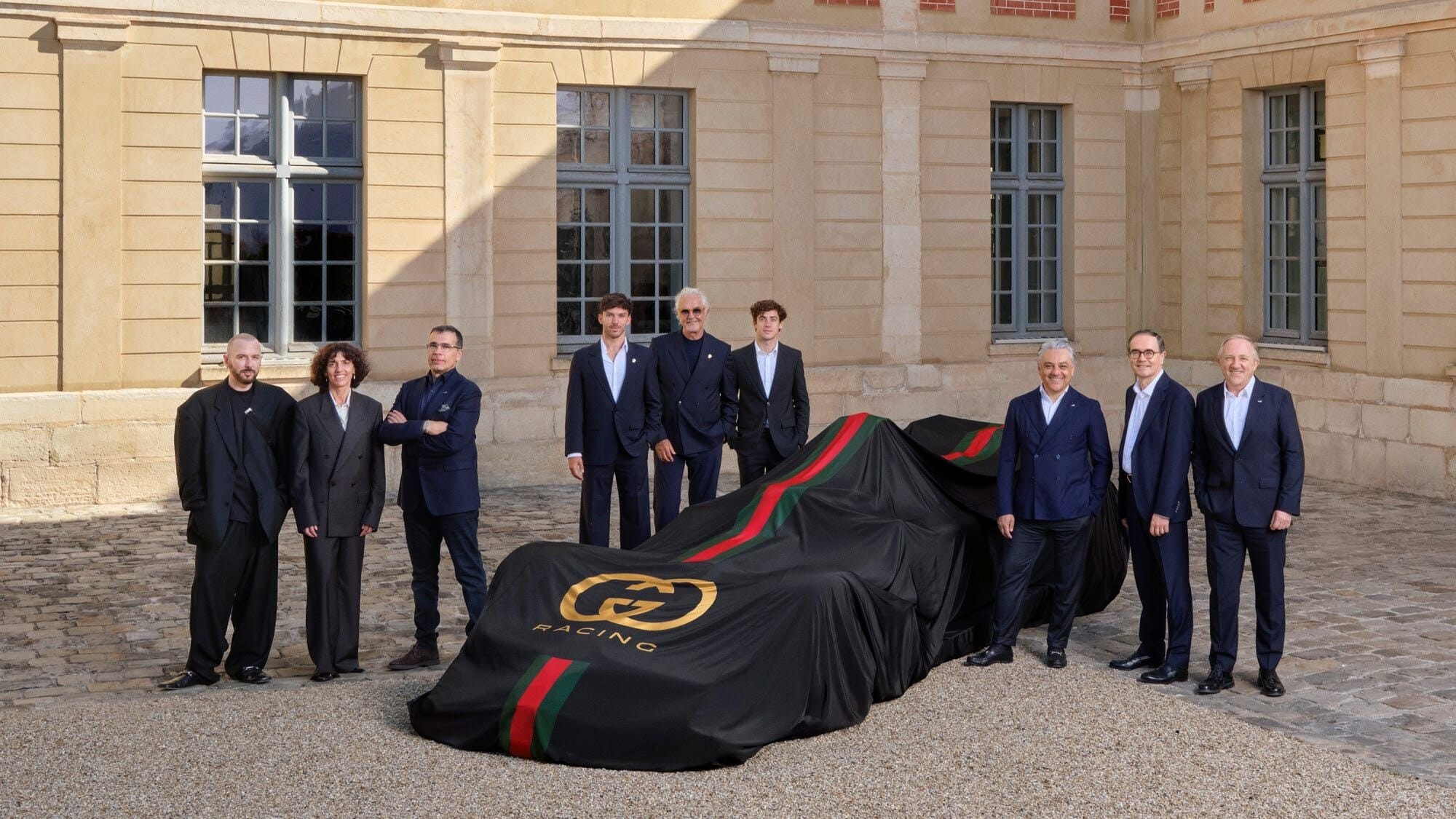
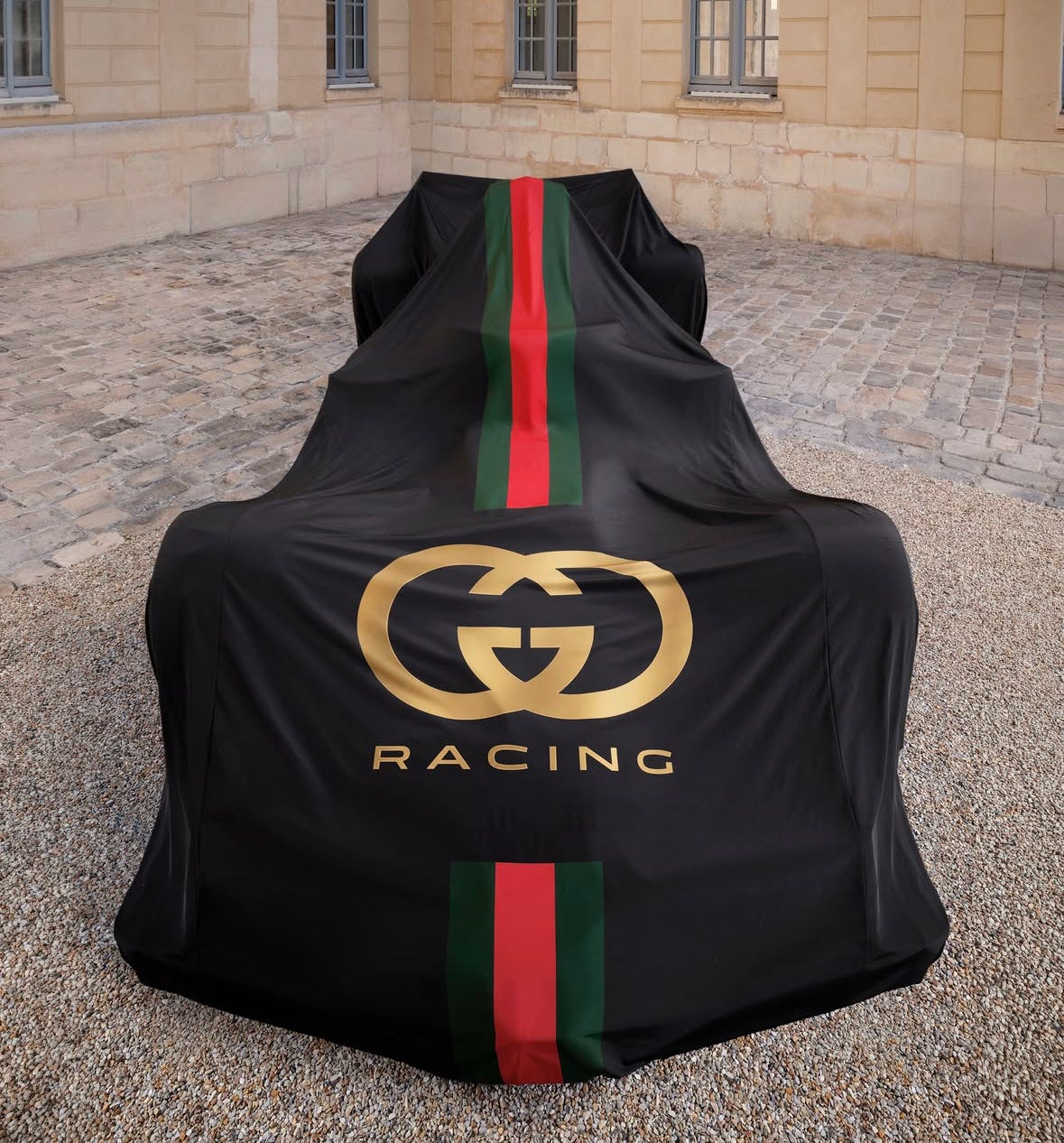
To me, the moment the announcement dropped, something already felt off. Gucci is in Formula 1 — not as a name on a sleeve, a logo on the garage or car, or a paddock hospitality partner, but as the title sponsor of an entire team. The Alpine F1 Team, to be precise. Except you might not know that, because Alpine barely appears to be part of its own story. Gucci’s last three posts on their social account, hint at an F1 car — that much is clear — but the Alpine team and branding are nowhere to be found. The Alpine logo is absent.
The French team, which has spent the better part of four years building one of the most recognizable liveries on the grid (the pink will certainly be missed), has apparently been relegated to a footnote in the press release announcing its own rebrand. This has little to do with Alpine’s value as one of the eleven teams on the F1 grid; the value is intrinsic and massive. Rather, to my eye, it highlights just who has a lot to gain — and a lot riding — on this partnership. Let’s be clear: it isn’t the team from Enstone.
Most of the headlines this morning read Gucci and F1, not Gucci and Alpine. The tension I felt watching this announcement felt highlighted by that framing: this partnership was not engineered from a position of strength. It was engineered from necessity.
Gucci has posted ten consecutive quarters of declining sales. In two years, the brand shed nearly €4 billion in revenue. In Q1 2026 alone, revenues fell another 14 percent, missing analyst expectations. The brand accounts for approximately 60 percent of Kering’s total earnings, and Kering posted a net loss in 2025 for the first time in recent memory.
This is not Louis Vuitton entering motorsport from the summit. Gucci doesn’t want F1. Gucci needs F1. And crucially, it needs F1’s platform, not Alpine’s which feels painfully obvious from yesterday’s PR fanfare.
With that said, how we got here and the key figures in the mix make for a fascinating story. See, none of this happens without Luca de Meo. The 58-year-old Italian executive spent five years as Renault Group CEO building Alpine’s F1 identity — understanding its commercial architecture from the inside, helping position the team as a vehicle for cultural ambition rather than pure sporting performance. Then, in the summer of 2025, he left to become CEO of Kering. He understood the asset he was leaving. He also understood the asset he was joining. It feels obvious and safe to say that he essentially engineered the commercial logic on both sides of this deal before either side sat down to negotiate. Without him, it almost certainly does not exist.
And then there is Flavio Briatore, whose involvement here is either beautifully circular or almost absurdly so, depending on your generosity. Briatore built his route into Formula 1 through the Benetton clothing empire — running franchises that eventually put him in the room where Benetton’s F1 team decisions were made. When Benetton entered the sport seriously in the 80s, it was the first time a fashion brand had occupied that kind of space in the paddock. The same man, at the same factory in Enstone, has now delivered the highest-profile fashion sponsorship in the sport’s history. Credit where it is due — that is a remarkable and somewhat poetic full circle.
But here is where I think this story gets genuinely interesting: this deal will ultimately be judged on paddock legacy and the balance sheets. Gucci entering F1 as a title partner seems to represent the first serious test of what the sport has been quietly promising every brand that has rushed to its doors since Drive to Survive shot the sport into another stratosphere: that F1 is not just a backdrop for your logo, but a genuine cultural relevancy engine with measurable commercial return.
Brands have been flooding into Formula 1 for five years, largely chasing association. The logic has been soft: F1 is cool now, audiences are young and global, so proximity to the sport must transfer something to the brand. Most of those partnerships have struggled to point to hard ROI — partly because sponsorship ROI is notoriously difficult to isolate and prove, and partly because brands have been using F1 as wallpaper rather than infrastructure, so they haven’t needed to lean on ROI. But wanting to be cool by association is not a business plan or strategy.
Gucci’s situation is different. This is not a brand in good health looking for cultural adjacency. This is a brand with a concrete problem — declining sales, eroded relevance, a new creative director in Demna still finding his footing, and one with a track record of controversies — using F1 as a core pillar of their new sales and brand strategy. The objective is not some abstract desire for relevance and visibility, but a real need for numbers to go up and to the right.
If Gucci’s numbers move meaningfully in the next two years, F1 will have proven something to every boardroom that has been half-convinced but not fully committed. If they don’t, it raises harder questions about what the sport can actually deliver to partners pouring in millions beyond impressions and paddock photographs.
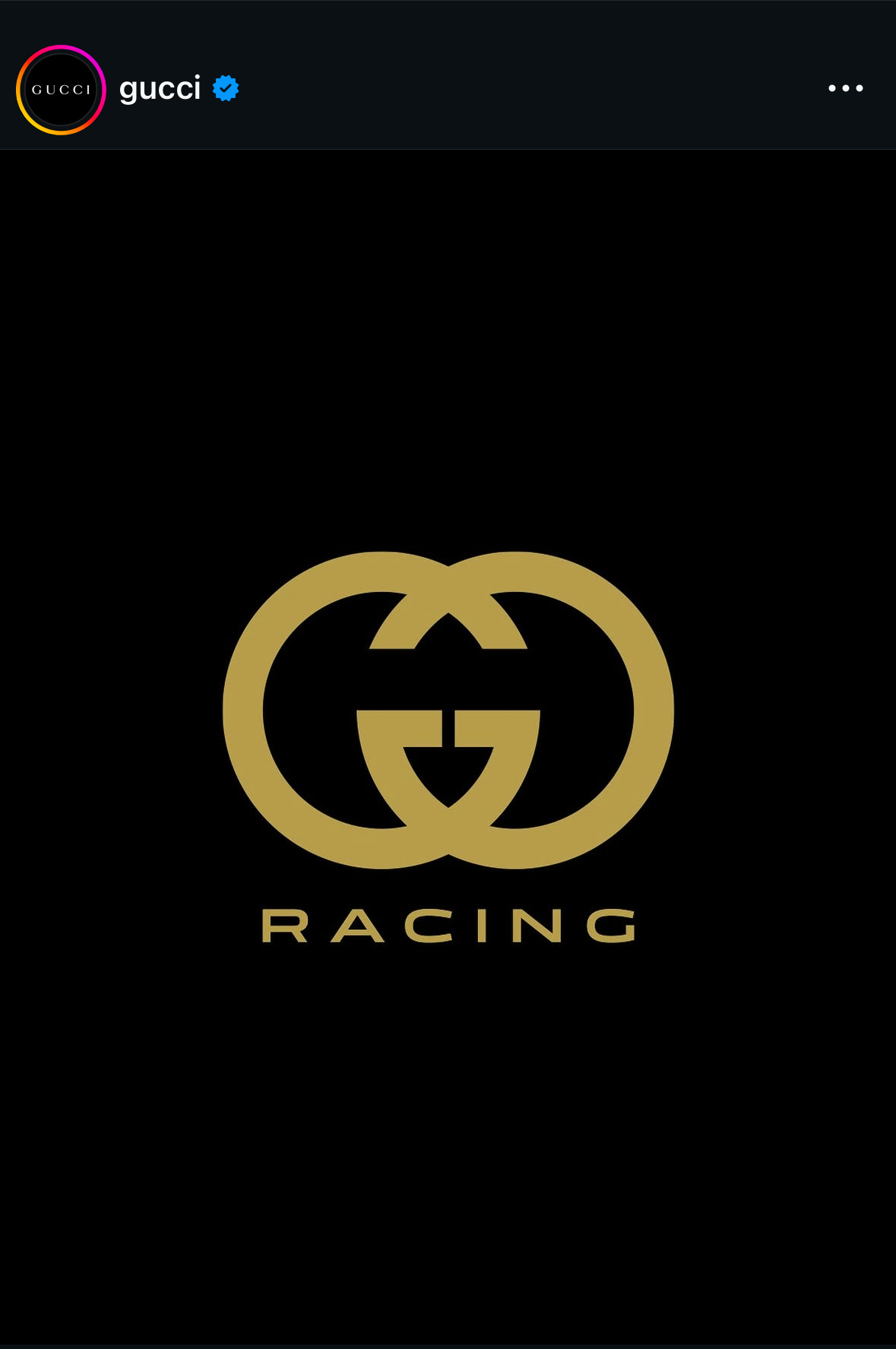
There is one last piece to highlight which makes this story that much more intriguing, and which few people seem to have flagged. Gucci Racing Alpine will race on circuits that carry LVMH branding — the luxury conglomerate that is Kering’s principal rival. LVMH and Kering have been engaged in a quiet cold war for luxury market dominance for years. Now a Gucci-liveried car will be doing racing laps around LVMH’s name. Whether that reads as irony or as competitive genius probably depends on how the next set of quarterly results lands. Success will come down to execution which — as LVMH has already discovered and Gucci is about to — is easier said than done in Formula 1. This is a whole different world with its own rules and context; it’s one of the reasons I love it so much.
The first luxury fashion house to title-sponsor an F1 team. That’s the surface-level headline. The real story is a higher stakes one: what is a title sponsorship in Formula 1 really worth to a brand whose challenge is deeper than visibility? The sport’s promise to brands — that it can do something more than make you look cool — is finally about to be put to a proper test. And I for one, will be paying close attention.
No posts
Comments
Nothing yet. Say the first thing.
Sign in to join the conversation.