
Sleep has a branding problem. It’s boring.
We love ACTION, and sleep seems the opposite of that. So let’s dispel this myth and show how sleep can be an action-packed adventure, fun for the whole family! Journeying into this mysterious and sometimes treacherous State of Consciousness that is The Night is a path for heroes & badasses of the mind.
Too many of us don’t pay enough (or any!) attention to these Mysterious States of Consciousness that make up a third of our life. This part of life is filled with experience, from the blissful to the downright terrifying. Nightmares, sleep paralysis, and plain old sleep anxiety are universal challenges that all will encounter at some point. To quote Game of Thrones: the night is dark and full of terrors!
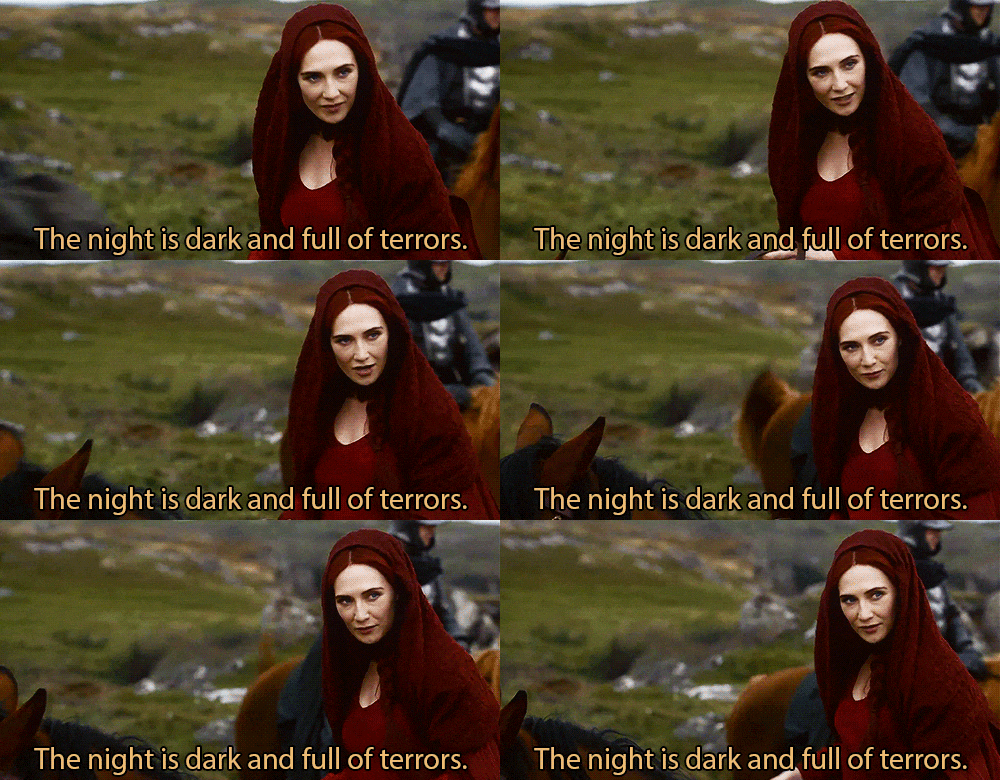
The journey into the night is not for the faint of heart - it is for the brave. It is a hero’s journey.
In fact, many of the practices for working with the night come from “warrior traditions.” In Tibetan the word used is Pawo - meaning “one who is brave.” Chogyam Trungpa Rinpoche says,
Warriorship in this context is the tradition of human bravery, or the tradition of fearlessness. The North American Indians had such a tradition, and it also existed in South American Indian societies. The Japanese ideal of the samurai also represented a warrior tradition of wisdom, and there have been principles of Enlightened Warriorship in Western Christian societies as well. King Arthur is a legendary example of warrior ship in the western tradition, and great rulers in the Bible, such as King David, are examples of Warriors common to both the Jewish and Christian traditions.On our planet Earth there have been many fine examples of warriorship.1
Rinpoche defines bravery as not being afraid of yourself. This is precisely what training in Dream Warriorship can do; it can allow us to make friends with our dreaming mind by becoming more familiar with its landscape.
Engaging with dreams can seem solitary - it’s just us in there after all - and it can be hard to find the real-world application. We don’t see dreams as “real.” And yet, every human that has ever existed in the history of humans has experienced dreams and nightmares. Sounds quite real to me! Dreams have inspired religions, scientific discovery, music, art, sport, and on and on. Very tangible impacts on the world. so if that’s not “real” then someone please teach me a better definition of what is real!
We all sleep and we all dream. This experience can unify us as humans, at a time when we really need to unify as humans.
One of my favorite books that has served me as a wonderfully effective guidebook for this nightly journey into sleep and dreams opens with the humanizing effect of sleeping and dreaming:
Every human being on this planet sleeps and dreams. It's a silent unifying feature of all humanity. Everybody knows what it feels like to fall into tranquil sleep, and everybody knows what it's like to be jolted awake. We've all had nightmares, blissful dreams, or difficulty with sleep. Right now, as you read this, about half of the people on Earth are sleeping and dreaming, snuggled into a mysterious State of Consciousness.2
In our wake-centric3 and dream-deprived4 society that places such little importance on our sleep & dream experience, we are too often left in the dark - without any guidance or understanding of this territory.
This is unfortunate, because children begin experiencing nightmares around age seven as part of the development process, and that fear is a rite of passage. In his book This Is Why You Dream,5 M.D. and PhD Neuroscientist Rahul Jandial says,
Nightmares are universal, and, as far as we can tell, have always been part of the human condition. They are not a glitch or aberration, randomly affecting some people and not others. Everyone has nightmares. They aren't limited by life experience, or diet, or age, or personal habits. The gentlest of childhoods is no barrier against nightmares.
He goes on to say that children experience nightmares an estimated five times more often than adults, and suggests that nightmares may just be a universal cognitive process by which all children cultivate and forge a sense of self as a normal and healthy part of the development process. That dream of a monster chasing us might not hit so hard if we are told this is normal and everyone else has gone through the same thing. We could all use more guidance in this universal experience of dreaming.
And yet, too often we’re left on our own (and we leave our children out on their own!) to just figure this all out. It’s no wonder so many of us opt-out and shut-out dreams completely. Ignore-ance becomes a survival strategy when we have no other tools to work with the experience. We ignore dreams or dismiss them altogether.
If you have children, this book6 by Angel Morgan is a fantastic tool, and I am looking forward to reading it to my little one in a few years:

One of the greatest gifts we can give our children and bring into our families is a culture of dream sharing - normalizing talking about what we experience at night.
In fact the latest episode of White Lotus had an interesting moment of dream sharing that also touched on this theme of the modern divergence in mindset around the importance of dreaming.
For those unfamiliar, White Lotus is an HBO show (one of the few shows I make time for), and in Season 3, Episode 3 (The Meaning of Dreams—coincidentally similar to the Rahul Jandial book title!), a family debates the significance of a dream.
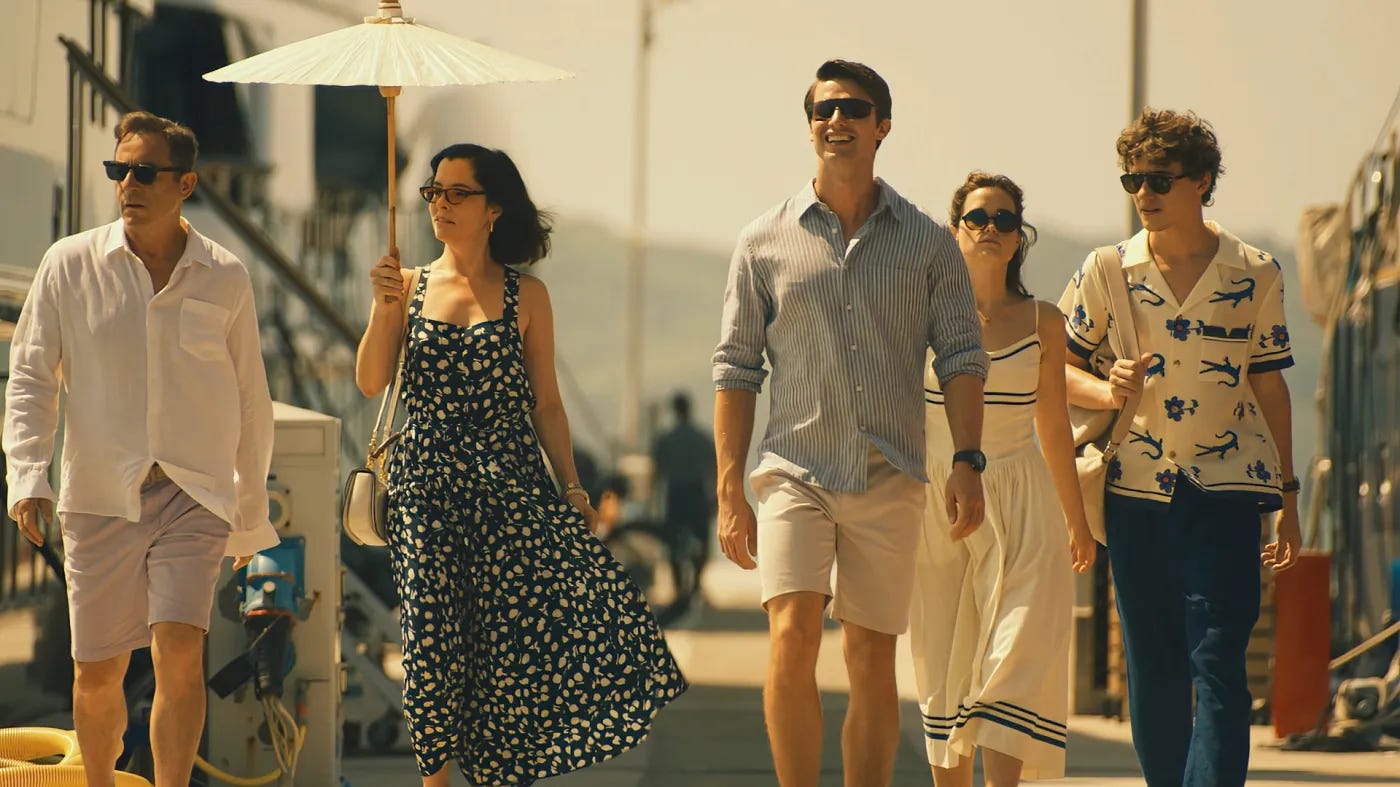
One night, the mother dreams about a tidal wave.7 At breakfast, after sharing the dream a discussion unfolds: Are dreams meaningless? Or do they hold deeper insight? The toxic eldest son dismisses the dream as a byproduct of watching YouTube videos of tidal waves, while the daughter, who is writing her Religious Studies thesis on Buddhism, suggests it could mean something more.
This family is a caricature of hugely wealthy, disconnected WASPs, but their debate reflects a larger cultural trend. Many people don’t place much importance on dreams. They don’t prioritize exploring the subconscious mind and their experience of the night.
Fortunately science is coming around on this and pointing to what humans have intuitively grasped for millennia; our dreams are useful and important.
But let’s give credit where its due - at least this family is having the breakfast-table conversation about their dreams! This is something more families, more friendships, more partners, can and should do. Sharing your dreams with others brings scientifically demonstrated benefits like building empathy & emotional awareness - extremely valuable yet scarce and often underrated skills for life. And it’s a great start on the path of Dream Warriorship - mindfully paying attention to what’s happening at night, shifting your mindset that dreams are useful and important, and normalizing them in your family & community.
We can work with this experience of the night, transcend our fear of the unknown and change the world. In fact there is a long tradition of dream warriors who have left maps to guide us in our exploration of the inner space of the dreaming mind. There are tools to help guide the brave souls who want to take this hero’s journey.
Importantly, the maps drawn by these expert oneironauts who have deeply explored the night have a key that can keep us pointed in the right direction on the path. The key to this map that can guide us through the dark and scary territory is this: underneath the nightmares, the fear, and heavy emotional content is a ground of basic goodness. Our true nature is pure and good. Each night is a homecoming, a return to this more fundamental state of being—a state of wholeness, clarity, and interconnection.
Exploring the night builds a sense of fearlessness - defined not as the lack of fear but rather going through fear. We will all still face fearful moments on the path, but we can face them with greater courage knowing that at the core of it all, our essential nature is basically good and pure. And in doing so, we can become more whole, more human. Again, from Trungpa Rinpoche:
In the process of becoming a warrior, you naturally begin to feel a deep fellowship with human beings. That is the real basis for helping others and, ultimately, for making a genuine contribution to society... The point of Warriorship is to become a gentle and tamed human being who can make a genuine contribution to this world.
In making this journey we can become more human, or as another teacher, Lama Yeshe via Charlie Morely would say, the fruition of dream practice is to become more Awake, more Aware, and more Kind.
This is what I hope to provide here at Night School; training to become a group of Dream Warriors. We are all headed there anyway! We’re going to sleep and dream, so why not train together and explore this territory that becomes less scary when you have a good map, a light, a guide, and a band of merry dream warriors in your vicinity? I only hope I can be a helpful guide on this journey into the night as so many of my teachers have been for me.
Thanks for being a part of this Night School and I wish you great courage and strength in your journey into the night!
Eric
Shambala, The Sacred Path of the Warrior, by Chogyam Trungpa Rinpoche
Dream Yoga, by Andrew Holocek
This theme of wake-centricity comes up a lot in Holocek’s work. Modern Western (materialist) culture tends to only place importance on the waking state of consciousness, whereas traditional contemplative cultures find truth and value in all states of consciousness; sleeping, dreaming, states induced by plant medicine, etc.
This Is Why You Dream, by Rahul Jandial
Dreamer’s Powerful Tiger, by Angel Morgan
I’ve had many a dream about tidal waves. Looked at the most recent one in my journal and if this one here doesn’t prove that dreams can be a badass adventure then I don’t know what would:
Dream Title: I am Jason Bourne
“I am facing all these attacks and challenges. Swimming in a river that has a giant wave coming on one end, and an indigenous group is attacking with arrows from the shore. I make it to land and I'm hanging from the ceiling hiding. They spot me and I fight, and choke out a guy. He shows me a picture from Bourne and it's the same image, implying that I am Jason Bourne.”
Comments
Nothing yet. Say the first thing.
Sign in to join the conversation.