
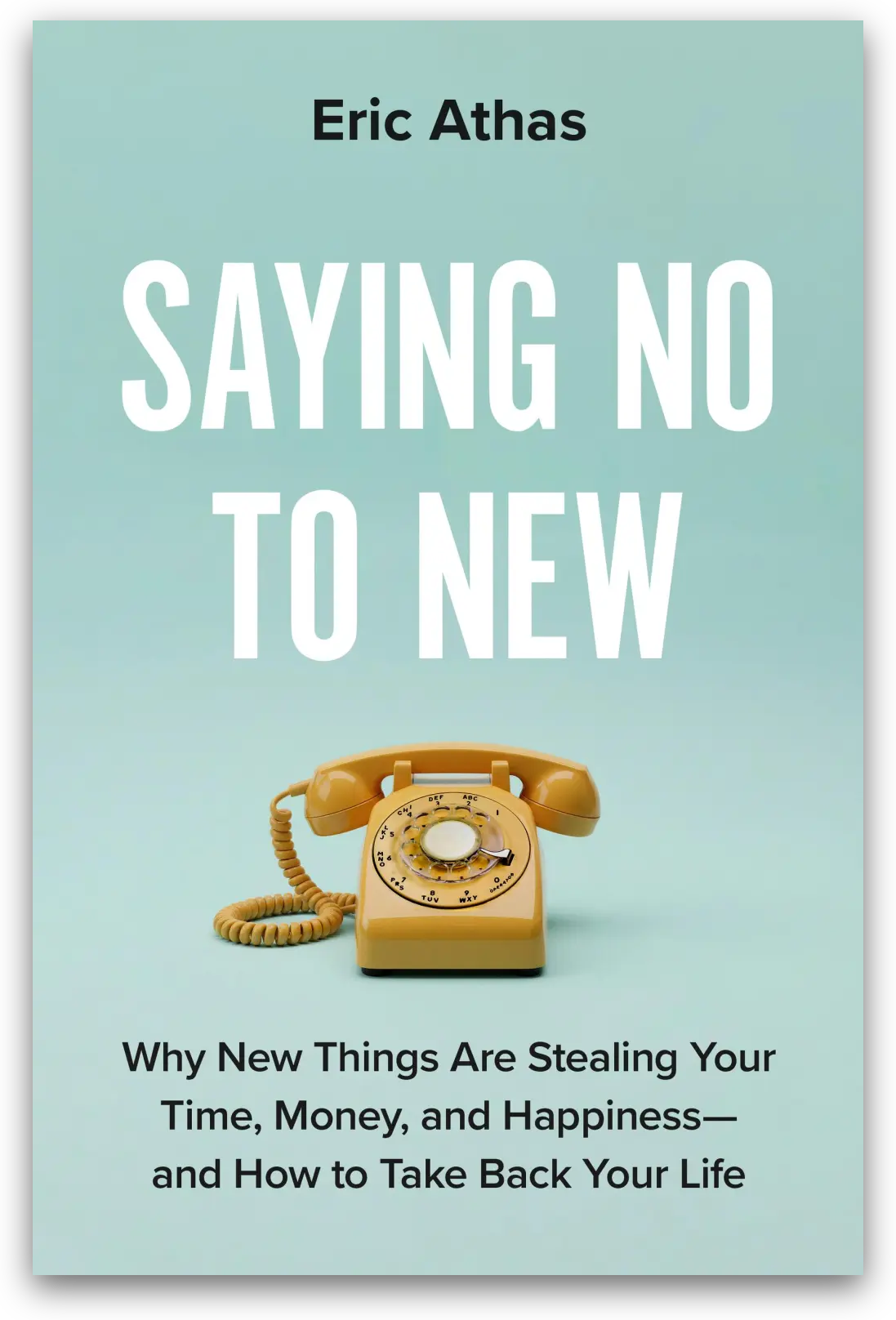
Many of the tips for avoiding bad habits involve active defiance. Stop buying things you don’t need. Resist looking at your phone all the time. (Even my book’s title, which is about saying no.)
Then I interviewed Vanessa Patrick, a self-control expert who introduced me to an intriguing, counterintuitive strategy that became a key lesson in my book. Here it is: Instead of saying you’re not going to do something, say you will do it—but you’ll do it later.
As in:
Sure, I’ll eat that double chocolate chip cookie, but later.
I’ll buy that expensive handbag, but another time.
I’ll download that app that costs $10 a month, but at some point in the future.
What’s going on here? Why would delaying make a difference?
This is one of those studies in which the explanation as to why it works is just as interesting as the outcome itself.
The easiest way to think about this is with regular, day-to-day plans you make. If you say you’re going to start that work project “some other time” without setting a concrete timeline, the project has a higher chance of falling through.
The same goes for social plans. If you run into an acquaintance and make an unspecific plan to catch up sometime (Let’s grab coffee one of these days!), I’d bet that coffee won’t happen.
Why? Because when we’re vague with our intentions to do something, we’re signaling to ourselves that we don’t care that much about it. And when we don’t care about something, we become less motivated to do it. It becomes less desirable.
But if we take the action right away (Let’s start that project now!) or make a specific plan to do it (How about we get coffee next Tuesday at 10?), we’re telling ourselves we care about the work project or the coffee with the friend. It becomes more desirable.
What’s fun about this is how we can also use lousy planning on things we don’t want to do. Researchers call this unspecific postponement.
In a series of experiments, Patrick and her research partner Nicole Mead proved the power of postponement. In one study, participants described an unhealthy food they wanted to avoid. Then some of the participants typed this:
“If I have the urge to eat [target temptation], I will tell myself that I can eat [target temptation] some other time!”
They were then asked to keep a nightly diary, noting whether they consumed the treat. The researchers found that participants who used unspecific postponement showed less desire for the unhealthy food and consumed less of it compared to the control group.
Other experiments tempted participants with cookies, M&Ms, and more. In each instance, unspecific postponement helped people steer clear of their vices.
Try it out the next time you’re feeling your willpower beginning to crumble. Say you’ll give in, but sometime later.
You’re online shopping and a new thing is calling out to you. Put it in the cart but say you’ll buy it some other time.
Keep a document or spreadsheet where you drop in items you want to buy, telling yourself that you’ll buy them later. (Tip: supercharge this approach by tracking the amount of money you’re saving by not buying the new things.)
Simply use unspecific postponement in daily interactions—when you’re tempted by unhealthy snacks or screen time. Use the scientifically-proven method of self-talk and say to yourself, “I’ll do it later.”
I’ve found that this strategy even works on my kids. When there’s an expensive toy they want me to buy, sometimes I’ll say, “Maybe later.” It works—the desire for the new thing fades over time.
Thanks for reading.
Eric
You can preorder your copy today.
No posts
Comments
Nothing yet. Say the first thing.
Sign in to join the conversation.