
At the center of the (many) debates about AI is the human relationship with friction. Friction to learn. Friction to complete tasks. Friction to develop romantic relationships. A call for friction-maxxing.
In an article titled “Against frictionless AI” in Communications Psychology, psychologists wrote that “AI’s greatest strength—removing friction from work and relationships—is also a liability.”
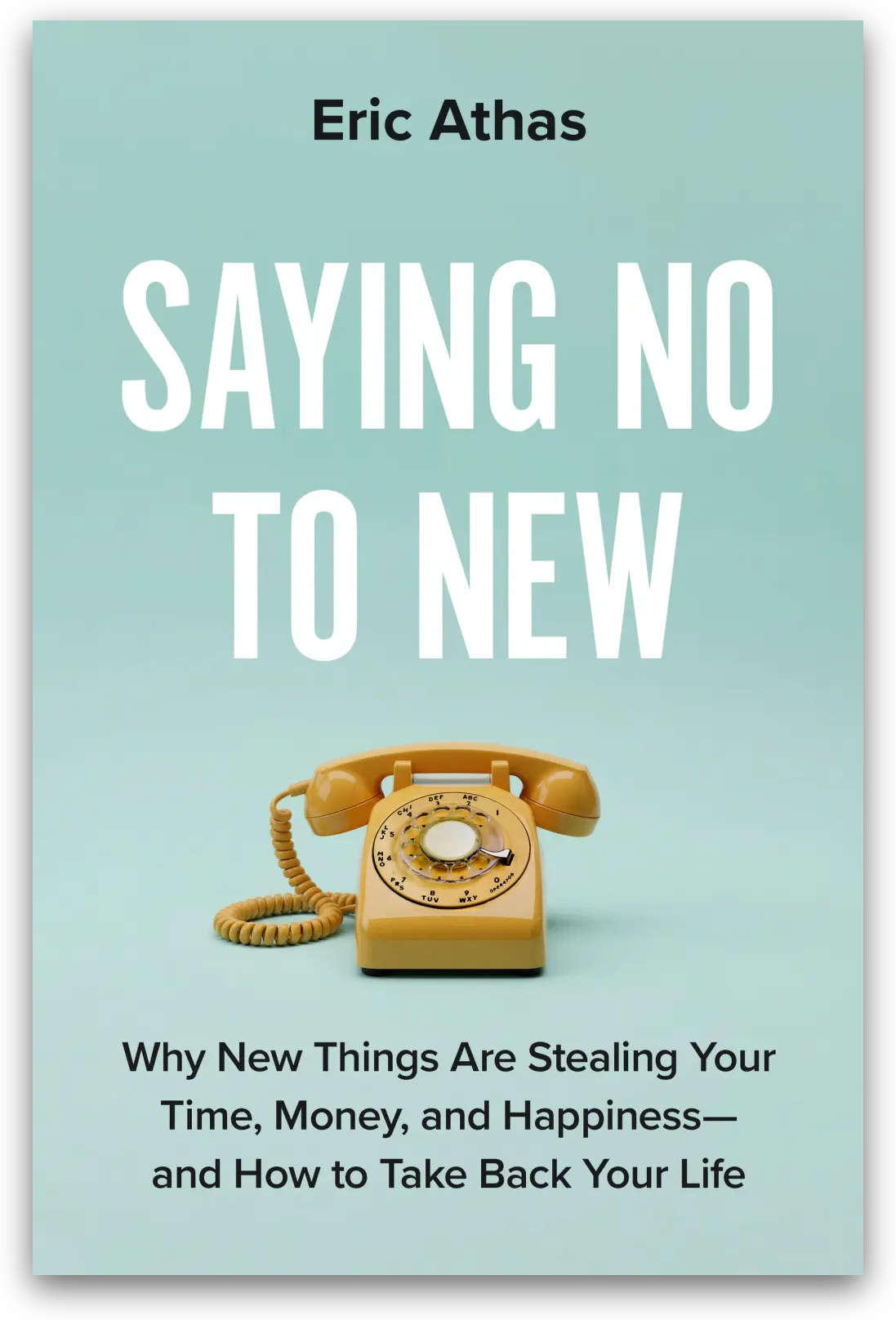
The debate over friction—the importance of it in our lives, AI’s role in removing it, and whether that’s a good or bad thing—ties into a foundational problem I write about in Saying No to New. I call it the new thing gap.
The new thing gap is the time and distance between encountering a new thing and acquiring it. This goes for new material things (new gadgets, home decor, clothing) and new information (new apps, content, subscriptions).
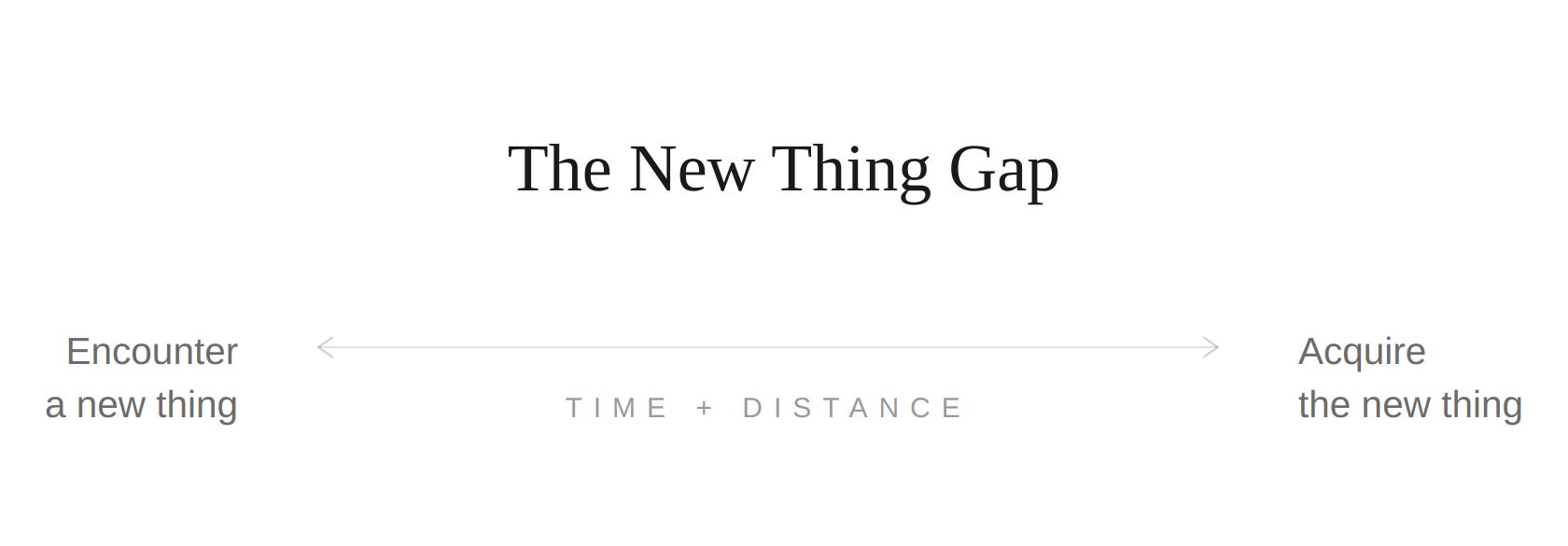
If we went back a few decades, the new thing gap was vast.
Let’s say you were watching TV and spotted an ad for a new blender or something. There was ample time and distance between that moment of viewing the commercial and making the transaction needed to gain possession of the new blender—a gap between you and a new thing. The same goes for consuming information. To enjoy a movie at home, you needed to visit a video store.
It was in this gap that consumers had time to debate whether they wanted it, needed it, had the budget for it, had the space for it. In other words, we had time to think.
We could use that thinking time to make measured decisions about new things, which meant that businesses had to work hard to persuade us to say yes to a new product or service. They had to make a convincing case because they knew we could put thought into the decision.
Today, the new thing gap is diminished. When we encounter something new, it takes seconds to acquire it. Information can be consumed with the swipe of a thumb. Material products can be ordered within seconds and arrive at our doorsteps in a matter of hours.
In exchange for convenience we’ve traded time to think. In doing so, we’ve made it extremely easy for businesses to influence our choices and persuade us to acquire new things—including those we don’t need or want. The less effort something takes to achieve an action, the less thinking is needed. And the less thinking you do before an action, the less intentional you are with that action.
This is how we end up spending money, time, and attention in the wrong places. And it’s how we end up hooked on dopamine-inducing novelty.
The late Daniel Kahneman, a psychologist and Nobel laureate, wrote about this as two pathways we take when we make decisions—cognitive ease and cognitive strain. We are less vigilant and attentive in cognitive ease mode. Friction pushes us into cognitive strain mode.
Of course, there are benefits that come with a compressed new thing gap. All that manual labor would require time and energy, perhaps in places where we don’t need to think. I don’t want to think about entering my password to get into my email. Less friction is better there.
But many times, less friction removes the thinking from actions that could have negative outcomes for us.
I want to think before spending money on something.
I want to think before acquiring something that will take up space in my home.
I want to think before consuming short-form video that may eat up my valuable time and attention.
To be clear, other people may not want these things. That is fine. What’s important is making the choice for yourself rather than having the choice made for you.
Here’s how the writer Amanda Mull described this trade-off in an essay in the Atlantic:
Much of the consumer system is constructed to generate retailers’ desired outcomes as frequently as possible. When something is made convenient, it’s because that convenience benefits the company. Sometimes, your interests and those of the retailer can align—it takes me about a minute to reorder a 15-pound bag of my dog’s kibble, for example, and I don’t need a moment longer to be sure I’m making a good decision. Other times, conveniences are put in place in order to short-circuit your ability to act in your own best interests, even if just for a split second.
In Saying No to New, you’ll get simple tips from economists, psychologists, and philosophers about how to add friction in the right places—the places where you want to think before acting—so you can reclaim that important thinking time. In other words, you’ll learn how to widen the new thing gap.
The integration of AI into everything will unquestionably reduce the new thing gap further, making already-instantaneous acquisition of new things even more instantaneous.
This is already happening, and the emergence of agentic shopping means “an AI agent shops on a human buyer’s behalf.” Major retailers like Amazon and Walmart are developing their agentic commerce strategies. Today, we can order something on Amazon and it will arrive in hours. What if packages just arrived without any effort?
Ultimately, you need to decide where you want to retain thinking time and where it isn’t needed so that those decisions aren’t made for you. The lessons I lay out in Saying No to New can help you navigate the next era of AI-powered frictionless tech and keep the new thing gap from shutting down completely.
Thanks for reading.
Eric
I spoke with Jeremy Caplan about gadgets, novelty, and how to make decisions about tools. Listen below.
You can preorder your copy today.
No posts
Comments
Nothing yet. Say the first thing.
Sign in to join the conversation.