
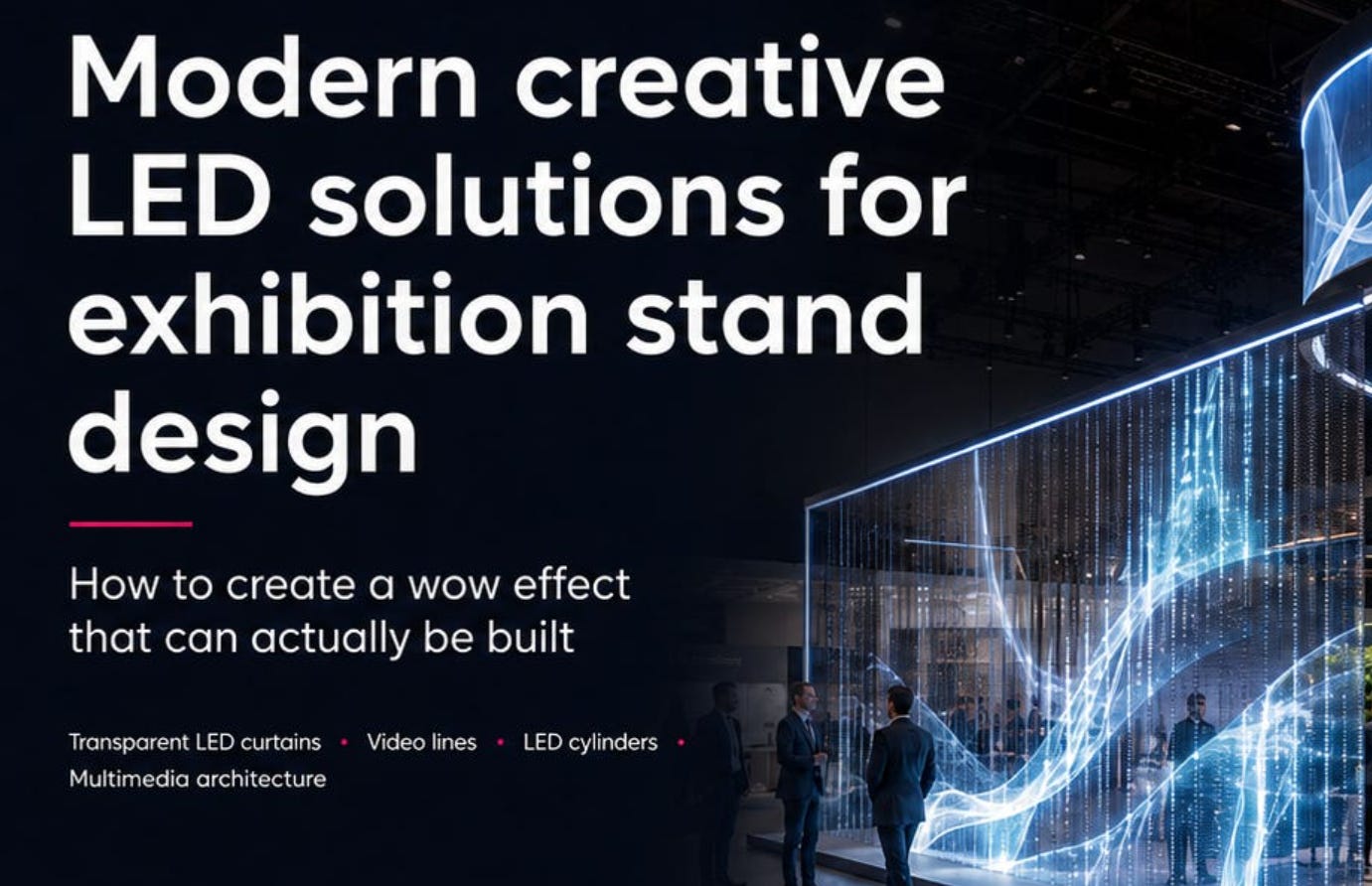
There are moments in exhibition stand design when even a very well-designed booth is simply not enough anymore.
The client wants the stand to be visible from a distance.
They want people to stop for a moment.
They want the product to look better than the competitor’s product next door
They want something modern, technological, premium, maybe a little “wow”…. but not always something that looks like a screen was simply attached to a wall at the end of the process.
That is exactly where multimedia becomes more than an add-on.
A well-used LED screen, transparent LED curtain, video line, lighting system or media server can become part of the stand architecture. It can define the entrance, draw a contour, frame a product, create a semi-transparent facade or add movement and depth to the whole space.
It is about designing multimedia exhibition stands with LED screens, lighting and audiovisual technology in a way that makes technology work for the brand, the product and the visitor experience.
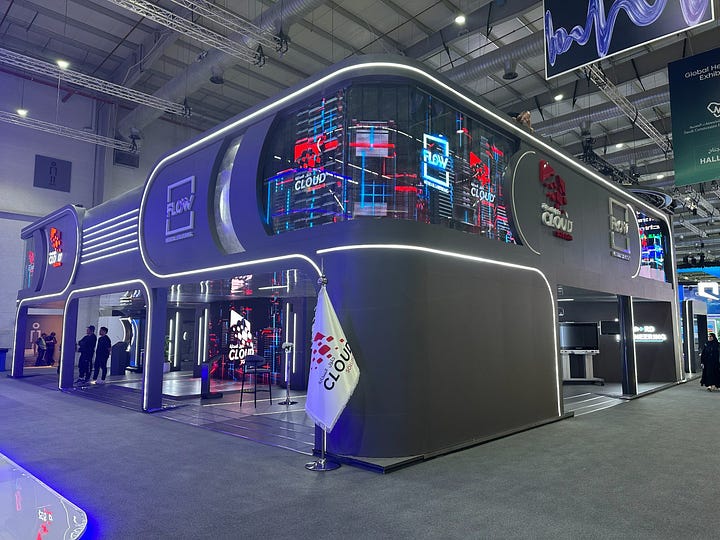
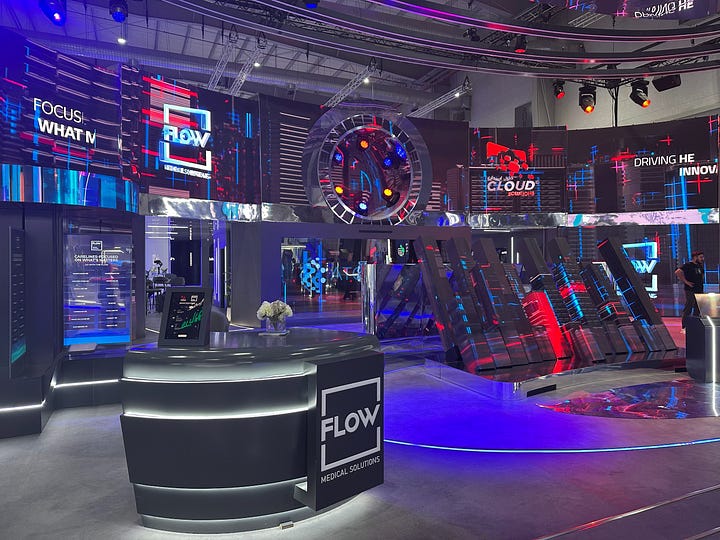
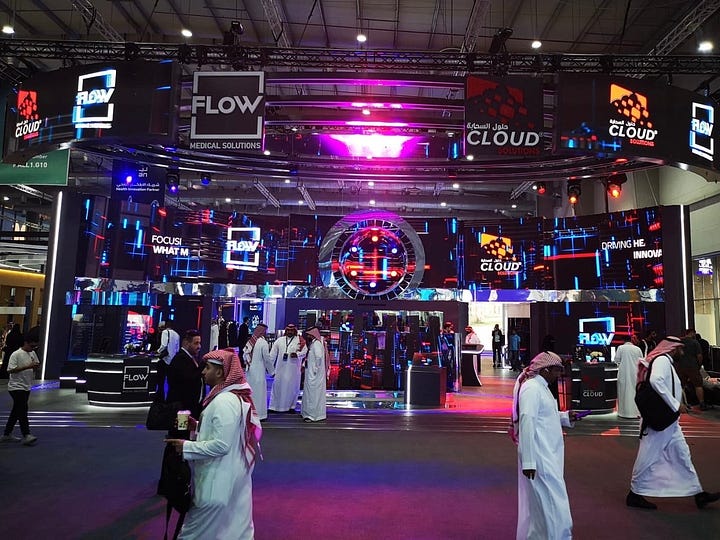
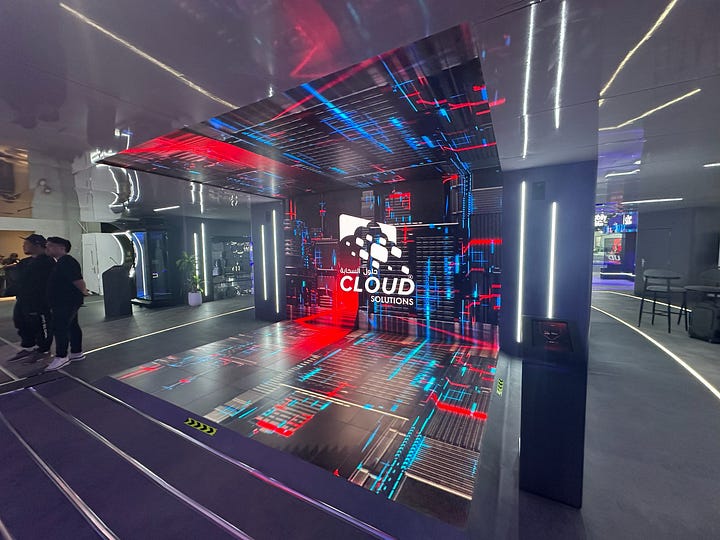
Trade shows are difficult environments. A hall is full of messages, screens, colours, conversations, lighting, movement and visual noise. Even a good stand can disappear if it does not have one strong element that catches attention.
That is why exhibition stands are increasingly borrowing the language of live events, product launches, showrooms and stage design. They are expected not only to inform, but to create atmosphere. Not only to display a product, but to build a world around it.
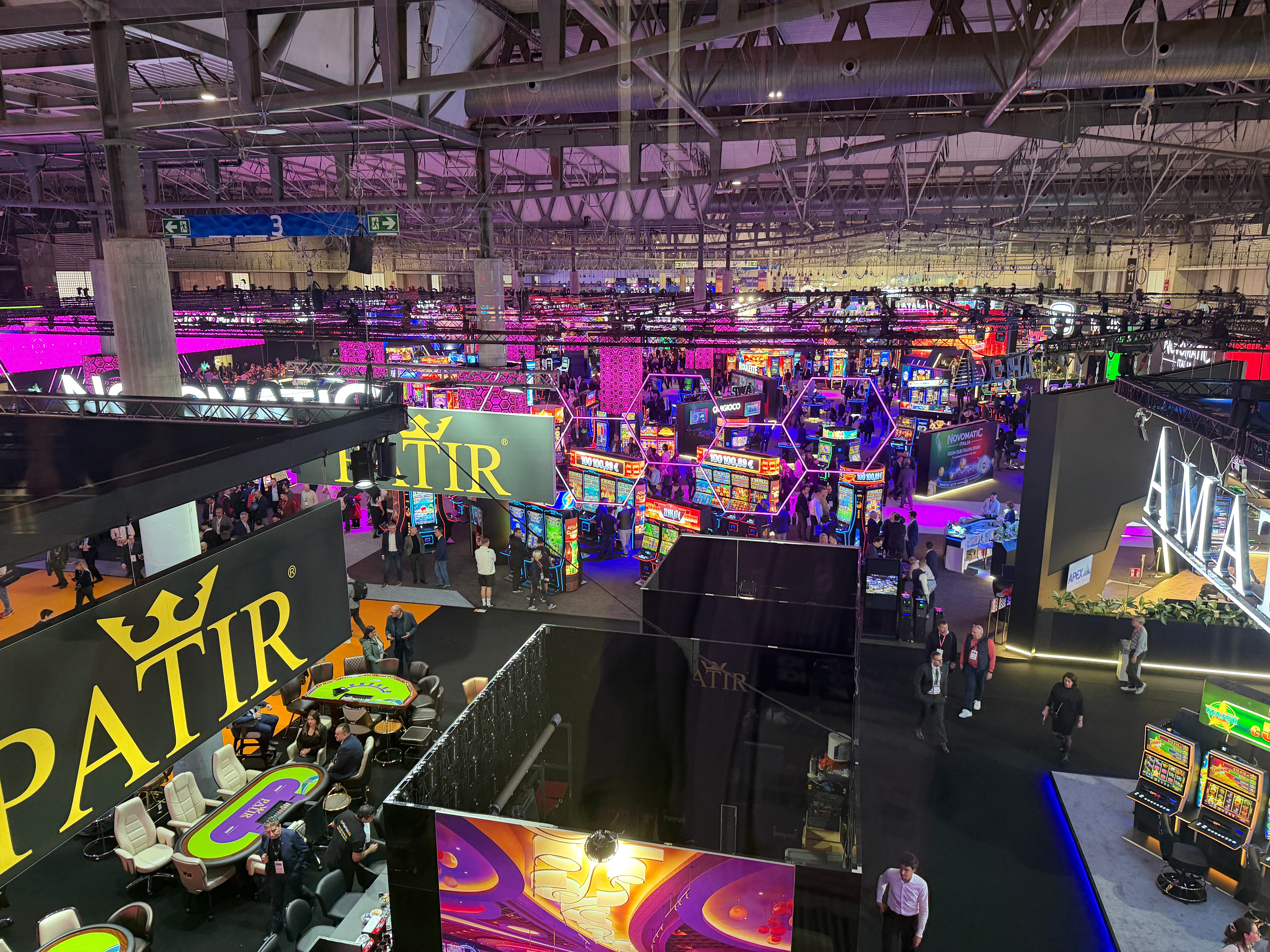
Sometimes that world is created by a large LED wall. Sometimes by a transparent layer of video behind a car. Sometimes by a line of light guiding visitors through the stand. Sometimes by a multimedia ring above the product. Sometimes by several smaller screens that support real sales conversations.
It is not always about scale.
Very often, it is about choosing the right tool.
That is why stand designers should think about technology not as an accessory to the booth, but as a design material - just like light, structure, colour, visitor flow or product display
LED screens are still one of the strongest tools in exhibition design. They bring motion, colour, video, emotion, flexible messaging and strong visibility from a distance.
But today, designers do not have to think only about one rectangular screen at the back of the stand.
Depending on the project, you can use fine-pitch LED for close viewing, larger LED walls for distance, curved displays, LED corners, lightweight creative LED forms or custom spatial structures. The A-Rental catalogue includes indoor LED screens, outdoor LED systems, creative LED, transparent LED and technologies for non-standard multimedia forms.
In practice, this means one simple thing: a good LED screen is not just “big”. A good LED screen is matched to the space, the content, the budget and the way people will actually look at it
If visitors are standing close, image quality matters. If the screen needs to be seen from across the hall, the decision is different. If the LED is part of a curved booth structure, that has to be planned early. If the image needs to wrap around a corner, it cannot be solved at the last minute.
This is also where the difference between a nice visual and a buildable design begins. As discussed in ChatGPT can draw an event. But someone still has to build it, a strong concept image does not yet answer questions about rigging, weight, schedule, budget, venue limits and available technology.
LED technology gives much more freedom than a classic flat wall — but only if it enters the design conversation early enough.
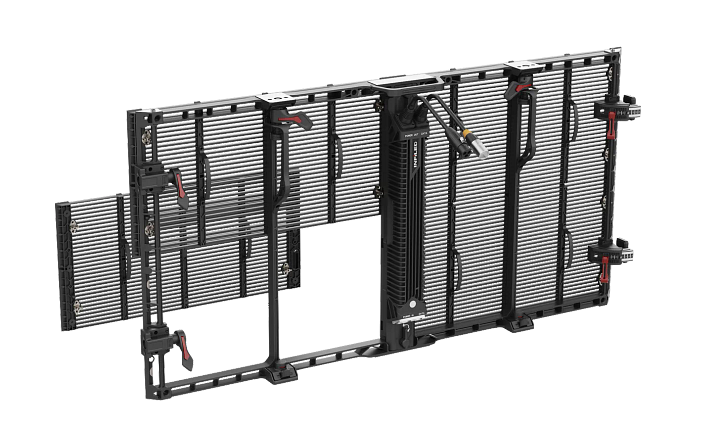
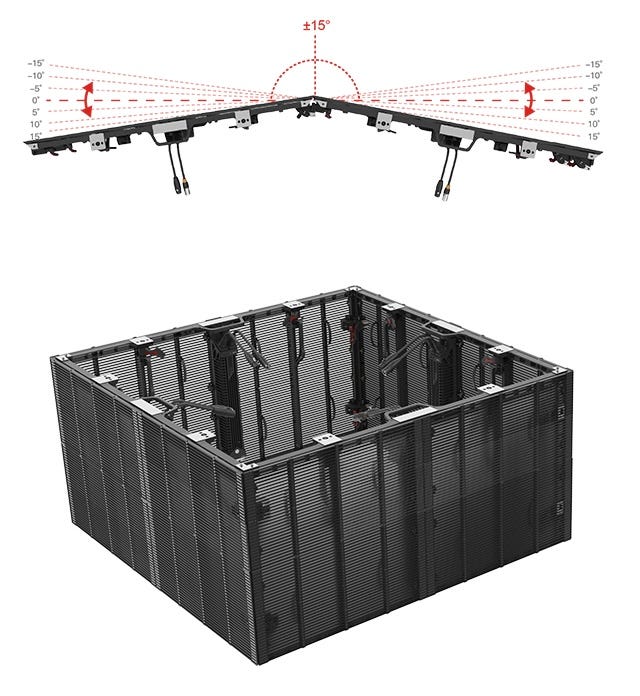
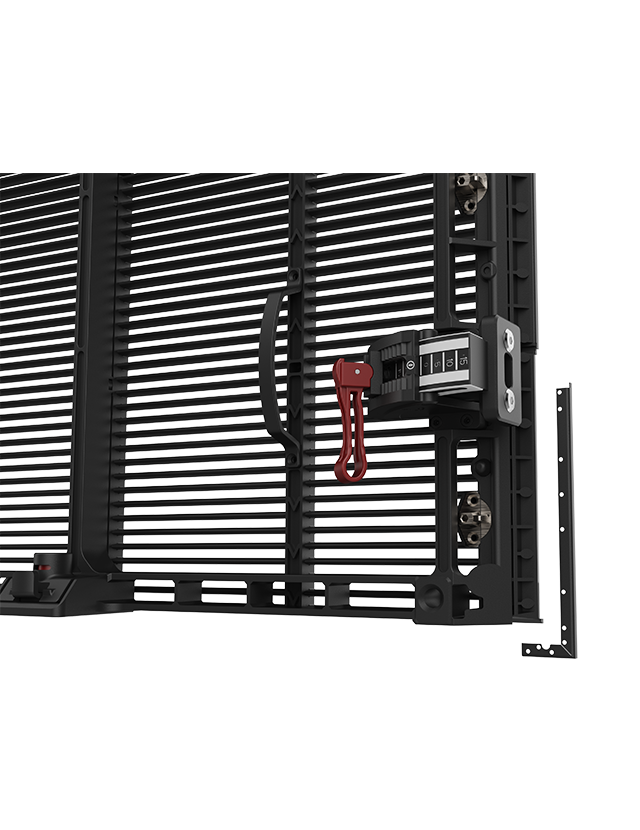
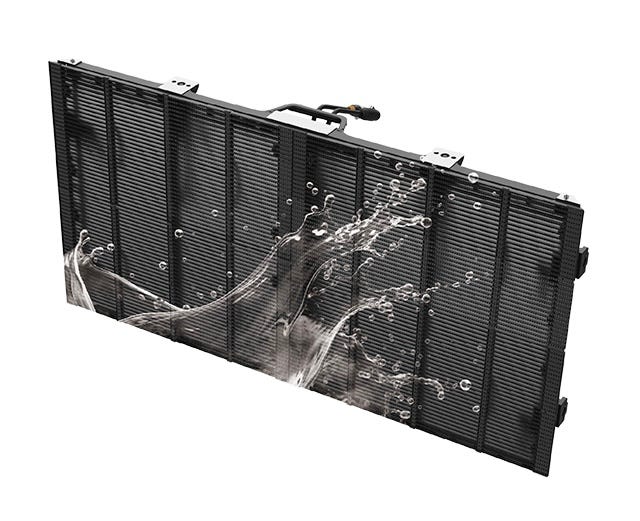
One of the most interesting technologies for exhibition stand designers is the transparent LED curtain.
Why? Because it behaves differently from a classic LED wall.
It does not close the stand. It does not create a heavy black surface. It does not completely divide the inside from the outside. It brings video, motion and atmosphere, while keeping openness, depth and visibility.
The A-RENTAL catalogue includes INFiLED HoloLight 3.9/7.8 mm, a transparent LED display with around 50% transparency, a high refresh rate of 7680 Hz and a lightweight cabinet of approximately 7.5 kg. It also describes its large stock of INFiLED HoloLight transparent LED curtain for large-scale productions, including its use for creative geometry, lightweight flown structures and large visual layers. (aram.eu)
On a trade show booth, transparent LED can be used as a semi-transparent wall, a product background, a layer in front of a car or machine, an entrance, a tunnel, a suspended element or a lightweight facade visible from far away.
It is especially interesting for automotive, technology, industrial, beauty, luxury, gaming and premium brand stands — anywhere the product should remain visible, but needsa stronger visual environment.
The most important thing is this: transparent LED does not scream “look, a screen”.
It builds a layer.
Atmosphere.
Depth.
Movement.
And very often, that is more interesting than another full LED wall.
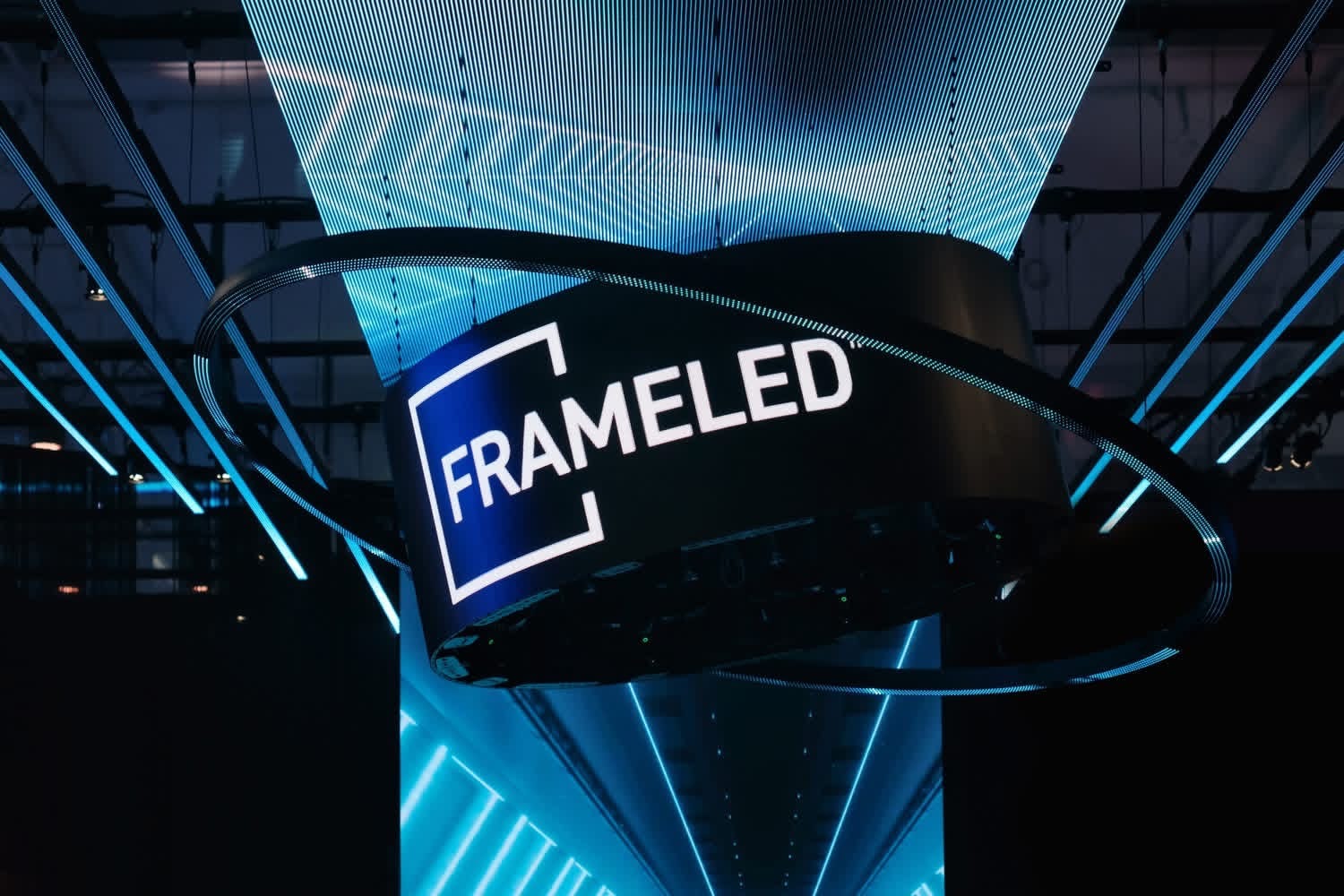
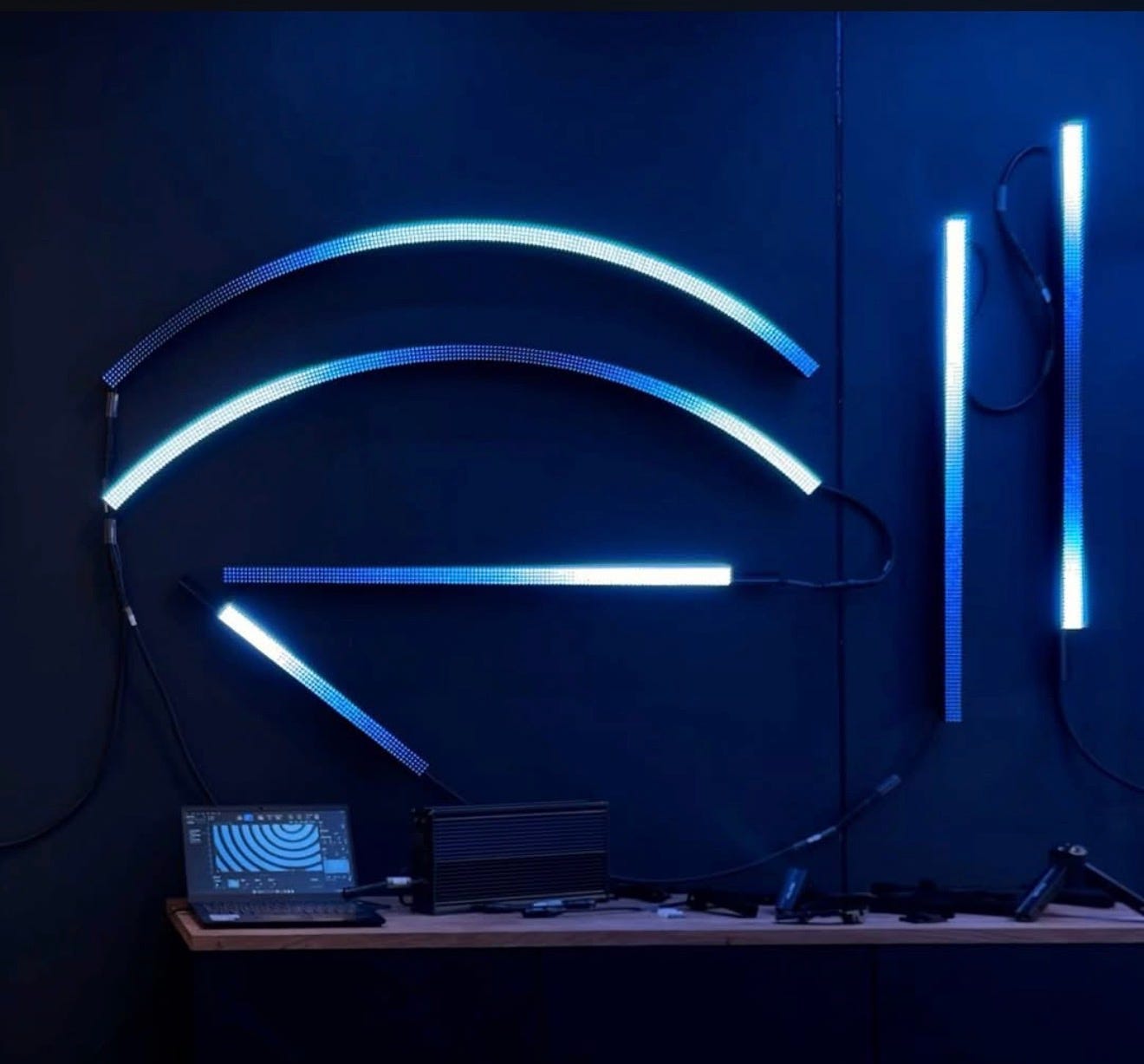
Another direction designers should watch closely is the use of video lines and FrameLED-type systems.
FrameLED Pulse, also included in the A-RENTAL catalogue, is a next-generation video strip designed as a bright modular LED line that can be integrated with structure and scenic design.
In design terms, this means something very simple: you can draw the space.
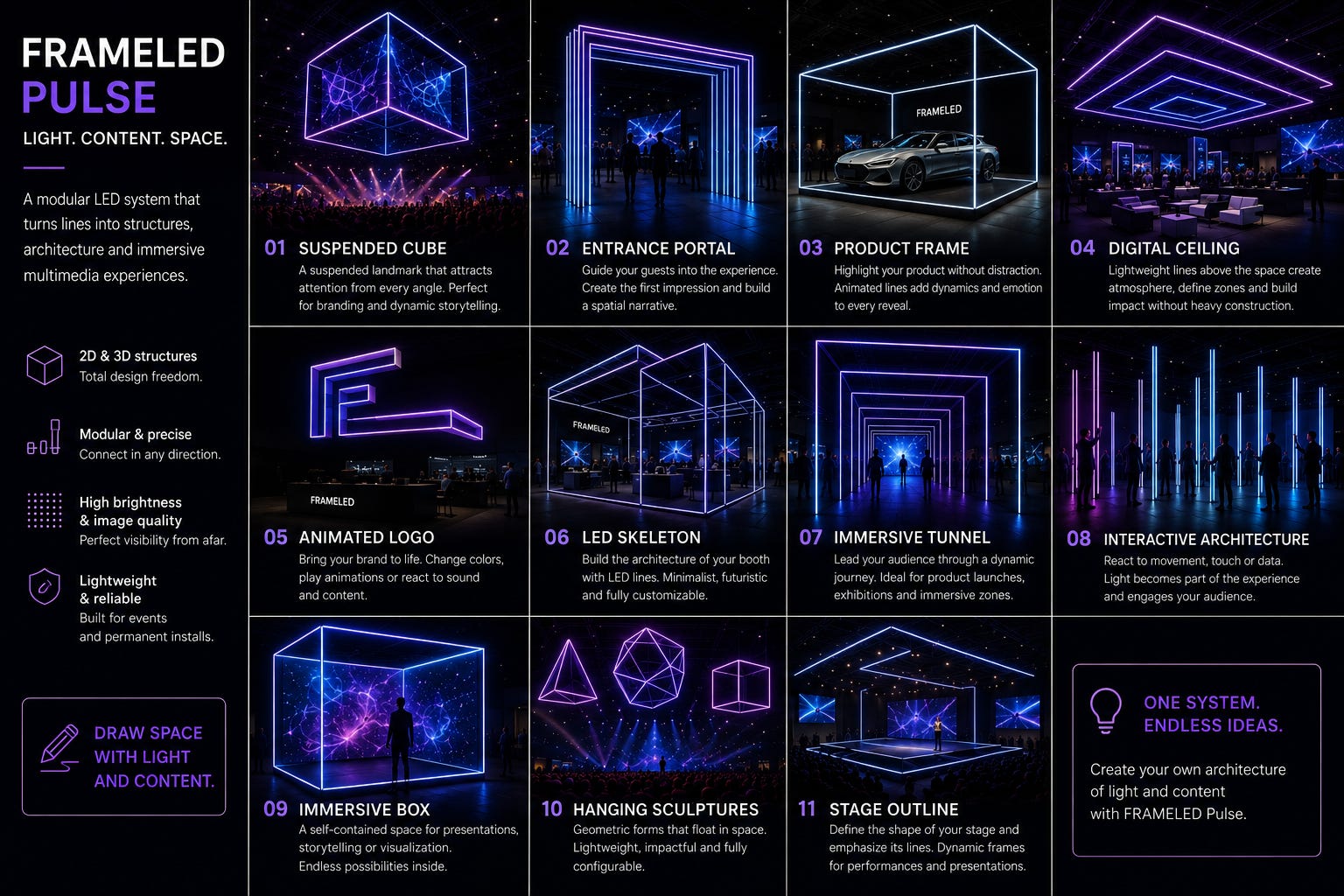
FrameLED does not need to be the main screen. Its strength is different. It can highlight the geometry of the stand, mark the ceiling edge, guide visitors along the floor, frame an entrance, outline a product or create a repeated visual motif visible from different sides of the hall.
On an automotive stand, video lines can emphasize the car silhouette or display platform.
On a technology stand, they can feel like data flow, circuits, signals or energy. On a premium stand, they can add precision and elegance. On a gaming stand, they can build rhythm and intensity.
This is why the article When LED stops being a screen and starts shaping space is a useful reference for designers: it looks at LED not only as a surface for video, but as a tool for shaping spatial identity. (entertainmentinsights.substack.com)
FrameLED does not compete with a large screen.
It completes the architecture.
If a transparent LED curtain creates the large visual layer, FrameLED adds contour, rhythm and structure. Together, they can create a very modern effect without overloading the stand with screens.
Very often, the strongest effect does not come from the largest surface. It comes from the most memorable element.
That is why creative LED should be seen as a scenographic tool, not only as a technical product.
The A-RENTAL catalogue includes solutions for arches, corners, triangular forms, video strips and flexible LED elements. These technologies allow designers to think beyond the classic rectangular screen.
You can build a digital entrance arch. A portal. An LED corner that wraps cleanly around the booth structure. A geometric composition. A dynamic background made from smaller modules. A line-based installation above the reception desk. A lightweight ceiling made of video strips. A detail that is not huge, but instantly memorable
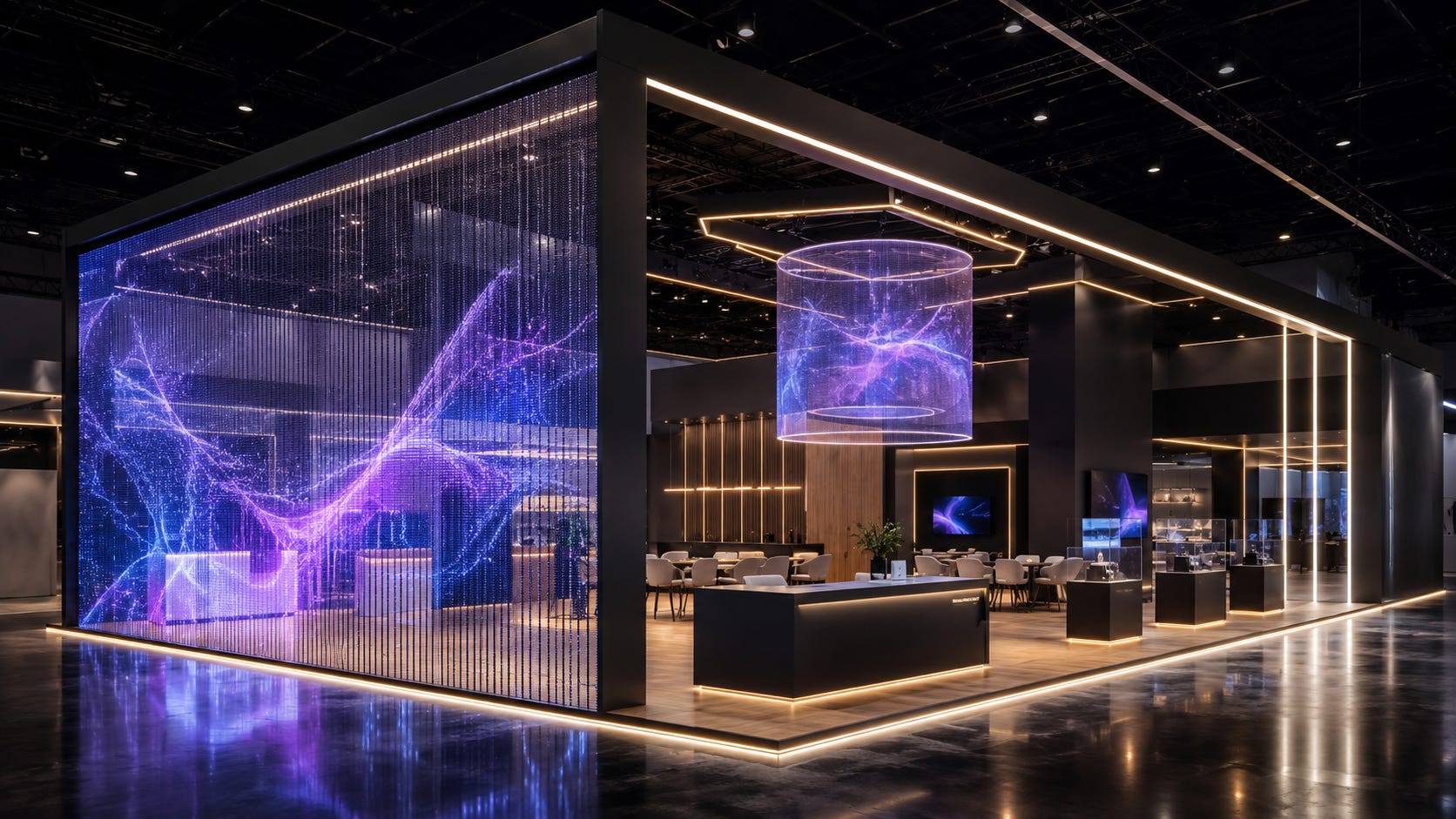
This matters because trade shows are not always won by the biggest screen.
Often, they are won by the clearest idea.
LED display solutions for events and exhibitions also makes this point in a broader way: LED can be tailored to brand identity, architecture and creative goals, not only used as a standard wall
For exhibition stand designers, this is the useful mindset:
The screen does not have to be a screen. It can become part of the brand’s spatial language.
A very strong design direction is the use of spatial forms: LED cylinders, rings, arches, circles, portals and structures above the product.
The A-Rental catalogue shows the possibility of creating LED cylinders from 2 to 20 metres in diameter, as well as truss arches and circles in many sizes. This gives designers much more freedom to think about the stand in three dimensions, not only as walls around rented floor space.
Imagine a stand with an LED ring above the car. A technology stand with a cylinder hanging above the main demo area. A premium brand stand with a light circle above reception. An industrial stand where a round multimedia form turns the machine into the centre of attention.
These elements are visible from far away, especially in large halls. They act as landmarks. They help a brand own the air above the stand.
But they also need early planning.
A ring, cylinder or suspended transparent curtain is not just a graphic in a render. It means weight, rigging, suspension points, power, transport, installation, structure and venue regulations. The earlier such an element enters the discussion with a technical partner, the higher the chance that the final result will stay close to the visual concept.
This is also where the difference between equipment rental and technical production becomes clear. As explained in Technical production vs equipment rental: a difference that costs thousands, the biggest savings and the best decisions often happen before the RFQ stage — when the design is still flexible enough to be optimized. (eventproductioninsights.substack.com)
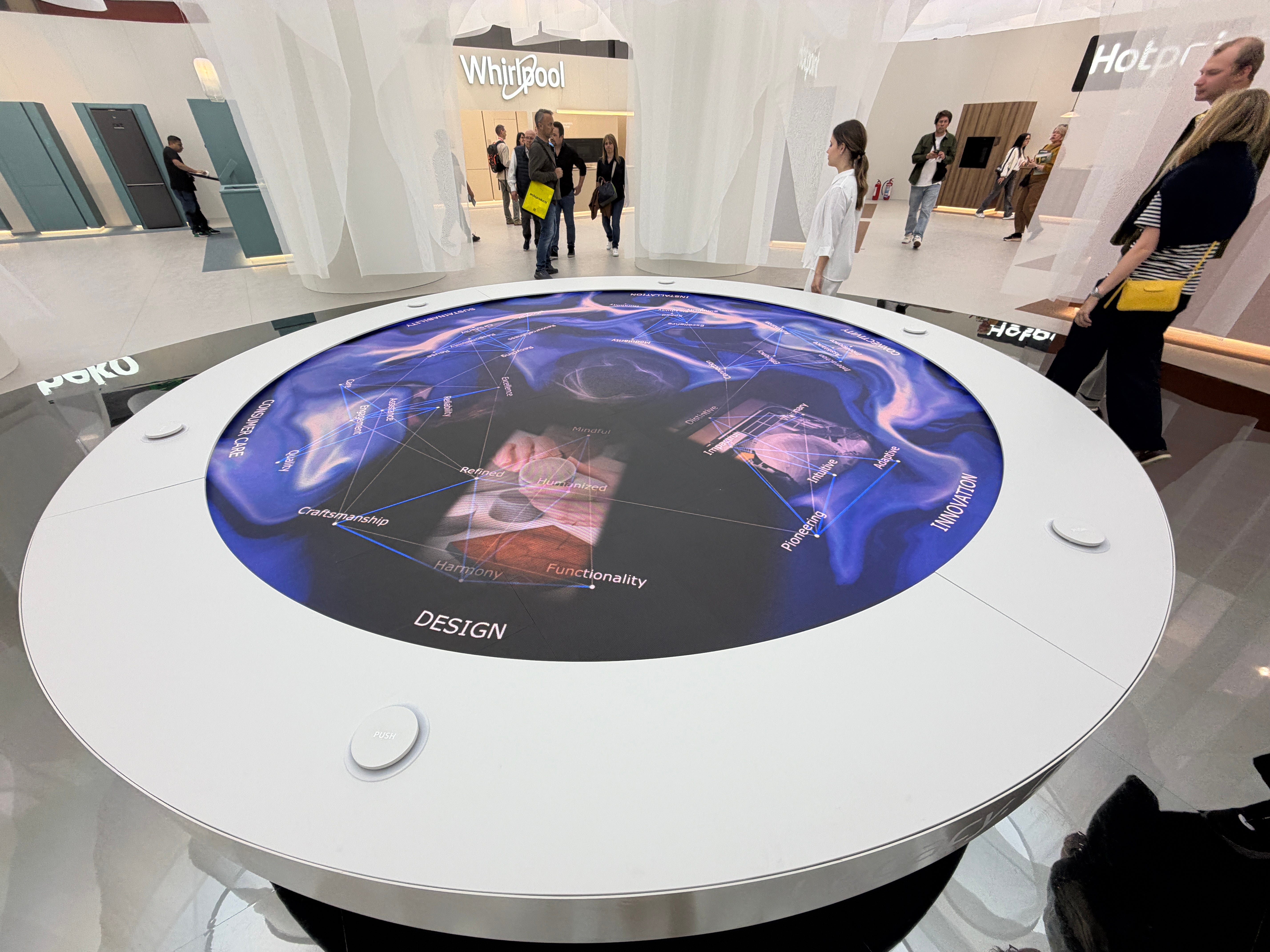
Not every booth needs a monumental installation.
Sometimes the best business impact comes from smaller tools: an LED poster, a monitor, an interactive screen, a display near the product or a simple presentation setup.
The A-REMTAL offer includes a dedicated Trade Show Booth / Conference monitors, interactive displays, presentation systems and LED Poster.
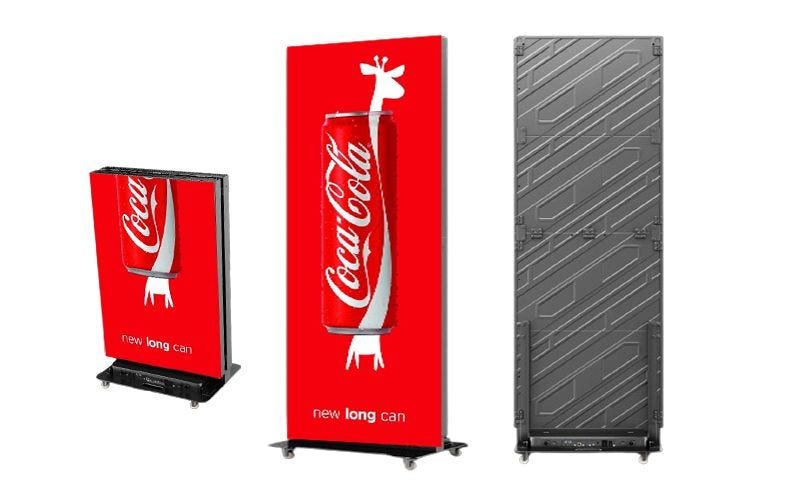
These elements may not be the most spectacular part of a render, but they often decide whether the stand actually works in practice.
Because a booth is not only a wide-angle photo. It is also a sales conversation. A product demo. A short presentation. A meeting. A technical explanation. A quick way to show the difference between one product and another.
An LED poster can support dynamic messaging. An interactive screen can help with demos and sales meetings. A large monitor may be enough for a smaller presentation zone. Presentation systems add professionalism if the booth hosts short talks or product launches.
A good stand should be designed at two scales.
From far away, it should attract.
From close up, it should help people talk.
If a stand has one screen, the system is simple.
But when the design includes a main LED wall, a transparent curtain, FrameLED, several monitors, an LED poster and content synchronized with lighting, it becomes a real multimedia production.
Then you need processing, media servers and proper signal flow.
Solutions from the Disguise, Barco, NovaStar, Lightware and Resolume ecosystem. This is the kind of backbone that makes it possible to manage more complex image systems, non-standard formats and multiple signal sources.
Visitors do not see this part.
But it often decides whether the booth looks like one coherent experience or like several screens connected separately at the last minute.
If content needs to move across different surfaces, travel from a screen to a transparent curtain, synchronize with FrameLED lines or change during a product presentation, it should be planned early.
Good processing is the difference between “it works” and “it feels designed”.
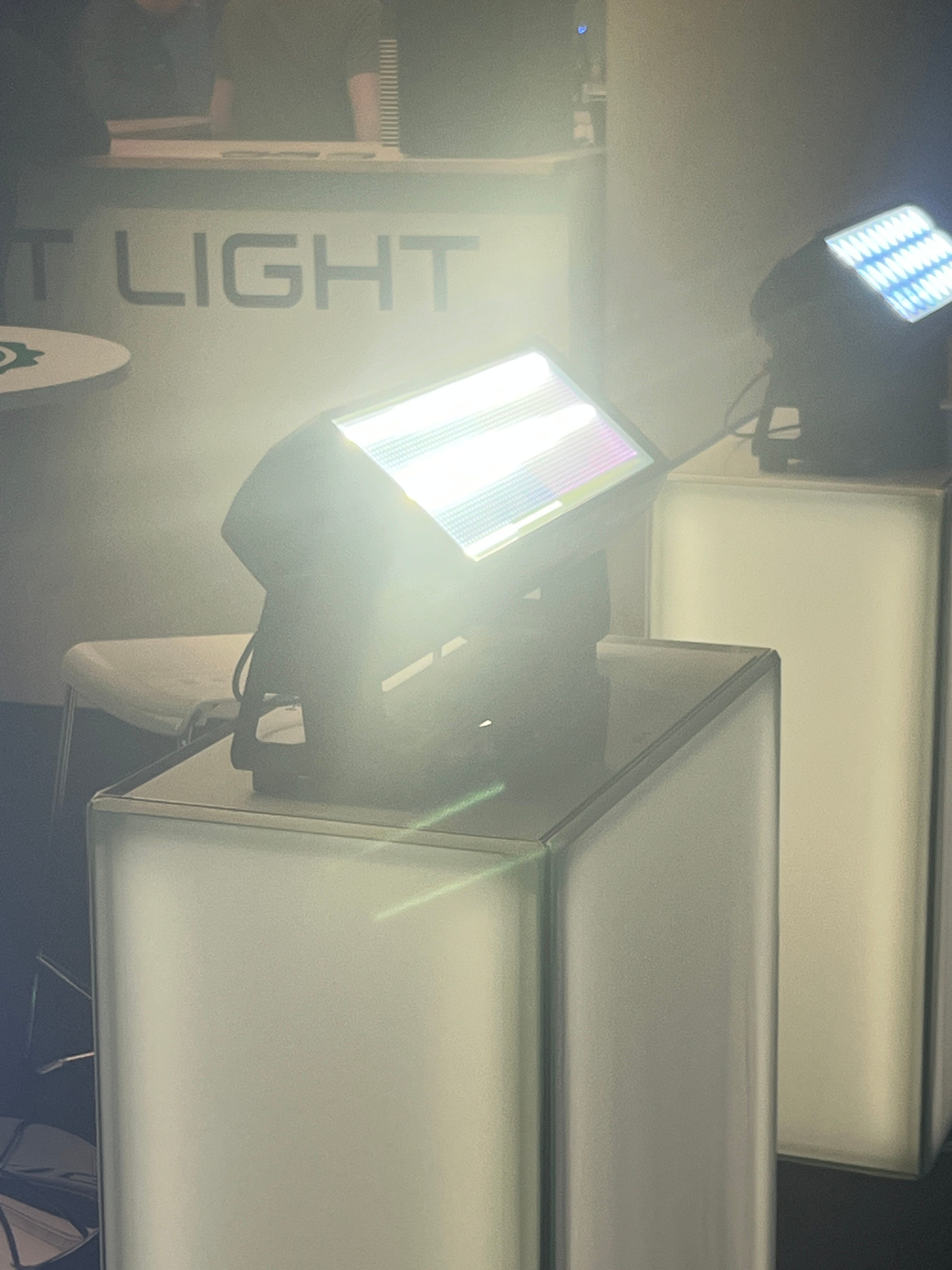
In exhibition design, it is easy to fall in love with LED and forget lighting.
That is a mistake.
Lighting can elevate the entire project. It reveals the product. It creates a premium look. It improves photos and video. It guides visitor attention. It highlights materials, paint, glass, metal, fabric and detail.
The A-Rental catalogue includes a broad lighting range, from product lighting and linear fixtures to effect lights and solutions useful for cameras, presentations and live content.
For designers, this opens several possibilities.
Lighting can become part of the architecture. It can create rhythm through linear fixtures. It can reveal the product with soft, controlled light. It can support a short reveal moment. It can synchronize with screen content. It can improve the stand for social media, press photos and live recordings.
On a trade show booth, lighting is not a technical accessory.
It is part of the branding.
A well-lit product looks more valuable. A well-lit booth looks more professional. Well-planned light makes technology feel like scenography, not chaos.
The best ideas often start in renders.
A suspended ring. A transparent facade. A cylinder above a car. A light portal. A multimedia ceiling. Video lines moving through the whole booth structure.
Great. That is what concepts are for.
But every such idea later has to answer practical questions: how much does it weigh, where is it suspended, how will it be powered, how does it enter the hall, how long will installation take, does the venue allow rigging, do we need a ground-supported structure, how do we route cables, who tests the system, what is the backup plan?
A-Rental’s catalogue includes rigging and structural equipment such as hoists, control systems, slings, trussing, corners, arches, circles, decks and support elements.
For designers, this is important.
It means you can think not only about what looks good, but also about how it can actually be built. And the earlier technology and structure enter the conversation, the fewer painful compromises appear later.
This connects directly with the broader argument from Planning an event in Europe? You don’t need more suppliers. You need the right partner: at a certain level of complexity, the value is not in adding more vendors, but in choosing a partner who understands how all parts of the system connect. (entertainmentinsights.substack.com)
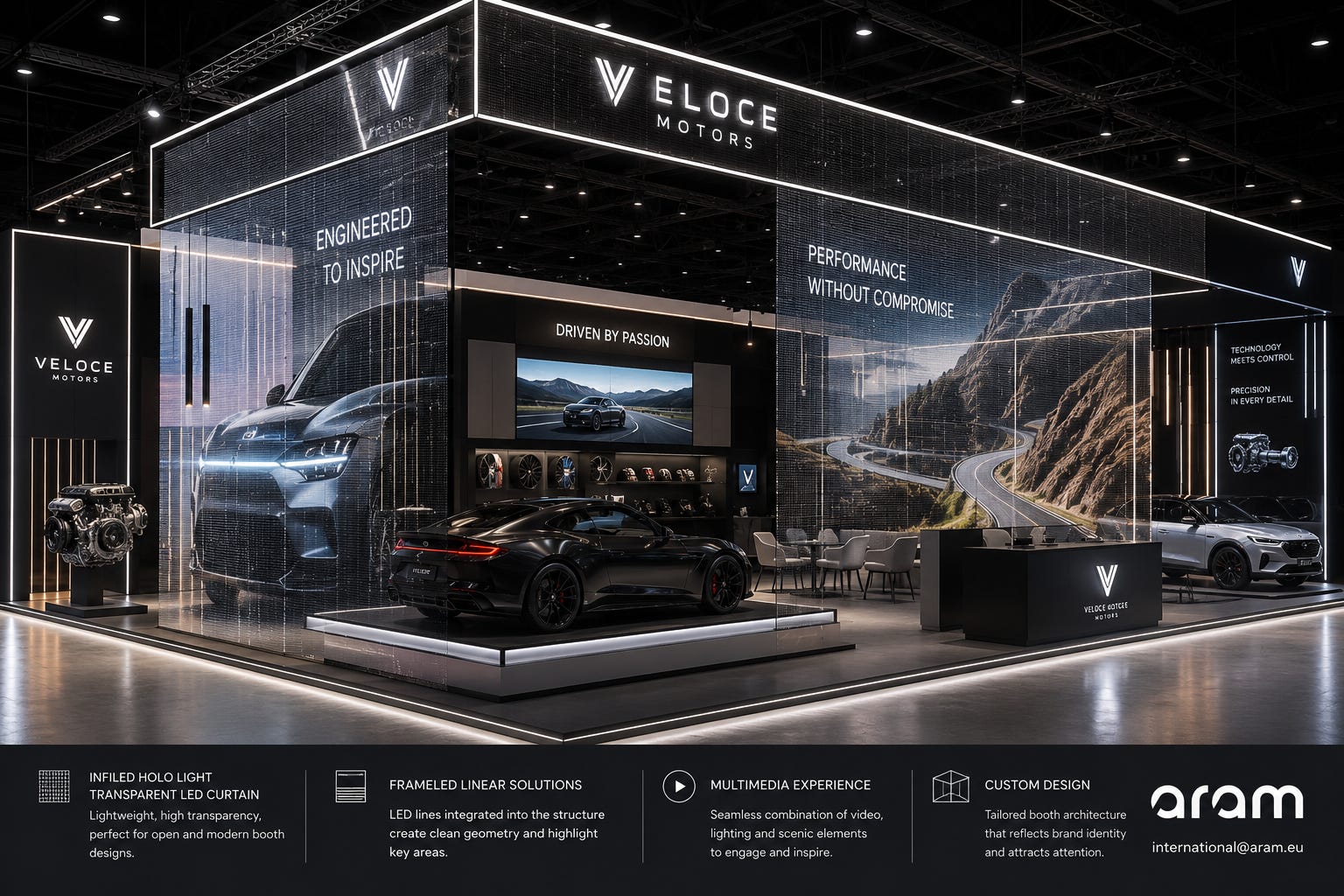
For an automotive stand, a strong direction could be a transparent LED curtain as a facade or background, FrameLED lines highlighting the car silhouette, an LED ring above the vehicle and carefully controlled product lighting. The result can feel modern, elegant and highly photogenic.
For a technology stand, fine-pitch LED can become the main visual surface, FrameLED can work as data lines, LED posters can carry product messaging, interactive displays can support demos and a media server can synchronize the whole content environment.
For an industrial stand, a transparent LED curtain can work as a layer in front of or behind a machine, a large LED wall can explain the technology, monitors can show technical data and strong directional light can reveal the product clearly.
For a premium stand, fewer elements may be better: refined LED, subtle video lines, soft lighting, one strong suspended element and perfectly prepared content.
For a smaller-budget stand, an LED poster, monitors, a few FrameLED lines or simple architectural lighting can still change the perception of the whole space.
It is not always about the largest equipment list.
It is about matching technology to the goal.
If you are designing an exhibition stand with LED, lighting, transparent displays, video lines or suspended elements, it is worth asking a few questions early:
Should the technology attract from far away, or support close-up sales conversations?
Should the screen be a surface, a layer, a line, a 3D form or a presentation tool?
Should the product be visible through the technology, or should the technology act as a background?
Will the content be prepared for the actual screen shape?
Are structure, power and rigging possible in the selected venue?
Is the equipment available for the trade show dates?
Can the design be simplified without losing the effect?
These questions help avoid the situation where a beautiful render becomes difficult, expensive or impossible to deliver on the exhibition floor.
This is also why Creating event concepts with AI? How to turn beautiful renders into buildable live experiences is relevant not only for event stages, but also for exhibition stands. A render can sell the emotion, but the real project begins when the idea is translated into structure, equipment, signal flow, content, power and schedule. (eventproductioninsights.substack.com)
If one idea should stay with you after this article, it is this: technology should enter the project early, not at the very end.
You do not need a complete technical specification. A sketch, render, moodboard or creative direction is enough to start the discussion.
From there, it is possible to check what is realistic, what is available, what should be reserved, where the risks are and how to optimize the budget without killing the effect.
Early conversations create more options.
Late decisions often mean working with what is left.
And at trade shows, where the stand is one of the most visible brand investments of the year, having options matters.
If you design exhibition stands and want to move beyond classic booth architecture, talk to ARAM and A-RENTAL early.
We can help match LED, transparent curtains, FrameLED, video strips, media servers, lighting, rigging, structure and power distribution to the actual project, budget and deadline.
If you have a render, moodboard or first idea, send it to us.
We will help check which technology can build that effect … and how to do it intelligently before the project becomes urgent.
Comments
Nothing yet. Say the first thing.
Sign in to join the conversation.