
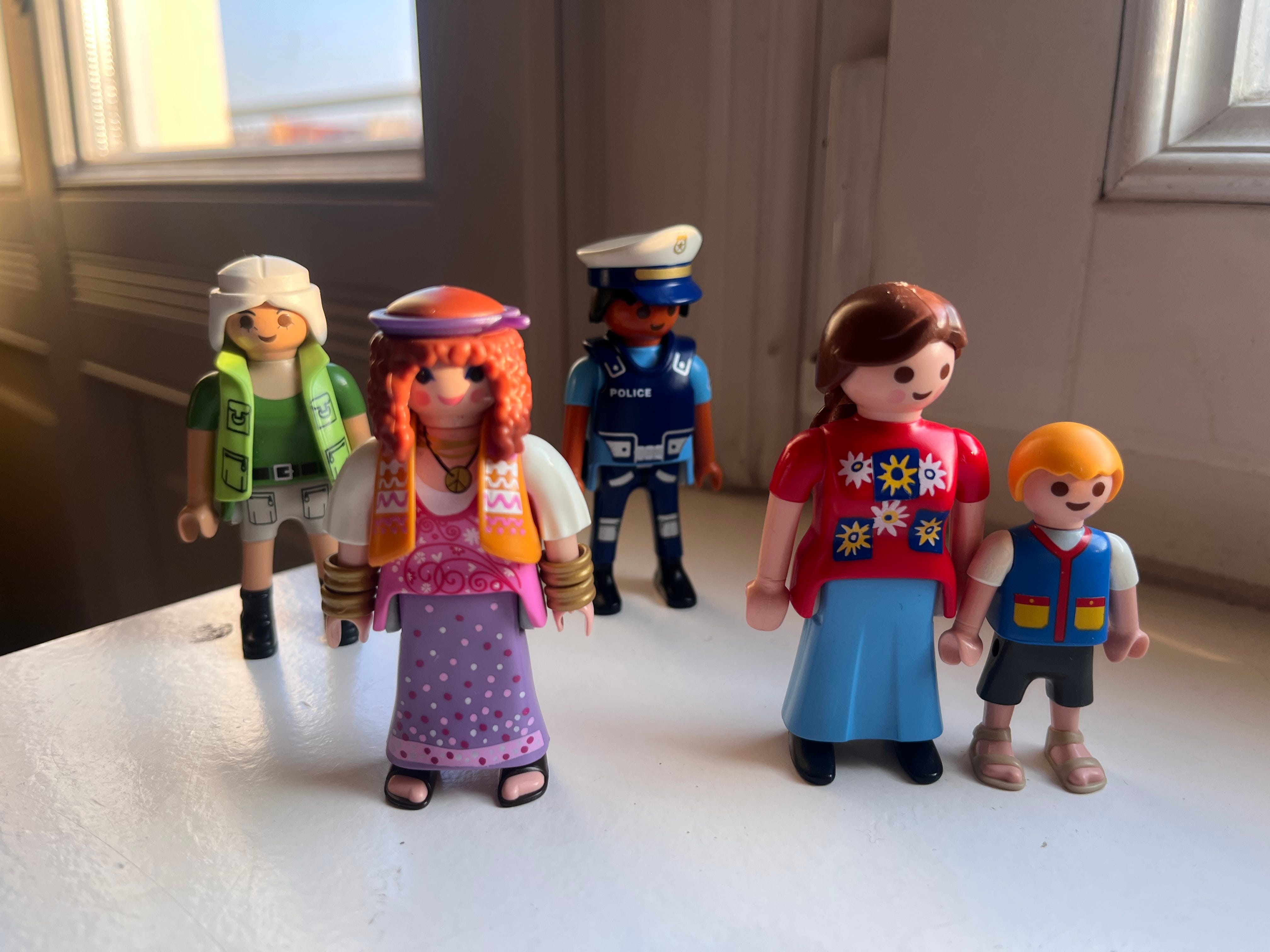
When I first started leading workshops and hosting events, it felt like a personal slight when some people didn’t turn up. Eventually I learned that the standard no-show rate at conferences or workshops is about a third or even higher for online events, although that figure goes down if people pay to attend. This was a relief: it had nothing to do with the quality of my teaching or moderation. But I still struggle to accept that this is OK.
If I receive an invitation, or take on a project, I will always show up or complete the work, unless I am at death’s door. Even if I don’t have the time, or the inclination, I will usually prioritise the interests of the person organising an event over my own. But a lot of people don’t operate like this: even those close to me. For example, I threw a party recently and one of my closest friends wrote: “I think I’ll stay in and have an early night. Would have loved to join you.” I struggle to do this. Knowing my own limits and gracefully communicating them is a skill that I am only belatedly learning.
In the past, I might have judged people who don’t show up as flaky. But I have come to realise that they are not necessarily unreliable: it’s just they can tune into their own preferences and give them at least as much weight as their obligations to me.
In her bestselling “The Four Tendencies”, Gretchen Rubin argues that the way we respond to internal and external obligations can predict how we make decisions, cope with deadlines and deal with stress. It is a helpful framework for personal and professional situations, including for many leadership challenges.
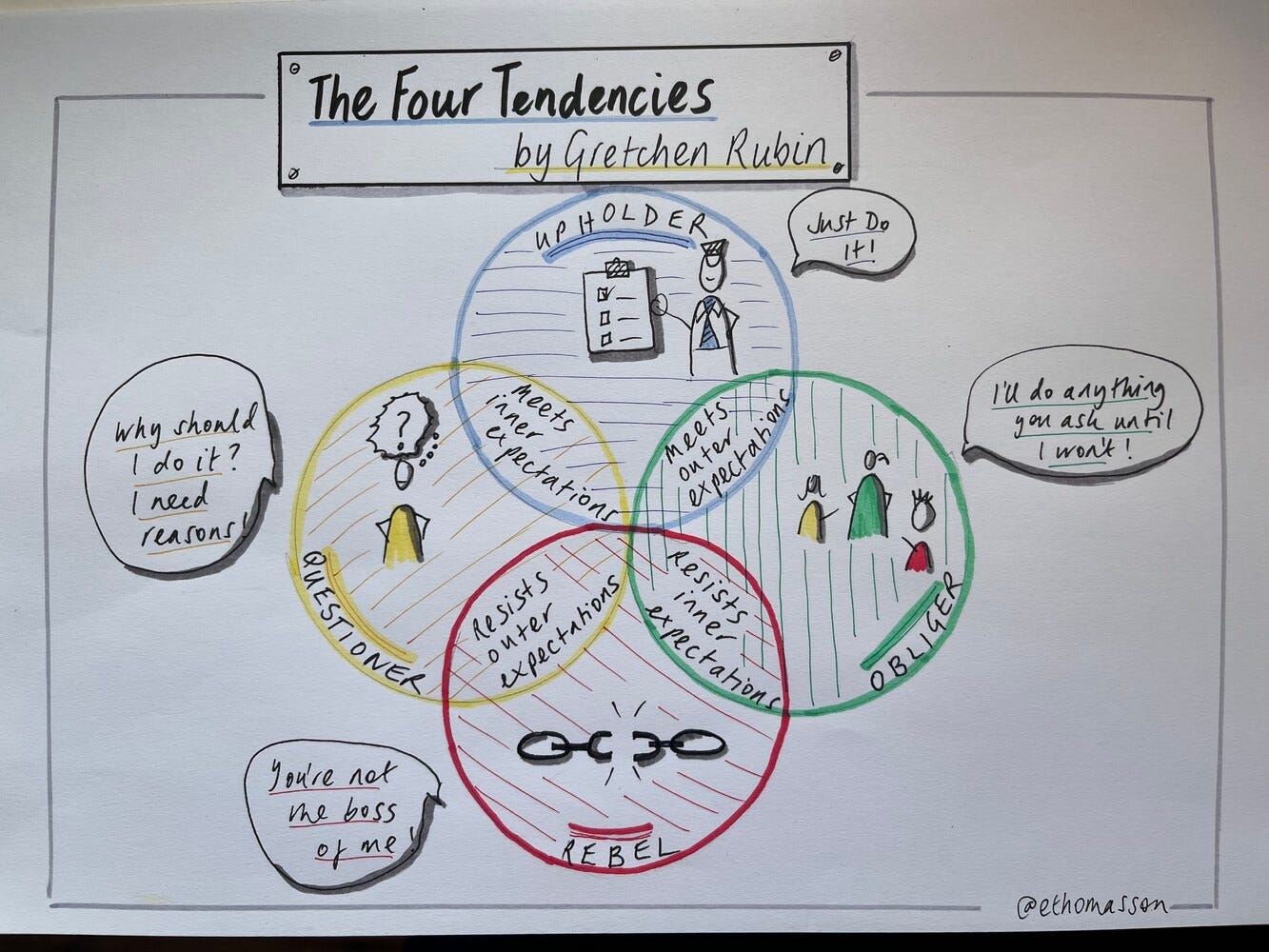
I am the classic “obliger”: I meet external obligations, but I resist inner obligations. So I feel compelled to keep reading a book because a friend gave it to me as a present, even if I don’t like it. Although I worked for years as a business journalist, I need a financial adviser to make me invest my savings wisely. And I will only get around to writing my book when an editor gives me a deadline. More than 40% of those who complete Rubin’s personality test come out as obligers: people can rely on us, but we can’t always rely on ourselves. New Year’s resolutions don’t really work for us unless we can build in some external accountability. So my “Veganuary” turned into just a few of days abstaining from cheese.
The second most common tendency, and the opposite of the obliger, is the “questioner”: people who meet inner expectations, but resist outer expectations, unless they are given good reasons to comply. Rubin says these people can make and keep resolutions although they might think that Jan. 1 is an arbitrary date to start. They are fair minded and unwilling to accept authority without justification. Many journalists I know fall into this category, perhaps a reason they can be tricky to manage. A team leader I was coaching, who was struggling to motivate a questioning employee, found Rubin’s advice very helpful:
“When coworkers realise that the questioner doesn’t intend to be confrontational, or uncooperative, or obstructionist, but is just acting according to his or her tendency, they find it much easier to be patient and to provide the information that a questioner needs.”
The third group are the “upholders”, the disciplined self-starters who are conscientious and reliable and interested in improving performance and self-management, like Rubin herself. They enjoy resolutions, on Jan.1 or other times of the year. I identify with this tendency too, and it is a common one for those in leadership. However, upholders can become defensive or rigid when plans change and might struggle to deal with people who are not as driven as themselves. Rubin says they do well in roles that require them to be self-starters, like entrepreneurship, freelancing or consulting. Perhaps why I have shifted in that direction.
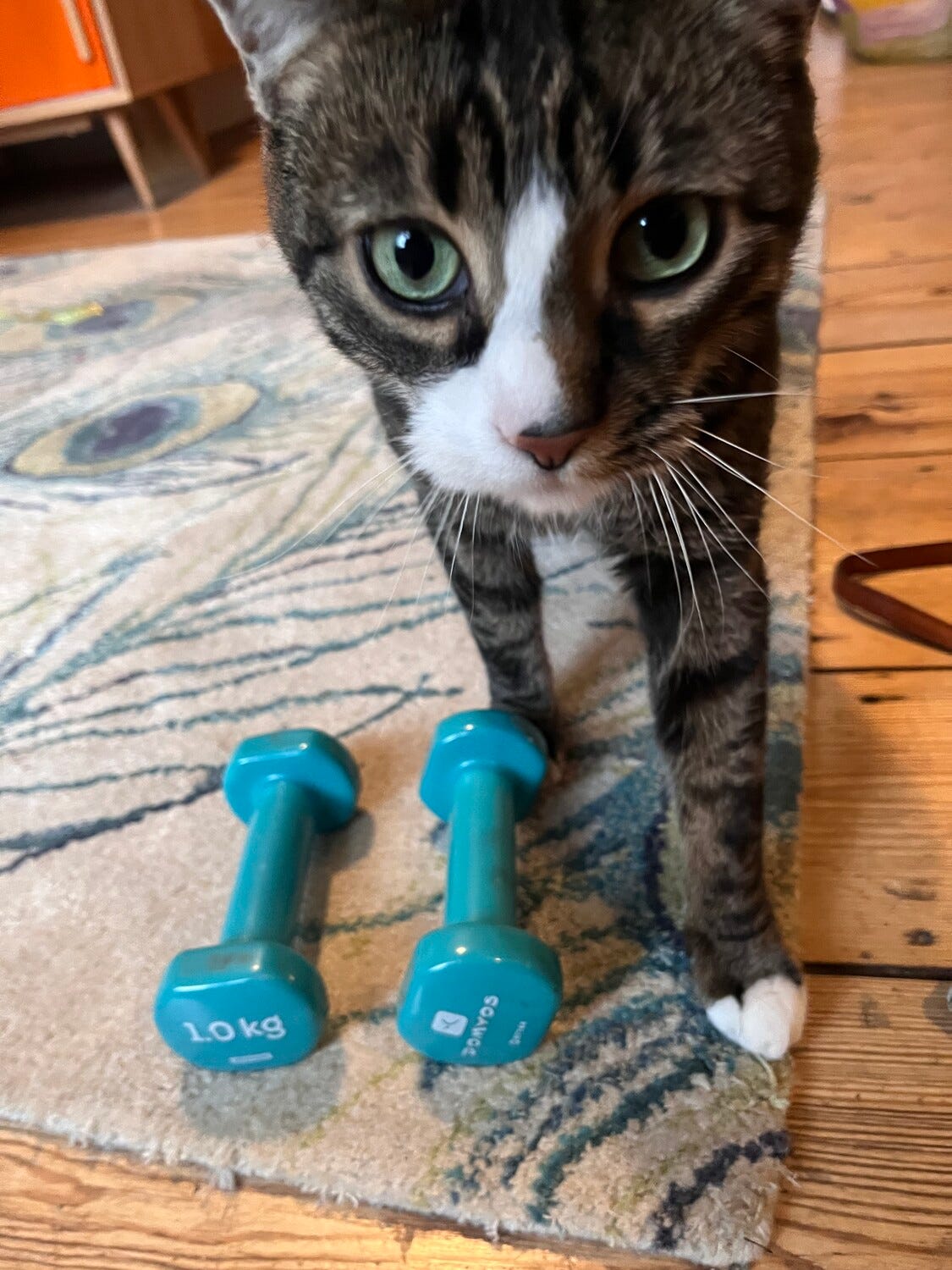
The final group, and the opposite of the upholders, are the “rebels”, who want freedom to do things their own way and resist inner and outer expectations. They might struggle to tell themselves what to do, even if it is something they want to do. So New Year’s resolutions are unlikely. A rebel in my family has been told to do exercises to build up strength after a knee injury but can’t bring themselves to follow the routine. These people don’t respond well to supervision or advice, but they thrive in a situation where they are given a challenge and allowed to meet it their own way. They often do well in creative industries, Rubin says, but paradoxically, also gravitate to institutions like the military or clergy, because they offer a sense of purpose and an opportunity to resist the rules.
The biggest insight I took from Rubin’s book is that obligers like me can sometimes flip into behaving like rebels. Because we are particularly prone to feeling burned out or resentful, and have difficulty delegating and saying “No”, obligers can reach a point when we suddenly snap and rebel against those expectations. Rubin says this rebellion can be very dramatic, like quitting a job or a relationship, or show up through small gestures, such as being deliberately late. So rather than stop going to my choir practice even though I wasn’t enjoying the songs we were singing, I started turning up later, and later.
Once I recognised this pattern, I took Rubin’s advice and spoke up in my choir about my musical preferences: now we are singing pieces I like better, I am on time again. Managers (or partners) of obligers can help us avoid this kind of silent rebellion by encouraging us to say No, delegate and take breaks.
Given social expectations for women to be more “obliging” than men, I thought gender might play a role in Rubin’s four tendencies. But then I started working with a man who has even stronger “obliger” tendencies than me. We have a monthly check-in call, but he had to cancel at short notice. He was excessively apologetic. I told him it was no big deal as I had lots else on that day, but he still felt bad about it.
That chimes with what Rubin’s view: she rejects the idea that women are more likely to be obligers. I still think the demands of motherhood strengthened my “obliger” tendency over my secondary “upholder” traits. But Rubin says she has no trouble taking care of herself despite being a busy mother.
“This feeling of “not being able to take time for myself” isn’t a female thing, it’s an Obliger thing. Obliger men feel this way, too, but they don’t ascribe it to gender,” she said. “If I think “I can’t take time for myself because I’m a woman,” I may not try to do anything about it. If I think “I can’t take time for myself because I’m an Obliger,” I may decide, “I need accountability to get myself to go to the gym, so I’d better sign up with a trainer.”
That is certainly true for me: I am much more likely to go to a weekly bootcamp in the park run by a friend than to motivate myself to do weights on my own.
As well as teaching ways to avoid burnout and overwhelm, this model can be useful for managers who are struggling to resolve conflicts in their teams or to motivate employees who have a different tendency to themselves.
Next time you want to get your message across, take into consideration all tendencies. So my next invite might look something like this:
“Come to my workshop to improve team performance. Sign up now! (for the upholders)
I teach methods proven by neuroscience to boost motivation and reduce absenteeism. (for the questioners)
Your teammates are counting on you to be there. (For the obligers)
We will have fun but attendance is not mandatory: the choice is yours.. (for the rebels).”
Which message works best for you?
Comments
Nothing yet. Say the first thing.
Sign in to join the conversation.