
Scared to eat lettuce right now? In all seriousness, fiber is important. And if you’re looking for more ways to incorporate it into your diet, keep reading.
Fiber isn’t just another nutrition buzzword. Most Americans genuinely don’t get enough of it, despite its role in digestive health, blood sugar regulation, heart health, satiety, and the gut microbiome.
Still, the category has historically been sleepy, dominated by products like Metamucil and Benefiber that consumers associate more with constipation and the medicine aisle than everyday wellness.
Fiber 101
To lay the groundwork, fiber is an umbrella term and not all fiber works the same way. It’s generally divided into two categories: soluble and insoluble.
Soluble fiber dissolves in water and can help slow digestion, regulate blood sugar, and lower cholesterol. Insoluble fiber adds bulk and helps move food through the digestive tract.
Resistant starch is another important form of fiber, although it does not fit neatly into the soluble versus insoluble framework. It resists digestion in the small intestine and reaches the colon, where it is fermented by gut bacteria. That fermentation produces short-chain fatty acids, which help support the gut lining and broader metabolic health.It can also help moderate the blood sugar response and may stimulate the body’s natural production of GLP-1 through the fermentation process. This isn’t the same as taking a GLP-1 medication, but the connection is interesting.

TLDR

Old School Fiber
Existing fiber brands use a mix of ingredients. Metamucil is built around psyllium husk and Benefiber Original uses wheat dextrin. Inulin (chicory root) is also common.These fibers can be effective, so what’s the problem with them?
Coloring / Flavoring: Some legacy fiber powders are brightly colored and heavily flavored (shoutout bright orange Metamucil). While that doesn’t necessarily make them unsafe, being clean label is table stakes for consumers at this point.
Psyllium husk: Psyllium itself isn’t really the issue. It’s a well established fiber with real benefits. The issue is the consumer experience. Psyllium absorbs water and quickly thickens into a gel. It’s not a drink you can casually sip throughout the day. It’s something you quickly chug in the morning, making fiber feel more like medicine than an everyday wellness habit.

Inulin: Inulin is a prebiotic and can have real digestive benefits, but is difficult for some people to tolerate. For sensitive consumers, particularly those with IBS, it can lead to gas, bloating, cramping, (and urgent trips to the bathroom).
It’s not that existing fiber formulations don’t work. Many products are unpleasant, inconvenient, or difficult to tolerate. For fiber to become “the next protein,” the category needs to make it easier for consumers to build fiber into their day-to-day.
New School Fiber
Enter the next generation of fiber: fun packaging, new blends, and snackable formats.
Fun packaging: BelliWelli was one of the first brands making fiber cool again. Their merch has some of my favorite taglines, including “Hot Girls Have IBS.” The brand takes a topic that has historically felt embarrassing or clinical and makes it something consumers are willing to talk about, and even wear on a sweatshirt.

Innovative powders: FiberBlisss is an emerging brand innovating on traditional powder formulations and one the most exciting I’ve seen. Its products use acacia fiber and cellulose instead of relying on inulin, which can be difficult for some people to tolerate. The formulas also contain ingredients like ginger, magnesium, and quercetin to support digestive comfort and broader gut health. Because the powder is free from psyllium husk, it is designed to be a lighter drink that can be enjoyed throughout the day rather than quickly chugged.
Ozzi takes a slightly different approach. Rather than positioning itself as a traditional fiber supplement, Ozzi uses fiber as part of a broader formula focused on cravings, satiety, and food noise. Its drink sticks combine konjac root, a soluble fiber that absorbs water and helps create a feeling of fullness, with a small amount of inulin, allulose, butyrate, and other metabolic health ingredients.
What I find particularly interesting about Ozzi is the use case. The brand moves fiber beyond regularity and into the conversation around metabolic health and natural GLP-1 support. With only 1g of dietary fiber per stick, it is probably more viewed as a metabolic wellness product that uses fiber rather than a product designed to meaningfully close the fiber gap. Still it shows how much broader the category can become.
Can’t skip Supergut here, which I view as one of the first real powder disruptors to Metamucil and Benefiber. Supergut combines resistant starch with other fibers, including oat beta-glucan, and positions the blend around metabolic health and supporting the body’s natural GLP-1 activity. It brings a much more relevant cultural message to a historically dated category.
Gummies: Arrae’s Bloat Gummies contain 5g of prebiotic fiber per serving from scFOS, or short-chain fructooligosaccharides (fructose molecules). The fiber forms the base of the gummy, allowing the product to contain no sugar or sugar alcohols vs. simply adding fiber to a traditional sugary gummy formula.
In addition to its powder format, BelliWelli offers a gummy supplement with 5g of fiber per serving from acacia fiber and tapioca resistant dextrin. The gummies also contain probiotics, collagen, and electrolytes, turning fiber into more of an all-in-one daily wellness product.
Snackable fiber: This is the area I’m most excited about. I think many investors and consumers would agree that there is some degree of powder fatigue. In part, I believe this is why brands like Grüns have resonated: they offer an alternative to pills and powders and make taking supplements feel fun again. In my view, we’re moving from pills → powder → gummies → snacks (and eventually to whole foods).
Harken Sweets and Fiome are two of my favorite new snackable fiber options. Harken has created genuinely delicious date-based candy bars that double as an excellent source of fiber. The Nutty One is my absolute favorite! Each bar has 14g of fiber from ingredients including dates, prebiotic tapioca fiber, and sunchokes.
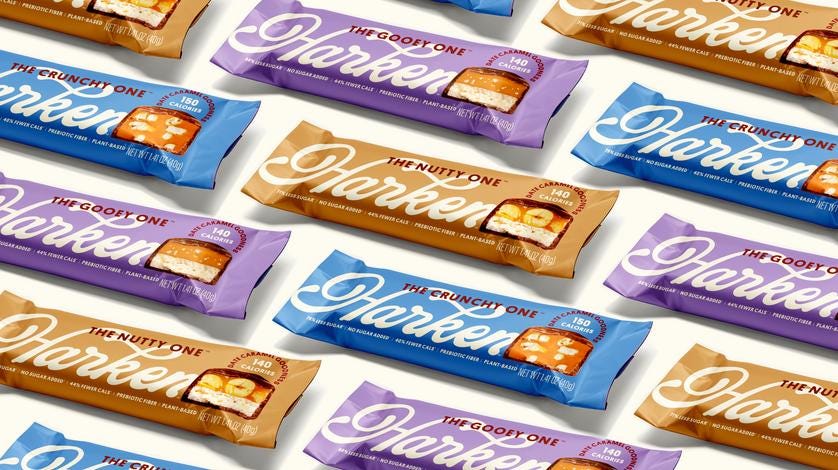
Fiome has taken a similar approach with small date-based bites with 5g of fiber each. Its fiber comes from a mix of inulin sourced from chicory root and artichoke, dates, and oat fiber.
Both brands use dates to make fiber feel more like food and less like a supplement. Which is really the whole story of this piece. Fiber hasn’t necessarily become more effective. It’s just finally fun!
No posts
Comments
Nothing yet. Say the first thing.
Sign in to join the conversation.