
Write one “AI house rule” for your team today. With AI now baked into half the software you touch, decide now what your people will never paste into a public chatbot — client contracts, passwords, anything with a Social Security or credit card number. One short paragraph, shared in your team chat. This costs you 10 minutes and saves you the nightmare in the Grok Build story below. Open a note, write “We never put X, Y, Z into AI tools,” and send it.
Rebuild one thing you skip because it’s “too expensive.” The polished proposal, the product photos, the 30-second promo video, the first draft of a policy — the stuff you don’t do because hiring it out costs too much. Netflix just used AI to make shots it literally couldn’t afford (see below). You can do the small version. Try this: pick one of those and ask ChatGPT or Claude to take a first swing today.
Reply and tell me the one repetitive phone-or-email task eating your week. The “call back every lead,” the “answer the same five questions,” the “send the same follow-up.” Hit reply with yours and I’ll map — free — how you’d hand it to an AI assistant. That mapping is step 1 of every engagement we do at Phos AI Labs.
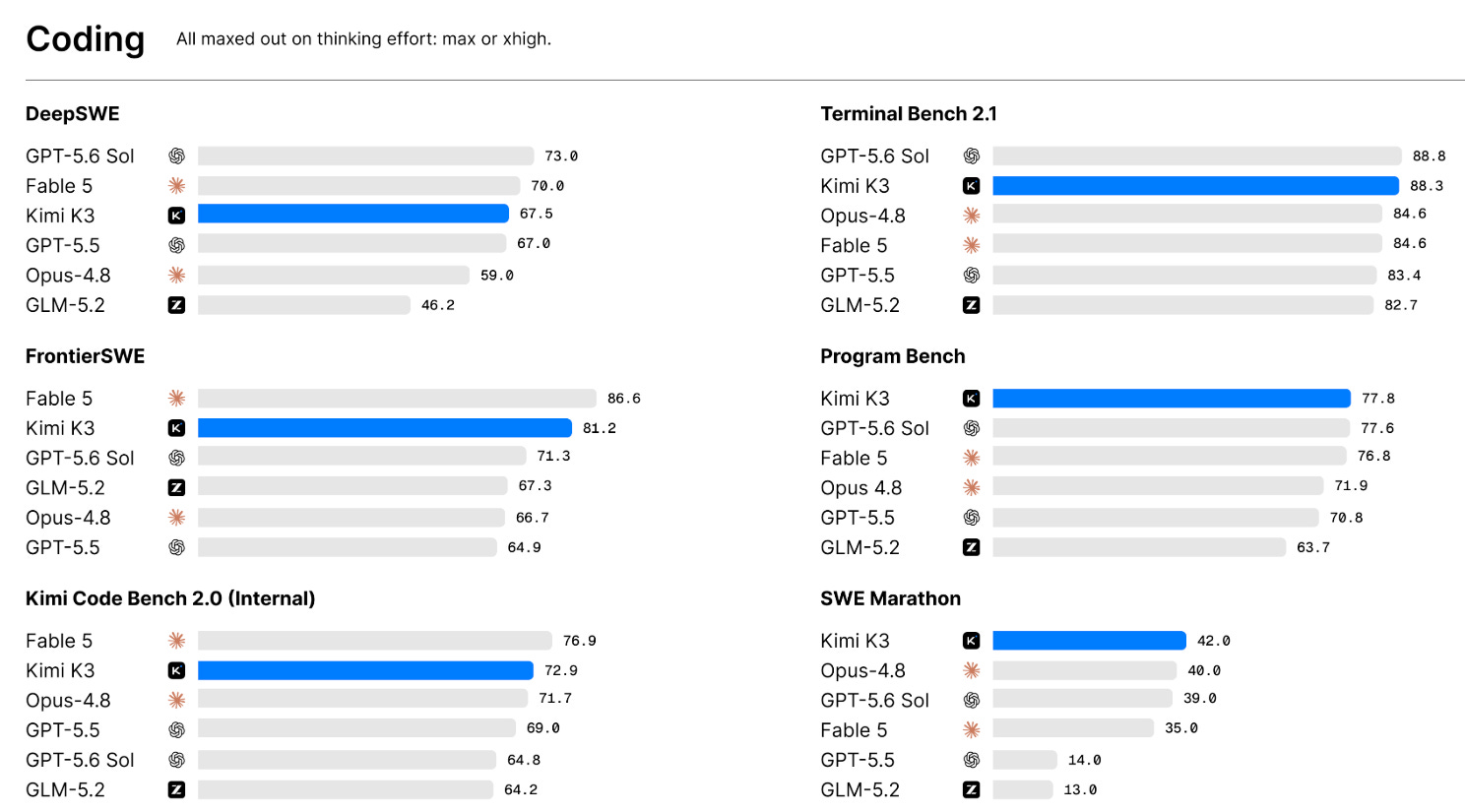
Here’s a story that looks like tech-race drama but is actually about your software bill. This week a Chinese startup called Moonshot released a free, open AI model named Kimi K3 — and on some tests it beat the best (and most expensive) models from OpenAI and Anthropic, the makers of ChatGPT and Claude. Business Insider reported it even topped them at writing website code. Demand was so heavy Moonshot had to pause new sign-ups within days.
Wall Street called it a “Kimi moment” — a rerun of last year’s DeepSeek shock that wiped hundreds of billions off chip stocks. Why does a free Chinese model spook the giants? Because “open” means anyone can download it and run it cheaply. One investor told Axios that free models will soon handle 95% of business AI tasks, leaving only the hardest 5% for the pricey names.
Why you should care: The thing you’re paying a premium for is getting commoditized - fast. “The best AI” is becoming a smaller and smaller advantage, because good enough AI is quietly becoming free. Plus, a lot of tasks where Claude/OpenAI was too expensive, now can be done for a fraction of the cost... same intelligence.
What this means for you: Don’t chase Kimi K3 today... just keep in mind to be model agnostic.. more on that below on our Nexus piece.
Netflix casually dropped a big number in its earnings report this week: AI was used in roughly 300 of its shows and movies in 2026 so far, mostly behind the scenes in post-production. In the series The American Experiment, co-CEO Ted Sarandos said there were 17 minutes of AI-enhanced footage — crowds and battle scenes — made twice as fast and for half the price of the old way.
Forget the Hollywood-vs-robots debate for a second. The line that matters for a business owner is this one from Sarandos: productions used AI for shots they “just wouldn’t have been able to afford” otherwise — they’d have cut them entirely.
Why it matters for you: That’s the real unlock, and it’s not just for billion-dollar studios. The most valuable thing AI does isn’t replacing what you already pay for — it’s making the stuff you skip suddenly affordable. The promo video you never shot. The product renders you couldn’t justify. The polished pitch deck you didn’t have time for.
xAI shipped a coding assistant called Grok Build, and a security researcher found it was quietly uploading users’ entire projects to xAI’s servers — including a file it was explicitly told not to touch, plus passwords and secret keys sitting in the code. xAI scrambled, killed the feature, added a privacy command, and Musk personally promised every uploaded file would be “completely and utterly deleted.”
You’re not running Grok Build. But you are pasting things into AI tools every day without reading what happens to them.
Why it matters for you: Bluevine’s data last week named data privacy the #1 reason business owners stall on AI — and stories like this are why. The fix isn’t fear, it’s a habit. What to do: before you put anything sensitive into a new AI tool, spend two minutes finding the “does this train on my data?” setting (most business tiers let you turn it off). And go write that AI house rule from Playbook #1 — this is the story it protects you from.
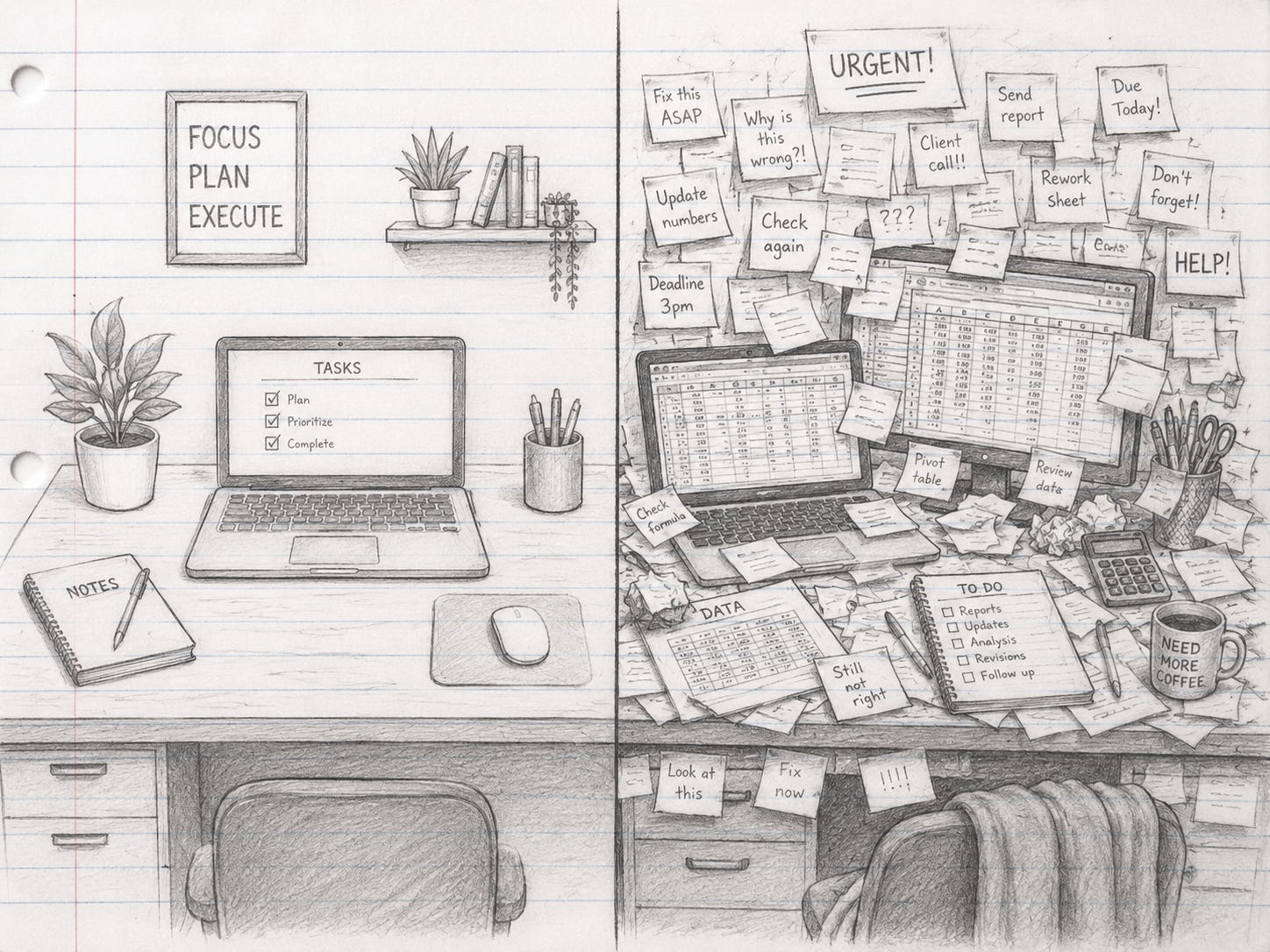
We just ran our AI Audit on a mid-sized industrial distributor — the kind of company with dozens of employees and a real ERP — and the findings are too useful to keep to ourselves. (Names and details scrubbed; the pattern is what matters, and we see it everywhere.)
Here’s the punchline that surprised even them: they didn’t have a software problem. They’d bought a big-name CRM three years ago, paid for it every month, and abandoned it 100%. It sat there unused next to an ERP nobody opened. The real problem was that the business actually ran on 20-plus personal Excel files, WhatsApp, email, and paper notebooks — no single place where the truth lived.
The cost of that mess, measured: roughly 140 hours a week across the team spent just assembling information — hunting for a number, rebuilding the same report, chasing a status update. That’s about 3.5 full-time people doing nothing but finding things.
One stat that’ll feel familiar: staff scanned ~900 WhatsApp messages a day to catch the 10-15 that actually needed action, and their big weekly meeting was four hours of reviewing everything instead of just the exceptions.
Why it matters for you: This is the trend, not a one-off. Most mid-sized companies think they need to buy something — a new tool, now an AI. Almost always, the money’s already been spent and ignored, and the actual leak is that information is scattered and nobody trusts a single source. AI can’t fix that until you do; but once you do, AI is what turns 140 wasted hours back into real work.
What to do: before you buy another tool, ask one question — “where does the truth about my business actually live?” If the honest answer is “spread across 20 spreadsheets and a group chat,” that’s your first project, not the shiny AI feature.
Nexus — our private AI workspace — This one’s ours, and it’s the exact fix for everything above. Right now your team is already using AI, just in their personal (often free) accounts, where your business data leaks out and walks out the door when they quit. Nexus looks and feels like ChatGPT, but it lives inside your walls: grounded in your company’s knowledge, voice, and rules, connected to your CRM/ERP, and locked to the people you choose.
The part that matters this week: it has a built-in “router” that reads each question and quietly sends it to a cheap model for simple stuff and an expensive one only for the hard 5% — so you get top-tier answers at a fraction of the token bill, exactly the shift the Kimi story is about.
Try this: watch the 10-minute walkthrough, and if your team’s AI use is scattered across personal accounts, reply and I’ll show you what this looks like for your company.
The through-line this week: AI’s price is falling and its reach is growing — which means the winners aren’t the ones who buy the most AI, they’re the ones who do the most with it. Kimi made near-best AI free. Netflix used it to make the unaffordable affordable. And this week a panel of experts told the House Small Business Committee something worth pinning up:
small businesses that adopt AI tend to grow and hire more people, not fewer — because AI lets them chase work they couldn’t handle before.
Their advice: invest in training your team to use AI, and ask your staff where it’d help. Same message the big labs keep repeating - it’s implementation, not the tool.
Spotify started rolling out an AI assistant you can talk to. Premium users can now chat with it to build playlists and find music. I personally don’t like it. Minor on its own, but a preview of where every app is heading: a conversation box instead of a menu.
A nonprofit raised $400M to build “free public AI.” Current AI wants an open alternative to the handful of companies that own today’s AI. Another sign the “you must rent AI from a giant” era is cracking.
We’re heads-down on the theme this whole issue points at: doing more with cheaper AI, safely. For clients that means AI “employees” tuned to one job — a front desk that answers the phone, an assistant that drafts quotes — built to run on affordable models instead of the priciest ones, with the data rules locked down from day one (see the Grok story for why that matters).
The other thing we’re rolling out is an AI Audit: a plain-English map of where AI actually fits in your business — which workflows to redesign first, not just which tools to buy. Want the no-jargon starter version? Grab the AI Blueprint and webinar replay here.
The signal: Good AI is getting cheap and open — a free Chinese model beat the giants this week, and even Netflix is using AI to do the things budgets used to make impossible. The edge in 2026 isn’t owning the fanciest model. It’s putting an ordinary one to work on the jobs you’ve been skipping.
The noise: The stock-market panic over China, the “our model beats their model” leaderboard, the billion-dollar IPO gossip. Fun to watch. Doesn’t change your Monday.
Your one thing: Pick the single task you avoid because it feels too big or too expensive to do right — and let AI take the first pass this week. And spend 10 minutes writing your team’s AI data rule so you can do it safely. That’s the whole game right now.
That’s your week in AI. Forward this to someone who keeps asking “should I be using AI?” — the answer is yes, and this newsletter is their starting point.
No posts
Comments
Nothing yet. Say the first thing.
Sign in to join the conversation.