
Put a one-page site online in 60 seconds — no account, no developer. Cloudflare Drop lets you drag a folder into your browser and get a live web link back, instantly.
Got a menu, a price sheet, or a one-pager you email people constantly? Drop it in and send a link instead.Check whether your Google Ads now wear an “AI” badge. Google started auto-labeling ads made with its generative tools this week. If you run ads, open your My Ad Center panel and see what’s flagged - then decide if the label helps or hurts your brand before your customers notice it first.
Reply with the one task that eats your week. Hit reply and tell me the repetitive thing that quietly steals your Mondays - invoicing, inbox triage, follow-ups. I’ll tell you, free, whether an AI employee can take it off your plate and where to start.
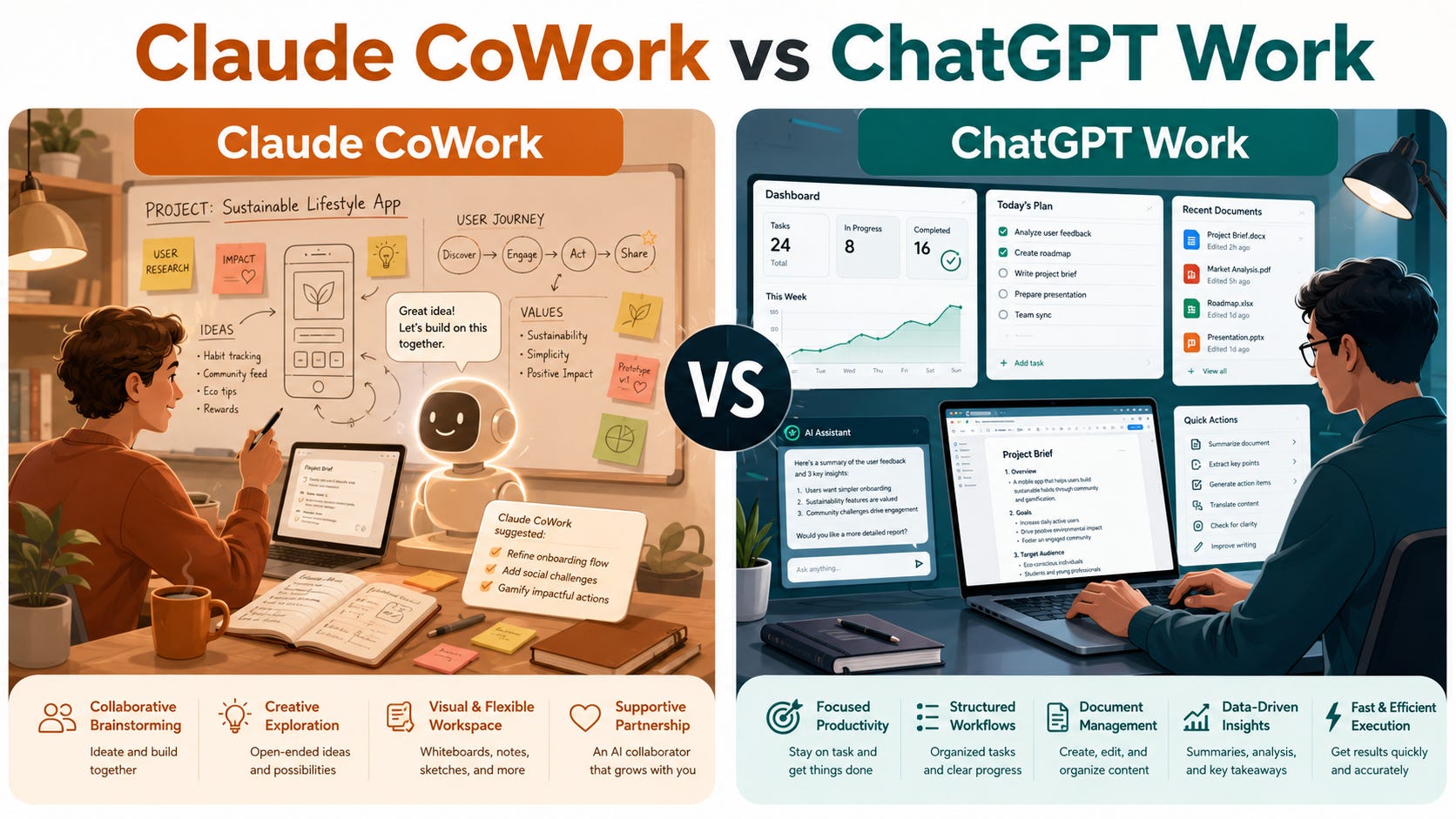
For three years, ChatGPT has been something you talk to. This week OpenAI made it something that does the work - and quietly renamed the old chat experience “ChatGPT Classic“ in the process.
The new tool is called ChatGPT Work. You give it a goal, and it plugs into your actual apps — Slack, Gmail, Google Drive, your calendar, even your CRM - pulls the context it needs, makes a plan, and executes it. OpenAI says it can “stay with a project for hours and turn a goal into finished work.” You can even kick a task off from your phone and check the finished product when you’re back at your desk.
Why you should care: This is OpenAI’s answer to Anthropic’s Claude Cowork - the two biggest AI companies are now racing to build the same thing: an assistant that finishes the job instead of handing you a draft. A chatbot that waits for your next message is a fancy search box. A tool that produces the deliverable is closer to staff.
What this means for you: Pick one task you’d normally delegate to a junior employee and hand it to ChatGPT Work instead — a competitor summary, a first draft of a proposal, a formatted expense report. You’ll learn more in 20 minutes of trying it than in a month of reading about it. (Heads up: “Work” tasks use more of your plan than a normal chat, so start small.)
For two years the deal with AI was simple: the good stuff cost real money, and the cheap stuff was frustrating. This week that math changed. OpenAI started rolling out its newest models — GPT-5.6 — to all users, not just the top tier. And xAI (Elon Musk’s AI company) dropped Grok 4.5, a top-shelf model that’s roughly 6x cheaper to run than the premium models everyone’s been paying for. Same brains, fraction of the price. Especially good for us spending 5-6 figures a year on tokens.
What to do: make a short list of the AI ideas you killed because they were “too pricey” - the customer-service bot, the report-writer, the thing that reads every inbound email. This is the week to dust one off and get a fresh quote. The number moved.
Here’s a quieter shift that matters more than any model release. According to Harvard Business Review, both consumers and business buyers increasingly form their opinion of your company through AI before they ever visit your site or talk to a human. Shopping is now the third most popular use of AI, per McKinsey — people ask ChatGPT, Gemini, and Perplexity “who’s the best [your industry] near me?” and take the answer at face value.
Why it matters for you: For 20 years, “getting found” meant ranking on Google. Now there’s a second front: what the AIs say about you when a potential customer asks. If ChatGPT recommends your competitor and doesn’t mention you, you never even got the chance to compete. What to do: open ChatGPT right now and ask the exact question your ideal customer would ask (”best [what you do] in [your city]”). See if you show up — and what it says. If you’re invisible or the details are wrong, that’s your new SEO problem, and it’s fixable. (We built a whole AI visibility system around exactly this - reply if you want a look.)
Adobe Firefly — Firefly now builds a whole brand kit for you: describe your business, name, and colors, and it generates on-brand images, short product videos, and even auto-assembles rough footage into a polished cut. Try this: feed it your logo and brand colors once, then generate a week of social posts in an afternoon. My take: this is the one to try if “making the visuals” is what stalls your marketing every month.
Shortwave — An AI email assistant that reads your inbox, builds you a to-do list from it, and helps you clear the backlog. Personally, my favorite, and the one I use, is MissiveApp. it’s not necessarily an AI assistant, but a super powerful, AI enabled email client (we’re implementation partners).
The real shift this week isn’t a new model — it’s a new job description for AI. Three things pointed the same direction: OpenAI turned ChatGPT into something that does the work, top-tier intelligence got dramatically cheaper, and customers started using AI to decide who they buy from.
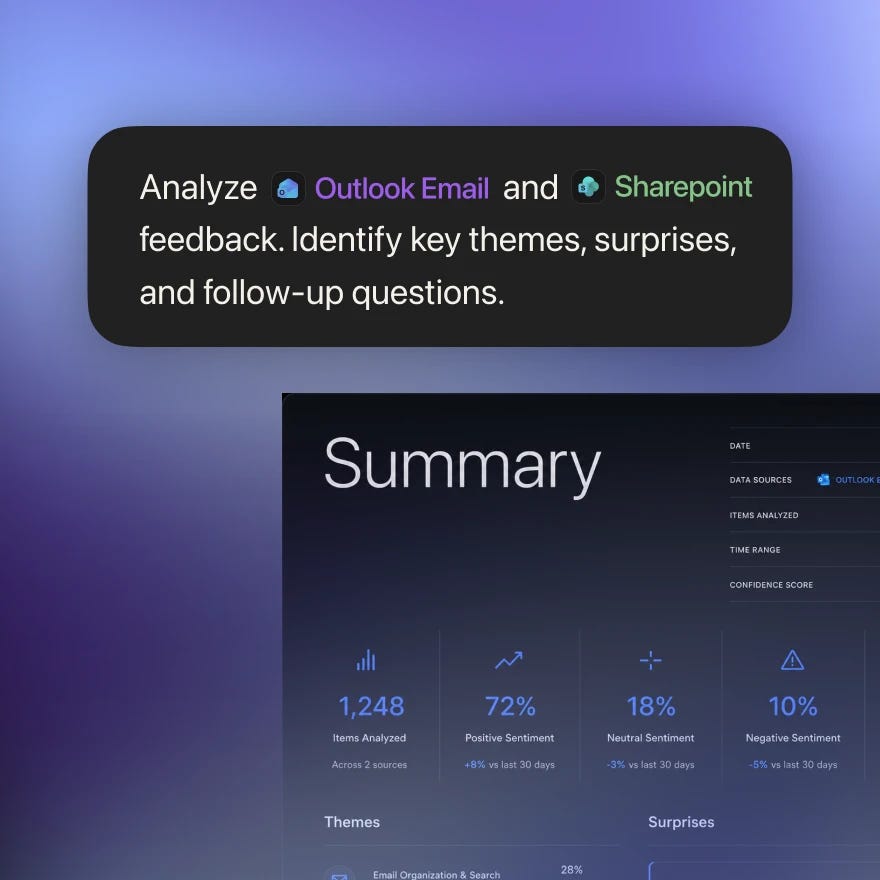
Put those together and the message is blunt. AI is no longer a smarter Google you occasionally consult. It’s becoming the thing that both does your work and chooses your vendors — and the price of “the good AI” is collapsing while it does. The businesses that treat it like a novelty will lose ground to the ones that wire it into how work actually gets done, and into how they get found.
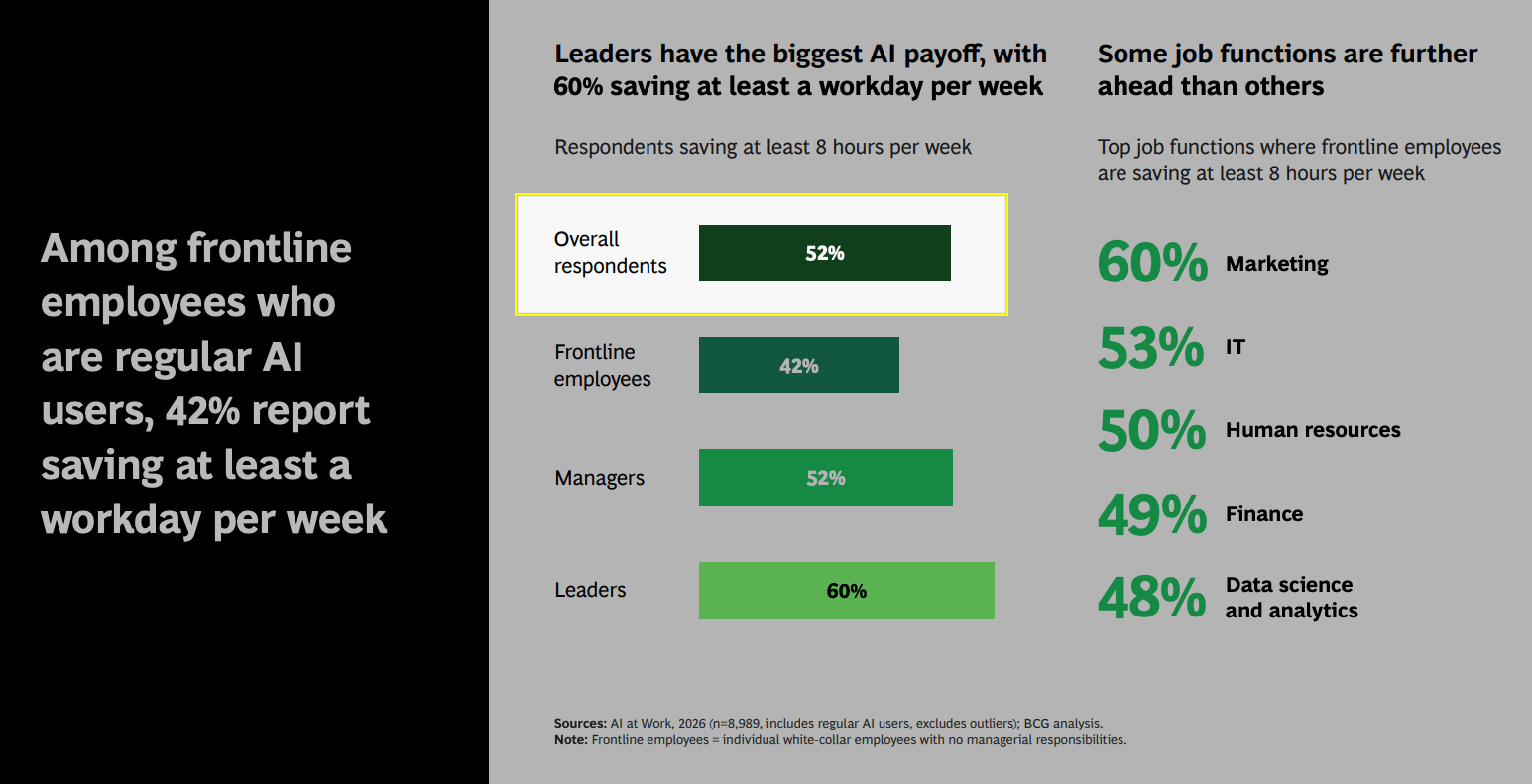
And there’s hard data behind this now. BCG just surveyed 11,749 workers for its 2026 “AI at Work” report, and the headline is strategy matters more than tools. Companies that redesigned how the work gets done around AI - not just handed people a chatbot - were far more likely to see real results: 67% reported measurable business improvement, versus just 43% for the “we bought the tools” crowd. Same tools, wildly different outcomes - the difference was whether anyone rethought the actual workflow. (BCG also found 66% of workers get little or no guidance on what to do with the time AI frees up - so it just evaporates. Ouch.)
What to do: Don’t try to “adopt AI” in the abstract. Map your processes. Start with this video, actually:
OpenAI is launching a keyboard next week with one giant button: a mic. The clearest signal yet that “typing at AI” is on its way out and talking to it is in. File under: the future is voice.
The “AI class divide” is widening, with a small group of power users pulling way ahead of everyone still using AI like a toy. Translation: 30 minutes of real practice a week now compounds into a genuine advantage.
64 AI agents rewrote a major piece of software in 11 days — a fun, slightly wild proof of how fast AI can now build real things when you point enough of it at a problem. File under “the pace is not slowing down.”
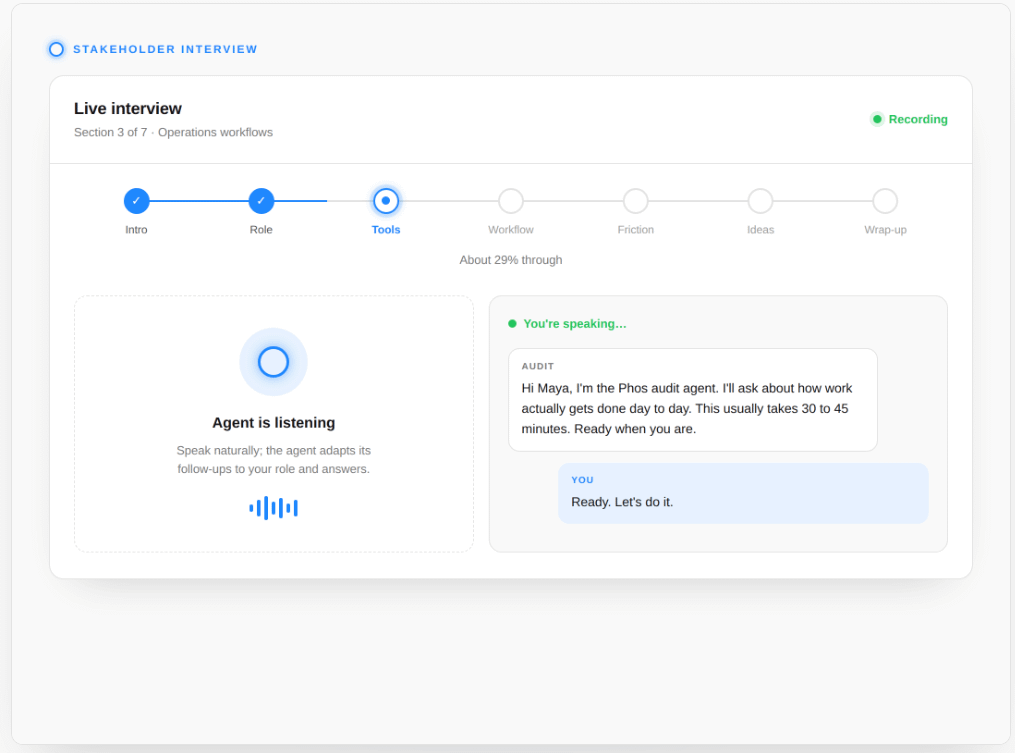
A very cool thing we’re rolling out right now: an AI Audit we’re deploying with both large and mid-sized clients as part of our AI consulting service.
It’s an AI Agent, doing a voice-call, with you and your team members. It maps where AI actually fits in your business - which workflows to redesign first, not just which tools to buy. (That order matters more than you’d think - see the BCG finding above.)
The signal: AI crossed a line from assistant to doer — and got cheaper doing it. ChatGPT Work, Claude CoWork and Perplexity Computer aren’t demos; they finish real deliverables today.
The noise: The endless “our model beats their model” benchmark wars and IPO-billionaire headlines are fun to watch but don’t change what you should do Monday morning.
Your one thing: Ask ChatGPT what it says about your business when a customer looks you up. Then hand it one real task and watch it work. The gap between people who read about AI and people who use it is widening every single week. Stay on the right side.
That’s your week in AI. Forward this to someone who keeps asking “should I be using AI?” — the answer is yes, and this newsletter is their starting point.
No posts
Comments
Nothing yet. Say the first thing.
Sign in to join the conversation.