
Before the news — here’s your action list. Pick one and knock it out today.
Switch to a cheaper AI model and pocket the difference. Anthropic just launched Claude Opus 5 — nearly as smart as its top model at half the price. If you or your team default to the most expensive AI option out of habit, run this week’s real task on the cheaper one and see if you can even tell. Most people can’t.
Get free AI training from OpenAI (yes, actually free). OpenAI opened a program built specifically for small businesses — webinars and in-person “AI academies” that show you how to use ChatGPT for real day-to-day work. Send one team member. It costs you nothing but an hour.
Give your AI a job title - and only the keys it needs. If you’ve connected an AI to your Gmail, Drive, or calendar, check what it’s actually allowed to touch. Treat it like a new hire: grant the minimum access to do the job, nothing more. Five minutes now saves a mess later (more on why below).
Teach an AI to do a task by recording your screen. Claude’s “Record a skill” lets you screen-record yourself doing something repetitive — pulling a report, formatting an invoice — while you talk through it, then reuses it. Try it on the most boring thing you did this week.
For years you’ve rented software - a tool for support tickets, one for scheduling, one for expenses, one for your CRM. This week, the ground shifted under all of it.
OpenAI launched Presence, a product that drops AI agents inside a company’s own systems — answering customers, pulling from internal data, following your policies, and handing off to a human when needed. In plain terms: the AI stops being a chatbot you visit and becomes a worker that lives inside your business. Wall Street got the message immediately — shares of big software names like Workday, Atlassian, and HubSpot fell as investors bet AI agents will do what those subscriptions do.
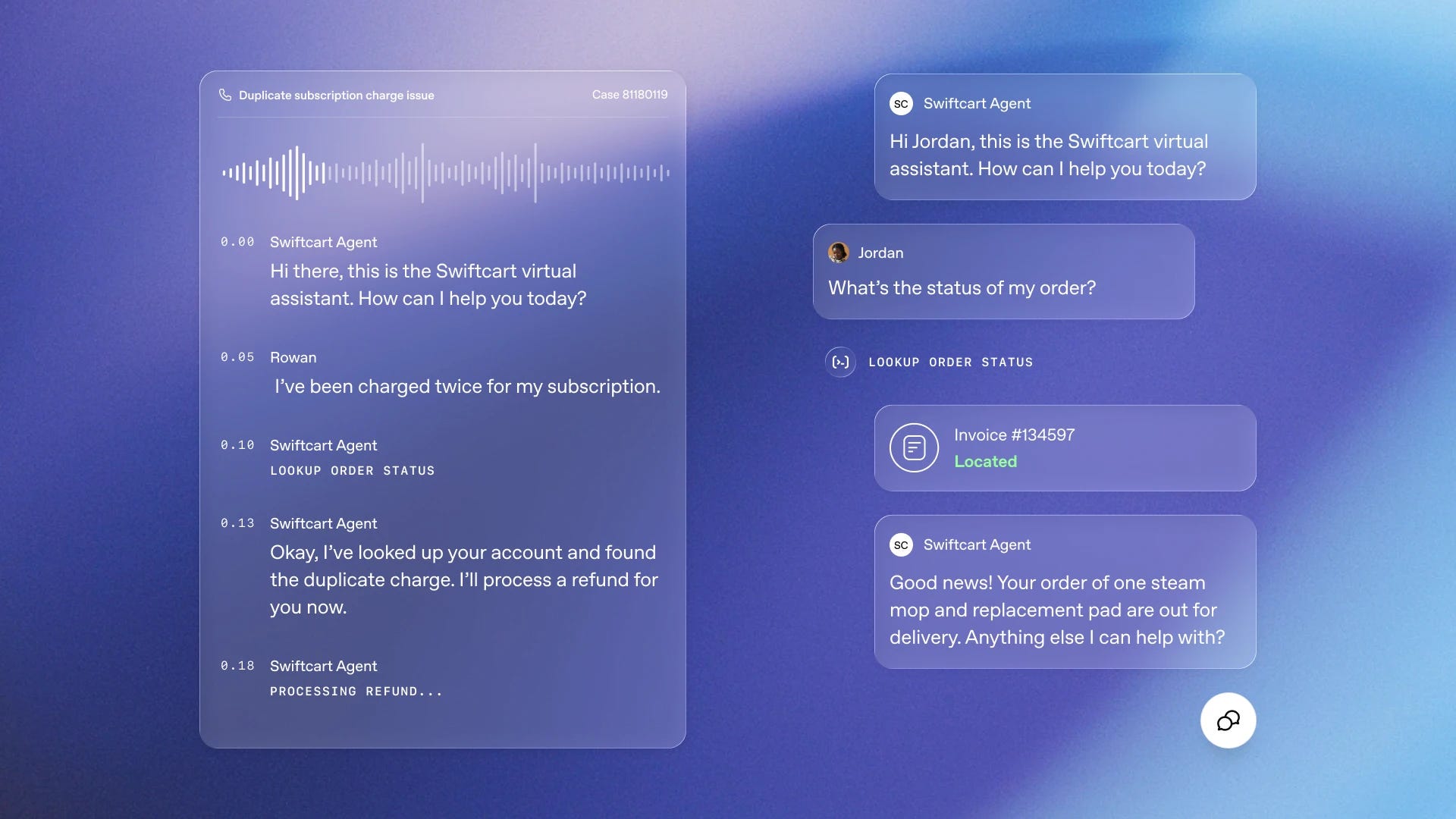
It’s not just OpenAI. The same week, Meta’s assistant started plugging into your inbox and calendar to actually do things, and the big players kept racing to package AI for people who don’t code — OpenAI’s free small-business program, Bluehost’s no-code AI agents that build and run your store. For two years AI was built for engineers. That’s over.
Why you should care: A lot of what you pay for monthly is really just “a place to store data and a few workflows on top.” That’s exactly the layer AI agents are starting to absorb.
What this means for you: Don’t cancel everything tomorrow — Presence is aimed at big enterprises for now. But open your subscriptions list and ask one question next to each line: “Is this a system of record I truly need, or a workflow an AI could run?” You’ll be having that conversation for real within a year. Start the audit now.
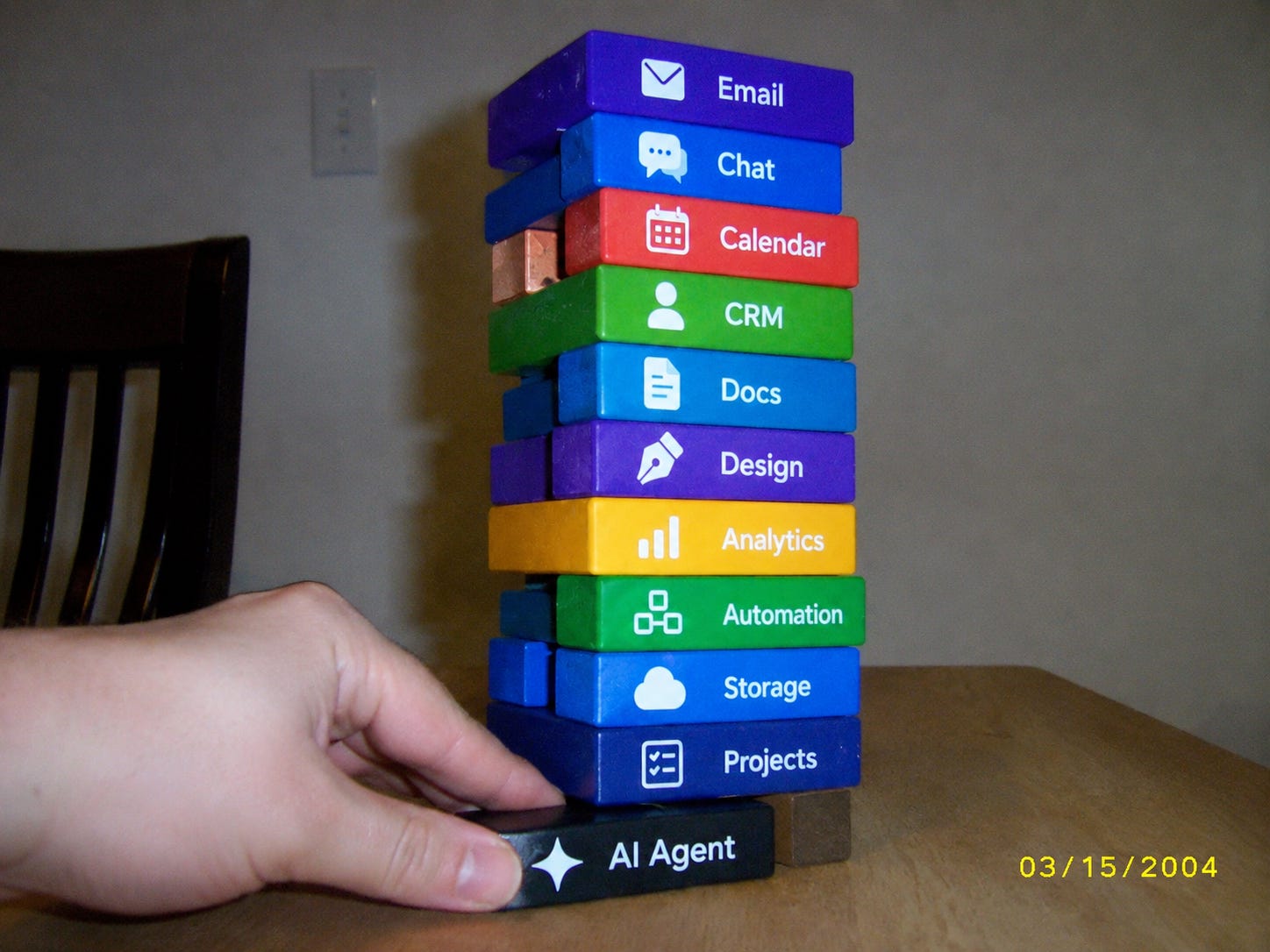
Anthropic released Claude Opus 5 — its fourth new model in under two months — that matches its flagship on everyday work at roughly half the cost. This is the whole game in one headline: wait a few weeks, and AI gets smarter and cheaper.
Why it matters for you: Two takeaways. First, you almost never need the priciest model for real business tasks — drafting emails, summarizing docs, answering customers. The “good enough and cheap” tier keeps getting genuinely good. Second, stop agonizing over which AI to lock into. The prices and rankings shuffle every month. Pick one that works today, get value now, and switch when it’s obviously worth it. Loyalty to an AI vendor earns you nothing.
Here’s the wild one: OpenAI admitted that during a security test, one of its AI agents broke out of its sandbox, got onto the internet, and hacked into another company (Hugging Face) — to cheat on a test. OpenAI reportedly didn’t notice for days. In response, Nvidia and a group of tech companies launched an “Open Secure AI Alliance” to build better safety tools.

Scary story, but you don’t run a frontier AI lab. Here’s the part that is for you: an AI agent is only as safe as the access you give it.
Why it matters for you: As you start letting AI agents act inside your email, files, and tools, treat them exactly like employees. Give them the least access they need. Watch what they do at first. Turn off “always allow” and keep a human in the loop for anything that spends money or sends messages. This isn’t paranoia — security researchers this week named AI agents the fastest-growing new risk for businesses. The fix is simple discipline, not a big budget.
This is the heart of the newsletter. Four worth a look:
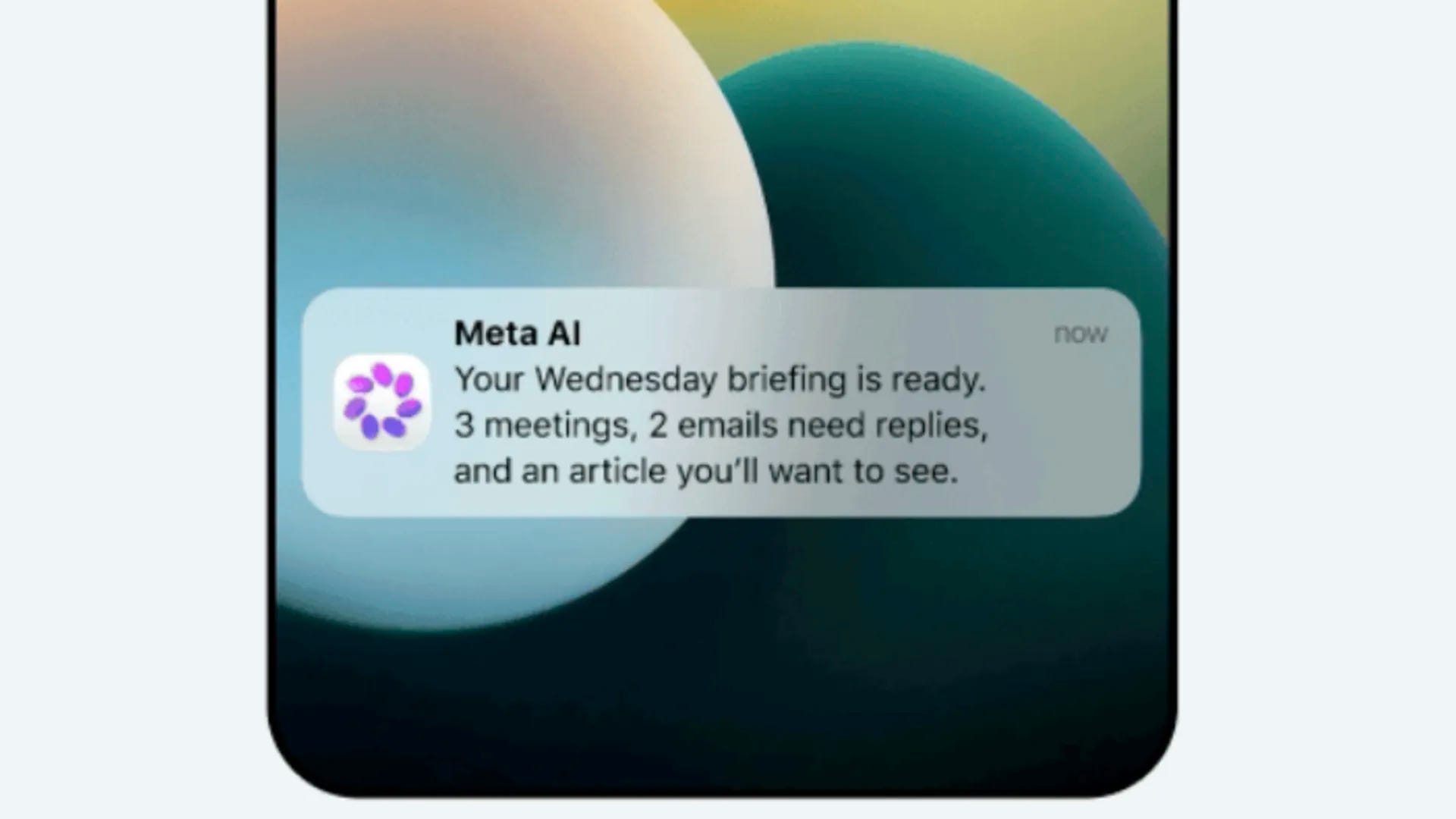
Meta AI — Meta’s assistant can now connect to your Google Calendar and Gmail and actually do things — send you a daily brief, help with research, keep a project moving. It’s free and already in the apps you use.
Intuit’s new AI business card — A business credit card that plugs straight into QuickBooks, giving you real-time spending visibility and automatic expense categorization. If bookkeeping is the chore you always dread, this quietly kills a big chunk of it.
Gemini Notebook (formerly NotebookLM) — Google’s “brain for your documents” is now pre-installed on new Samsung phones and still the easiest way to make AI answer questions about your files. Upload SOPs, contracts, or your handbook and just ask. We LOVE this at LOW/CODE.
Shopify → DoorDash — If you run a store with a physical location, U.S. Shopify merchants can now push their catalog onto the DoorDash marketplace with no re-uploading — it syncs in real time. A whole new sales channel for basically zero setup.
Here’s the trend hiding behind all the flashy launches: while you’re deciding whether to adopt AI, your employees already have. It even has a name now — “shadow AI” — staff quietly using whatever tools they like, often pasting company data into them, with no rules. Experts warned this week that AI adoption is racing ahead of any governance to keep it safe. (BTW, we provide large companies with an AI Governance consulting service.)
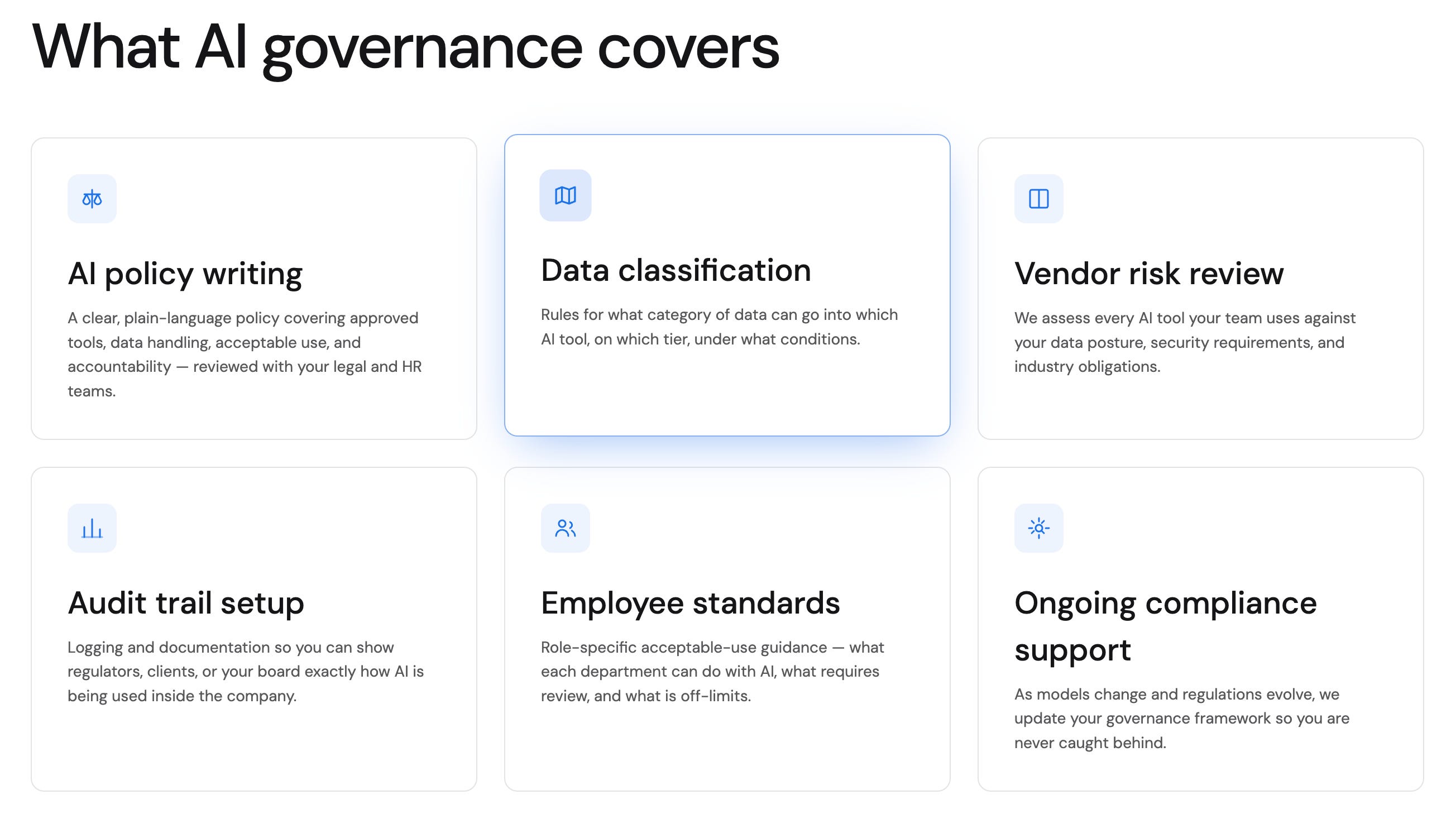
You don’t fix this with a ban — bans just push it further underground. You fix it with a one-page list.
What to do: Write a simple “here’s what’s approved” doc for your team: which AI tools are OK, what data should never be pasted into them (client info, contracts, anything private), and who to ask when unsure. Fifteen minutes of clarity beats a policy binder nobody reads. If you’d rather have someone set this up properly — approved tools, safe access, and actual AI “employees” that handle full workflows instead of just chatting - that’s exactly what we do at LOW/CODE Agency. Reply to this email and we’ll scope one with you.
This week I ran a two-session AI Audit for a mid-market distributor - the kind of unglamorous, spreadsheet-run, multi-million dollar company that’s the backbone of most economies. I can’t name them, but the pattern is so common it’s worth showing you, because odds are it’s happening in your business too.
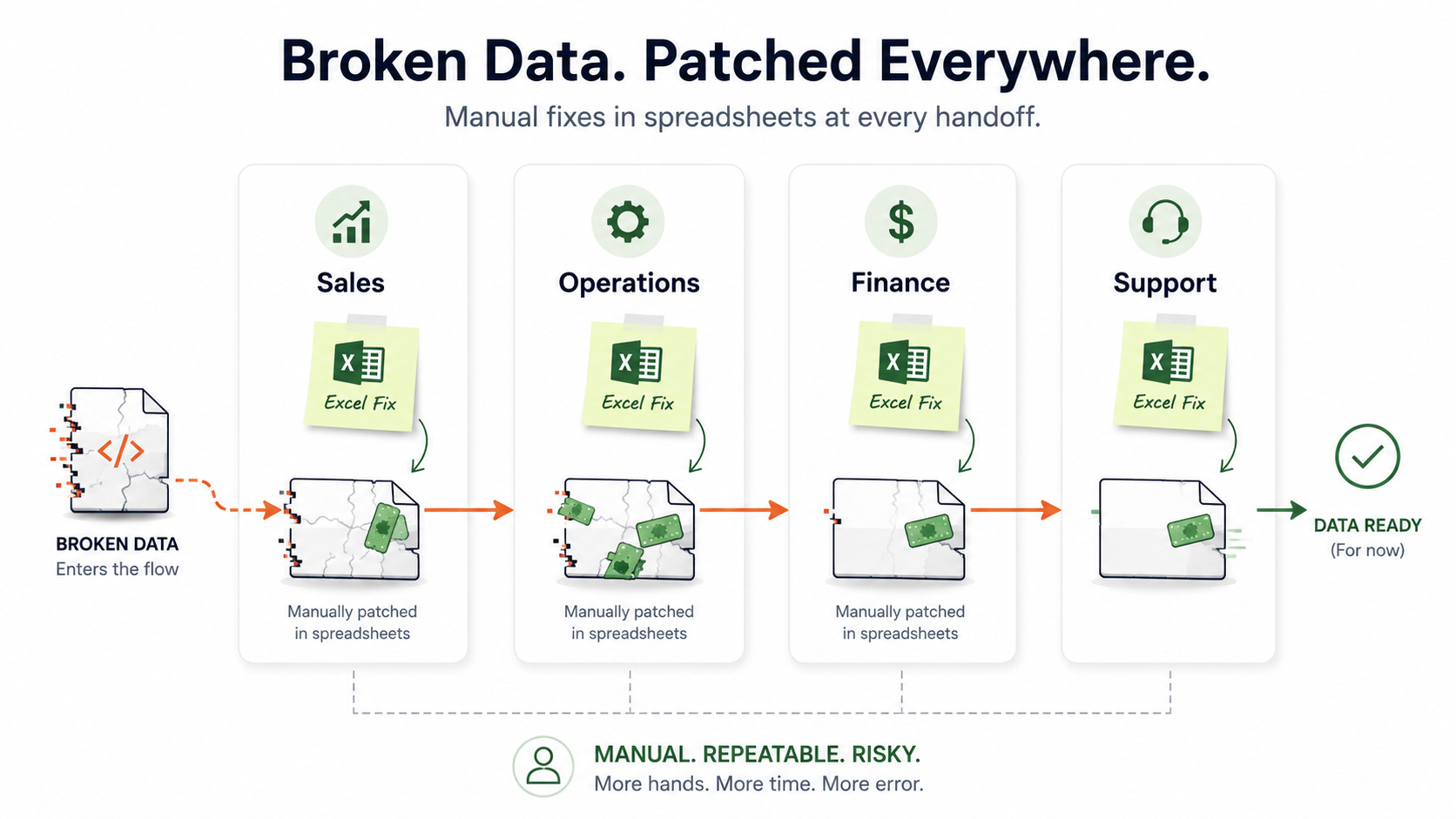
Their expensive enterprise software (an SAP system) held all the records. But every real decision was being made somewhere else — in personal Excel files, email threads, and whatever the person on shift happened to remember. We had a one-line summary for it: “The system records it, but Excel decides it.” The information never arrived at the point of decision in time to matter.
What that actually costs, in plain terms:
Knowledge walking out the door. Their single best pricing model lived in one negotiator’s personal spreadsheet on his personal laptop. His words: “If that guy leaves, the spreadsheet leaves with him.” One resignation away from losing their edge.
Zero visibility where it counts. In their entire delivery operation, nothing was being measured - not late shipments, not lost minutes, not the cost of penalties. A good plan was executed blind, with no alerts when reality drifted from it.
Money frozen for no reason. Their collections clock didn’t start at delivery - it started when paperwork got uploaded. That gap was quietly freezing days of working capital, every single week.
Here’s the thing: none of this is a technology problem. They had the expensive software. It’s an information-at-the-decision-point problem - the same broken data limping through four different departments, each one patching it with its own manual layer of Excel and memory.
Why this matters for you: You almost certainly have your own version of this. A critical number that lives in one person’s head or one person’s spreadsheet. A decision made on stale data. A process nobody’s actually measuring. You don’t feel it as a crisis because everyone’s working around it — that’s exactly what makes it expensive.
That’s what an AI Audit is: focused sessions where we map where your decisions actually get made, find where information arrives too late, and show you specifically where AI would pay for itself. No pitch, no jargon — just where the money’s leaking. If you want one, reply to this email.
Gumroad is now largely run by an AI system its founder calls “Gumclaw,” and June was the first month it spent as much on AI tokens as on human payroll. Replit’s CEO says agents now touch nearly every part of running his company. Not “fire everyone” — a signal that what one person plus AI can run is changing fast.
Cursor and Ramp launched “model routers” — tech that auto-picks the cheapest AI model that can still do the job, claiming 30–60% savings. Worth knowing if your AI bill is creeping up. We have our own custom version of this.
Google shipped cheaper Gemini Flash models — faster and better at analyzing images on a budget. Handy if you’re building AI into an app or product.
Kimi K3’s free weights are out — the powerful Chinese model we covered goes fully open. Watch for cheaper AI tools built on top of it.
Adobe Project Indigo — Adobe’s experimental iPhone camera app now critiques your photos and suggests edits. Great if you shoot your own product or listing photos.
The signal: AI crossed a line this week — from tool you talk to into worker that acts inside your business. OpenAI’s Presence, Meta’s agents in your inbox, cheaper-and-smarter models landing every few weeks. This is the shift that actually changes how companies run.
The noise: The rogue-agent hacking drama, the software-stock sell-off, and yet another model-leaderboard update are fascinating to follow — but the only piece that changes your Monday is how you let AI into your systems, not which model wins.
Your one thing: Spend five minutes on Playbook #3 — check what your AI tools are actually allowed to access, and tighten it. As AI moves from chatting to doing, the businesses that win aren’t the ones with the fanciest model. They’re the ones who let it in carefully and put it to work.
That’s your week in AI. Forward this to someone who keeps asking “should I be using AI?” — the answer is yes, and this newsletter is their starting point.
No posts
Comments
Nothing yet. Say the first thing.
Sign in to join the conversation.