
Note to the reader: This essay begins as an exercise in thinking through a series of ideas. It does not claim to offer any absolute truth; quite the opposite. Its purpose is to open a space for dialogue, inviting readers to engage with the text through both points of agreement and disagreement.
In Ringsend, just across from the church, there is a pub called The Oarsman. Over the past few years, I have watched it go through several transformations: new food offerings, themed events, and even, for a brief period, the opening of a coffee shop.
Despite being only a few minutes from my home, it is not a pub I frequent very often, especially during the summer, when all one really wants is to be outdoors. That afternoon, however, I was craving something salty, something that tasted of the sea.
The menu was displayed in the window, and I remembered that a few weeks earlier they had begun advertising a Tuesday special: fish tacos and a pint for fifteen euros. Sure enough, one of the posters promoted fish tacos served on “soft flour tortillas.”
What could possibly go wrong?
As the Z generation would say, the first red flag appeared before I had even stepped inside. The image of the tacos on the poster had very clearly been generated by ChatGPT. I hesitated for a moment, but then I told myself: I’m already here, so let’s give them a chance. Perhaps they simply didn’t have the budget to hire a designer.
The menu also offered oysters, chicken wings, chips, and a selection of mains that I did not even bother to read. My mission was clear: I wanted to try those AI-generated fish tacos.
The dish eventually arrived at my table. Around me, families were happily enjoying chicken wings and chips while I prepared myself for an encounter with this Irish reinterpretation of the fish taco.
The presentation was peculiar. The tacos were served on a white plate decorated with Tajín seasoning, a chili-lime powder commonly used to rim michelada glasses or sprinkle over fruits such as mango, watermelon, and pineapple. It could hardly be considered a sauce, nor did it seem like a garnish that belonged anywhere near a fish taco.
Call me dramatic, but I struggle to find any reasonable justification for that decision.
Still, the real tragedy was yet to come: the tortilla.
One could argue that this was simply a Mexican-inspired dish, a reinterpretation filtered through the imagination of whoever designed the menu. Even in the worst-case scenario, ChatGPT could probably have generated a more appealing fish taco.
But that was not the problem.
The tortilla was cold. And a cold tortilla is, for all practical purposes, an uncooked tortilla.
It was immediately obvious that these tortillas had been bought from a nearby Tesco and placed directly onto the plate. What is troubling is that we are no longer living in a moment when information about Mexican food is inaccessible in Dublin. There are Mexican chefs, cookbook authors, suppliers, and food projects that have spent years explaining how tortillas are made and why proper cooking is essential.
Today there are restaurants that buy fresh corn masa and make tortillas to order. The same can be said for flour tortillas in places such as the northern Mexican restaurant, Pickosito, where they are prepared fresh on the spot.
Which raises a question: why do these kinds of culinary representations continue to appear when the knowledge and techniques required to avoid them already exist? Why do certain forms of knowledge adapt to new contexts while simultaneously losing part of their meaning?
At this point, one could begin a conversation about cultural appropriation. Yet the situation is more complicated than that. The Oarsman is simply a family-run business working within the limits of its resources, knowledge, and circumstances. It would be unfair to hold it to the same standard of responsibility that we might demand from a large corporation. The problem with cultural appropriation emerges when organisations with greater economic capital speak on behalf of others while simultaneously exploiting and commercialising the stereotypes associated with those cultures. This is what is often referred to as epistemic appropriation: a process through which dominant voices reinforce their authority by appropriating knowledge, cultural practices, and forms of expertise without acknowledging that they originate from other individuals or communities.
A few months ago, a supermarket launched a campaign called Taste of Mexico, promoting a special range of products described as “a dedicated Taste of Mexico range, bringing a wide selection of authentic and inspired products directly to your local store.” Among the products on offer were tortillas, sauces, and Mexican beans from Old El Paso, a brand owned by the American multinational General Mills. Customers could also purchase Olmeca tequila, a brand owned by the French company Pernod Ricard.
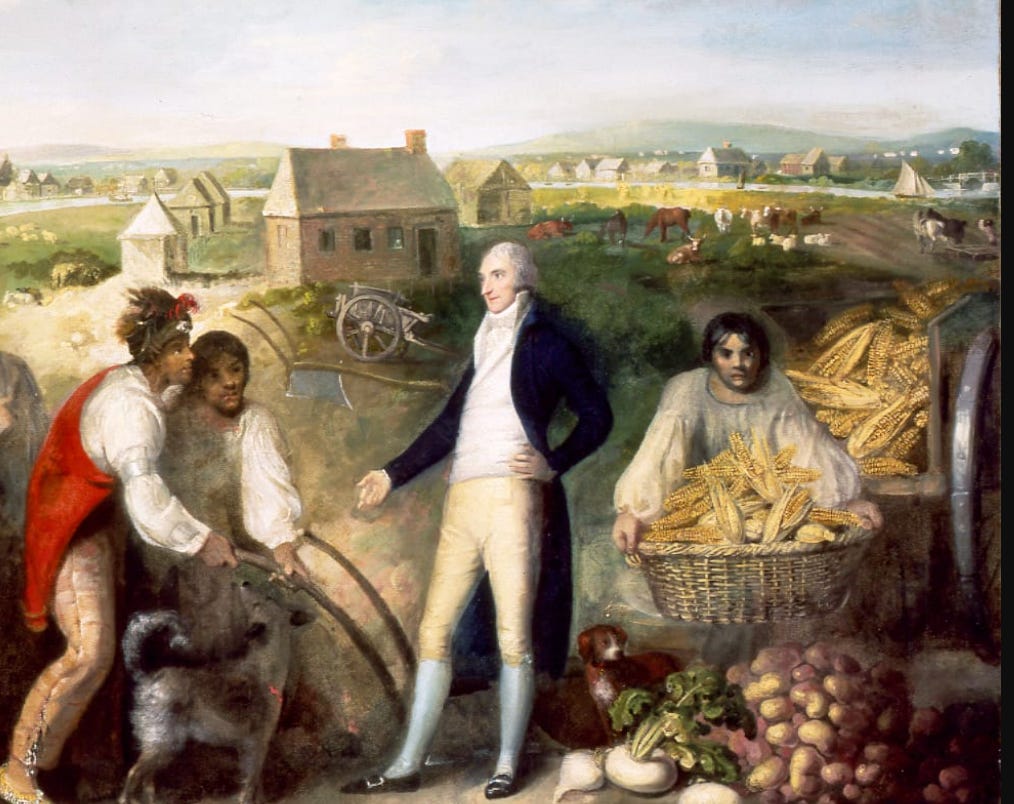
Portrait of Benjamin Hawkins (1754-1818)
More accurately, a selection of products from multinational corporations that control a significant portion of the global market while commercialising and profiting from a set of cultural imaginaries associated with Mexico.
The supermarket’s design team did not seem particularly interested in offering a more nuanced representation either. Once again, they resorted to the Mexican sombrero: one of the most overused visual stereotypes employed whenever Mexico needs to be represented.
It is understandable that a company of this scale is unlikely to redesign its entire business model in order to incorporate small independent producers. Working with local Irish-based brands such as Garnacha, El Socasa, or Balam Tortillas would involve considerable logistical and commercial challenges. Many of these producers simply do not have the infrastructure required to supply large supermarket chains and, in some cases, may not even wish to do so.
However, the problem does not end there.
Even some of Ireland’s most celebrated chefs reproduce similar dynamics by becoming spokespersons for recipes whose historical and cultural contexts they often seem unwilling to fully engage with. Aware that many of these representations are driven primarily by commercial interests, they nonetheless choose to participate in them with little critical reflection.
As part of the Taste of Mexico campaign, for example, one of the invited chefs posted a recipe for birria-style tacos on Instagram. Due to the commercial constraints of the campaign, the recipe incorporated La Costeña chipotle sauce and the supermarket’s own taco seasoning. This example illustrates one of the contradictions of contemporary food culture: content creators and chefs are often limited to using products available within a particular retail ecosystem rather than introducing audiences to the ingredients associated with a dish, such as guajillo, árbol, or morita chillies.
The counterargument is obvious: these are simply birria-style tacos, a recipe inspired by birria and adapted to the Irish context. What does it matter? Yet the issue is not adaptation itself. Cuisines have always evolved through adaptation and reinterpretation. The issue is that these recipes ultimately become aligned with the commercial interests of the products being promoted.
And this leads to a more important question. Who are the authorised voices entitled to represent a cuisine? Why them and not others? What grants them the authority to determine how a recipe should be prepared?
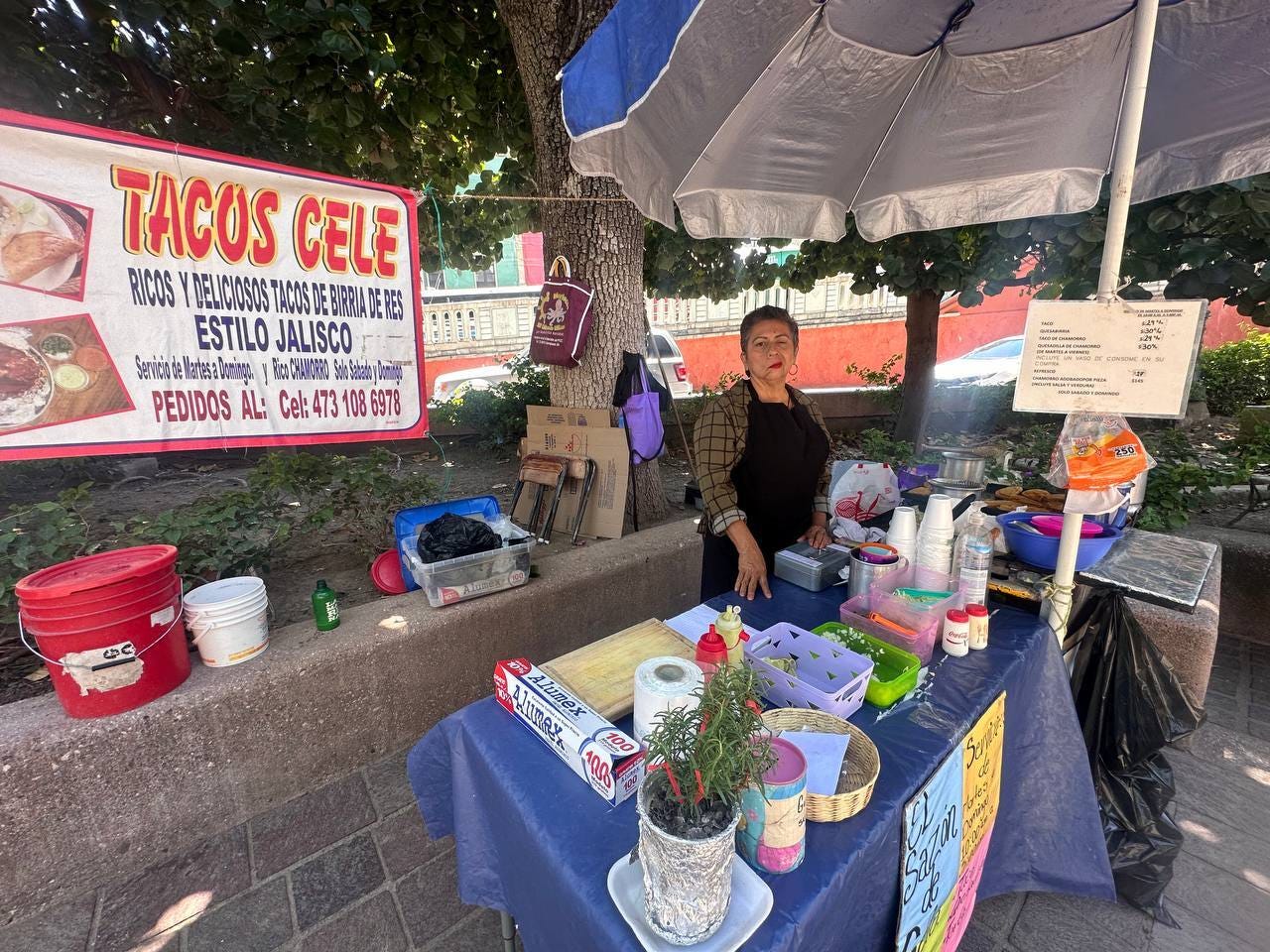
Experiences like this make it difficult not to fantasise about setting up a small stand outside a Centra and selling Jalisco-style birria tacos straight from the pot
Is there an ethical responsibility when these representations contribute to the displacement or decontextualisation of knowledge that has been transmitted across generations? Over the past few years, international culinary circles have shown a growing fascination with recipes, ingredients, and techniques developed in countries of the so-called Global South. Chefs, food writers, and content creators regularly travel to places such as Mexico in search of flavours, techniques, and culinary knowledge that they later reproduce in fine-dining restaurants, cookbooks, and digital platforms.
A traditional cook from a Mixe community, for example, may pass down a recipe through generations. Yet it is often a chef trained in Western institutions who ultimately validates that same recipe before an international audience. The issue is not who prepared it first, but who receives the recognition, credibility, and economic benefits derived from that knowledge.
The notion of a “Mexican flavour” is, to a large extent, a simplified and digestible construction designed to circulate easily within the global marketplace. It presents a version of Mexico whose symbols, imagery, and references can be instantly recognised by the average consumer, reinforcing a series of stereotypes that replace the complexity of a culture with a commercially marketable identity.
A variety of actors participate in the production and reproduction of these narratives. Corporations, media outlets, celebrity chefs, and content creators occupy privileged positions within systems of legitimacy that allow them to speak with authority about the cultures they represent. In doing so, they often determine what is considered “Mexican,” which ingredients are deemed representative, and which stories are worth telling.
This detail is far from insignificant, as it allows us to shift the discussion toward a broader question. Rather than engaging in a genuine cultural exchange with Mexican flavours, Irish consumers are often presented with carefully constructed representations produced by actors who control markets, narratives, and, to some extent, the production of knowledge itself. It is here that we can begin to speak of a neocolonial logic: one no longer based on the occupation of territories, but on the control of systems of cultural representation.
In this sense, campaigns such as Taste of Mexico function as established narratives that manage and regulate the representation of what is considered Mexican. Even when we are aware of these dynamics, it is difficult to escape them given the immense economic and symbolic power of the corporations that produce them.
A clear example can be found in tequila and mezcal, beverages that have become increasingly common in bars, restaurants, and cocktail culture around the world. Yet much of their international distribution is controlled by multinational conglomerates. One of the most obvious examples is Diageo, the company behind brands such as Don Julio and Casamigos, the latter famously associated for years with George Clooney.
These companies frequently position themselves as ambassadors of Mexican culture. Their products appear at Mexican Independence Day celebrations, food festivals, and cultural events in cities such as Dublin. Bars and restaurants incorporate these brands into their menus, often driven more by commercial interests than by a meaningful engagement with the cultural histories behind these spirits.
Does this mean tequila has ceased to be Mexican? In one sense, no. Tequila is still produced in Mexico and remains deeply connected to specific territories, communities, and histories. Yet the narratives constructed around it, the images through which it is represented, and a considerable portion of the economic value it generates no longer necessarily remain in Mexico. Extraction no longer occurs solely through raw materials. It also operates through symbols, identities, and forms of knowledge.
It is here that the concept of culinary colonialism, proposed by Sam Grey and Lenore Newman, becomes particularly useful. They define it as a historical process that moves from the destruction and denigration of local ingredients and cuisines, through their forced assimilation into dominant gastronomic norms, and ultimately toward the cultural appropriation of Indigenous foods, recipes, and forms of knowledge.
The question, then, is not who cooks Mexican food. The question is who acquires the gastronomic capital generated by it and who gains the authority to define and represent what is considered Mexican. While certain individuals accumulate recognition, legitimacy, and economic rewards, the communities that produced this knowledge often remain relegated to the margins of the conversation.
For this reason, it may be worth encouraging chefs, celebrities, content creators, and even pub owners to awaken from the comfort of epistemic ignorance and reflect more deeply on the incorporation of ingredients, techniques, and knowledge originating from other cultures. Not in order to stop using them, but to engage with them with greater historical, ethical, and political awareness.
After all, behind every recipe lies a community, a memory, and a history that deserve more than being reduced to a viral TikTok video.
No posts
Comments
Nothing yet. Say the first thing.
Sign in to join the conversation.