
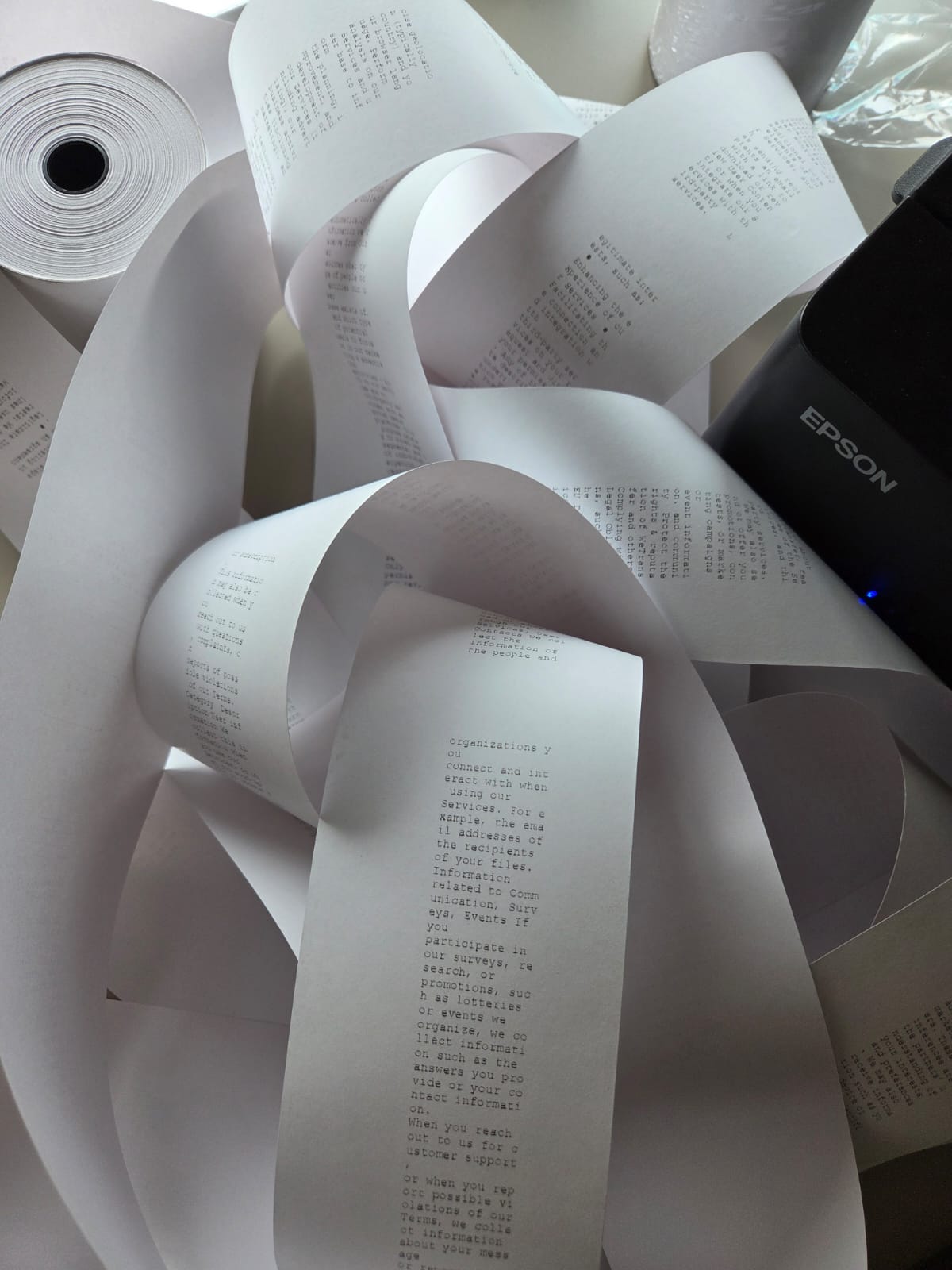
I’ve been working on a new installation project, RECEIPTS, that will be presented at Sonar+D in a little over a week. I’ve spent most of my time these last few days trying my best to keep my eyes from permanently crossing while I sift through an insane amount of legalese1 and EPSON documentation.
No spoilers just yet, but getting a receipt printer to trigger has been a surprisingly hacky exercise, as has setting receipt paper margins (who knew?) But it’s been fun working with something that feels like old clunky technology.
The project is a riff on something that I worked on last year called Glitch Armour, which I built with my friend Araya. In case you haven’t seen my write up about it, the project that aims to help people reclaim agency by weaponizing unpredictability, scrambling patterns, and as best we can, helping others enforce their refusal to be profiled. We basically rolled all our favourite privacy friendly tools into a kit to give away :
Introducing Glitch Armour: A Toolkit for Online Privacy
·
September 6, 2025

It's a big topic, certainly. But privacy isn't about perfection; it's about power. By sharing this toolkit with you, it becomes a collective act of defiance, something that turns our data into a source of community strength instead of corporate control.
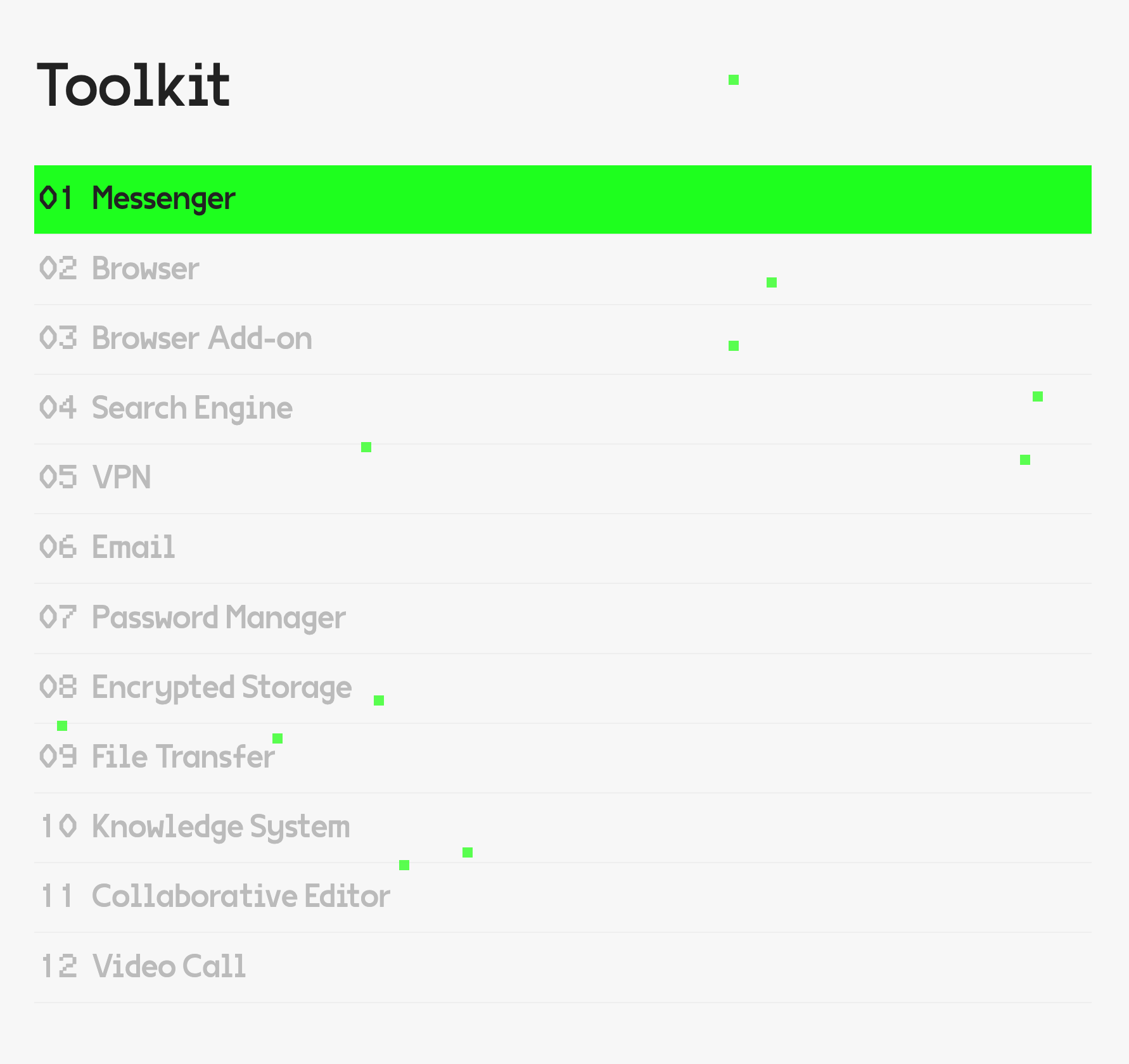
A few months ago Araya asked me if I’d be interested in iterating on that idea. I proposed to turn it into more of an experience, something that brings a sense of physicality to information that is usually layered into exceedingly long documents of legal text. All the policies, terms and conditions we agree to in order to use our favourite apps and services. The information overwhelm is by design, and it really carves out the space for tech lords and aspiring tech lords to hide all kinds of things in plain sight and redefine what consent represents.
Now, please excuse the slight detour we’re about to make into the fashion world, but I’m going to pretend I’m 21 again and still have a fashion blog (RIP myemptycloset.blogspot.com, 2005–2010) for a second, because there is a really interesting link to be made between the way tech companies handle their Terms & Conditions and this year’s Met Gala.
I came across The Death of Good Taste by Percia Verlin this week on YT, and I found her take really well articulated. She makes many great observations and points - the video is great, I invite you to watch it - but the one that was particularly interesting to me was that the tech “elites” are trying to buy good taste so that their tools feel more acceptable and cool than scary and harmful. Except that trying to buy taste is very cringe, very pick-me. Which is the antithesis of taste.
Something that stands out to me as very ironic is that one thing money can buy you is time, which is exactly what you need to develop taste. And yet none of these “elites” are using theirs to do so. No amount of money, or queue jumping can purchase time spent developing a those spidey senses and yet they persist.
So what is happening with the Met Gala then, or the fashion shows Mark Zuckerberg has been going to since he grew out his hair, or even the slightly more demure but nonetheless cultural clout-seeking Anthropic cafe that popped up in New York last year?
The equation seems to be soft power + misdirection. In other words, a smoke screen.
In fact the way the tech world deals with consent is the way the tech world deals with taste. It’s the same playbook.
Behind the scenes they’re trying to redefine taste as whatever is optimizable and profitable. Rather than something that is gently cultivated over time through experience and participation in culture, taste is being redefined as the ability to discern what will make the most money. Taste as ROI. Ew.
Where once consent meant freely given, informed agreement, it has become “you clicked ‘I agree’ on a 60‑page PDF.” And even then there are many tech companies that claim that simply downloading and using their app means you are consenting. Gross.
Soft power is what normalizes glossing over the many policies, terms and conditions we agree to. Soft power is what normalizes using AI for literally everything under the sun. That normalization is the misdirection. Everyone uses iPhones, Google, Instagram, ChatGPT, that’s just life, right?
a quote
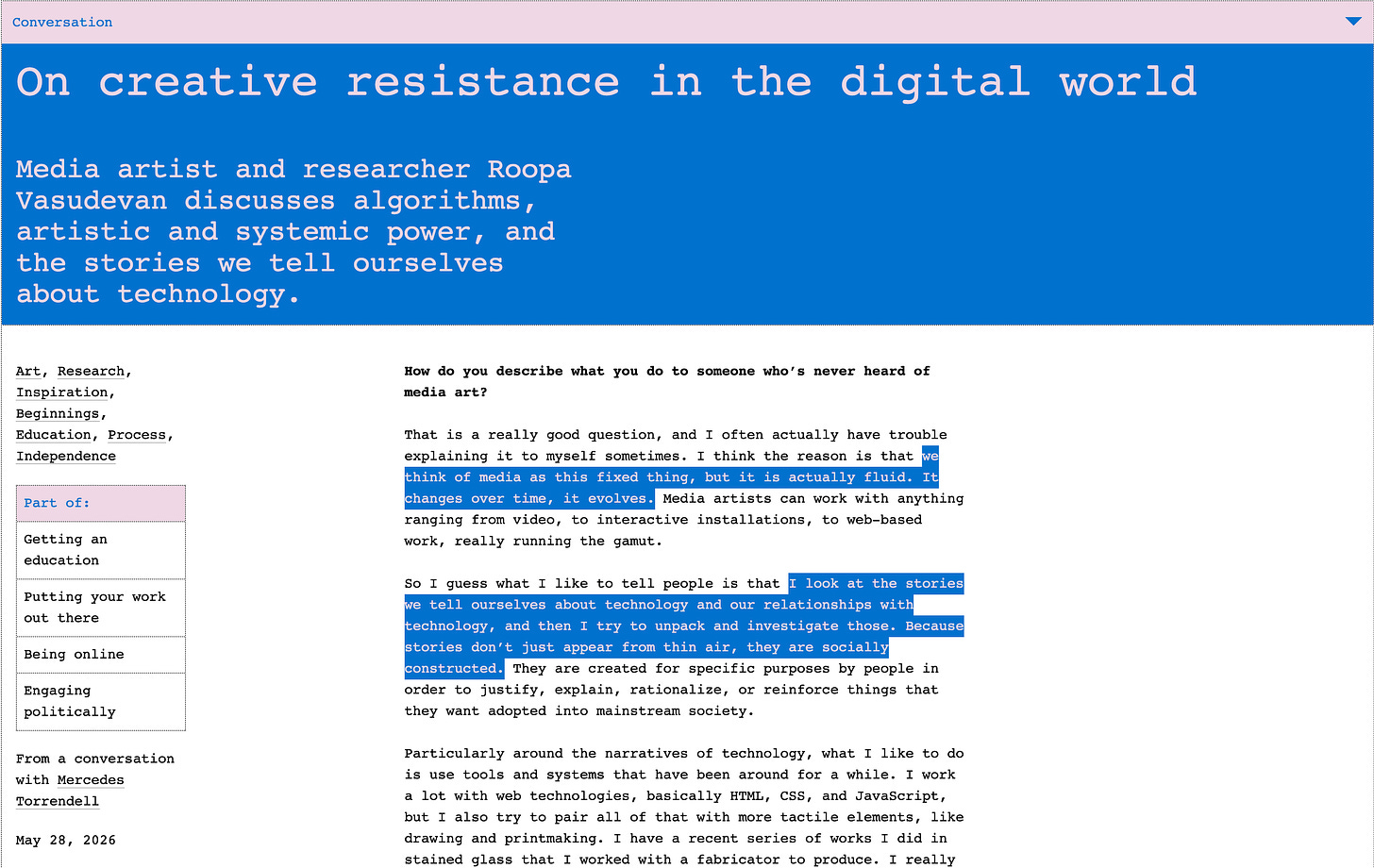
“A lot of artists start to realize how much the “move fast and break things” ideology of the tech industry has really seeped into their daily practices, how they feel pressure to move at a certain pace in their work that is dictated by the expectations we have of technology. We expect it to be seamless, to move quickly, to give us what we want immediately. And I think a lot of artists have really internalized that.”
Roopa Vasudevan | The Creative Independant
an interview
a website
river.maxbittker.com x Max Bittker

One of the cutest websites I’ve seen in a long time. A great place to spend time if you need some inspiration, or just want to explore your sense of taste, which is on theme. Be sure to turn on your speakers because there are some extremely charming interaction related sounds embedded into this website that remind a lot of the Sublime clipper sound. Ifykyk.
a video
legal terminology and framing
Comments
Nothing yet. Say the first thing.
Sign in to join the conversation.