
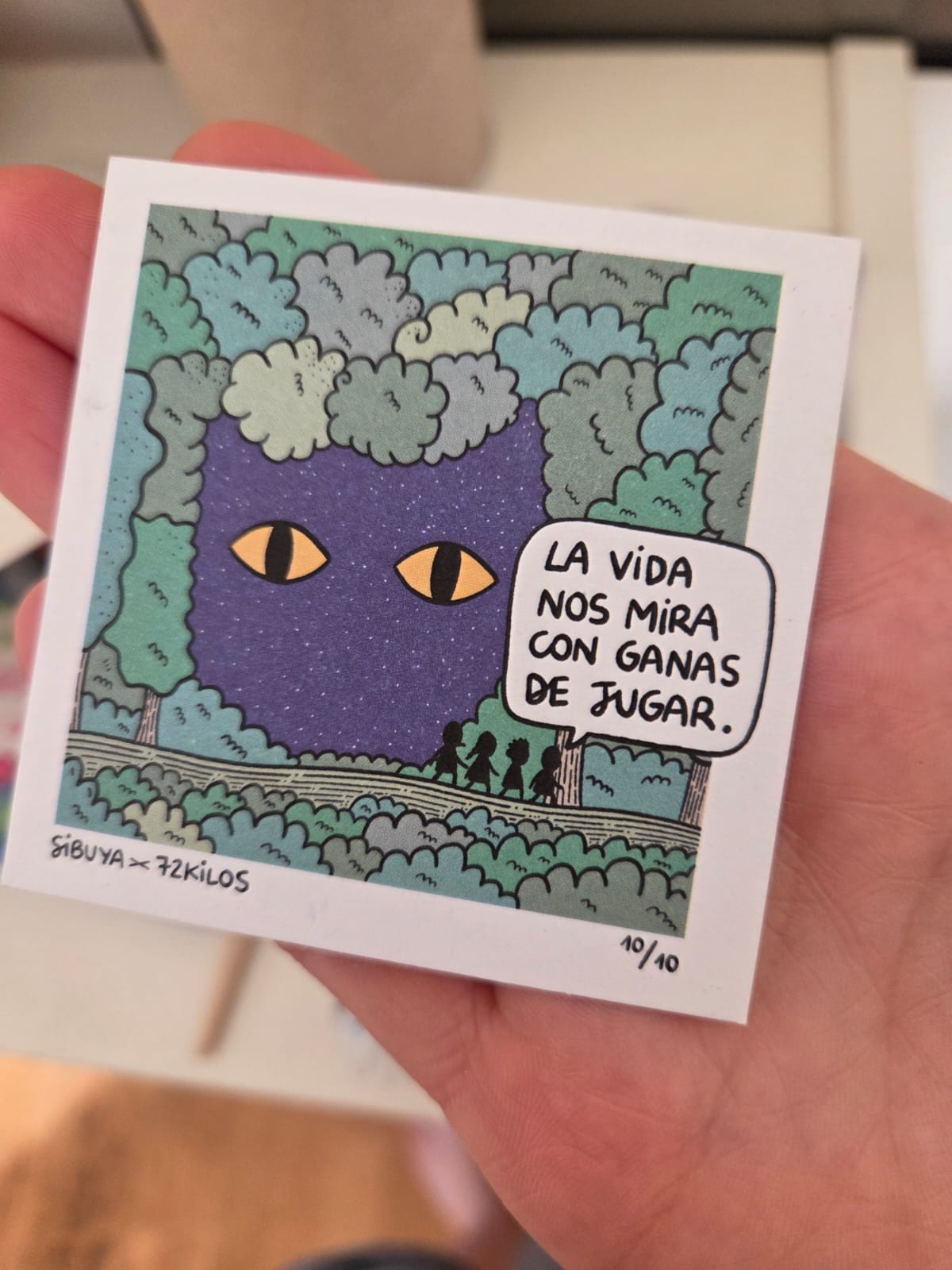
Again and again in conversations that I had this week, I kept coming up against this idea that the most magical thing is the realest thing. Authenticity feels like magic. Honesty feels like magic. Doubt and imperfection and showing up anyway feels like magic.
It makes me think back to 2020 when I was still living in Paris. I was cooking dinner one night, wondering what would become of us all, when I heard Sarah, the host of one of my forever favourite podcasts, Moonbeaming, say “...the magic is in the mundane...” I couldn’t tell you what the episode was even about anymore, but that one little sentence grounded me instantly, and has always stayed with me.
Showing up again and again as our imperfect selves, doing whatever work we feel called to do can feel monotonous sometimes, the kind of thing that leads to “why am I even doing this?” moments. But compounded over time, all that effort and intention mixed with a bit of random luck add up to what, from the outside, can look like catching lightning in a bottle. The perfect opportunity, or connection that snowballs into something big, maybe even life changing. Magic.
When I think about AI, the first thing that comes to mind are models. When I think about programming, the first thing that comes to mind are algorithms. When I think about social media, and the press at large if I’m totally honest, the first thing that comes to mind is performativity. What do all of these things have in common? They flatten whatever you send through them.
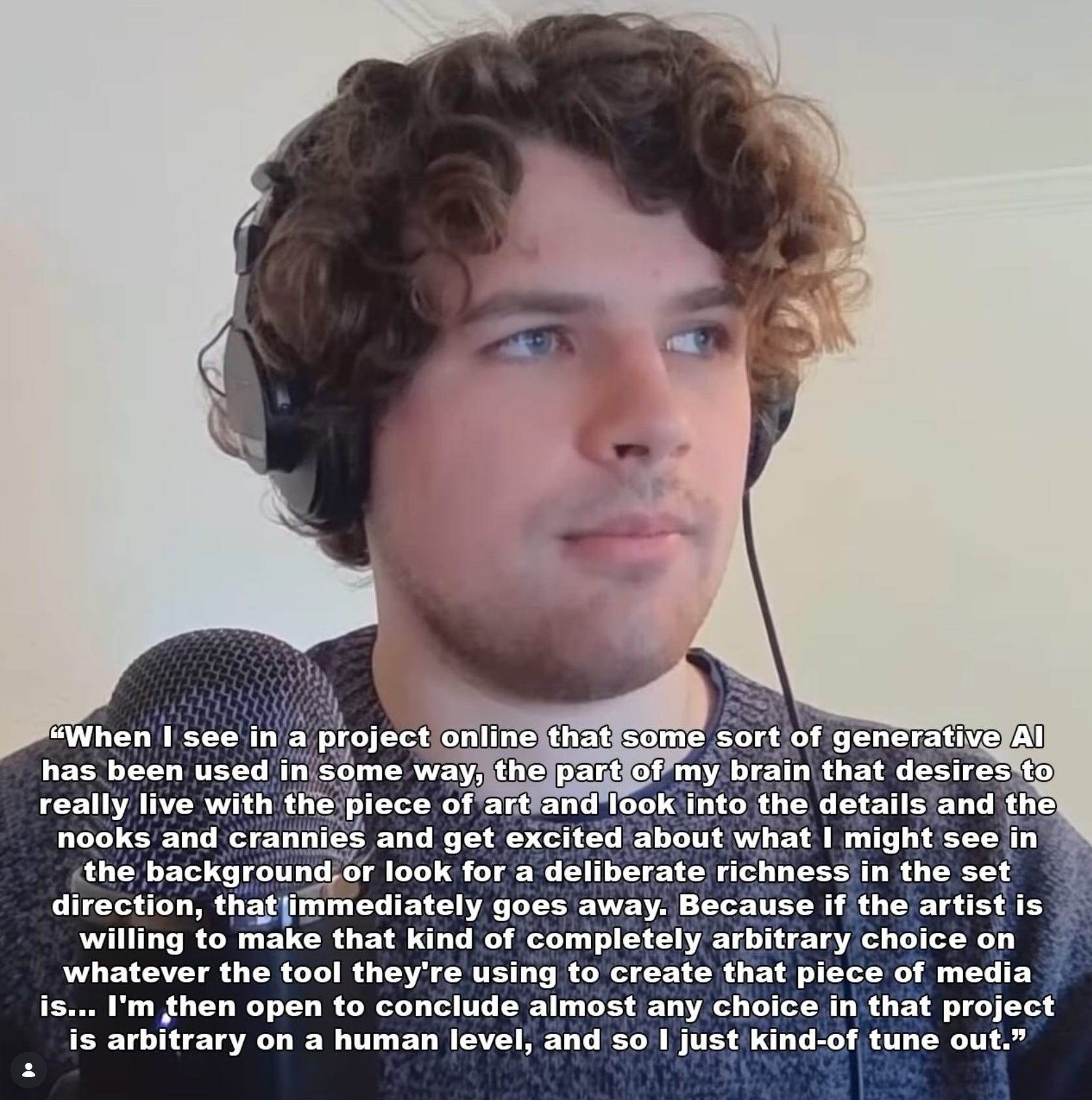
I saw an Even Ross Katz post go by on ig recently. He had interviewed Kane Parsons, the brain behind Backrooms. I haven’t found the full interview anywhere yet but a quote was pulled and published from their sit down where he explains that whenever he sees generative AI used in art, he loses interest because work loses its richness. There’s nothing to really investigate or seek out in the work.
A flattening.
But what exactly is being flattened?
The very messy nature of reality.
Aka one of the main vectors of generative art and simulations: randomness. Randomness exists all across nature, and can’t be reverse engineered. How can that be?
True randomness implies that there is no discernible rule, pattern or sequence to explain a behaviour that occurs between two or more things that are in relationship with one another. There’s no way to recreate it.
Did you know that a computer can’t generate true randomness? Pseudo randomness, sure. But true randomness? Nope, not without a little push from the natural world. Code is a set of instructions. If you start from the same internal state and run the same code, you always get the same result.
But how can Generative Art run on randomness then? In code, pseudo-random numbers are generated by an algorithm. The algorithm has to start somewhere, it needs a value, any value, from which to build out it’s random(ish) numbers. That seed is what allows you to reconstruct the whole sequence again if you need to. Just feed that same starting number into the generator and you will get the same sequence. It’s what allows generative artists to find their way back to their favourite output out of thousands generated.
So what does this have to do with magic?
Models, algorithms, and Instagram templates turn the beautiful chaos of reality, something that is alive and relational, into something that has basically been sanitized. Randomness is the magic of life. The tech industry wants that magic tidied up, made legible and rendered optimizable.
I have a sneaking suspicion that’s why so much AI content is flashy visual demos. They want us to believe AI is “magic” when it’s the most flattened version of reality that exists. Do they really think that it’s possible to reset our senses, confuse our bodies into believing true wonder is better found in the models and machines? I don’t know about you, but everyone around me is absolutely parched for the real.
But let me rewind for a sec, because I’m a programmer and a generative artist. I’m actually not against AI when it’s used with consideration and intention within a larger creative process.
When I poke at algorithms and play around with pseudo randomness, I’m whittling away at my understanding of the laws of the natural world and how I might inject them into my work. The work I do fills me with awe and curiosity and expands my understanding of the world around me. That feels very different from the tech industry’s effort to reduce reality down to its most engineerable, most controllable version.
The output can be beautiful. But the magic is in the messy process that made it.
a quote
Unsurprisingly, James Bridle lays it out with perfect eloquence:
“All computers are simulators. They contain abstract models of aspects of the world, which we set in motion – and then immediately forget that they’re models. We take them for the world itself. The same is true of our own consciousness, our own umwelt. We mistake our immediate perceptions for the world-as-it-is – but really, our conscious awareness is a moment-by-moment model, a constant process of re-appraisal and re-integration with the world as it presents itself to us. In this way, our internal model of the world, our consciousness, shapes the world in the same way and just as powerfully as any computer. We attempt to make the model more like the world, and the world more like the model, at every step of our intra-action. This is why models and metaphors matter...
This is the way in which all (successful) computation operates. First, it models the world, and then it attempts to replace the world with the model.”
an album
from 2018, but I only discovered it this week. It’s been added to my ambient concentration collection
an idea & an article
How do you resolve a contradiction? You don’t. This is a really cute piece of text that reminded me that hunting for resolution is often a fools errand.
a tool
How could I not give a shout out to my absolute favourite self organizing tool and the happiest place on the internet in 2026, Sublime 2.0 has just released! Most of my library is private but if you want a taste, I do occasionally leave a few cards public.
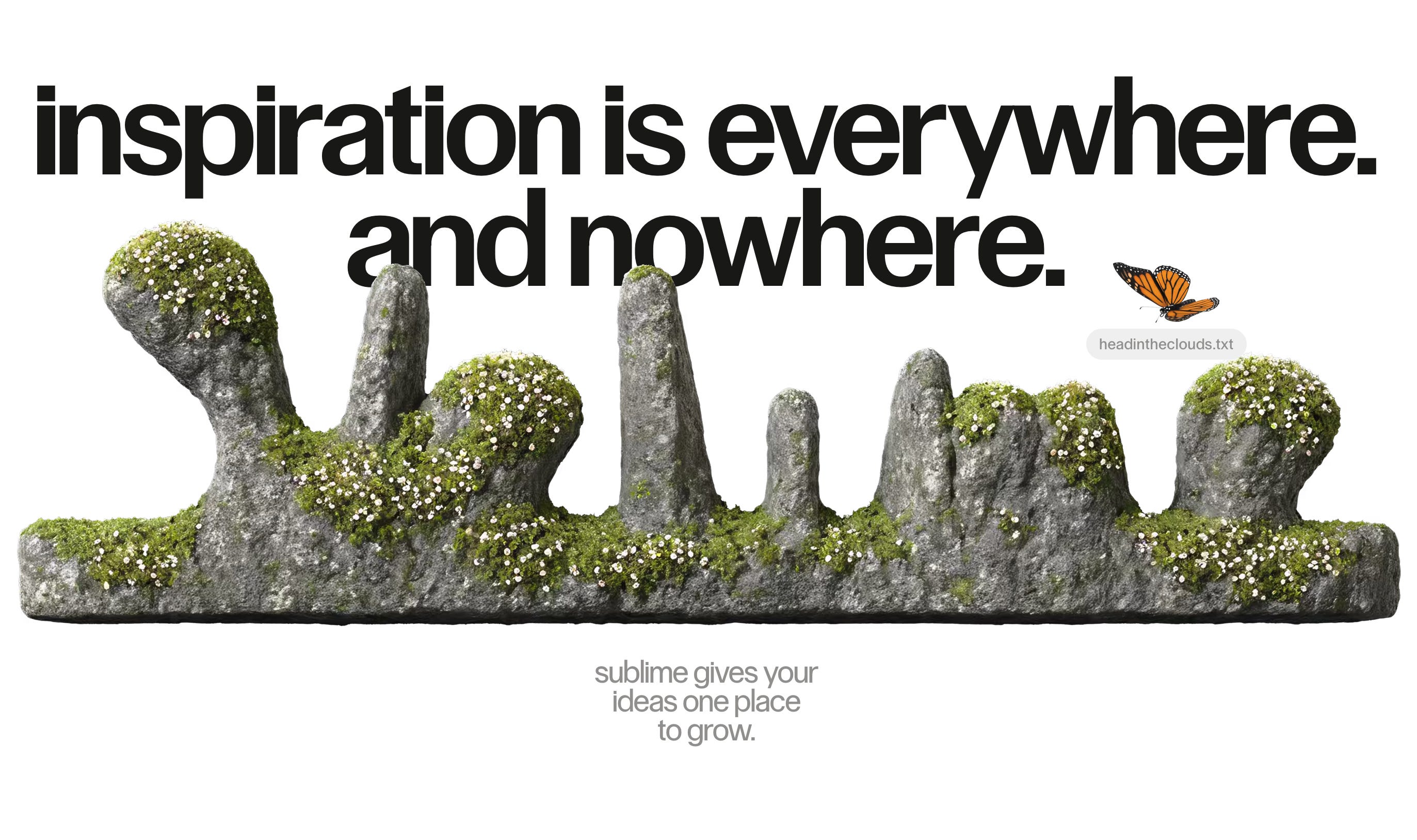
More the launch and Sublime in general here:
Comments
Nothing yet. Say the first thing.
Sign in to join the conversation.